

Did the custom of releasing a prisoner at Passover attested in the Gospels originate in Roman or Jewish legal tradition?
Purity Halakha in the Story of the Hemorrhaging Woman

Does concern for ritual purity explain why the hemorrhaging woman touched Jesus’ tzitzit?
Man With Edema
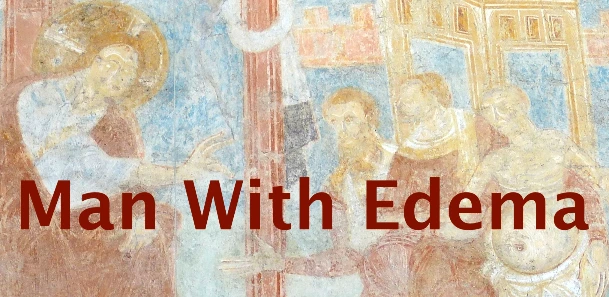
According to Jesus, God sets aside his divine prerogatives in order to alleviate human suffering.
Halakha in the Gospels

The Gospels describe Jesus and his followers as keeping halakha to a relatively high extent; they were a group to whom the law was important.
Failures of the Aramaic Solution: Aramaic’s Inability to Explain Jesus’ Halachic Questions on the Sabbath (Luke 14:5; Matt. 12:11-12a)

How well does Aramaic explain Jesus’ sayings on healing on the Sabbath?
Jesus the Galilean, a Stranger in Judea?
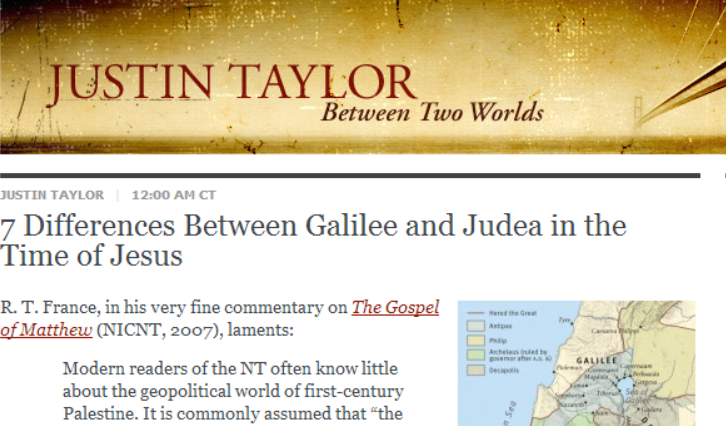
Follow Garcia as he challenges Taylor’s work and brings about the conclusion that “We should attribute any differences between Galileans and Judeans primarily to issues of opposing halakhic opinions.”
The Apostolic Decree and the Noahide Commandments

Jerusalem Perspective is pleased to make available to the English-speaking world this important article written originally in German by David Flusser and Shmuel Safrai: “Das Aposteldekret und die Noachitischen Gebote,” in Wer Tora mehrt, mehrt Leben: Festgabe fur Heinz Kremers (ed. E. Brocke and H.-J. Borkenings; Neukirchen-Vluyn, 1986), 173-192.
The Jewish Cultural Nature of Galilee in the First Century

The prevailing opinion among New Testament scholars is that first-century Galilee was culturally and spiritually deprived, and that, therefore, Jesus came from an underdeveloped and backward Jewish region of the land of Israel. Professor Safrai here presents massive evidence against this view.
The Value of Rabbinic Literature as an Historical Source
The thesis of this article is that rabbinic sources, when used in a careful manner, can provide reliable historical material pertaining to the Second Temple period. If this thesis is accepted, the consequences for the study of the New Testament Gospels are obvious.
The Theological Significance of the Parable in Rabbinic Literature and the New Testament

One of the finest articles ever written on rabbinic parables and the parables of Jesus was published in 1972 in the now defunct Christian News from Israel. The article is a classic, but, unfortunately, no longer available. Jerusalem Perspective is pleased to resurrect this milestone article together with the responses of founding Jerusalem School members, the late Robert L. Lindsey and David Flusser.