
How Jesus’ cryptic warning has given rise to an array of conflicting interpretations. What did Jesus actually intend?
Locating Jesus’ Place on the Political-Ideological Spectrum of Second Temple Jewish Society
Was Jesus on the right, left, or near the center of the political spectrum of first-century Jewish society?
The Good Samaritan
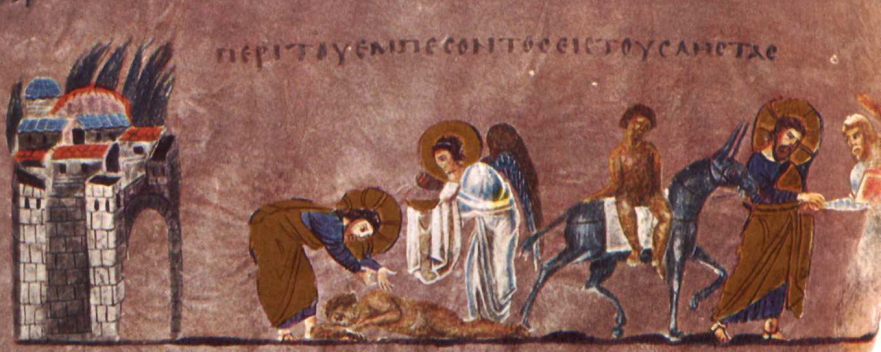
The parable of the Good Samaritan came as a response to the lawyer’s question, “And who is my neighbor?” The lawyer wanted Jesus to draw a circle defining who is inside, and therefore the neighbor I must love, and who is outside. Jesus, by using Leviticus 19:34, ingeniously turned the lawyer’s question on its head.
This article is a sample chapter of Marc Turnage’s, Windows into the Bible: Cultural and Historical Insights into the Bible for Modern Readers (Springfield, Mo.: Logion, 2016), which will be released at the end of March 2016.
Character Profile: Chief Priests and Sadducees

Why did the chief priests and Sadducees continue to oppose the early believers even after the crucifixion of Jesus? In this video Marc Turnage places the chief priests and Sadducees in their historical context and explains why the preaching of the apostles was unwelcome news to the Temple authorities in Jerusalem.
Character Profile: Joseph Caiaphas

The high priest Joseph Caiaphas is known not only from the New Testament Gospels as the high priest who opposed Jesus and his early followers, but also from Josephus the Jewish historian who lived in the first century C.E. In this video Marc Turnage provides an historical sketch of this pivotal character.
“It Is Said to the Elders”: On the Interpretation of the So-called Antitheses in the Sermon on the Mount

Jesus’ Sermon on the Mount deserves endless study, and the more one studies ancient Jewish sources, the clearer the meaning of these words of Jesus becomes.
Character Profiles: Gamaliel and Nicodemus
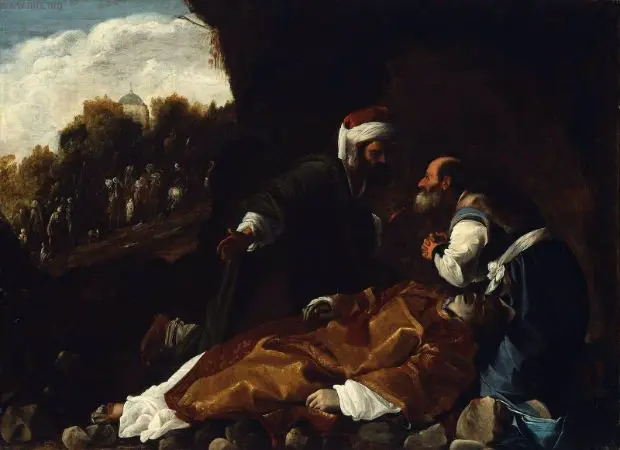
Gamaliel saved the lives of Jesus’ apostles, and also influenced Paul’s ethics, even after Paul’s conversion. Nicodemus belonged to the Hillelite anti-Zealot circles to which Jesus himself was close.
The “Hypocrisy” of the Pharisees

Without reading the Scriptures carefully, and without a familiarity with Second Temple-period extra-biblical sources, a simple reader of the New Testament might assume that a majority of the Pharisees were hypocrites and that the Pharisees as a movement were indeed a “brood of vipers.” As a result of this common Christian assumption, the word “Pharisee” has become a synonym for “hypocrite” in the English language.
Evidence of an Editor’s Hand in Two Instances of Mark’s Account of Jesus’ Last Week?
It has been noted that in instances where Mark’s editorial hand restructured his story, Luke has preserved a more primitive form of the account, a form that is independent of Mark’s influence. Gospel scholars need to properly evaluate Mark’s editorial style and acknowledge that frequently a theological agenda influenced his rewriting.
The Value of Rabbinic Literature as an Historical Source

The thesis of this article is that rabbinic sources, when used in a careful manner, can provide reliable historical material pertaining to the Second Temple period. If this thesis is accepted, the consequences for the study of the New Testament Gospels are obvious.