
Parallelism is a central feature of Hebrew poetry. It permeates the words of biblical poet and prophet. The frequency with which parallelism occurs in the utterances of Jesus is surprising, and leads inevitably to the conclusion that the Greek source (or, sources) used by the authors of Matthew, Mark and Luke derive(s) from a Greek translation (or, translations) of Hebrew documents.
Cataloging the Gospels’ Hebraisms: Part Four (Parallelism)

Doubling, or repeating, is a characteristic feature of Hebrew. Hebrew loves to say things twice (or more!) by adding equivalents. Words, phrases, sentences, and even stories, are doubled (or tripled).
Cataloging the Gospels’ Hebraisms: Part Three (Impersonal “They”)
Awareness of even the simplest Hebrew grammatical structure can bring to life a vague, or difficult-to-understand, saying of Jesus. Since potential Hebrew idioms are so dense in the Greek texts of Matthew, Mark and Luke, one has to ask, Could these apparent Hebrew idioms be evidence that the synoptic Gospels are descendants of an ancient translation of a Hebrew “Life of Jesus,” the gospel that the church father Papias spoke of when he wrote: “Matthew…arranged the sayings [of Jesus] in the Hebrew language”?
Cataloging the Gospels’ Hebraisms: Part Two (Luke 9:51-56)
Relatively few of the suggested Semitisms underlying the Greek New Testament constitute clear-cut proof for a Hebrew undertext, but a high density of Hebraisms in a given passage increases the probability that it is “translation Greek.”
Jesus and the Enigmatic “Green Tree”
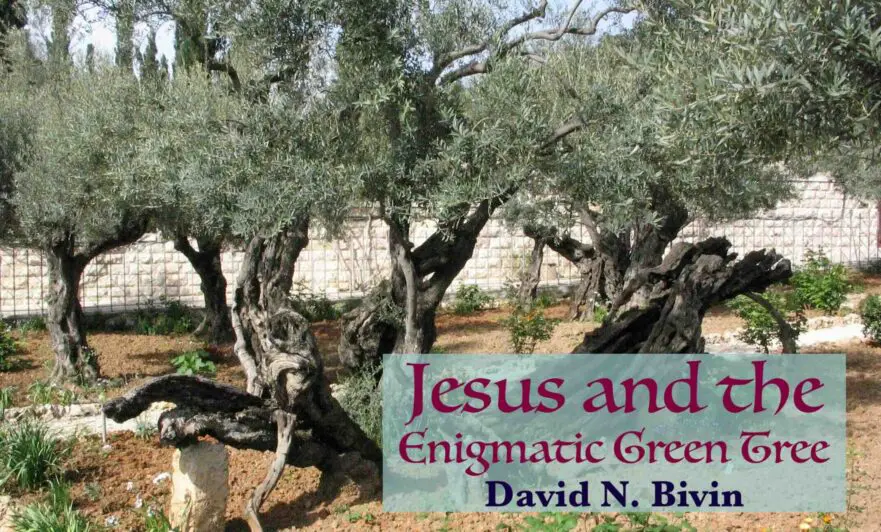
Jesus made bold messianic claims when he spoke. To thoroughly understand these claims, however, we must get into a time machine and travel back in time to a completely different culture, the Jewish culture of first-century Israel. We must acculturate ourselves to the way teachers and disciples in the time of Jesus communicated through allusions to Scripture.
Treasures in Heaven

What is the relationship between the preaching of Jonah and putting a lamp on a lampstand? The prophet Jonah in classical Jewish thought calls to mind repentance. In Rabbinic literature we read that many prophets were sent to Jerusalem and the people did not listen, but to Nineveh one prophet was sent, and the people repented.
Measure For Measure

Some of the things Jesus emphasized in his teachings stand as strong warnings to those who belong to the community of faith. Jesus made statements about not lapsing into prideful judgmentalism, and becoming centripetal in one’s thinking. Jesus taught that our attitude toward other people—outsiders, even sinners—must be like God’s.
Scholars and Saints: A Critical Collaboration
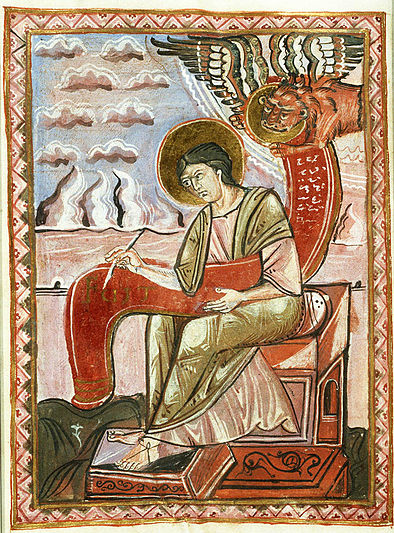
Most academics would question the value of attempting to identify material originating from the historical Jesus because Matthew, Mark and Luke are not historical narratives in the modern sense.
“They Didn’t Dare” (Matt 22:46; Mark 12:34; Luke 20:40): A Window on the Literary and Redactional Methods of the Synoptic Gospel Writers
Mark’s placement of Jesus’ “no longer dared” comment is very awkward: first, because the comment comes in the middle of a lovefest between Jesus and a scribe; and second, because the comment immediately follows Jesus’ appreciation of the scribe’s wisdom: “You are not far from the Kingdom of God.”
Matthew 5:19: The Importance of “Light” Commandments

Jesus adopted a well-known rabbinic approach to the Torah in which a light commandment is no less important than a heavy commandment.