
Rather than being treated as liabilities to a statistical study, conjectured details are turned into historical givens and are even factored in as positive data. Consequently, most of the connections made in the documentary fall under the heading of “special pleading.”
James Tabor Responds to JP Review
Poirier’s review on JP of Tabor’s recently published The Jesus Dynasty: The Hidden History of Jesus, His Royal Family, and the Birth of Christianity has caused a stir on the Internet
Book Review: James Tabor’s The Jesus Dynasty
Tabor has an annoying habit of promoting remote possibilities into even possibilities, and then into probabilities.

Another Look at the “Cleansing of the Temple” Story
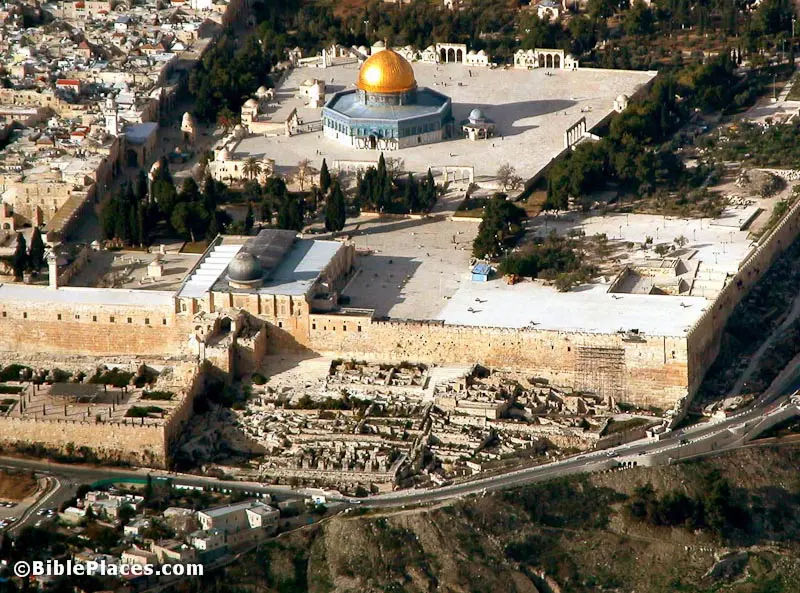
Based on archaeological excavations near the southern wall of the temple, the research of Shmuel Safrai, and a nuance of the Hebrew verb that is one of the equivalents for Greek ekballein (drive out, banish; throw out; throw away, reject; cast out of a place, expel; remove, get rid of; put out), it may be necessary to reinterpret the gospel accounts of Jesus’ “cleansing” of the temple, even suggesting a different location for Jesus’ action.
Jesus and the Essene Passover
Fifty years of scholarship concerning the Dead Sea Scrolls have brought clearer understanding concerning a fascinating stream of Jewish piety which existed during the final days of the Second Temple.
The Search for Bethsaida: Is It Over?
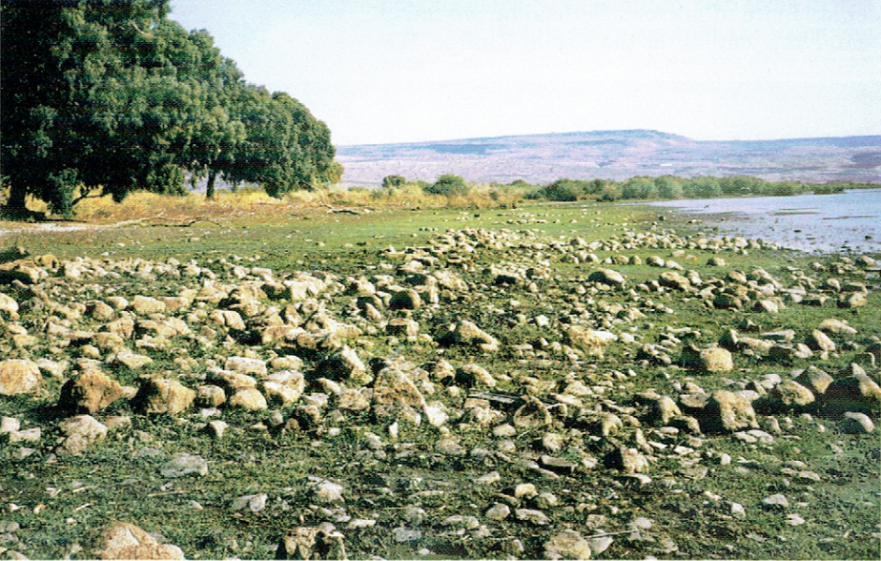
One of the challenging tasks for archaeologists and biblical historians alike is the identification of sites mentioned in the Bible — some of which were destroyed and disappeared in time without a trace. The first comprehensive attempt to locate these sites was that of Eusebius, the fourth-century church historian (ca. 265-339 A.D.).
The Man Who Would Be King
Scholarship has recognized the similarities between the Parable of the Talents and the historical account of Archelaus’ attempts to inherit the kingdom of his father, Herod the Great. When Herod died, Caesar Augustus divided the kingdom between Herod’s three sons, Archelaus, Antipas and Philip.
Design and Maintenance of First-century Ritual Immersion Baths
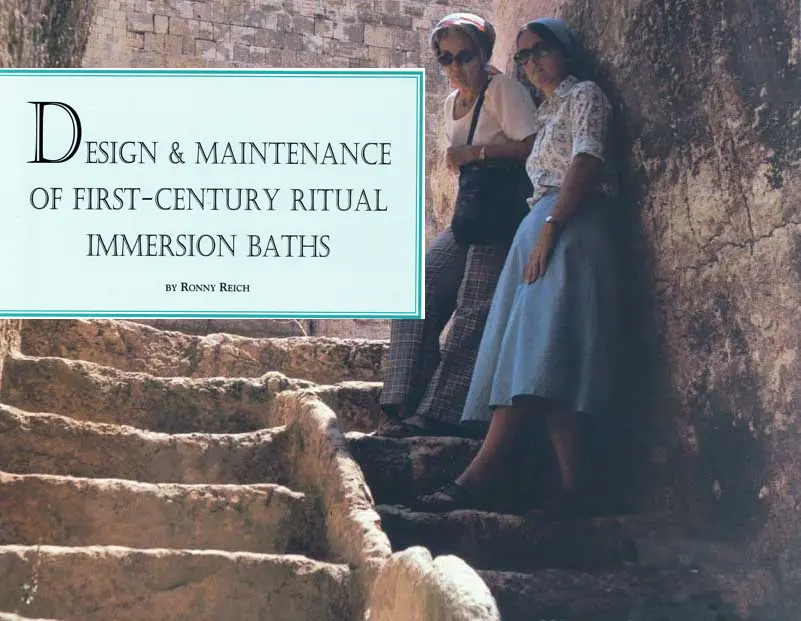
Archeologists and other scholars have not written prolifically about ancient mikvaot (or ritual immersion baths). Nevertheless, ritual immersion in the first century A.D. constitutes an important element of the overall historical, social and religious background of the New Testament. Here, Ronny Reich explains in non-technical language the intricacies of the design and maintenance of ancient mikvaot.
The Synagogue the Centurion Built
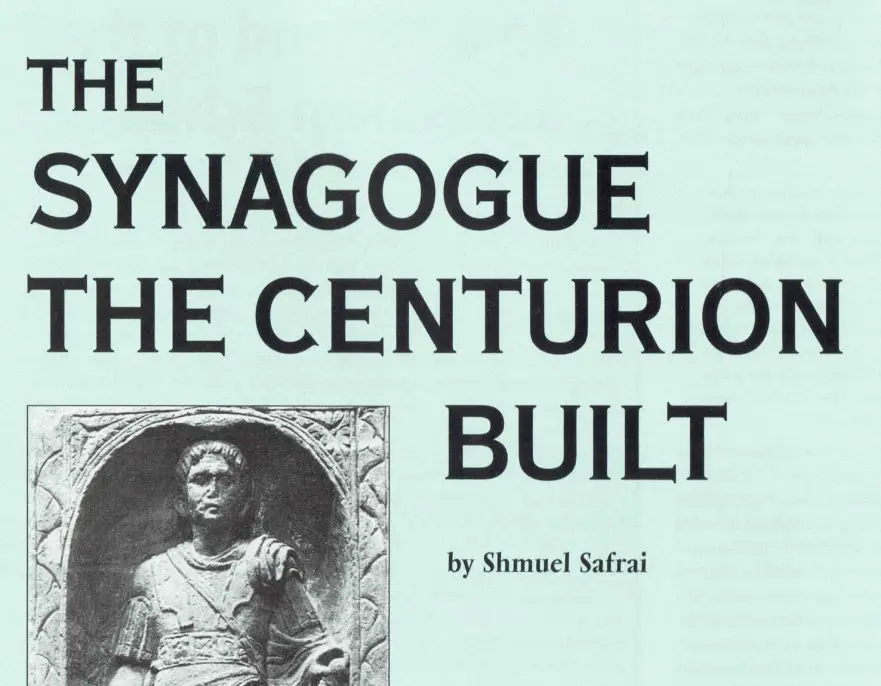
Would a Roman officer have had the means to finance the construction of a synagogue in the lakeshore town of Capernaum?