
In this article David Flusser applies the methods of the Jerusalem School of Synoptic Research and the insights of Robert Lindsey’s solution to the Synoptic Problem to Jesus’ prophecy concerning the destruction and liberation of Jerusalem.
Measuring the Disparity Between Matthew, Mark and Luke

A solution to the synoptic problem involves, among other things, the measurement of the disparity we find between parallel texts in Matthew, Mark and Luke.
The Apostolic Decree and the Noahide Commandments
Jerusalem Perspective is pleased to make available to the English-speaking world this important article written originally in German by David Flusser and Shmuel Safrai: “Das Aposteldekret und die Noachitischen Gebote,” in Wer Tora mehrt, mehrt Leben: Festgabe fur Heinz Kremers (ed. E. Brocke and H.-J. Borkenings; Neukirchen-Vluyn, 1986), 173-192.
A Response to Kilty and Elliott on the Talpiot Tomb

The calculations of Kevin Kilty and Mark Elliott have an after-the-fact particularity to them that belies their claim to be dealing with probabilities.
Lord’s Prayer
David Bivin and Joshua Tilton envision how the Lord’s Prayer might have been formulated in its original language and explore the ancient Jewish context to which the Lord’s Prayer belongs.
From Melchizedek to Jesus: The Higher Eternal Priest in Jewish Second Temple Literature
A scroll from the Judean Desert proves that the biblical Melchizedek was transformed into the eschatological high priest in some Jewish circles in the first century B.C.E.
Evidence of an Editor’s Hand in Two Instances of Mark’s Account of Jesus’ Last Week?
It has been noted that in instances where Mark’s editorial hand restructured his story, Luke has preserved a more primitive form of the account, a form that is independent of Mark’s influence. Gospel scholars need to properly evaluate Mark’s editorial style and acknowledge that frequently a theological agenda influenced his rewriting.
Jesus and the Enigmatic “Green Tree”
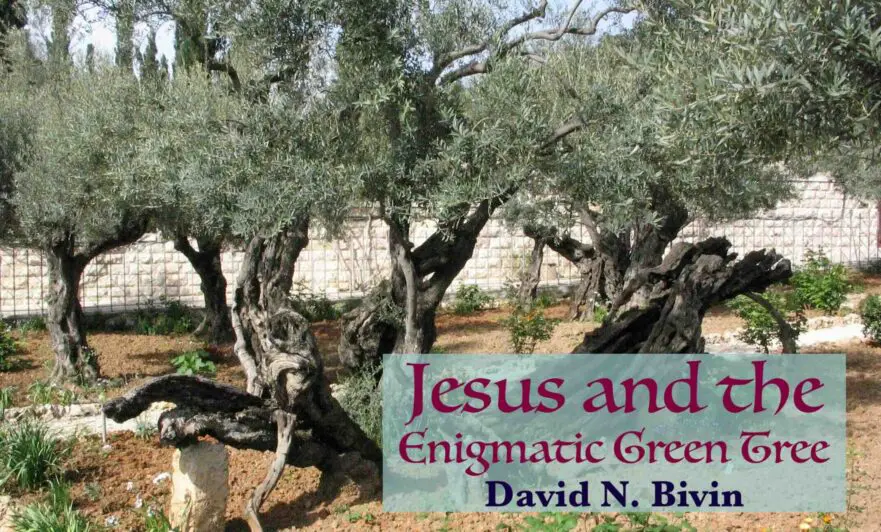
Jesus made bold messianic claims when he spoke. To thoroughly understand these claims, however, we must get into a time machine and travel back in time to a completely different culture, the Jewish culture of first-century Israel. We must acculturate ourselves to the way teachers and disciples in the time of Jesus communicated through allusions to Scripture.
The Value of Rabbinic Literature as an Historical Source
The thesis of this article is that rabbinic sources, when used in a careful manner, can provide reliable historical material pertaining to the Second Temple period. If this thesis is accepted, the consequences for the study of the New Testament Gospels are obvious.
Elijah Prays About Rain

Toward the end of his Epistle, James exhorts his readers to pray with faith for the healing of the sick. When we read that “the prayer of a righteous man has great power in its effects” (James 5:16), we might have expected James to cite the example of Abraham. Genesis 20:17 might have served as the perfect prooftext: “Abraham prayed to God; and God healed Abimelech.” …The example of Elijah that was provided by James, however, seems less obvious and more difficult.