

In the past, some scholars have relied on the evidence of Jesus’ use of the word “Abba” to draw far-reaching conclusions about Jesus, the language he spoke, and his relationship to Judaism. As part of their ongoing research for the LOY project, David Bivin and Joshua Tilton revisited the evidence for Jesus’ use of “Abba” as an address to God. Tilton summarizes their findings here.
Sending the Twelve: Apostle and Sender

The Apostle and Sender saying (Matt. 10:40; Luke 10:16) not only gave assurance to Jesus’ emissaries as he sent them out on their first healing and teaching mission, it also offers us an extraordinary glimpse into Jesus’ high self-awareness as the shāliaḥ, or official representative, of Israel’s God. In this segment of the Life of Yeshua commentary, David N. Bivin, JP’s editor-in-chief, and Joshua N. Tilton envision how Jesus’ Apostle and Sender saying may have been worded in Hebrew and explore the Jewish backgrounds of this profound saying.
Sending the Twelve: Conduct in Town

David N. Bivin and Joshua N. Tilton suggest a Hebrew reconstruction of Jesus’ instructions about how the twelve apostles were to behave when they entered a town. In this pericope we learn about the giving and receiving of hospitality among Jesus’ earliest followers. We also learn what may be wrong about the popular view that shaking the dust from the apostles’ feet was a symbolic action meant to signal to Jews who rejected Jesus that they were henceforth to be considered as Gentiles.
“Shake the Dust from Your Feet”: What Did the Apostles’ Action Signify?

The standard interpretation of the apostles’ dust-shaking action proposes that Jesus turned the concept of the impurity of Gentile lands against the Jewish inhabitants of cities within the (ritually pure) land of Israel. This interpretation concludes that shaking the dust from their feet dramatically symbolized that Jesus’ apostles would henceforth regard the Jewish inhabitants of a city that had rejected their message as though they were cut off from Israel. It is time for this mistaken interpretation to finally be put to rest.
Jesus’ Attitude Toward the Samaritans

It is always our duty to ask ourselves whether the kind of speech we voice and the kind of rhetoric we listen to engenders respect for our neighbor, no matter how different she or he might be from ourselves, or whether it is sowing the seeds of hatred and violence.
Unconditional Love: A Holy Week Meditation
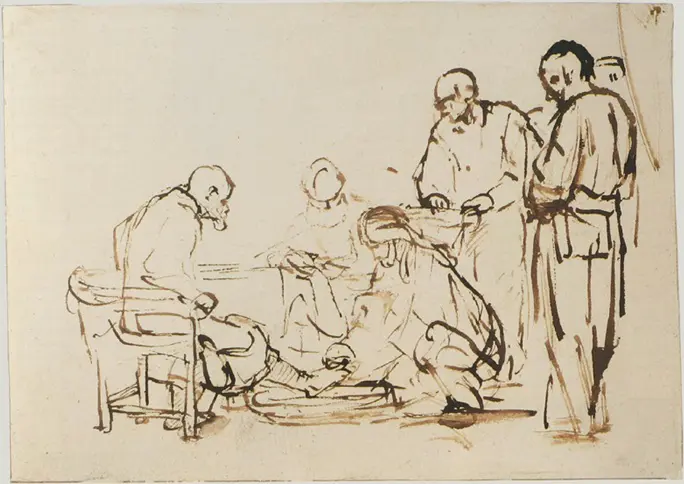
The commemoration of Jesus washing the feet of his disciples affords a moment of vulnerability that allows both the servant and the one being served to experience unconditional love.
The Good Samaritan

The parable of the Good Samaritan came as a response to the lawyer’s question, “And who is my neighbor?” The lawyer wanted Jesus to draw a circle defining who is inside, and therefore the neighbor I must love, and who is outside. Jesus, by using Leviticus 19:34, ingeniously turned the lawyer’s question on its head.
This article is a sample chapter of Marc Turnage’s, Windows into the Bible: Cultural and Historical Insights into the Bible for Modern Readers (Springfield, Mo.: Logion, 2016), which will be released at the end of March 2016.
Parables on the Character of God

Jerusalem Perspective is excited to announce that in the coming months Dr. R. Steven Notley will be sharing a series of blogs on Jesus’ parables with our readers. In anticipation of these blogs, and as a preview of what we might expect from Dr. Notley, we are sharing two sermons on the parables that Dr. Notley delivered to the Narkis Street Congregation in Jerusalem. Enjoy!
The Significance of Jesus’ Words “Not One Jot or One Tittle Will Pass from the Law” (Matt. 5:18)

“Jot” and “tittle” are not everyday words in English. What do they mean and how should Jesus’ words in Matthew 5:18 be understood? Jerusalem Perspective‘s editor-in-chief, David Bivin, tackles these questions on behalf of a subscriber’s request for help.
David Flusser on the Historical Jesus: An Interview with Roy Blizzard

In the interview Flusser discusses the language of Jesus, the importance of studying ancient Judaism of the Second Temple period for the understanding of Jesus’ message, and Jesus’ high self-awareness.