
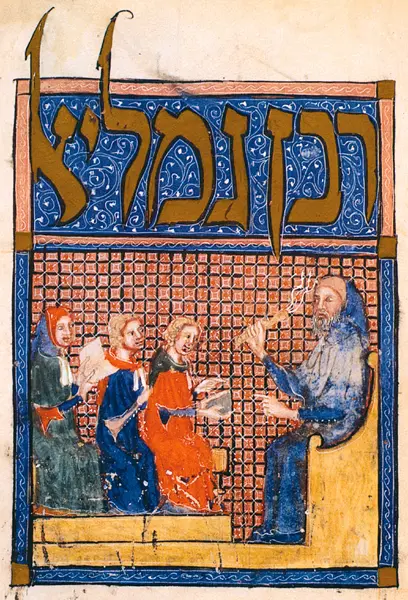
The ancient Jewish sage Rabban Gamliel is mentioned not only in rabbinic literature, but also twice in the New Testament. Marc Turnage introduces us to this important figure in the history of Judaism and Christianity.
Windows into the Bible (4): Stone Vessels

In this video Marc Turnage discusses the significance of stoneware vessels for understanding the cultural context of the Gospels. Marc Turnage, a member of the Jerusalem School of Synoptic Research, is the director of the Center for Holy Lands Studies for The General Council of the Assemblies of God in Springfield, Missouri. Learn more about Turnage and his work at his blog The Shard and the Scroll at www.theshardandthescroll.com.
The Gospel of John’s Jewish-Christian Source

In an important study entitled The Gospel of Signs, Robert Fortna correctly identified a Jewish-Christian source embedded in the Fourth Gospel. This article is based upon the conclusions of Fortna’s research and explores their significance. I will also point out additional evidence Fortna overlooked that clarifies the origins and intentions of the Jewish-Christian source embedded in the text of the Fourth Gospel.
“It Is Said to the Elders”: On the Interpretation of the So-called Antitheses in the Sermon on the Mount

Jesus’ Sermon on the Mount deserves endless study, and the more one studies ancient Jewish sources, the clearer the meaning of these words of Jesus becomes.
Character Profiles: Gamaliel and Nicodemus

Gamaliel saved the lives of Jesus’ apostles, and also influenced Paul’s ethics, even after Paul’s conversion. Nicodemus belonged to the Hillelite anti-Zealot circles to which Jesus himself was close.
Unintentional Anti-Semitism in the Church

I heard an all too familiar theme surface in an otherwise good sermon with regard to the recognition and acceptance of Jesus as Messiah: “The Jews just missed it!” Sadly, this affront by categorization also shows a total lack of recognition of the role of Jews in the early church and in their making the message of salvation through Yeshua (Jesus) available to non-Jews. It is as if Yeshua appears on the scene, is rejected by the Jews, but is welcomed with open arms by the non-Jews.
The Apostolic Decree and the Noahide Commandments
Jerusalem Perspective is pleased to make available to the English-speaking world this important article written originally in German by David Flusser and Shmuel Safrai: “Das Aposteldekret und die Noachitischen Gebote,” in Wer Tora mehrt, mehrt Leben: Festgabe fur Heinz Kremers (ed. E. Brocke and H.-J. Borkenings; Neukirchen-Vluyn, 1986), 173-192.
The “Hypocrisy” of the Pharisees

Without reading the Scriptures carefully, and without a familiarity with Second Temple-period extra-biblical sources, a simple reader of the New Testament might assume that a majority of the Pharisees were hypocrites and that the Pharisees as a movement were indeed a “brood of vipers.” As a result of this common Christian assumption, the word “Pharisee” has become a synonym for “hypocrite” in the English language.
The Jewish Cultural Nature of Galilee in the First Century
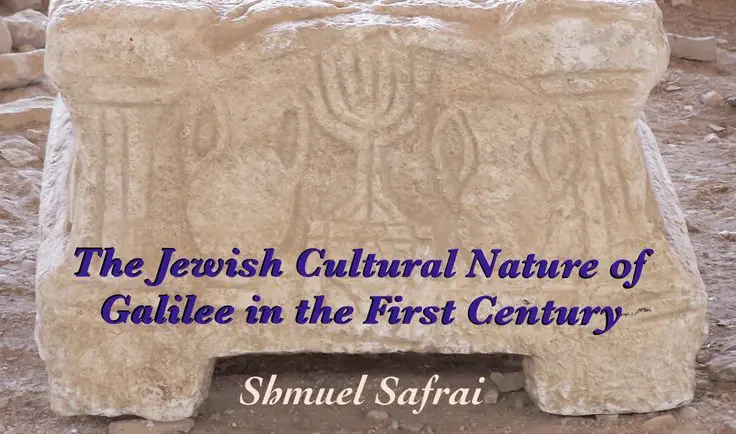
The prevailing opinion among New Testament scholars is that first-century Galilee was culturally and spiritually deprived, and that, therefore, Jesus came from an underdeveloped and backward Jewish region of the land of Israel. Professor Safrai here presents massive evidence against this view.
Evidence of an Editor’s Hand in Two Instances of Mark’s Account of Jesus’ Last Week?
It has been noted that in instances where Mark’s editorial hand restructured his story, Luke has preserved a more primitive form of the account, a form that is independent of Mark’s influence. Gospel scholars need to properly evaluate Mark’s editorial style and acknowledge that frequently a theological agenda influenced his rewriting.