

Some months ago, pastor-blogger Trevin Wax posted an article called “Urban Legends: The Preacher’s Edition.” There he lists several “urban legends” that he’s heard floating around lately in sermons. Like Internet rumors that people forward on ad infinitum, these preaching illustrations don’t have much grounding in fact.
The “Hypocrisy” of the Pharisees

Without reading the Scriptures carefully, and without a familiarity with Second Temple-period extra-biblical sources, a simple reader of the New Testament might assume that a majority of the Pharisees were hypocrites and that the Pharisees as a movement were indeed a “brood of vipers.” As a result of this common Christian assumption, the word “Pharisee” has become a synonym for “hypocrite” in the English language.
The Jewish Cultural Nature of Galilee in the First Century

The prevailing opinion among New Testament scholars is that first-century Galilee was culturally and spiritually deprived, and that, therefore, Jesus came from an underdeveloped and backward Jewish region of the land of Israel. Professor Safrai here presents massive evidence against this view.
Evidence of an Editor’s Hand in Two Instances of Mark’s Account of Jesus’ Last Week?
It has been noted that in instances where Mark’s editorial hand restructured his story, Luke has preserved a more primitive form of the account, a form that is independent of Mark’s influence. Gospel scholars need to properly evaluate Mark’s editorial style and acknowledge that frequently a theological agenda influenced his rewriting.
Jesus and the Enigmatic “Green Tree”

Jesus made bold messianic claims when he spoke. To thoroughly understand these claims, however, we must get into a time machine and travel back in time to a completely different culture, the Jewish culture of first-century Israel. We must acculturate ourselves to the way teachers and disciples in the time of Jesus communicated through allusions to Scripture.
The Theological Significance of the Parable in Rabbinic Literature and the New Testament
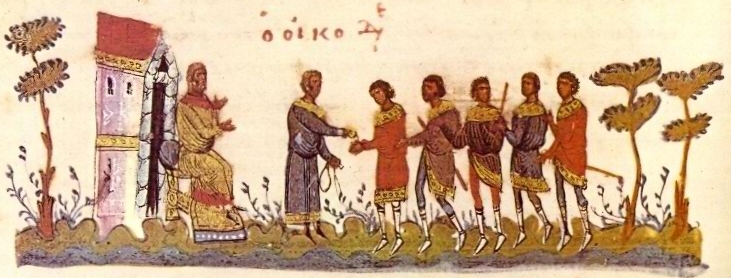
One of the finest articles ever written on rabbinic parables and the parables of Jesus was published in 1972 in the now defunct Christian News from Israel. The article is a classic, but, unfortunately, no longer available. Jerusalem Perspective is pleased to resurrect this milestone article together with the responses of founding Jerusalem School members, the late Robert L. Lindsey and David Flusser.
From Ezekiel 17:24 and 21:3 to Luke 23:31: A Survey of the Connecting Jewish Tradition

“For if they do these things in a green tree, what shall be done in the dry?” (Luke 23:31; KJV) Passages such as this demonstrate the indispensability of situating the teachings of Jesus within the context of Second Temple Period history, culture, literature, and language.
Mark 7:19: Did Jesus Make “Unclean” Food “Clean”?

One should not be too quick to throw out large portions of the Torah because of a four-word parenthetical comment by Mark at the end of a long halachic discussion.
Measure For Measure

Some of the things Jesus emphasized in his teachings stand as strong warnings to those who belong to the community of faith. Jesus made statements about not lapsing into prideful judgmentalism, and becoming centripetal in one’s thinking. Jesus taught that our attitude toward other people—outsiders, even sinners—must be like God’s.
Repentance: God Inhales
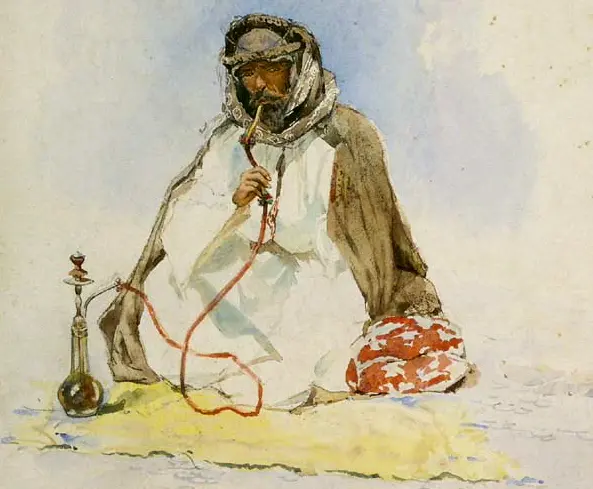
Blessing God as one who delights in repentance has rich theological implications. Nevertheless, this blessing runs the risk of inaccuracy by understating God’s reaction to repentance. He not only delights in it but displays peculiar patterns of behavior when under its influence.