
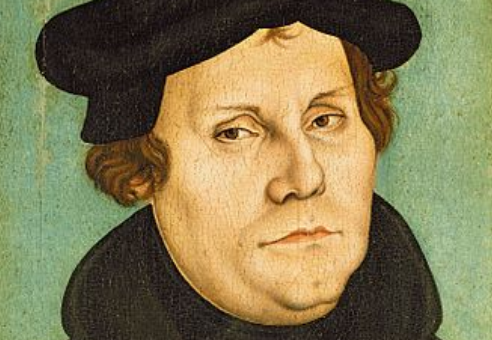
It is now a commonplace observation among scholars that Paul’s most basic convictions were misrepresented by the most dominant streams of Western theology.
The Central Text in the Original Sin Controversy
Diverging views on the doctrine of original sin represent a great chasm fixed between scholars and theologians today.
Romans 11: The Olive Tree’s Root
Paul spoke about Israel as a “cultivated olive tree” whose rootage was in the Patriarchs, particularly Abraham. Some Bible commentators, however, interpreted the root of the olive tree as Christ or his messianic program.
Anti-Jewish Tendencies in the Synoptic Gospels
The scourge of anti-Semitism has not departed from the Church. Though recently there have been encouraging signs, many Christians still harbor prejudice against Jews. The Synoptic Gospels may have helped spawn this prejudice. They may even play a continuing role in perpetuating it.
Gergesa: Site of the Demoniac’s Healing

The recent discovery of many of the ancient harbors that ringed the Sea of Galilee is an exciting chapter in Sea of Galilee research. One of these harbors is located at Kursi, ancient Gergesa. In this article, Mendel Nun contends that the demoniac’s healing and the miracle of the swine took place at Gergesa, not Gadara or Gerasa.
Pieces to the Synoptic Puzzle: Papias and Luke 1:1-4

Despite a rather turbulent transmission process, the Synoptic Gospels retain an astonishing amount of authentic and reliable material.
New Testament Canon

While God had used individual writers to record the books themselves, the actual acceptance of those books as being from God was subject to a long transition, a process of testing.
The Two Great Principles and Sefer Pitron Torah

The command to love one’s neighbor was already thought of during the Second Commonwealth as the essence of the second half of the Decalogue, in which sense it is quoted in Sefer Pitron Torah.
The Decalogue and the New Testament
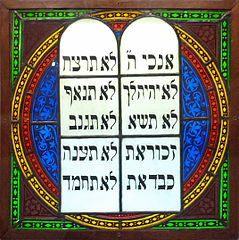
Professor Flusser examines references to the Decalogue in ancient Jewish sources and the New Testament. In light of this comparison, Jesus’ Sermon on the Mount does not merely present a utopian ideal, but rather an outline of practical behavior.
“Son of Man”: Jesus’ Most Important Title

There is a common thread uniting the views of those who think that Jesus signaled Daniel 7 by using the Aramaic bar enash in the middle of Hebrew speech. Anyone who holds this view must assume that Jesus spoke or taught in Hebrew much of the time. That Jesus used Hebrew a significant amount of the time is a sociolinguistic conclusion that has a growing number of supporters in New Testament scholarship, but one that is still a minority opinion.