

In Widow’s Son in Nain, David Bivin and Joshua N. Tilton ask “Which Nain was the town where Jesus raised the widow’s son?” and “What is the meaning of the people’s exclamation that a prophet had arisen among them?” The possibility of a Judean ministry early in Jesus’ career and of the messianic connotations of the Widow’s Son in Nain story are discussed in detail in this segment of the Life of Yeshua commentary.
Who Made the “Omission,” Luke or Mark?
Did Luke see and omit Mark 6:45-8:21, or did Mark see and omit Luke 9:51-18:14? The present article explores the possibility that the Markan pericope, “What Makes a Person Impure” in Mark 7:1-23 is dependent upon the Lukan pericope on “Discourse against the Pharisees” in Luke 11:37-41.
A Goy’s Guide to Ritual Purity

The concept of ritual purity is perhaps one of the most difficult concepts in the Bible for people to grasp today. Whereas in many “traditional” societies the concept of ritual purity was (and is) taken for granted in daily life, the whole framework for the concept of ritual purity is totally foreign to the secular western mindset.
The Apostolic Decree and the Noahide Commandments
Jerusalem Perspective is pleased to make available to the English-speaking world this important article written originally in German by David Flusser and Shmuel Safrai: “Das Aposteldekret und die Noachitischen Gebote,” in Wer Tora mehrt, mehrt Leben: Festgabe fur Heinz Kremers (ed. E. Brocke and H.-J. Borkenings; Neukirchen-Vluyn, 1986), 173-192.
The Jewish Cultural Nature of Galilee in the First Century
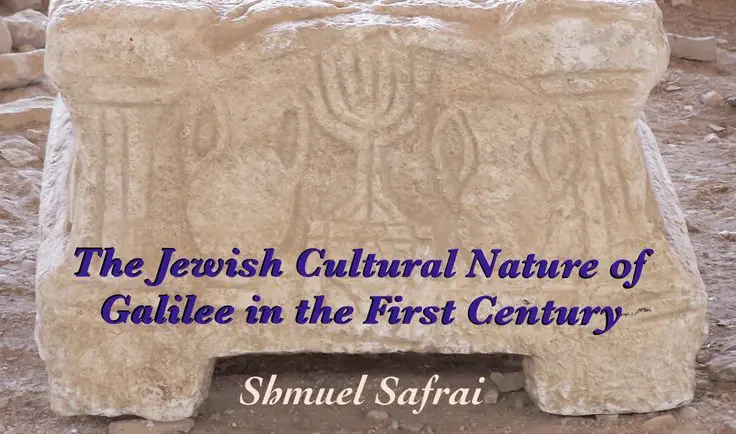
The prevailing opinion among New Testament scholars is that first-century Galilee was culturally and spiritually deprived, and that, therefore, Jesus came from an underdeveloped and backward Jewish region of the land of Israel. Professor Safrai here presents massive evidence against this view.
Did women go through a mikveh (ritual immersion pool) after childbirth?

Scripture seems to say nothing about a woman washing herself either after childbirth or after her monthly period.
Recommended Books On Ritual Purity Laws
Jack Poirier calls attention to four books on a topic that few readers of the New Testament understand.
John’s Baptism of Repentance
All of the Gospels open with a description of John the Baptist’s proclamation of a “baptism of repentance for the forgiveness of sins” (Mark 1:4). In this brief study we want to consider both the form of John’s baptism and his distinctive call to accompanying repentance.
Jesus and the Essene Passover
Fifty years of scholarship concerning the Dead Sea Scrolls have brought clearer understanding concerning a fascinating stream of Jewish piety which existed during the final days of the Second Temple.
Design and Maintenance of First-century Ritual Immersion Baths
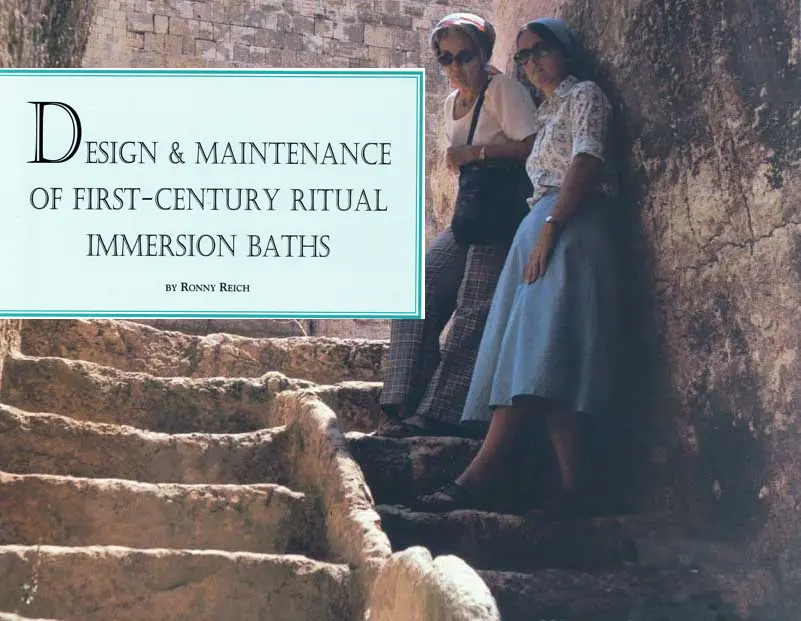
Archeologists and other scholars have not written prolifically about ancient mikvaot (or ritual immersion baths). Nevertheless, ritual immersion in the first century A.D. constitutes an important element of the overall historical, social and religious background of the New Testament. Here, Ronny Reich explains in non-technical language the intricacies of the design and maintenance of ancient mikvaot.