

Hebraisms are as ubiquitous in the Synoptic Gospels as cats in Jerusalem.
Paraphrastic Gospels
As Robert Lindsey realized in 1962, Mark reworked Luke’s Gospel in writing his own. Mark liked to substitute synonyms for nearly anything that Luke wrote. If, for instance, Luke used the singular of a noun, Mark substituted the plural form of the same noun in writing his Gospel. And vice versa: if Luke used the plural, Mark substituted the singular. In this article, Robert Lindsey surveys a unique substitution category found in Mark’s Gospel: the replacing of one verse of Scripture with another.
Stewards of God’s Keys
Jesus gave his disciple Peter the “keys of the kingdom of heaven” and promised that whatever Peter “bound” and “loosed” on earth would be “bound” and “loosed” in heaven. What scriptural allusions lurk beneath these expressions and what are their implications? How does the Jewish literary background of Matthew 16:19 help us better appreciate Jesus’ words?
Unlocking the Synoptic Problem: Four Keys for Better Understanding Jesus

While translating the Gospel of Mark to modern Hebrew, pastor-scholar, the late Dr. Robert Lindsey was forced to conclusions that ran counter to his seminary training. If correct, his conclusions have the potential for revolutionizing New Testament scholarship. In this article, Lindsey condenses the results of a lifetime of research.
Why I Am a Member of the Jerusalem School
The appeal of the Jerusalem School of Synoptic Research lies in the potential of its research methodologies to make the words and claims of Jesus clearer.
Matthew 16:18: The Petros-petra Wordplay—Greek, Aramaic, or Hebrew?
The pinnacle of the Gospel story may be Jesus’ dramatic statement, “You are Petros and on this petra I will build my Church.” The saying seems to contain an obvious Greek wordplay, indicating that Jesus spoke in Greek. However, it is possible that “Petros…petra” is a Hebrew wordplay.
That Small-fry Herod Antipas, or When a Fox Is Not a Fox

We need to start translating “fox” with its proper Hebraic cultural meaning.
Pieces to the Synoptic Puzzle: Papias and Luke 1:1-4

Despite a rather turbulent transmission process, the Synoptic Gospels retain an astonishing amount of authentic and reliable material.
“He Shall Be Called a Nazarene”

One of the titles given to Jesus was “Nazarene.” Where did the title come from, and did it have any special significance? Ray Pritz traces the title’s origins.
The Parable of the Rich Man and Lazarus: Did the Rich Man End Up in Hell or Gehenna? (Luke 16:22)
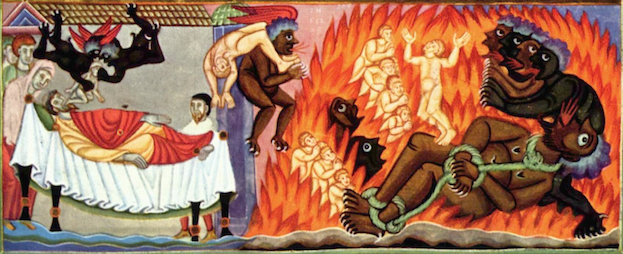
Mechanically reconstructing to Hebrew Greek texts found in Matthew, Mark and Luke on the basis of Septuagintal equivalents can widely miss the mark.