
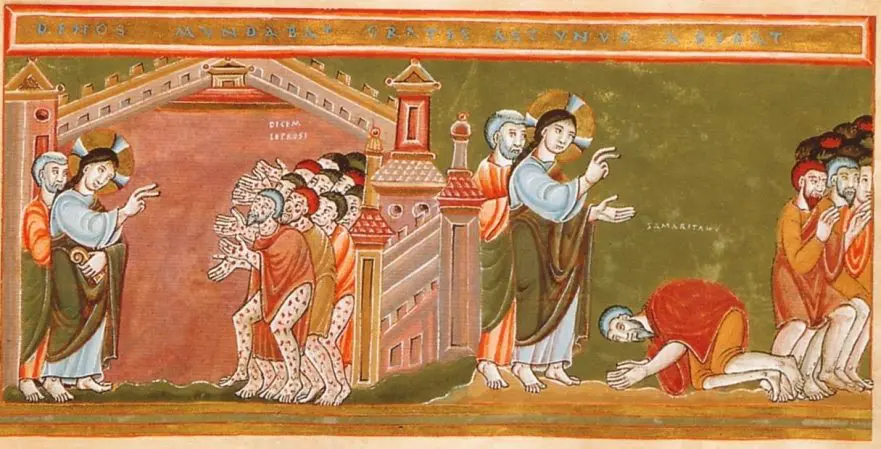
It is always our duty to ask ourselves whether the kind of speech we voice and the kind of rhetoric we listen to engenders respect for our neighbor, no matter how different she or he might be from ourselves, or whether it is sowing the seeds of hatred and violence.
Matthew 2:1-23: A Nazorean Shall Be Called
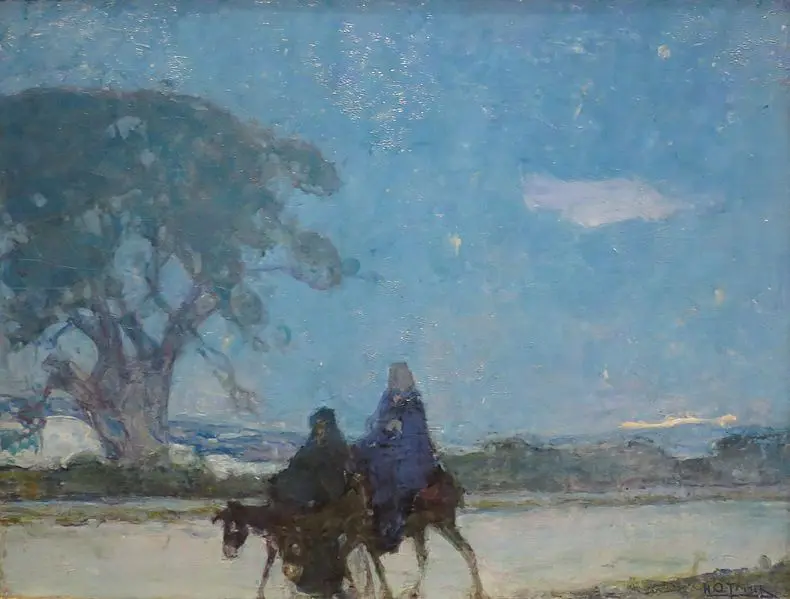
Where in the Hebrew Scriptures is it expected that the Redeemer will be called a Nazarene or come from Nazareth?
The Significance of Jesus’ Words “Not One Jot or One Tittle Will Pass from the Law” (Matt. 5:18)
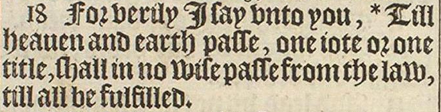
“Jot” and “tittle” are not everyday words in English. What do they mean and how should Jesus’ words in Matthew 5:18 be understood? Jerusalem Perspective‘s editor-in-chief, David Bivin, tackles these questions on behalf of a subscriber’s request for help.
Evidence for Hebrew Roots of Matthew 1:21

The oldest known manuscripts of the New Testament were written in Greek, but by comparing Matt. 1:21 in Hebrew, Aramaic and Greek with the knowledge of the naming formula so common in the Hebrew Bible, we see that this verse only makes sense in Hebrew. Since the naming formula depends on a wordplay that does not work in Greek or Aramaic, Matt. 1:21, or the oral tradition behind it, had to be in Hebrew.
The Gospel of John’s Jewish-Christian Source

In an important study entitled The Gospel of Signs, Robert Fortna correctly identified a Jewish-Christian source embedded in the Fourth Gospel. This article is based upon the conclusions of Fortna’s research and explores their significance. I will also point out additional evidence Fortna overlooked that clarifies the origins and intentions of the Jewish-Christian source embedded in the text of the Fourth Gospel.
The Major Importance of the “Minor” Agreements

In this article, Dr. Robert Lindsey discusses the importance of the so-called “minor agreements” of Luke and Matthew against Mark for properly understanding the interrelationship of the Synoptic Gospels. David N. Bivin and Joshua N. Tilton collaborated with Lauren Asperschlager to bring this article, which previously existed only as an unfinished draft, to Jerusalem Perspective subscribers.
Chickens and the Cultural Context of the Gospels

One aspect of the cultural context of the Gospels that is often overlooked is the role played by animals. In this article I will explore the significance of chickens in first-century Jewish culture and the part they play in the story of Jesus.
Who Made the “Omission,” Luke or Mark?
Did Luke see and omit Mark 6:45-8:21, or did Mark see and omit Luke 9:51-18:14? The present article explores the possibility that the Markan pericope, “What Makes a Person Impure” in Mark 7:1-23 is dependent upon the Lukan pericope on “Discourse against the Pharisees” in Luke 11:37-41.
Jesus the Galilean, a Stranger in Judea?
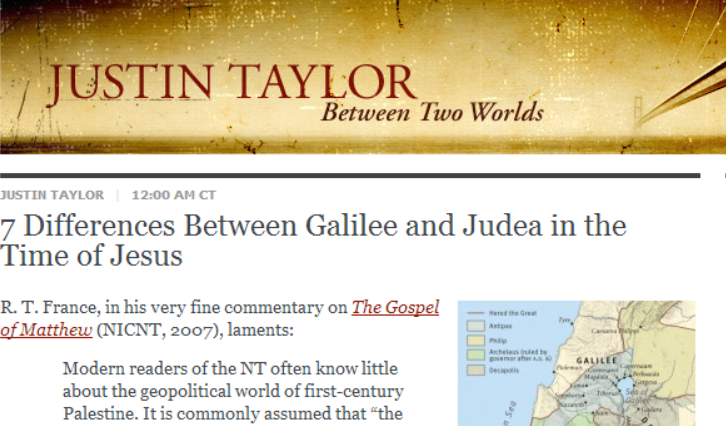
Follow Garcia as he challenges Taylor’s work and brings about the conclusion that “We should attribute any differences between Galileans and Judeans primarily to issues of opposing halakhic opinions.”
A Goy’s Guide to Ritual Purity

The concept of ritual purity is perhaps one of the most difficult concepts in the Bible for people to grasp today. Whereas in many “traditional” societies the concept of ritual purity was (and is) taken for granted in daily life, the whole framework for the concept of ritual purity is totally foreign to the secular western mindset.