

In a beautiful statement that probably referred to the Kingdom of Heaven, Jesus proclaimed to his disciples, according to Luke, that “many prophets and kings” desired to see and hear what they (his disciples) are seeing and hearing. Matthew preserves the same saying, but in Matthew’s account the doublet is, “prophets and righteous persons.” The wording of Jesus’ saying in these two accounts is so similar that it appears likely that their slight differences reflect literary, or editorial, changes rather than different versions of the saying uttered by Jesus on different occasions. If so, which of these gospel accounts preserves the more original form of Jesus’ saying? Did Jesus say “prophets and kings” or “prophets and righteous persons”?
Jesus and the Essene Passover

Fifty years of scholarship concerning the Dead Sea Scrolls have brought clearer understanding concerning a fascinating stream of Jewish piety which existed during the final days of the Second Temple.
First-century Jewish Use of Scripture: Evidence from the Life of Jesus

Through the window of a single New Testament episode we can gain insight into how Jesus and his Jewish contemporaries employed sacred texts with creative ingenuity to grapple with the complex issues of their day.
The Cross and the Jewish People
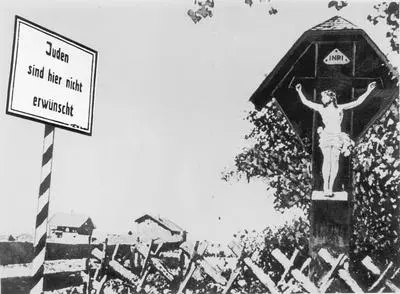
One of the most poignant pictures which exemplify the chasm of historical misunderstanding between Jews and Christians is that found in Yad Vashem, the Holocaust memorial in Jerusalem. It is a photograph of a life-size crucifix that stood outside an unknown German village prior to World War II. In a twist of tragic irony a sign was hung on the cross to warn Jews not to enter the village. It read: “Jews are not welcome here.”
Let Him Who Is Without Sin…
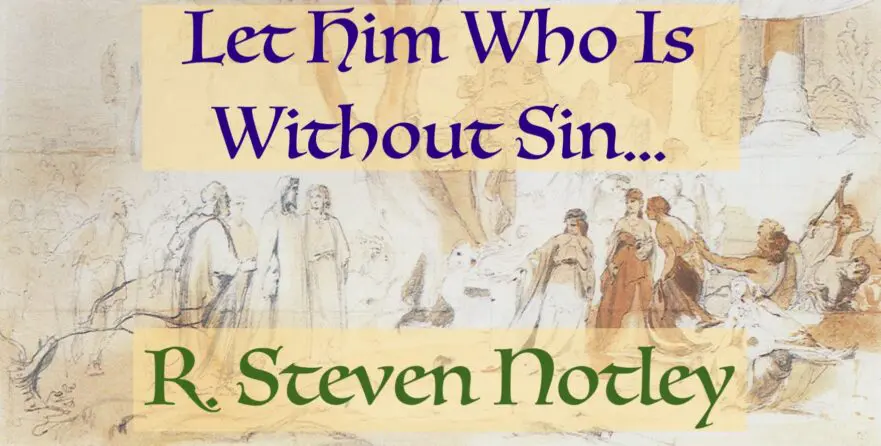
When the story of the woman caught in adultery (John 7:53-8:11) is read within the setting of the Second Temple period, it resonates with authentic attitudes and issues.
The Synagogue the Centurion Built
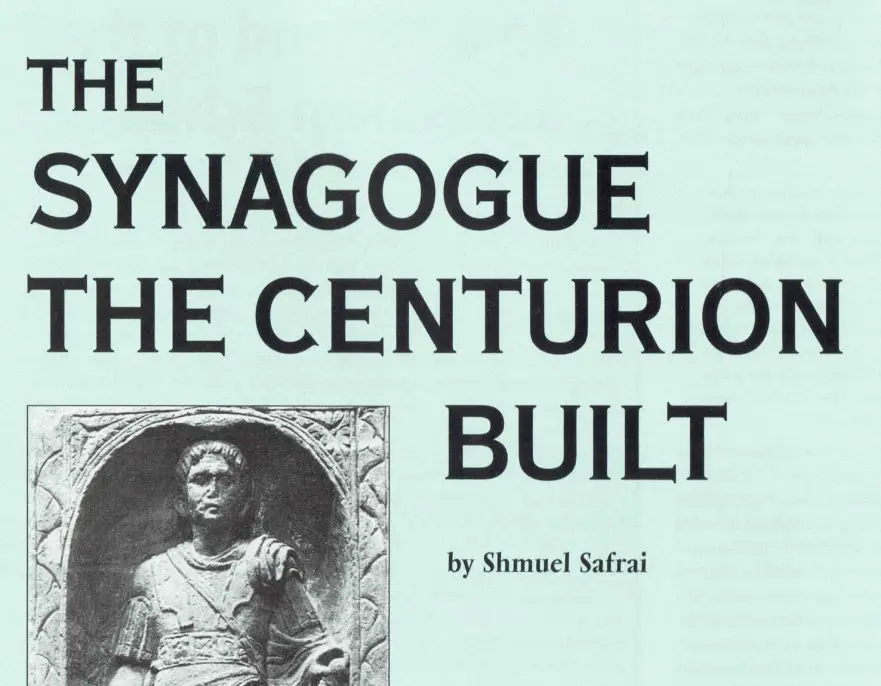
Would a Roman officer have had the means to finance the construction of a synagogue in the lakeshore town of Capernaum?
The “Desert” of Bethsaida
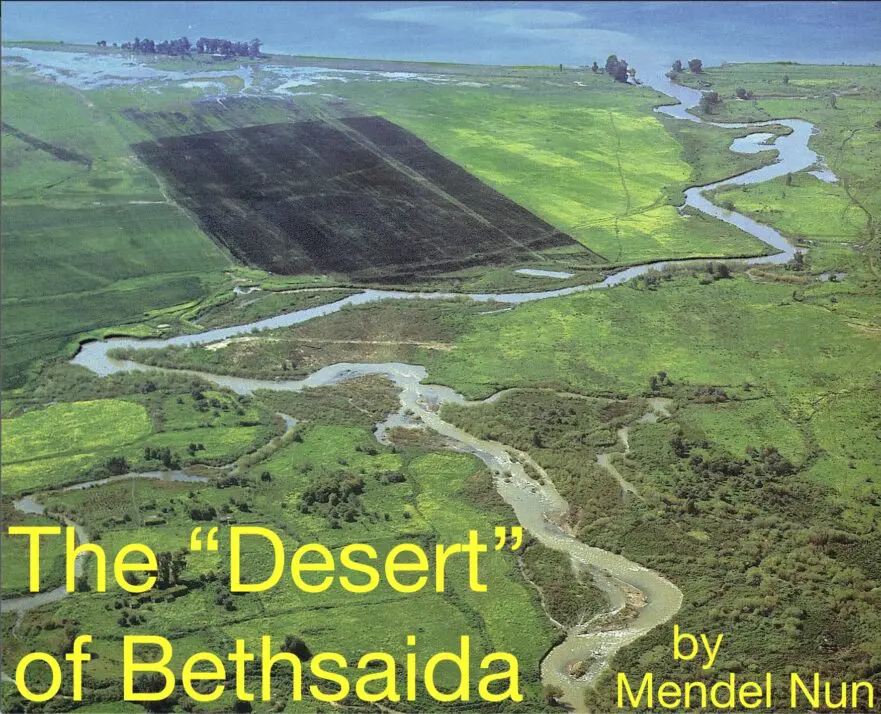
By analyzing the meaning of the word translated “desert,” the topography at the Feeding of the Five Thousand can be clarified.
One Torah Reader, Not Seven!
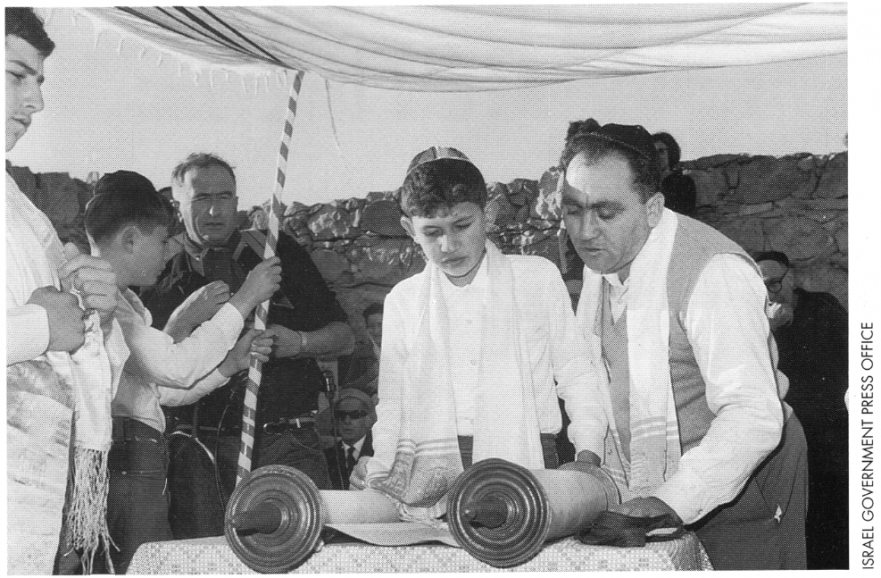
Only around 100 A.D. did it become the custom to have the weekly Torah portion read by seven persons.
Paraphrastic Gospels
As Robert Lindsey realized in 1962, Mark reworked Luke’s Gospel in writing his own. Mark liked to substitute synonyms for nearly anything that Luke wrote. If, for instance, Luke used the singular of a noun, Mark substituted the plural form of the same noun in writing his Gospel. And vice versa: if Luke used the plural, Mark substituted the singular. In this article, Robert Lindsey surveys a unique substitution category found in Mark’s Gospel: the replacing of one verse of Scripture with another.
Gergesa: Site of the Demoniac’s Healing

The recent discovery of many of the ancient harbors that ringed the Sea of Galilee is an exciting chapter in Sea of Galilee research. One of these harbors is located at Kursi, ancient Gergesa. In this article, Mendel Nun contends that the demoniac’s healing and the miracle of the swine took place at Gergesa, not Gadara or Gerasa.