

Flusser and Safrai’s premise is that “blood” in this passage does not refer to the consumption of blood but rather to murder. They conclude that the apostolic decision prohibiting eating meat sacrificed to idols, fornication, and blood is equal to the rabbinic decree that under penalty of death a Jew may violate any of the commandments of the Torah with the exception of idolatry, adultery and murder.
Unintentional Anti-Semitism in the Church

I heard an all too familiar theme surface in an otherwise good sermon with regard to the recognition and acceptance of Jesus as Messiah: “The Jews just missed it!” Sadly, this affront by categorization also shows a total lack of recognition of the role of Jews in the early church and in their making the message of salvation through Yeshua (Jesus) available to non-Jews. It is as if Yeshua appears on the scene, is rejected by the Jews, but is welcomed with open arms by the non-Jews.
The Apostolic Decree and the Noahide Commandments
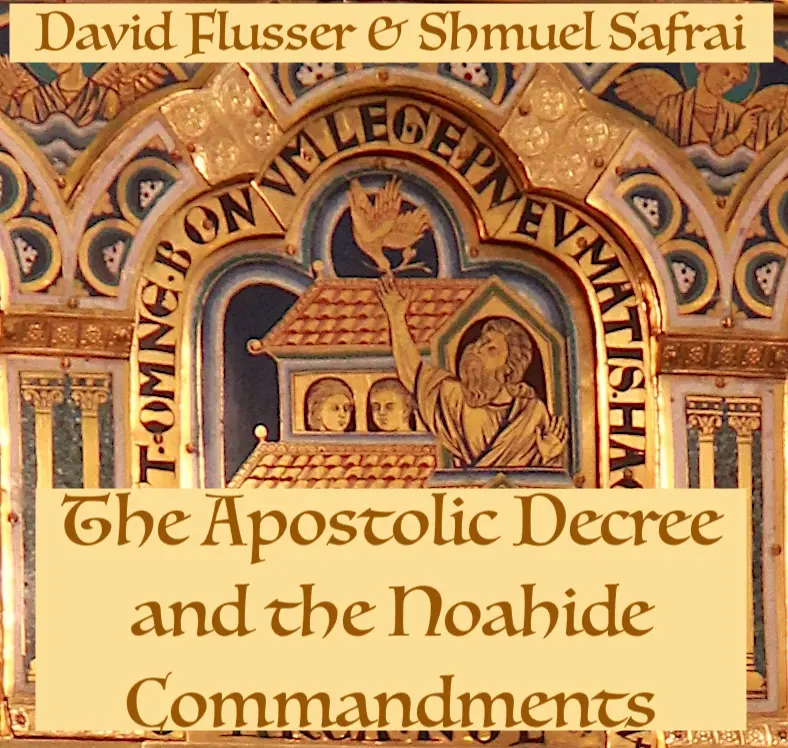
Jerusalem Perspective is pleased to make available to the English-speaking world this important article written originally in German by David Flusser and Shmuel Safrai: “Das Aposteldekret und die Noachitischen Gebote,” in Wer Tora mehrt, mehrt Leben: Festgabe fur Heinz Kremers (ed. E. Brocke and H.-J. Borkenings; Neukirchen-Vluyn, 1986), 173-192.
Blessedness of the Twelve

Without a knowledge of the saying’s context, Jesus’ saying about eyes and ears and prophets and righteous men, seems quite prosaic. However, when it is understood that this saying deals with the Kingdom of Heaven, it becomes one of Jesus’ most exciting and dramatic statements.
The Surprise of Finding Anti-Semitism in the Heart of the Early Church Fathers
“The other disease which my tongue is called to cure is the most difficult… And what is the disease? The festivals of the pitiful and miserable Jews which are soon approaching.” — Saint John Chrysostom (349-407)
Measure For Measure

Some of the things Jesus emphasized in his teachings stand as strong warnings to those who belong to the community of faith. Jesus made statements about not lapsing into prideful judgmentalism, and becoming centripetal in one’s thinking. Jesus taught that our attitude toward other people—outsiders, even sinners—must be like God’s.
A Theology of Jewish-Christian Relations

This piece of writing is a rare glimpse of David Flusser the theologian. Flusser, who died in Jerusalem in 2000, penned the article as an introduction to Israel, God’s Key to World Redemption, a book written in 1974 by his close friend, the late Elmer A. Josephson. In 1956 Josephson founded Bible Light International, a non-profit religious organization that seeks to “arouse the Christian evangelical community’s conscience toward the emerging nation of Israel and stimulate expressions of encouragement to the Jewish community in its Zionist aspirations.” Jerusalem Perspective Online wishes to thank Bible Light International for permission to publish this article in electronic format. Jerusalem Perspective supplied the article’s title. — JP
Reflecting on David Flusser’s Vision

The term “genius” readily appears on the lips of scholars at the Hebrew University in Jerusalem when they refer to their former colleague, David Flusser (1917-2000). This word, which was understandably mixed with more critical words, was shared with me repeatedly the years I was Lady Davis Professor in the Hebrew University.
The Approval of Abraham: Traditions of God’s Acceptance of Abraham in Early Jewish and Christian Sources
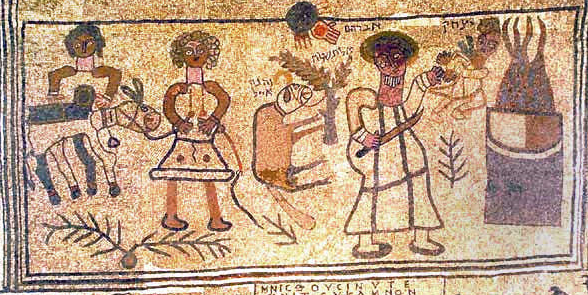
When, in ancient times, people read the account of the life of Abraham, it was common for them to ask, “When did Abraham finally make the grade? At which point in his life was Abraham approved and accepted by God?”
Fishers and Hunters: A Fishy Reading of Jeremiah 16:16
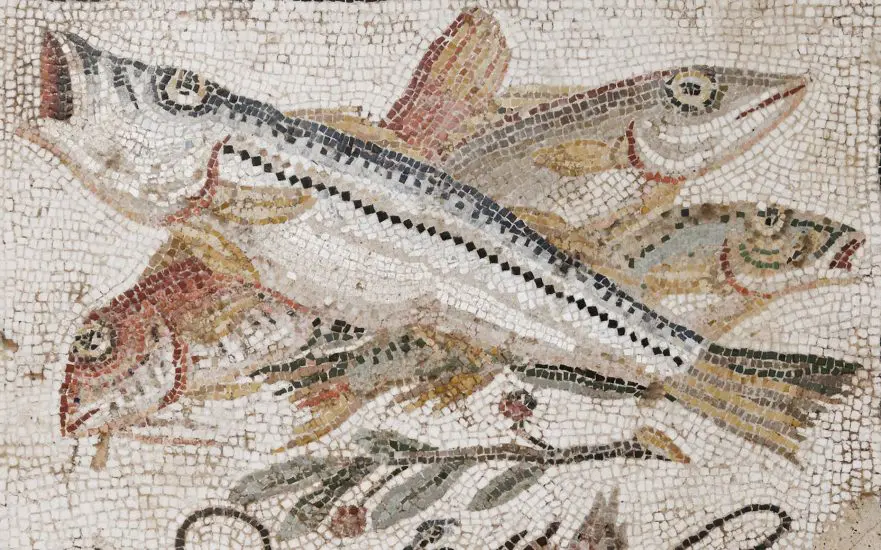
Based on on a “fishy” interpretation of Jeremiah 16:16, some Christians see it as their duty to warn Diaspora Jews of a coming persecution.