Jesus gave his disciple Peter the “keys of the kingdom of heaven” and promised that whatever Peter “bound” and “loosed” on earth would be “bound” and “loosed” in heaven. What scriptural allusions lurk beneath these expressions and what are their implications? How does the Jewish literary background of Matthew 16:19 help us better appreciate Jesus’ words?
Jesus and the Hasidim

How do we define Jesus within first-century Jewish society? To which of the various Jewish sects does he belong? Was he a Pharisee, an Essene? After years of painstaking research, Shmuel Safrai has identified a new stream within the Judaism of Jesus’ time: the Hasidic movement. This may be a major breakthrough in New Testament studies, as well, because the picture Safrai paints of the Hasidim is amazingly similar to what we know about Jesus. Jesus, who was quite close to the Hasidim and perhaps even involved with some of them, does not reflect Galilean boorishness or ignorance, but rather the dynamism and ongoing creativity of Jewish life in Galilee.
The Place of Women in First-century Synagogues
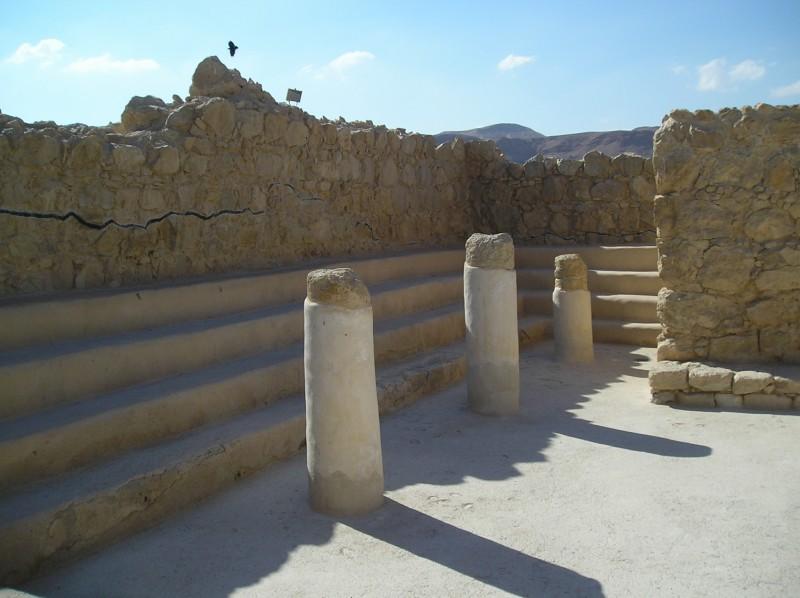
Today, public worship can take place in a synagogue only if at least ten adult Jewish males are present. Women do not qualify as part of this quorum. Furthermore, women are separated from men within the synagogue: women worship in an ezrat nashim, a balcony, or section with a divider, located beside or behind the men’s section. Things were considerably different in Jesus’ day.
Literary Languages in the Time of Jesus

Not only was Hebrew the most prevalent spoken language in the land of Israel during the first century, it was also the language in which most literary works were written.
What Is the Priest Doing? Common Sense and Culture

Common sense is connected to cultural expectations. What is understandable in one culture may be opaque in another.
Spoken Languages in the Time of Jesus

Professor Safrai presents an overview of the three languages used in the land of Israel during the days of Jesus, and concludes that Hebrew was the primary language spoken by the Jewish residents at that time.
Master and Disciple

To understand the relationship between a first-century master and his disciples, one must appreciate the central role of Torah in ancient Jewish society.
A Friend of Tax Collectors

Tax collectors were especially hated because they increased their profit by collecting more taxes than their masters actually demanded.
Synagogue and Sabbath

The description of Jesus’ visit to the Nazareth synagogue found in Luke provides substantial information about synagogue life and customs in the early first century C.E.