
The complete 2006 lecture is now accessible to JP users. View now!
Myth of the Pagan Origins of Christianity
The artificial constructions of scholars who once sought to build a bridge directly from Hellenism to Christianity are being dismantled, both because of greater knowledge of the Greek world and due to more intensive study of ancient Jewish and Christian thought.
The Apostolic Decree and the Noahide Commandments
Jerusalem Perspective is pleased to make available to the English-speaking world this important article written originally in German by David Flusser and Shmuel Safrai: “Das Aposteldekret und die Noachitischen Gebote,” in Wer Tora mehrt, mehrt Leben: Festgabe fur Heinz Kremers (ed. E. Brocke and H.-J. Borkenings; Neukirchen-Vluyn, 1986), 173-192.
From Melchizedek to Jesus: The Higher Eternal Priest in Jewish Second Temple Literature
A scroll from the Judean Desert proves that the biblical Melchizedek was transformed into the eschatological high priest in some Jewish circles in the first century B.C.E.
From Ezekiel 17:24 and 21:3 to Luke 23:31: A Survey of the Connecting Jewish Tradition

“For if they do these things in a green tree, what shall be done in the dry?” (Luke 23:31; KJV) Passages such as this demonstrate the indispensability of situating the teachings of Jesus within the context of Second Temple Period history, culture, literature, and language.
Hebrew as a Spoken Language in First-century Israel
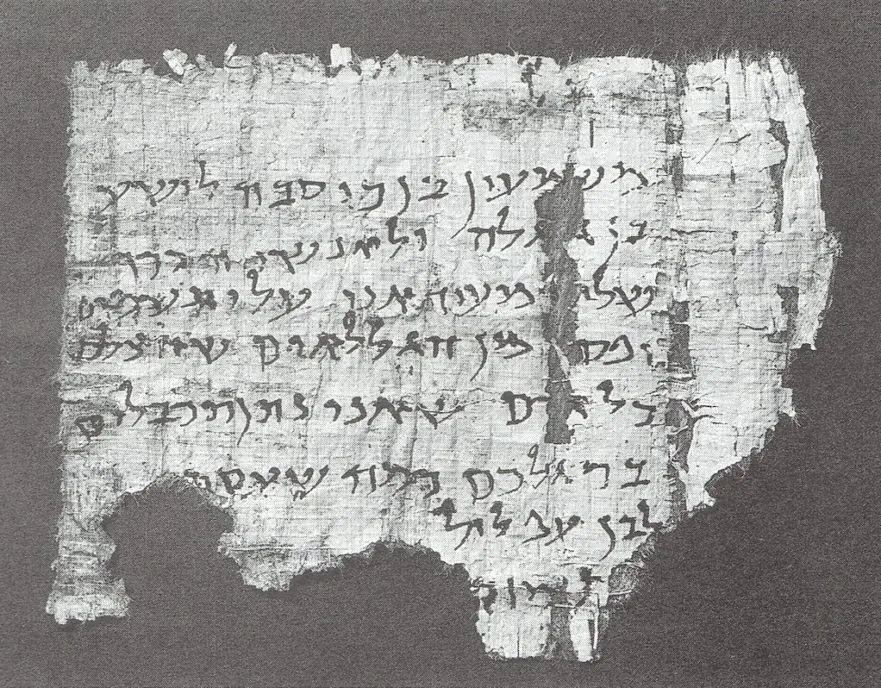
Hebrew was a living language in first-century Israel, part of a multilingual environment (Hebrew, Aramaic and Greek).
Hananiah Notos: The Never-ending Importance of the Dead Sea Scrolls
One of the recently published Dead Sea Scroll documents is known as the “Register of Rebukes.” Only parts of eleven lines of a column of this document have survived. However, even these few words and parts of words are enough to see that the document, or a portion of it, was a list of the sect’s members who were rebuked because they had violated community laws.
Jesus’ Jewish Command to Love

Jesus’ command to “love your enemies” was revolutionary! No one before him dared to raise such a high standard for the life of faith.
First-century Jewish Use of Scripture: Evidence from the Life of Jesus

Through the window of a single New Testament episode we can gain insight into how Jesus and his Jewish contemporaries employed sacred texts with creative ingenuity to grapple with the complex issues of their day.
The Qumran Targum of Job as a Window into Second Temple Judaism: A Response to Randall Buth’s “Where Is the Aramaic Bible at Qumran? Scripture Use in the Land of Israel”

How does one explain the sparseness of the Qumran targumic corpus?
- Page 1 of 2
- 1
- 2