

I appreciate this opportunity to return to some issues concerning the Targum of Job that I raised in Where Is the Aramaic Bible at Qumran? Scripture Use in the Land of Israel and to evaluate Jack Poirier’s response entitled, The Qumran Targum of Job as a Window into Second Temple Judaism: A Response to Randall Buth.
Where Is the Aramaic Bible at Qumran? Scripture Use in the Land of Israel

The documents at Qumran allow us to reconstruct Scripture access in the Province of Judea in the first century. From the evidence, we must assume that the Qumran community and the other Jewish communities in the land had direct access to the Hebrew Bible, generally understood it, and were interested in teaching that related directly to the Hebrew text.
Us and Them: Loving Both

In ancient Roman society, the taking of revenge on an enemy was considered a commendable deed, but Jesus encouraged his followers to “Love your enemies.”
Design and Maintenance of First-century Ritual Immersion Baths
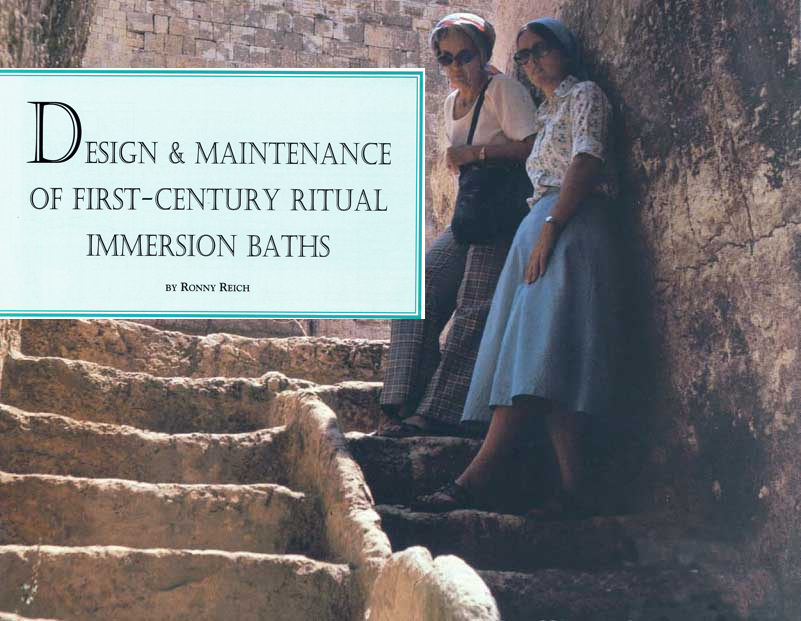
Archeologists and other scholars have not written prolifically about ancient mikvaot (or ritual immersion baths). Nevertheless, ritual immersion in the first century A.D. constitutes an important element of the overall historical, social and religious background of the New Testament. Here, Ronny Reich explains in non-technical language the intricacies of the design and maintenance of ancient mikvaot.
From Allegro to Zeitlin

In this article the author explains his view that the output of cheap, pseudo-scholarship has driven legitimate, serious scholarly information from the marketplace of ideas.
The Library at Qumran
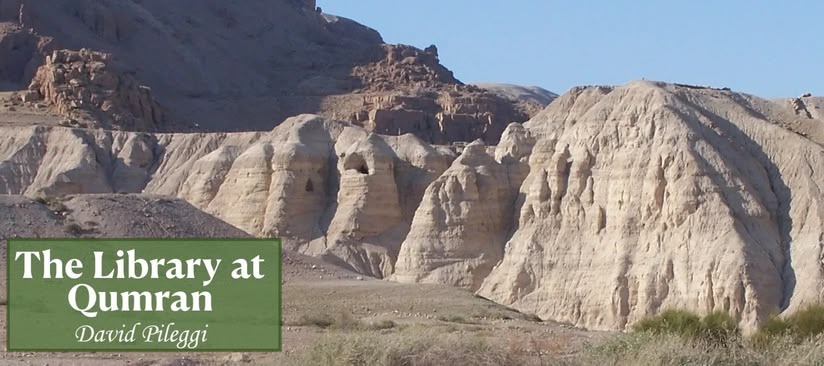
In the middle of the last century two Bedouin shepherds of the Ta’amra tribe found the first of the Dead Sea Scrolls. Their discovery created an exciting new area of biblical research.

Book Review: David Flusser’s The Spiritual History of the Dead Sea Sect
Based on a series of radio lectures, the book retains much of its original conversational tone and structure, but has been expanded to present a more detailed overview.
The Sons of His Will

Christmas brings many carols and cards containing the words from Luke 2:14, “Goodwill to men” and “Peace to men of goodwill.” The angels praised God with words that in English may sound like a politician wishing us to “Have a nice day.” Most of us sense that these words reflect something deeper, but why did the angels use such seemingly innocuous words?
- Page 2 of 2
- 1
- 2