
Doubling, or repeating, is a characteristic feature of Hebrew. Hebrew loves to say things twice (or more!) by adding equivalents. Words, phrases, sentences, and even stories, are doubled (or tripled).
Cataloging the Gospels’ Hebraisms: Part Three (Impersonal “They”)

Awareness of even the simplest Hebrew grammatical structure can bring to life a vague, or difficult-to-understand, saying of Jesus. Since potential Hebrew idioms are so dense in the Greek texts of Matthew, Mark and Luke, one has to ask, Could these apparent Hebrew idioms be evidence that the synoptic Gospels are descendants of an ancient translation of a Hebrew “Life of Jesus,” the gospel that the church father Papias spoke of when he wrote: “Matthew…arranged the sayings [of Jesus] in the Hebrew language”?
The “Hypocrisy” of the Pharisees

Without reading the Scriptures carefully, and without a familiarity with Second Temple-period extra-biblical sources, a simple reader of the New Testament might assume that a majority of the Pharisees were hypocrites and that the Pharisees as a movement were indeed a “brood of vipers.” As a result of this common Christian assumption, the word “Pharisee” has become a synonym for “hypocrite” in the English language.

Evidence of an Editor’s Hand in Two Instances of Mark’s Account of Jesus’ Last Week?
It has been noted that in instances where Mark’s editorial hand restructured his story, Luke has preserved a more primitive form of the account, a form that is independent of Mark’s influence. Gospel scholars need to properly evaluate Mark’s editorial style and acknowledge that frequently a theological agenda influenced his rewriting.
Jesus and the Enigmatic “Green Tree”
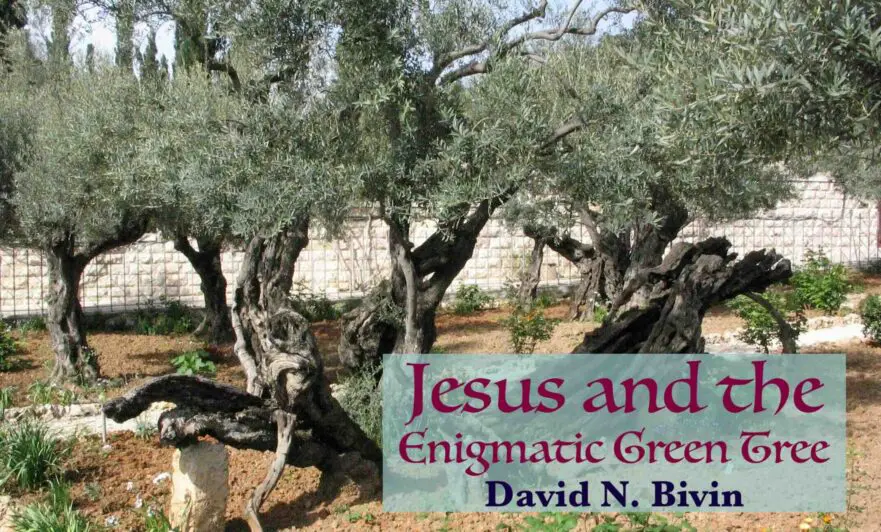
Jesus made bold messianic claims when he spoke. To thoroughly understand these claims, however, we must get into a time machine and travel back in time to a completely different culture, the Jewish culture of first-century Israel. We must acculturate ourselves to the way teachers and disciples in the time of Jesus communicated through allusions to Scripture.
Keys of the Kingdom: Allusion to Divinity?
The more we know and understand the historical, cultural and linguistic background of the Bible, the more we are able to discern elements in the biblical text that heretofore have gone unnoticed. These can be elements that can greatly increase our understanding of the biblical text, reinforce our traditional conceptions, or at times radically transform our understanding by revealing totally unexpected information that affects how the texts would have been originally understood.
The Value of Rabbinic Literature as an Historical Source
The thesis of this article is that rabbinic sources, when used in a careful manner, can provide reliable historical material pertaining to the Second Temple period. If this thesis is accepted, the consequences for the study of the New Testament Gospels are obvious.
Mark 7:19: Did Jesus Make “Unclean” Food “Clean”?
One should not be too quick to throw out large portions of the Torah because of a four-word parenthetical comment by Mark at the end of a long halachic discussion.
Links with Tabernacles and Hanukkah in the Gospel Accounts of Palm Sunday
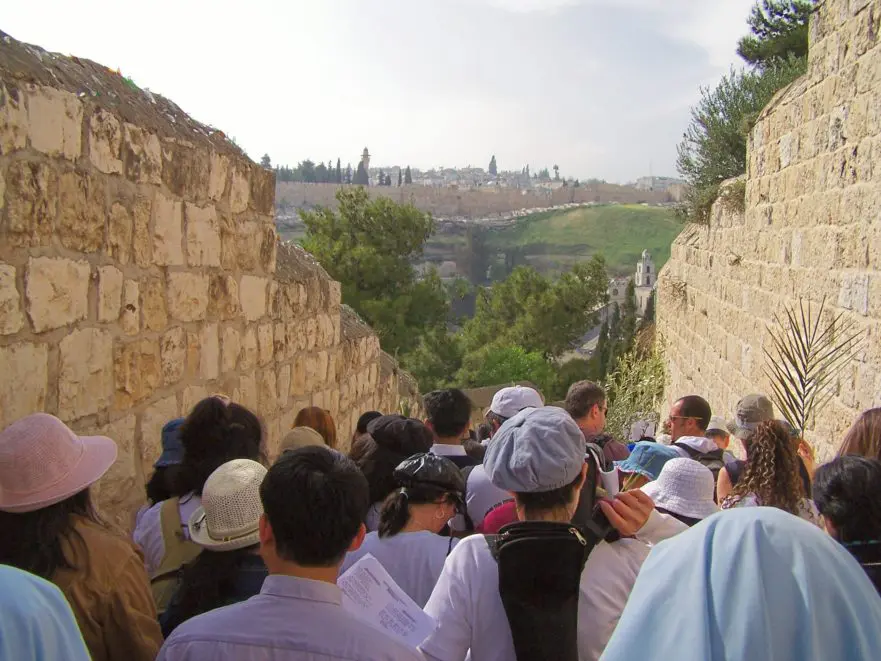
The Gospel writers wished their readers to be reminded of Hanukkah when they read the account of Palm Sunday.