
We are now in the middle of Passover week and one frequently hears the question, “And where did you go for the Seder [the special home service on the first night of Passover]?” Answers are varied: “To my family’s home.” “To friends.” “To a hotel in Eilat.”
I happily stand corrected!
After reading my “Jehovah, A Christian Misunderstanding” article, a Jerusalem Perspective Member provided several impressive references, pointed out that the Christian reading “Jehovah” can be traced to Raymond Martin’s Pugeo Fidei (1270 A.D.), and may have originated much earlier, even as early as the ninth century!
A Response to Kilty and Elliott on the Talpiot Tomb

The calculations of Kevin Kilty and Mark Elliott have an after-the-fact particularity to them that belies their claim to be dealing with probabilities.
Covered in the Dust of Your Rabbi: An Urban Legend?

Some months ago, pastor-blogger Trevin Wax posted an article called “Urban Legends: The Preacher’s Edition.” There he lists several “urban legends” that he’s heard floating around lately in sermons. Like Internet rumors that people forward on ad infinitum, these preaching illustrations don’t have much grounding in fact.
The Jewish Cultural Nature of Galilee in the First Century

The prevailing opinion among New Testament scholars is that first-century Galilee was culturally and spiritually deprived, and that, therefore, Jesus came from an underdeveloped and backward Jewish region of the land of Israel. Professor Safrai here presents massive evidence against this view.
Links with Tabernacles and Hanukkah in the Gospel Accounts of Palm Sunday

The Gospel writers wished their readers to be reminded of Hanukkah when they read the account of Palm Sunday.
A Different Way to Reckon a Day

Jesus may have been confined to Joseph of Arimathea’s tomb for a period of time no longer than about 26 hours.
Jehovah and PIPI
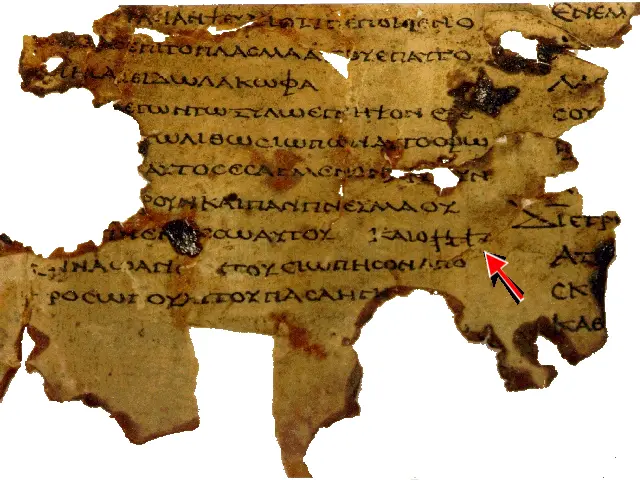
According to Jerome, those who were unfamiliar with Jewish customs tried to pronounce the Hebrew letters as if they were Greek letters. The result was quite a howler: they pronounced YHVH as PIPI!
Over and Under-Familiarity with Matthew 6:11

Hearing something repeatedly can diminish its significance. I suspect that this is particularly true of Scripture. Overfamiliarity with a biblical passage can contribute to its misunderstanding. Sometimes it can reduce a profound saying to nothing more than a cliché.
Rabbinic Reflections on Living Sacrifices at Romans 12:1

Paul mentions the living sacrifices without explanation, as if the readers would be familiar with the concept. Similar early rabbinic vocabulary suggests that Paul is referring to sacrifices which were given to the Temple but which were inappropriate for offering, because they were female instead of male or for other technical reasons. They could not be un-offered so, although they were sacrifices, they were kept alive as temple property till they became blemished, and any profit from them was for the Lord.