
Rather than being treated as liabilities to a statistical study, conjectured details are turned into historical givens and are even factored in as positive data. Consequently, most of the connections made in the documentary fall under the heading of “special pleading.”
Jesus’ Folded Napkin (John 20:7): Is it significant that Jesus’ burial napkin was found in the empty tomb folded?

The false theory that the folded “napkin” in Jesus’ tomb has deep spiritual significance is a good opportunity for us to sharpen our critical thinking skills.
Jesus’ Reference to Folklore and Historical Events
An inherent consequence of our distance from the world of Jesus is that we primarily understand Jesus’ words as they apply within our twenty-first century eschatological and theological framework. However, Jesus’ teachings reflect his cultural background as a Jewish rabbi in first-century Galilee.
A Time to Fast?

Once, when Jesus and his disciples were enjoying themselves at a dinner party, a simple observation was made: “Your disciples don’t fast!” The observation was innocent and simple enough; it was not an accusation, but an honest exclamation of perplexity. Jesus’ response, however, was far from simple.
Hananiah Notos: The Never-ending Importance of the Dead Sea Scrolls
One of the recently published Dead Sea Scroll documents is known as the “Register of Rebukes.” Only parts of eleven lines of a column of this document have survived. However, even these few words and parts of words are enough to see that the document, or a portion of it, was a list of the sect’s members who were rebuked because they had violated community laws.
Call No Man “Father”

The word abba (אַבָּא), which literally means “the father” in Aramaic, but also can mean “our father” or “my father,” was brought into Hebrew and used in the endearing sense of “daddy.”
Another Look at the “Cleansing of the Temple” Story

Based on archaeological excavations near the southern wall of the temple, the research of Shmuel Safrai, and a nuance of the Hebrew verb that is one of the equivalents for Greek ekballein (drive out, banish; throw out; throw away, reject; cast out of a place, expel; remove, get rid of; put out), it may be necessary to reinterpret the gospel accounts of Jesus’ “cleansing” of the temple, even suggesting a different location for Jesus’ action.
Let the One Who Has Ears to Hear, “Hear!”
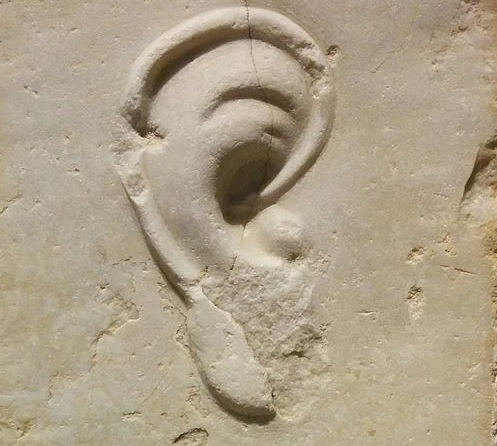
Gospel parables are probably the most widely identifiable teaching form of Jesus. However, readers seldom recognize Jesus’ sophisticated skill as a first-century Jewish parabolist. Indeed, many Christians are unaware that his use of story parables is one of the strongest links between Jesus and contemporary Jewish piety. His parables also demonstrate that Jesus taught in Hebrew.
The Teaching of Balaam
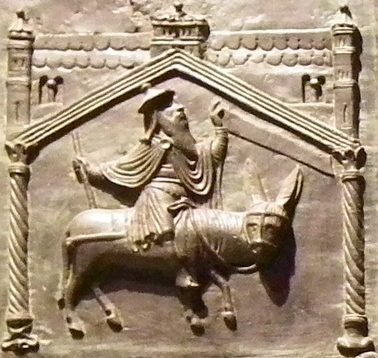
Revelation 2:12-16 is one of those occasions when it is necessary for the Christian reader to be familiar with first-century Jewish interpretation of an Old Testament account.
Joy Comes in the Morning
April here in Israel was a month of mixed emotions, a mixture of joy and sorrow. There were two major commemorations: Holocaust Remembrance Day (April 19) and Memorial Day (April 25); and two major joyous celebrations: Pesach, or Passover (April 8-14), and Independence Day (April 26).