

How a promise of safe harbor evolved into a prophecy of the end.
LOY Excursus: The Genitive Absolute in the Synoptic Gospels

What can the distribution of genitive absolute constructions in the Gospels of Matthew, Mark and Luke tell us about the origins of the Synoptic Gospels?
The Significance of Jesus’ Words “Not One Jot or One Tittle Will Pass from the Law” (Matt. 5:18)
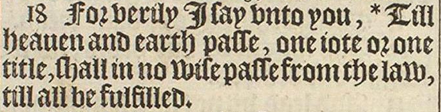
“Jot” and “tittle” are not everyday words in English. What do they mean and how should Jesus’ words in Matthew 5:18 be understood? Jerusalem Perspective‘s editor-in-chief, David Bivin, tackles these questions on behalf of a subscriber’s request for help.
Choosing the Twelve
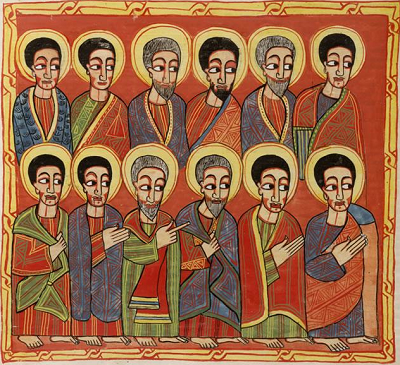
One day Yeshua called his disciples together and chose twelve of them to be his emissaries to Israel. Their names were Shimon Petros and Andrai (his brother), Yaakov, Yohanan, Pelipah, Talmai’s son, Matai, Tomah, Yaakov Halfi’s son, zealous Shimon, Yehudah Yaakov’s son, and Yehudah from Keriyot, who was a traitor.
Evidence for Hebrew Roots of Matthew 1:21

The oldest known manuscripts of the New Testament were written in Greek, but by comparing Matt. 1:21 in Hebrew, Aramaic and Greek with the knowledge of the naming formula so common in the Hebrew Bible, we see that this verse only makes sense in Hebrew. Since the naming formula depends on a wordplay that does not work in Greek or Aramaic, Matt. 1:21, or the oral tradition behind it, had to be in Hebrew.
Video Clip: David N. Bivin on “The Value of Translating Matthew, Mark and Luke to Hebrew”
In this video Jerusalem Perspective‘s editor-in-chief, David Bivin, demonstrates how translating Jesus’ sayings into Hebrew can provide clearer insight into Jesus’ message.
The Major Importance of the “Minor” Agreements

In this article, Dr. Robert Lindsey discusses the importance of the so-called “minor agreements” of Luke and Matthew against Mark for properly understanding the interrelationship of the Synoptic Gospels. David N. Bivin and Joshua N. Tilton collaborated with Lauren Asperschlager to bring this article, which previously existed only as an unfinished draft, to Jerusalem Perspective subscribers.
Tower Builder and King Going to War Similes

The Tower Builder and King Going to War similes explain why Jesus thought full-time discipleship was not suitable for everyone.
Notley Lecture: “Between the Chairs: New Testament Evidence for the Hebrew Jesus Spoke”
Dr. R. Steven Notley is a contributor to Jerusalem Perspective and member of the Jerusalem School of Synoptic Research. He is Professor of New Testament and Christian Origins at Nyack College in New York. In this lecture Dr. Notley discusses examples of how the Hebrew language influenced the Greek text of the canonical Gospels.
Demands of Discipleship

“Anyone who wants to join me but puts family ties or love of self ahead of me cannot possibly be my full-time disciple. Anyone who is not prepared to die cannot possibly be my full-time disciple. Anyone who does not renounce his possessions cannot possibly be my full-time disciple.”
LOY Excursus: The Kingdom of Heaven in the Life of Yeshua

In this excursus to the Life of Yeshua commentary, David N. Bivin and Joshua N. Tilton delve into the ancient Jewish concept of the Kingdom of Heaven and discuss the ways in which Jesus made use of this concept in his own unique style.
Hidden Treasure and Priceless Pearl Parables

Supposing that these twin parables once belonged to the same narrative-sayings complex as the Rich Man Declines the Kingdom of Heaven incident enables us to understand their message. Jesus’ demand that the rich man sell everything wasn’t an onerous or unreasonable request; to the contrary, Jesus had offered the rich man an extraordinary bargain.
Widow’s Son in Nain
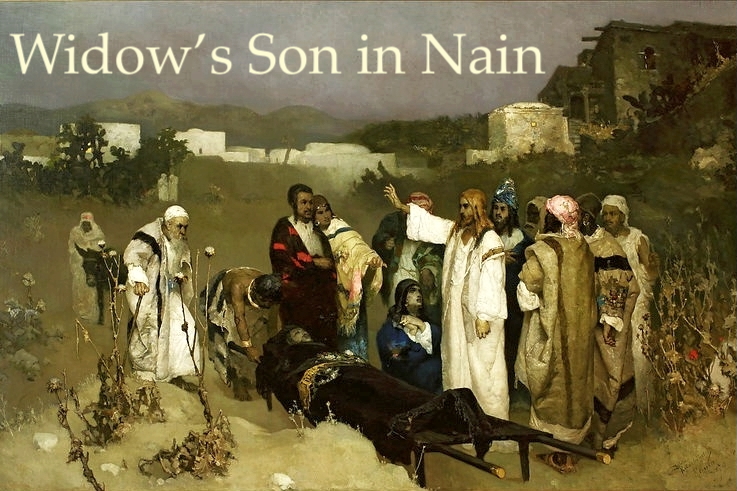
In Widow’s Son in Nain, David Bivin and Joshua N. Tilton ask “Which Nain was the town where Jesus raised the widow’s son?” and “What is the meaning of the people’s exclamation that a prophet had arisen among them?” The possibility of a Judean ministry early in Jesus’ career and of the messianic connotations of the Widow’s Son in Nain story are discussed in detail in this segment of the Life of Yeshua commentary.
LOY Excursus: Greek Transliterations of Hebrew, Aramaic and Hebrew/Aramaic Words in the Synoptic Gospels

One of the clues that the Synoptic Gospels descended from a Hebrew Life of Yeshua is the number of foreign words that were transliterated into Greek from either Hebrew or Aramaic (it is often impossible to distinguish Hebrew from Aramaic in Greek transliteration).
Foreword to Robert Lindsey’s A Hebrew Translation of the Gospel of Mark

It seems clear that Lindsey’s observations have provided a decisive new clue to understanding the synoptic relationships and an equally important clue to the correct approach to the Gospel of Mark.
“Verily” or “Amen”—What Did Jesus Say?
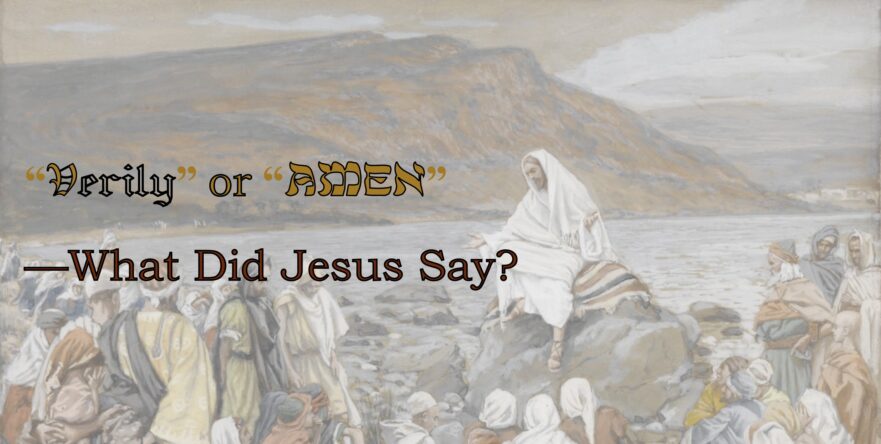
In translating the Greek texts of the Gospels into Hebrew, Dr. Lindsey found that many passages could be rendered literally with almost no change of word order. The result was a Hebrew version that often sheds fascinating light on the meaning of Jesus’ words, so much so that Lindsey came to believe the Greek sources Matthew, Mark and Luke used were rendered very literally from Hebrew originals. This Hebraic perspective sometimes explains Gospel passages that have long been considered difficult or ambiguous. In the following article, Lindsey presents one example of what has been considered a uniquely idiosyncratic expression of Jesus, but which a Hebraic perspective reveals to be a familiar phrase from the Scriptures.
Hebraisms in the New Testament

The text of the New Testament contains many Semitic elements, some of which are Hebraisms. The Synoptic Gospels show evidence for the existence of wordplays and idioms that are typical of Hebrew.
Engaged: Eternally Dwelling In Hell?

Becker discusses a JP article where one verse of Mark has Jesus using an idiom which might be misunderstood by translators. Becker purports that the discovery should engage our readers on the topic of death after death.