

For Jesus, working for social justice was an act of redemption with cosmic implications.
Stephen’s Speech (Acts 7:1-53) and Early Jewish Scriptural Interpretation
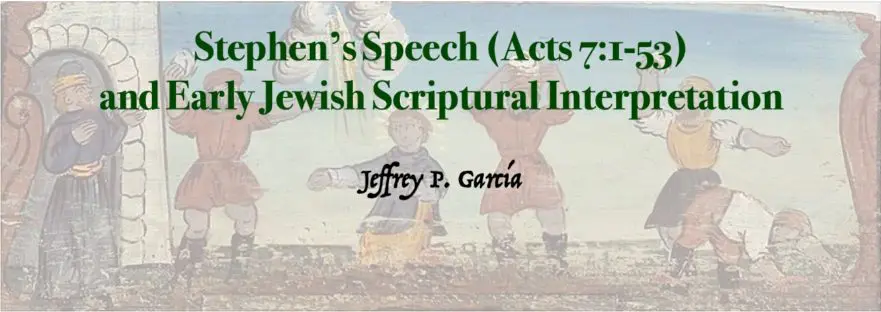
Discover connections between Stephen’s Speech and ancient Jewish literature.

LOY Excursus: Mark’s Editorial Style

This LOY Excursus is a compendium of observations regarding the redactional changes the author of Mark typically made to his sources. It also discusses the image of Jesus the author of Mark wanted to portray in his Gospel.
The Jewish Cultural Nature of Galilee in the First Century

The prevailing opinion among New Testament scholars is that first-century Galilee was culturally and spiritually deprived, and that, therefore, Jesus came from an underdeveloped and backward Jewish region of the land of Israel. Professor Safrai here presents massive evidence against this view.
Evidence of an Editor’s Hand in Two Instances of Mark’s Account of Jesus’ Last Week?
It has been noted that in instances where Mark’s editorial hand restructured his story, Luke has preserved a more primitive form of the account, a form that is independent of Mark’s influence. Gospel scholars need to properly evaluate Mark’s editorial style and acknowledge that frequently a theological agenda influenced his rewriting.
Elijah Prays About Rain

Toward the end of his Epistle, James exhorts his readers to pray with faith for the healing of the sick. When we read that “the prayer of a righteous man has great power in its effects” (James 5:16), we might have expected James to cite the example of Abraham. Genesis 20:17 might have served as the perfect prooftext: “Abraham prayed to God; and God healed Abimelech.” …The example of Elijah that was provided by James, however, seems less obvious and more difficult.
Sunshine For Everybody
Song of Songs Zuta is a rabbinic commentary on the Song of Songs. It may be characterized as exegetical and haggadic. In contrast to the better known Song of Songs Rabbah, Song of Songs Zuta is shorter in length. The words rabbah (great) and zuta (small) imply this contrast.
Measure For Measure

Some of the things Jesus emphasized in his teachings stand as strong warnings to those who belong to the community of faith. Jesus made statements about not lapsing into prideful judgmentalism, and becoming centripetal in one’s thinking. Jesus taught that our attitude toward other people—outsiders, even sinners—must be like God’s.
Repentance: God Inhales

Blessing God as one who delights in repentance has rich theological implications. Nevertheless, this blessing runs the risk of inaccuracy by understating God’s reaction to repentance. He not only delights in it but displays peculiar patterns of behavior when under its influence.