

Most academics would question the value of attempting to identify material originating from the historical Jesus because Matthew, Mark and Luke are not historical narratives in the modern sense.
“They Didn’t Dare” (Matt 22:46; Mark 12:34; Luke 20:40): A Window on the Literary and Redactional Methods of the Synoptic Gospel Writers
Mark’s placement of Jesus’ “no longer dared” comment is very awkward: first, because the comment comes in the middle of a lovefest between Jesus and a scribe; and second, because the comment immediately follows Jesus’ appreciation of the scribe’s wisdom: “You are not far from the Kingdom of God.”
Studying the Gospels Synoptically
A synopsis allows us to see the differences in each Gospel—which is often valuable in understanding the texts and determining the better readings.
Another Look at the “Cleansing of the Temple” Story

Based on archaeological excavations near the southern wall of the temple, the research of Shmuel Safrai, and a nuance of the Hebrew verb that is one of the equivalents for Greek ekballein (drive out, banish; throw out; throw away, reject; cast out of a place, expel; remove, get rid of; put out), it may be necessary to reinterpret the gospel accounts of Jesus’ “cleansing” of the temple, even suggesting a different location for Jesus’ action.
Selected Examples of Rewriting in Mark’s Account of Jesus’ Last Week

It has been noted that in instances where Mark’s editorial hand restructured his story, Luke has preserved a more primitive form of the account, a form that is independent of Mark’s influence. Gospel scholars need to properly evaluate Mark’s editorial style and acknowledge that frequently a theological agenda influenced his rewriting.
John’s Baptism of Repentance
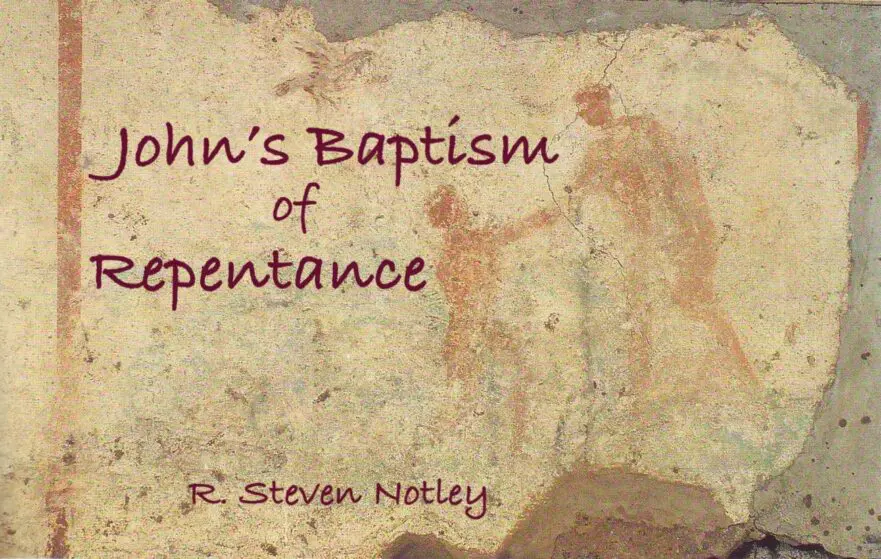
All of the Gospels open with a description of John the Baptist’s proclamation of a “baptism of repentance for the forgiveness of sins” (Mark 1:4). In this brief study we want to consider both the form of John’s baptism and his distinctive call to accompanying repentance.
Let the One Who Has Ears to Hear, “Hear!”

Gospel parables are probably the most widely identifiable teaching form of Jesus. However, readers seldom recognize Jesus’ sophisticated skill as a first-century Jewish parabolist. Indeed, many Christians are unaware that his use of story parables is one of the strongest links between Jesus and contemporary Jewish piety. His parables also demonstrate that Jesus taught in Hebrew.
Jesus’ Jewish Command to Love

Jesus’ command to “love your enemies” was revolutionary! No one before him dared to raise such a high standard for the life of faith.
“Give unto Caesar”: Jesus, the Zealots and the Imago Dei

The retorts of Hillel and Jesus exemplify innovative developments in Jewish thought during the Second Temple period, developments that were established on the biblical notion that man was created in the image of God—Imago Dei (Gen. 1:27).