

To access this post, you must purchase New Testament Priests access, JP Premium Membership or Friend of JP.
The Best Long-term Investment—Making Loans to God

In our day, the 20th-century disciple of Jesus feels the challenge of his call to lay up treasure in heaven more than ever. In the face of an emerging global society drunken with consumerism and materialism, Jesus’ words shatter the silence: “You cannot serve God and mammon!”
Stewards of God’s Keys
Jesus gave his disciple Peter the “keys of the kingdom of heaven” and promised that whatever Peter “bound” and “loosed” on earth would be “bound” and “loosed” in heaven. What scriptural allusions lurk beneath these expressions and what are their implications? How does the Jewish literary background of Matthew 16:19 help us better appreciate Jesus’ words?
The Power of Parables

Jesus was a master teacher. Therefore, it is significant that he relied heavily on parables. What is it about parables that makes them so moving and memorable?
Jesus and the Hasidim
How do we define Jesus within first-century Jewish society? To which of the various Jewish sects does he belong? Was he a Pharisee, an Essene? After years of painstaking research, Shmuel Safrai has identified a new stream within the Judaism of Jesus’ time: the Hasidic movement. This may be a major breakthrough in New Testament studies, as well, because the picture Safrai paints of the Hasidim is amazingly similar to what we know about Jesus. Jesus, who was quite close to the Hasidim and perhaps even involved with some of them, does not reflect Galilean boorishness or ignorance, but rather the dynamism and ongoing creativity of Jewish life in Galilee.
“Jehovah”: A Christian Misunderstanding
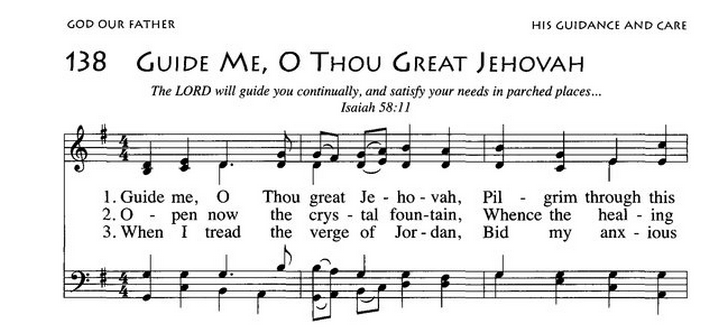
We shouldn’t create new names for God such as “Jehovah” out of our ignorance of Jewish conventions.
The Shema in Early Jewish Teaching
“Hear, O Israel: The Lord our God, the Lord is one” (Deut. 6:4), known as the Shema, is a foundational teaching of both Judaism and Jesus.
The Two Great Principles and Sefer Pitron Torah

The command to love one’s neighbor was already thought of during the Second Commonwealth as the essence of the second half of the Decalogue, in which sense it is quoted in Sefer Pitron Torah.
The Decalogue and the New Testament
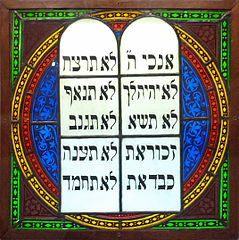
Professor Flusser examines references to the Decalogue in ancient Jewish sources and the New Testament. In light of this comparison, Jesus’ Sermon on the Mount does not merely present a utopian ideal, but rather an outline of practical behavior.
The Kingdom of God: God’s Power Among Believers

One of the greatest theological controversies in the last century concerns the meaning of the terms “Kingdom of God” and “Kingdom of heaven.” Because scholars have not given adequate attention to the fact that these are completely Hebraic terms, confusion has arisen concerning the period of time to which the Kingdom refers, who takes part in it and the exact nature of the Kingdom. Examining relevant Gospel passages in their Hebraic context will clarify what Jesus meant when he spoke of the “Kingdom of God” or the “Kingdom of heaven.”