
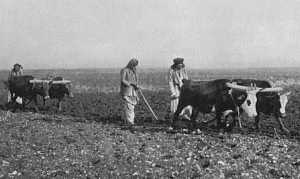
It appears that the original context for Jesus’ “Comfort for the Heavy-Laden” saying has been lost; however, passages in the apocrypha indicate that Jesus was speaking of Torah study and the rigors of first-century discipleship.
The Approval of Abraham: Traditions of God’s Acceptance of Abraham in Early Jewish and Christian Sources
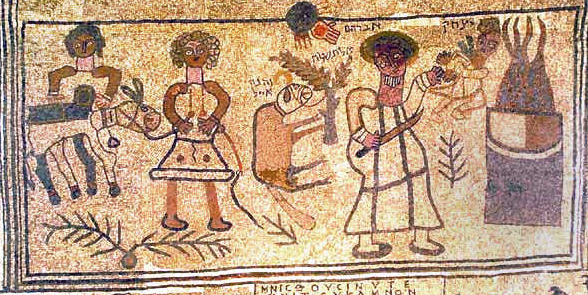
When, in ancient times, people read the account of the life of Abraham, it was common for them to ask, “When did Abraham finally make the grade? At which point in his life was Abraham approved and accepted by God?”
Abraham’s Temptation, Forerunner of Jesus’ Temptation

When tempted, both Jesus and Abraham vanquished their tempter with words of Torah, just as Israel’s teachers exhorted their students to do.
The Qumran Targum of Job as a Window into Second Temple Judaism: A Response to Randall Buth’s “Where Is the Aramaic Bible at Qumran? Scripture Use in the Land of Israel”

How does one explain the sparseness of the Qumran targumic corpus?
More on the Absence of an Aramaic Bible at Qumran: A Response to Jack Poirier’s “The Qumran Targum of Job as a Window into Second Temple Judaism: A Response to Randall Buth”
I appreciate this opportunity to return to some issues concerning the Targum of Job that I raised in Where Is the Aramaic Bible at Qumran? Scripture Use in the Land of Israel and to evaluate Jack Poirier’s response entitled, The Qumran Targum of Job as a Window into Second Temple Judaism: A Response to Randall Buth.
The “Only Begotten” Son
As a small boy growing up in Alabama I had a deep love of God and a real hunger to know him better. By the age of eight I had read the entire Bible. But, like most people, I often struggled to understand what the Scriptures were saying. Many verses didn’t seem to make sense.
Where Is the Aramaic Bible at Qumran? Scripture Use in the Land of Israel
The documents at Qumran allow us to reconstruct Scripture access in the Province of Judea in the first century. From the evidence, we must assume that the Qumran community and the other Jewish communities in the land had direct access to the Hebrew Bible, generally understood it, and were interested in teaching that related directly to the Hebrew text.
Leah’s Tender Eyes

The King James Version translates Genesis 29:17 as follows: “Leah was tender eyed; but Rachel was beautiful and well favoured.” The New International Version has, “Leah had weak eyes,” while the New American Bible reads, “Leah had lovely eyes.” What did the Hebrew original mean to say?
Romans 11: The Olive Tree’s Root

Paul spoke about Israel as a “cultivated olive tree” whose rootage was in the Patriarchs, particularly Abraham. Some Bible commentators, however, interpreted the root of the olive tree as Christ or his messianic program.
The Teaching of Balaam
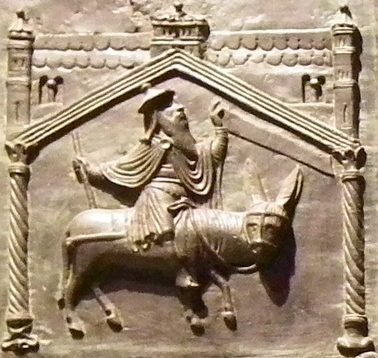
Revelation 2:12-16 is one of those occasions when it is necessary for the Christian reader to be familiar with first-century Jewish interpretation of an Old Testament account.