

An inherent consequence of our distance from the world of Jesus is that we primarily understand Jesus’ words as they apply within our twenty-first century eschatological and theological framework. However, Jesus’ teachings reflect his cultural background as a Jewish rabbi in first-century Galilee.
Was New Orleans Punished for Its Sinfulness?
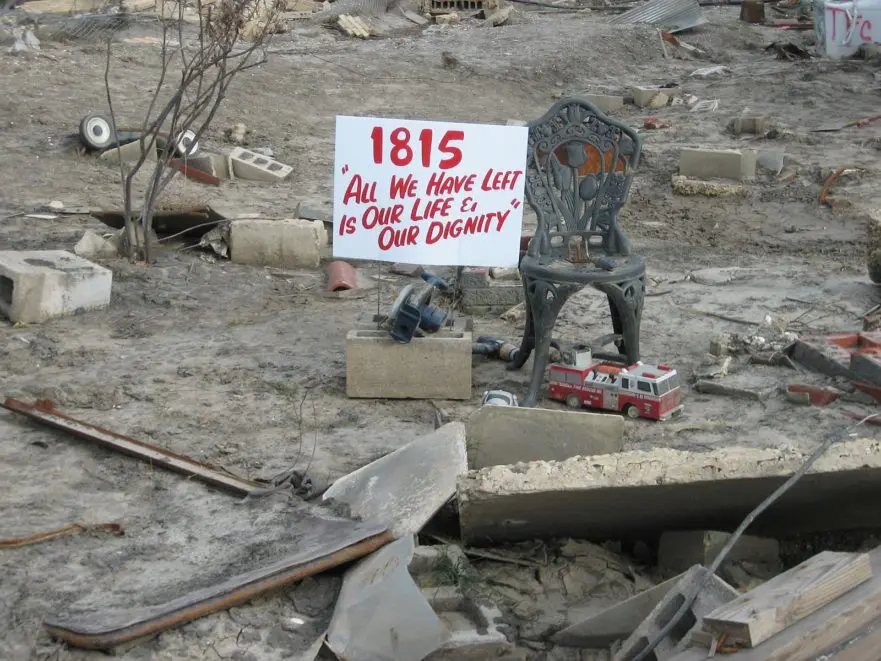
Let’s consider how Jesus would have responded to the damage and loss of life wrought by Katrina.
“They Didn’t Dare” (Matt 22:46; Mark 12:34; Luke 20:40): A Window on the Literary and Redactional Methods of the Synoptic Gospel Writers
Mark’s placement of Jesus’ “no longer dared” comment is very awkward: first, because the comment comes in the middle of a lovefest between Jesus and a scribe; and second, because the comment immediately follows Jesus’ appreciation of the scribe’s wisdom: “You are not far from the Kingdom of God.”
Jesus’ Yoke and Burden
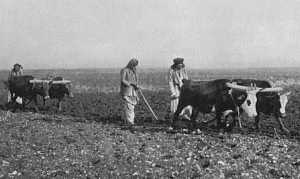
It appears that the original context for Jesus’ “Comfort for the Heavy-Laden” saying has been lost; however, passages in the apocrypha indicate that Jesus was speaking of Torah study and the rigors of first-century discipleship.
Jesus’ Jewish Command to Love

Jesus’ command to “love your enemies” was revolutionary! No one before him dared to raise such a high standard for the life of faith.
Something Greater Than the Temple

In Jesus’ statement about the Temple he did not speak of himself, he spoke of the needs and value of his disciples.
The Man Who Would Be King

Scholarship has recognized the similarities between the Parable of the Talents and the historical account of Archelaus’ attempts to inherit the kingdom of his father, Herod the Great. When Herod died, Caesar Augustus divided the kingdom between Herod’s three sons, Archelaus, Antipas and Philip.
A Personal Tribute to Professor Shmuel Safrai, Recipient of the Israel Prize
I would like to congratulate Professor Safrai on his award, and add a personal note: I have known Professor Safrai since 1965 when he was one of my instructors at the Hebrew University. I have spent literally hundreds of hours with him. Not only is Professor Safrai one of the greatest scholars that the Hebrew University has ever produced, he is also a mensch. Kind, well-mannered, and above all, patient, he has been a model of right living to his many students.
The Season of Redemption

In the face of a national disaster, hope remained. Summer and its ripe figs—signs of future redemption—would come.
Don’t Throw Away That Piece of Bread!

The importance of sharing one’s bread with the poor has remained in the Jewish consciousness until today.