

It has been noted that in instances where Mark’s editorial hand restructured his story, Luke has preserved a more primitive form of the account, a form that is independent of Mark’s influence. Gospel scholars need to properly evaluate Mark’s editorial style and acknowledge that frequently a theological agenda influenced his rewriting.
John’s Baptism of Repentance
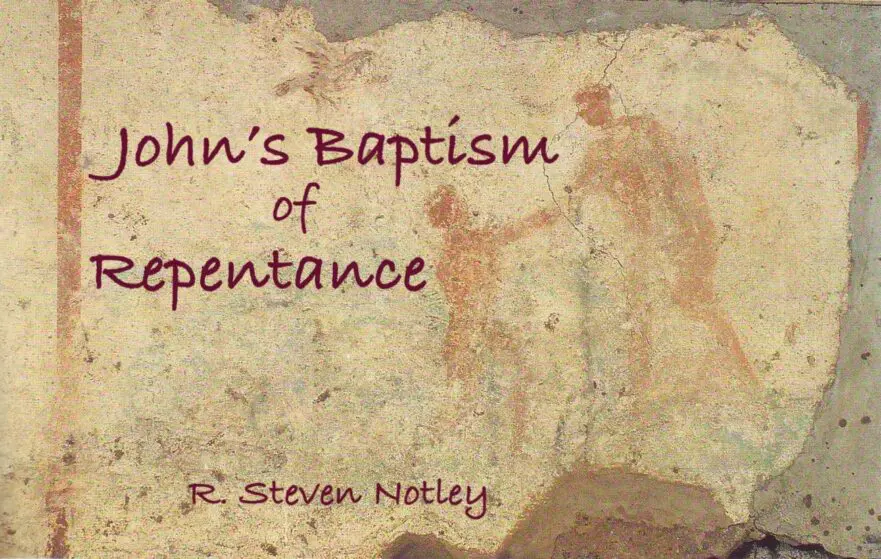
All of the Gospels open with a description of John the Baptist’s proclamation of a “baptism of repentance for the forgiveness of sins” (Mark 1:4). In this brief study we want to consider both the form of John’s baptism and his distinctive call to accompanying repentance.
Jesus and the Essene Passover

Fifty years of scholarship concerning the Dead Sea Scrolls have brought clearer understanding concerning a fascinating stream of Jewish piety which existed during the final days of the Second Temple.
Let the One Who Has Ears to Hear, “Hear!”

Gospel parables are probably the most widely identifiable teaching form of Jesus. However, readers seldom recognize Jesus’ sophisticated skill as a first-century Jewish parabolist. Indeed, many Christians are unaware that his use of story parables is one of the strongest links between Jesus and contemporary Jewish piety. His parables also demonstrate that Jesus taught in Hebrew.
Can Gentiles Be Saved?
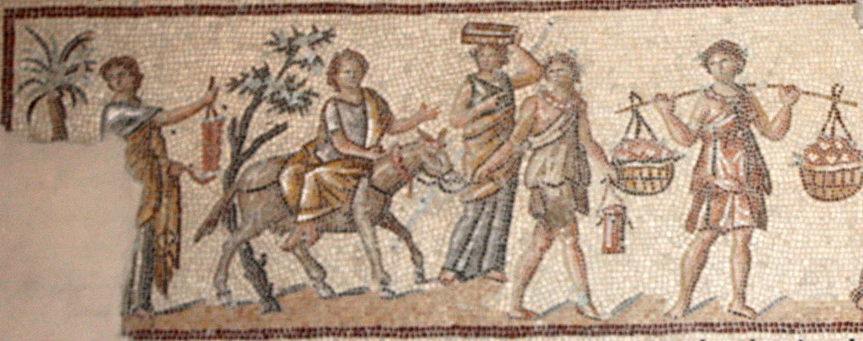
Jesus’ broadminded approach resonates with contemporary sages who belonged to the School of Hillel. In their opinion, it is better to leave God-fearing Gentiles in their blessed state with only the necessity of the moral laws given to Noah.
If Your Eye Be Single

In Matt. 6:22, where you would expect to find the idiom, “good eye,” the adjective used in our saying is not καλός (kalos, “good,” “pleasant”) but ἁπλοῦς (haplous, “single,” “simple”).
Jesus’ Command to “Hate”
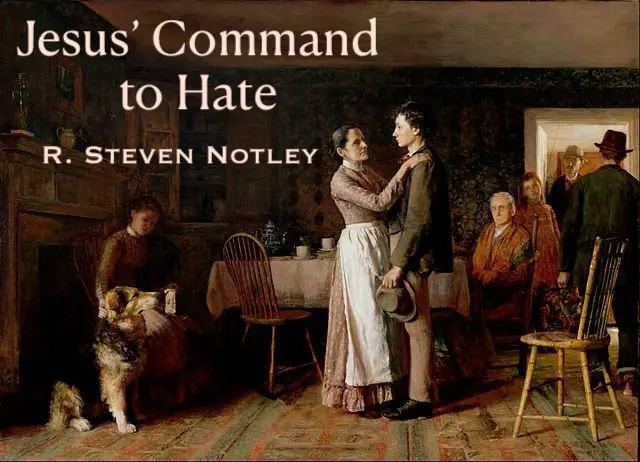
If any one comes to me and does not hate his own father and mother and wife and children and brothers and sisters, yes, and even his own life, he cannot be my disciple. (Lk. 14:26, RSV)
The Most Abused Verse in the Bible?

Romans 8:28 has been read as a free-floating logion for years (at least in the American Bible culture), divorced from a context that would, if properly respected, lend it a much more limited meaning.

Jesus’ Jewish Command to Love

Jesus’ command to “love your enemies” was revolutionary! No one before him dared to raise such a high standard for the life of faith.