

“For if they do these things in a green tree, what shall be done in the dry?” (Luke 23:31; KJV) Passages such as this demonstrate the indispensability of situating the teachings of Jesus within the context of Second Temple Period history, culture, literature, and language.
Mark 7:19: Did Jesus Make “Unclean” Food “Clean”?
One should not be too quick to throw out large portions of the Torah because of a four-word parenthetical comment by Mark at the end of a long halachic discussion.
Written, Inspired and Profitable
The Bible provides minimal help for anyone trying to write a description of it for inclusion in a Statement of Faith. As a result, such descriptions typically claim more than the Bible discloses about itself.
Jehovah and PIPI
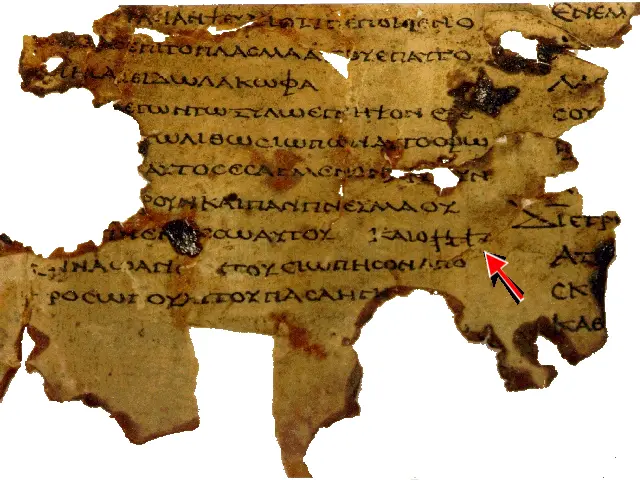
According to Jerome, those who were unfamiliar with Jewish customs tried to pronounce the Hebrew letters as if they were Greek letters. The result was quite a howler: they pronounced YHVH as PIPI!
Repentance: God Inhales
Blessing God as one who delights in repentance has rich theological implications. Nevertheless, this blessing runs the risk of inaccuracy by understating God’s reaction to repentance. He not only delights in it but displays peculiar patterns of behavior when under its influence.
Jesus’ Yoke and Burden
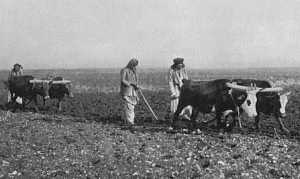
It appears that the original context for Jesus’ “Comfort for the Heavy-Laden” saying has been lost; however, passages in the apocrypha indicate that Jesus was speaking of Torah study and the rigors of first-century discipleship.
The Approval of Abraham: Traditions of God’s Acceptance of Abraham in Early Jewish and Christian Sources
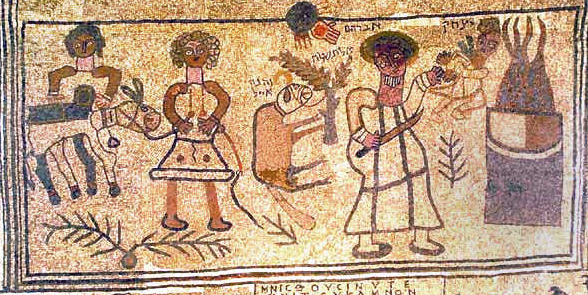
When, in ancient times, people read the account of the life of Abraham, it was common for them to ask, “When did Abraham finally make the grade? At which point in his life was Abraham approved and accepted by God?”
Matthew 5:19: The Importance of “Light” Commandments

Jesus adopted a well-known rabbinic approach to the Torah in which a light commandment is no less important than a heavy commandment.
Another Look at the “Cleansing of the Temple” Story
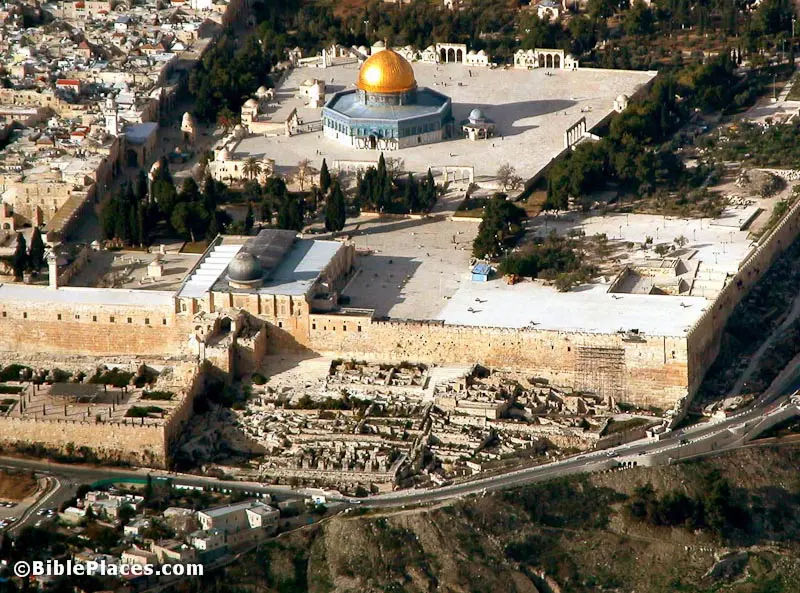
Based on archaeological excavations near the southern wall of the temple, the research of Shmuel Safrai, and a nuance of the Hebrew verb that is one of the equivalents for Greek ekballein (drive out, banish; throw out; throw away, reject; cast out of a place, expel; remove, get rid of; put out), it may be necessary to reinterpret the gospel accounts of Jesus’ “cleansing” of the temple, even suggesting a different location for Jesus’ action.
Abraham’s Temptation, Forerunner of Jesus’ Temptation

When tempted, both Jesus and Abraham vanquished their tempter with words of Torah, just as Israel’s teachers exhorted their students to do.