Holiness and purity play a hidden role in the story commonly known as the Gerasene Demoniac.
How to cite this article: Joshua N. Tilton and David N. Bivin, “Possessed Man in Girgashite Territory,” The Life of Yeshua: A Suggested Reconstruction (Jerusalem Perspective, 2023) [https://www.jerusalemperspective.com/26210/].
Yeshua arrived in the territory of the Girgashites, which is opposite the Galil. Out came a certain man from the nearby village to meet him. But this man had a demon in him. Because of it he had neither worn clothes nor lived at home for a long time. Rather, he lurked among the graves. The demon seized him so often that the townspeople bound him in chains. Yet the demon snapped them apart and drove him off to a place of ruins.
Suddenly, the possessed man yelled at Yeshua in a loud voice, shouting, “What do you and I have in common, O Yeshua, Son of God Most High? Have you come here to torment me?”
At that, Yeshua asked him, “What is your name?”
“Ligyon,” the possessed man replied. (He had earned this nickname because many demons had entered him.)
Then the demons began to urge Yeshua, telling him, “Don’t expel us from our territory!”
Now at that location a herd consisting of a great many pigs was grazing on the hillside, so the demons urged Yeshua, saying, “If you must force us out of the man, at least drive us away to the herd of pigs so that we may enter them.”
“Go!” Yeshua replied.
So the impure spirits came out of the man and entered the pigs. But the entire herd tumbled down the ridge into the sea, where they all drowned in the water. When the swineherds saw what happened, they ran away and, coming to the village, they told all about what they had seen.
When they heard this, everyone in the village went out to prevent Yeshua from coming any closer. Finding the man whom Yeshua had liberated from the demons dressed and sitting calmly at Yeshua’s feet, they were filled with dread. The swineherds identified Yeshua as the culprit, and everyone asked him to leave their territory.[2]
In all three Synoptic Gospels Possessed Man in Girgashite Territory appears as the sequel to Quieting a Storm. But the Synoptic Gospels are not agreed as to which story follows Possessed Man in Girgashite Territory. In Matthew it is followed by Bedridden Man (Matt. 9:2-8), while in Mark and Luke Possessed Man in Girgashite Territory is followed by Yair’s Daughter and a Woman’s Faith (Mark 5:21-43; Luke 8:40-56). In any case, Matthew, Mark and Luke are agreed that the incident described in Possessed Man in Girgashite Territory took place after Jesus had already gathered a following of disciples. Indeed, the disciples are said to have been with Jesus in the boat as he crossed the lake and weathered the storm, after which Jesus met the demon-possessed person (or persons, in Matthew) on the farther shore. Nevertheless, it is a striking fact that the disciples are never explicitly mentioned in Possessed Man in Girgashite Territory (see below, Comment to L1). The disciples’ presence is merely implied by a plural verb to describe “their” arrival in the opening line of the Markan and Lukan versions of the pericope (Mark 5:1; Luke 8:26).[3]The disciples play no part in the events that unfold, and by the end of the pericope Jesus alone is said to get into the boat and return (Mark 5:18; Luke 8:37). Even that minuscule role is denied to the disciples in Matthew’s version of the pericope, where no trace of the disciples remains. The virtual absence of the disciples in the story suggests that at a pre-synoptic stage of the tradition Possessed Man in Girgashite Territory took place prior to Jesus’ gathering of disciples while he was still itinerating on his own.
The calming of the storm and the driving out of the demons into the swine, as depicted in an 11th-cent. illuminated manuscript. Image courtesy of Wikimedia Commons.
We think it likely that it was the First Reconstructor, whom Robert Lindsey described as attempting to create a continuous narrative out of the literary fragments collected in the Anthology (Anth.), who placed Possessed Man in Girgashite Territory after Quieting a Storm. His reason for doing so is clear: having recounted a lake crossing, he required a story that took place when Jesus reached the other side. Possessed Man in Girgashite Territory met this requirement admirably, but it lacked any references to Jesus’ disciples. By changing the opening verb from a third-person singular to a third-person plural, the First Reconstructor was able to give the impression of the disciples’ presence in the pericope with minimal change to his source (Anth.).[4]
Since we believe the narrative sequence from Quieting a Storm to Possessed Man in Girgashite Territory can be traced back to the First Reconstructor’s editorial activity, it is necessary for us to find a suitable location for the latter story in our reconstruction of the Hebrew Life of Yeshua, the source from which we believe the Synoptic Gospels were ultimately derived. Because the disciples’ negligible role in this story suggests that Possessed Man in Girgashite Territory took place before Jesus began to call disciples, we have placed this pericope in the section of the Map entitled “Yeshua, the Galilean Miracle-Worker.” While Possessed Man in Girgashite Territory does not, strictly speaking, take place in the Galilee, it was probably from the Galilee, or perhaps from Bethsaida just beyond it, that Jesus entered the “land of the Girgashites,” and it was probably to the Galilee that Jesus returned when the inhabitants of that land asked him to depart.
We have already indicated our opinion in the Story Placement discussion above that the author of Luke based his version of Possessed Man in Girgashite Territory on that which he found in the First Reconstruction (FR). This we surmised from the not wholly convincing attempt to make a continuous narrative out of the events described in Quieting a Storm, which features the disciples prominently, and Possessed Man in Girgashite Territory, which features the disciples hardly at all. The conspicuous absence of the disciples in Possessed Man in Girgashite Territory is not the only reason for attributing Luke’s version of this pericope to FR, however. The resistance of certain parts of Luke’s version of Possessed Man in Girgashite Territory to Hebrew retroversion and the apparent rearranging of the order in which events are narrated also point to FR as Luke’s source for this pericope.[5]In addition, Possessed Man in Girgashite Territory is preceded in Luke 8 by several other pericopae that we have determined the author of Luke copied from FR. These include the Four Soils parable (Luke 8:4-8),[6]the Four Soils interpretation (Luke 8:9-15),[7]the “string of pearls” in Luke 8:16-18,[8]and Yeshua, His Mother and Brothers (Luke 8:19-21).[9]Since the author of Luke tended to copy large blocks of material from his sources rather than constantly switching back and forth between them from one pericope to the next, and since Possessed Man in Girgashite Territory is associated in Luke with other FR pericopae, it is likely that Possessed Man in Girgashite Territory in Luke was taken from FR too.[10]
Mark’s version of Possessed Man in Girgashite Territory depends mainly upon Luke’s. Many of the differences between the Lukan and Markan versions of this pericope can be attributed to the author of Mark’s characteristically elastic treatment of his sources. Some differences, however, may reflect Mark’s awareness of the version of Possessed Man in Girgashite Territory in Anth.
Matthew’s version of Possessed Man in Girgashite Territory is notably different from the Lukan and Markan versions, especially in terms of its brevity. While the author of Matthew often abbreviated pericopae he found in Mark, it is possible that he was partially guided in doing so by comparing Mark’s version of Possessed Man in Girgashite Territory with a much shorter one in Anth. Matthew’s version of Possessed Man in Girgashite Territory also has some Hebraic features that could be traced back to Anth.[11]
The pigs’ tumbling into the water, as depicted in an illuminated manuscript (ca. 1000 C.E.). Image courtesy of Wikimedia Commons.
Some scholars have expressed the opinion that Possessed Man in Girgashite Territory was originally transmitted as two stories, one about an exorcism and one about the drowning of pigs. The drowning of the pigs, some scholars suggest, may not even have originated as a story about Jesus.[12]Originally, the drowning of the pigs may have been told about some other Jewish or non-Jewish miracle-worker. Somehow in the course of its transmission the drowning of the pigs was absorbed into the Jesus tradition.
It is easy to identify two motivating factors behind the desire of these scholars to separate the exorcism from the drowning of the pigs and to discard the latter. First, there is a topographical difficulty. The ancient city of Gerasa (modern Jerash) is some thirty miles from Lake Gennesar (i.e., the Sea of Galilee). Gerasa’s territory definitely did not extend to the lakeshore. Therefore, if the story took place in the “land of the Gerasenes,” as many of the most reliable NT manuscripts indicate, then it is impossible to reconcile the setting of the exorcism in the vicinity of Gerasa with the drowning of the pigs in Lake Gennesar. Removing the drowning of the pigs from the exorcism story resolves this topographical inconsistency.[13]Second, there is a clear aversion among certain scholars to the notion that Jesus would parley with demons, permit them to enter pigs, and allow the pigs to be drowned.[14]This series of events is regarded as too grotesque to be associated with Jesus. Therefore, it is convenient for scholars to dismiss the drowning of the pigs as a secondary accretion to the Jesus tradition.
But neither of these reasons is sufficient to justify the dismemberment of the Possessed Man in Girgashite Territory pericope. The topographical difficulty rests on one particular reading of a very uncertain text. Other readings offer solutions that allow the integrity of the pericope to be maintained. As for the scholarly aversion to the drowning of the pigs, we cannot allow modern prejudices to color our judgment. Indeed, it is likely that modern prejudices have deafened readers to the original message of Possessed Man in Girgashite Territory. These modern prejudices cause readers to tune out the motifs of ritual purity and the longing for the redemption of Israel (both the people and the land) that unify both parts of the pericope.[15]
A mural (ca. 100 B.C.E.) from the island of Delos depicting the sacrifice of a pig. Photographed by Zde at the Archaeological Museum of Delos. Image courtesy of Wikimedia Commons.
In several respects the story of the Possessed Man in Girgashite Territory is about ritual purification.[16]Possessed Man in Girgashite Territory is the story of the purification of a man from his impure dwelling among the graves of the dead.[17]Possessed Man in Girgashite Territory is also the story of the purification of a community from the impure spirits that terrorized and contaminated it. For it was not only the possessed man who was tormented by the harmful influence of the demons. His deranged behavior disrupted the entire community to which he belonged and from which he had been driven. Possessed Man in Girgashite Territory is, moreover, the story of the purification of the land from impure animals. Pigs were forbidden to Jews for consumption (Lev. 11:7), and the carcasses of pigs defiled (Lev. 11:8). While the living animals do not impart ritual impurity,[18]the only purpose for raising pigs was that they might be slaughtered for meat or offered as sacrifice to the gods of the Gentiles. Otherwise, pigs had no economic value.[19]Thus, the presence of pigs meant that the land was defiled either by the slaughtering of pigs for food or by the offering of pigs to idols. Finally, Possessed Man in Girgashite Territory is the story of the symbolic purification of Israel’s inheritance from Gentile rule. While the location of the Girgashites’ territory on the east shore of the Sea of Galilee is problematic, the appellation clearly lays claim to the territory as part of Israel’s inheritance. The Hittites, Girgashites, Amorites, Canaanites, Perizzites, Hivites and Jebusites were the seven nations whose territory Israel was to possess (Deut. 7:1). The haunting of the Girgashite territory by demons, its occupation by Gentiles, and its trampling by impure animals signaled that it was no longer under Israel’s command. Conversely, the purification of the territory signaled the restoration of the “land of the Girgashites” to Israel. We see, therefore, that the motif of ritual purification unites the exorcism account with the drowning of the pigs. The drowning of the pigs cannot be removed from the pericope without doing injury to the message the purification motif is intended to convey.[20]
The final aspect of purity in Possessed Man in Girgashite Territory overlaps with the motif of Israel’s redemption, which likewise unifies this pericope. First, the description of the region as Girgashite territory connotes the period of Joshua’s conquest of the Holy Land. Under Roman rule Israel longed for a reconquest of the Holy Land that would liberate the Jewish people from the yoke of foreign oppression. Second, demon possession was, in a sense, a microcosm of Roman imperialism. When a person became possessed by a demon, his or her psyche was colonized by a hostile foreign entity, just as the Roman Empire, a hostile and foreign entity, had invaded and colonized the Jewish homeland.[21]Moreover, the same malignant spiritual forces that were involved in demon possession were believed to animate the Roman Empire.[22]Thus, it is hardly accidental that the possessed man was nicknamed by the Roman military term “legion.” The many demons that entered the possessed man had turned him into a terror his neighbors could only compare to the destructive force of a Roman legion.
The defeat of demonic forces on the individual plane also had ramifications on the cosmic plane and on the political level.[23]If, as demonstrated by Jesus’ authority over the impure spirits, the legs were being knocked out from under the demonic powers behind the Roman Empire, the logical conclusion was that the oppressive system of Roman imperialism would soon falter.[24]Jesus’ sending away of the impure spirits, which had transformed a man into a legion, into the pigs, which then rushed into the lake and perished, carried with it the hope and the promise that the Roman military presence in the land of Israel would likewise be banished from the Holy Land forever.[25]
When the ear is attuned to these unifying motifs in Possessed Man in Girgashite Territory, it becomes more difficult and less desirable to detach and discard the drowning of the pigs from the account of the exorcism.[26]In our view, the exorcism and the drowning of the pigs have always formed an integral unity that expressed a powerful message: Jesus brings redemption to Israel.
Crucial Issues
Did the story take place in Gerasa (Jerash), Gadara, or Gergesa?
Was the possessed man a Jew or a Gentile?
What was the fate of the demons who entered the pigs?
What message or messages was Possessed Man in Girgashite Territory intended to convey?
Why did the townspeople ask Jesus to leave?
Comment
L1καὶ κατέπλευσαν (Luke 8:26). “And they sailed ashore” in L1 is probably redactional, since the Greek verb is too refined to have come from Anth.[27]Hebrew has no corresponding verb, and this is the only occurrence of καταπλεῖν (kataplein, “to sail ashore”) in the Synoptic Gospels.[28]We cannot say for certain whether the First Reconstructor or the author of Luke is responsible for καὶ κατέπλευσαν (kai kateplevsan, “and they sailed ashore”). The verb καταπλεῖν never occurs in Acts, which might lead to the conclusion that καταπλεῖν stems from FR. But numerous other compounds of πλεῖν (plein, “to sail”) do occur in Acts: ἀποπλεῖν (apoplein, “to sail away”; Acts 13:4; 14:26; 20:15; 27:1), βραδυπλεῖν (bradūplein, “to sail slowly”; Acts 27:7), διαπλεῖν (diaplein, “to sail across”; Acts 27:5), ἐκπλεῖν (ekplein, “to sail from”; Acts 15:39; 18:18; 20:6), παραπλεῖν (paraplein, “to sail past”; Acts 20:16) and ὑποπλεῖν (hūpoplein, “to sail under”; Acts 27:4, 7). Thus, the frequency of such verbs in Acts suggests that καταπλεῖν in Possessed Man in Girgashite Territory probably came from the author of Luke’s pen.
καὶ ἐλθόντος αὐτοῦ (Matt. 8:28). The genitive absolute construction with which Matthew’s version of Possessed Man in Girgashite Territory opens is, like Luke’s opening, suspect. Not only are genitives absolute typically indicative of Greek redaction,[29]but a comparison with Mark’s wording in L6 shows that Matthew’s opening phrase was picked up, with slight modification, from Mark 5:2. By picking up Mark’s genitive absolute phrase from L6, the author of Matthew was able to streamline the opening of the pericope.
In one respect, however, Matthew’s wording in L1 may retain a glimmer of Anth. Matthew’s opening makes no reference to Jesus’ disciples. In Matt. 8:28 only Jesus arrives on the far side of the lake. The author of Matthew’s exclusion of the disciples from Possessed Man in Girgashite Territory may in part be due to the complete absence of the disciples in Anth.
καὶ ἦλθον (Mark 5:1). Mark’s simple wording in L1 probably comes closest to that of Anth., except that whereas Mark has a third-person plural form of ἔρχεσθαι (erchesthai, “to come”), Anth.’s form was likely a third-person singular.[30]
καὶ ἦλθεν (GR). The reason we suspect Anth.’s verb in L1 was singular is the total absence of the disciples throughout the pericope apart from the plural verb forms in Luke and Mark. The First Reconstructor probably pluralized the verb in order to create continuity with Quieting a Storm, the preceding pericope. Plural forms were then passed down to the authors of Luke and Mark. The author of Matthew, as we have stated, may have been partially influenced by Anth. when he decided to make his opening genitive absolute construction singular. The author of Matthew may also have preferred a singular because he noticed the absence of the disciples in the rest of the pericope. A similar change may also be observed in some MSS of Mark, where scribes replaced καὶ ἦλθον (kai ēlthon, “and they came”) with καὶ ἦλθεν (kai ēlthen, “and he came”), inadvertently restoring what we believe was the wording of Mark’s source (Anth.).[31]
וַיָּבֹא (HR). On reconstructing ἔρχεσθαι (erchesthai, “to come”) with בָּא (bā’, “come”), see Demands of Discipleship, Comment to L8.
In Quieting a Storm we noted that בָּא (bā’, “come”) can mean “sail,” but that is not its usual meaning, and it was probably not the intended sense in the Hebrew Life of Yeshua, since we believe the references to the boat in the Lukan, Markan and Matthean versions of this pericope are secondary (see below, Comment to L6-7). The mode by which Jesus entered the Girgashite territory was probably not specified in the pre-synoptic sources until the First Reconstructor joined this story to Quieting a Storm.[32]Unless otherwise specified, the presumption would be that Jesus had traveled by foot.
L2εἰς τὸ πέραν τῆς θαλάσσης (Mark 5:1). Mark’s phrase, “to the other side of the sea,” helps fuse Possessed Man in Girgashite Territory with Mark’s version of Quieting a Storm, where the phrase “to the other side” occurs (Mark 4:35; L6, L16). We think the author of Mark added this phrase for just that purpose. Scholars have noted that double prepositional phrases, like “to the other side of the lake, to the land of the Gerasenes” in L2-3, are typical of the author of Mark’s style.[33]If the author of Mark is responsible for the double prepositional phrases in L2-3, it must be the prepositional phrase in L2 that the author of Mark added, since Mark’s prepositional phrase in L3 was taken from Luke.
Ruins of the forum of ancient Gerasa in modern Jerash, Jordan. Photo courtesy of Joshua N. Tilton (2001).
L3εἰς τὴν χώραν τῶν Γεργεσηνῶν (GR). How Possessed Man in Girgashite Territory is interpreted is largely dependent on the name of the territory in which the story takes place. It is unfortunate, therefore, that there is a lack of clarity in the ancient manuscripts on precisely this point.
Three main readings are attested: εἰς τὴν χώραν τῶν Γερασηνῶν (eis tēn chōran tōn Gerasēnōn, “into the region of the Gerasenes”), εἰς τὴν χώραν τῶν Γαδαρηνῶν (eis tēn chōran tōn Gadarēnōn, “into the region of the Gadarenes”) and εἰς τὴν χώραν τῶν Γεργεσηνῶν (eis tēn chōran tōn Gergesēnōn, “into the region of the Gergesenes”). All three readings are attested in Greek MSS of Mark and Luke. In Greek MSS of Matthew only “Gadarenes” and “Gergesenes” are attested; however, “Gerasenes” does appear in Latin and Syriac versions of Matthew.[34]
There are various means for assessing the original readings in Matt. 8:28, Mark 5:1 and Luke 8:26. One is to determine the earliest and best-attested readings in the three Gospels. Another is to determine which reading is most likely to have given rise to the others. Yet another is to determine which location best fits the details described in the story. A final way is to ask which of the three locations Jesus is most likely to have visited. Before attempting to assess the original readings, however, it will be helpful to identify the locations to which the variant readings refer.
Approximate territories controlled by cities of the Decapolis in the vicinity of the Sea of Galilee. While this map is open to criticism, it is clear that the territory of Gerasa (modern Jerash) is widely separated from the Sea of Galilee. Whether Gadara’s territory extended to the Sea of Galilee is disputed. Also, the map fails to indicate that near the Jordan’s outlet from the Sea of Galilee the city of Philoteria controlled territory along the lakeshore east of the river. This map is adapted from a photograph taken by Mboesch of a sign at the Susita National Park in Israel. Courtesy of Wikimedia Commons.
The “region of the Gerasenes” refers to the territory surrounding Gerasa (modern Jerash in Jordan),[35]a Hellenistic city (polis) of the Decapolis. Each polis in the ancient world controlled the villages and agricultural lands that surrounded it.[36]Gerasa (Γέρασα [Gerasa]) is more than thirty miles from the Sea of Galilee, and while the exact extent of its territory is unknown, it is certain that its territory never extended to the lake.[37]
The “region of the Gadarenes” refers to the territory surrounding Gadara (modern Umm Qais in Jordan),[38]another Hellenistic city of the Decapolis. Gadara (Γάδαρα [Gadara]) is approximately six miles from the Sea of Galilee. Unlike Gerasa, it is possible that Gadara’s territory did extend to the lakeshore, but the evidence is not unequivocal and remains a point of contention among scholars.[39]
The “region of the Gergesenes” is more difficult to pinpoint. In LXX the Γεργεσαῖοι (Gergesaioi, “Gergesenes”) are one of the seven ethnic groups Israel was to conquer and whose lands Israel was to possess. Γεργεσαῖοι is equivalent to the Hebrew גִּרְגָּשִׁי (girgāshi, “Girgashite[s]”), but nowhere in the Hebrew Scriptures do we learn where the territory of the Girgashites was located, other than that it must have been somewhere within the territory allotted to the twelve tribes of Israel. There is nothing in the Hebrew Scriptures to associate Girgashite territory with any part of the shoreline of Lake Gennesar. There may, however, be an association in LXX of the Girgashites with the northeast shore of the lake. Along the northeast shore of Lake Gennesar was situated the ancient kingdom of Geshur. According to Josh. 13:1-13, Geshur was located within the territory intended for Israel, but the tribes did not succeed in driving the Geshurites out. In place of גְּבוּל הַגְּשׁוּרִי (gevūl hageshūri, “the border of the Geshurite[s]”) the LXX translators wrote τῶν ὁρίων Γαργασι (tōn horiōn Gargasi, “the borders of Gargasi”) in Deut. 3:14 and τῶν ὁρίων Γεργεσεί (tōn horiōn Gergesei, “the borders of Gergesi”) in Josh. 12:5 (Vaticanus). Thus, it is possible that the LXX translators identified the kingdom of Geshur as the land of the Girgashites.[40]
A map showing the general location of Geshur northeast of Lake Gennesar. Image courtesy of Wikimedia Commons.
We return now to the textual variants. The earliest witness we possess of Luke 8:26 is 𝔓75, a Greek papyrus of the third century, where the reading is Γεραση[–], i.e., “Gerasenes.” “Gerasenes” is also supported by Codex Vaticanus (fourth cent.), which serves as the base text for our reconstruction. The earliest witness for “Gergesenes” in Luke is Codex Sinaiticus (fourth cent.). The earliest witness for “Gadarenes” in Luke is Codex Alexandrinus (fifth cent.). Those who would decide the text-critical issue solely on the basis of earliest attestation must conclude that “Gerasenes” was in the original text of Luke, but, as we have seen, attestation is not the sole criterion for establishing the original text.
The earliest witnesses we have of Mark 5:1 are Codex Vaticanus and the uncorrected text of Sinaiticus (both fourth cent.), both of which read “Gerasenes.” Codex Sinaiticus, however, was corrected to read “Gergesenes.” “Gadarenes” is first attested in Codex Alexandrinus (fifth cent.).
The earliest witnesses to Matt. 8:28 are Codex Vaticanus and Codex Sinaiticus (both fourth cent.). The text of Vaticanus supports “Gadara,” while the corrected text of Sinaiticus supports “Gergesa.” “Gerasa,” as we noted, does not appear in Greek MSS of Matthew.
These variant readings were already known to be a problem in the third century C.E., since they were discussed by the Church Father Origen, who wrote:
In the matter of proper names the Greek copies are often incorrect, and in the Gospels one might be misled by their authority. The transaction about the swine, which were driven down a steep place by the demons and drowned in the sea, is said to have taken place in the country of the Gerasenes [Γερασηνῶν]. Now, Gerasa [Γέρασα] is a town of Arabia, and has near it neither sea nor lake. And the Evangelists would not have made a statement so obviously and demonstrably false; for they were men who informed themselves carefully of all matters connected with Judæa. But in a few copies we have found, “into the country of the Gadarenes [Γαδαρηνῶν];” and, on this reading, it is to be stated that Gadara [Γάδαρα] is a town of Judæa, in the neighbourhood of which are the well-known hot springs, and that there is no lake there with overhanging banks, nor any sea. But Gergesa [Γέργεσα], from which the name Gergesites [Γέργεσαῖοι] is taken, is an old town in the neighbourhood of the lake now called Tiberias, and on the edge of it there is a steep place abutting on the lake, from which it is pointed out that the swine were cast down by the demons. (Origen, Commentary on John 6:24 §41 [on John 1:28])[41]
The approximate location of the site of the demoniac’s healing is indicated by a red arrow on this topographical map of the eastern shore of the Sea of Galilee. Image courtesy of Wikimedia Commons.
To sort through the variants, Origen attempted to square the place names with the topography described in the narrative. Gerasa is to be ruled out, Origen argued, because it is beyond the geographical confines of the Gospels: Gerasa is in Arabia, not Judea. Origen ruled out Gadara because although it is within the geographical scope of the Gospels, Gadara does not have a precipice that drops down into the Lake of Tiberias (i.e., Sea of Galilee) or any other large body of water. Therefore, Origen preferred Gergesa as the true site of the miracle. Gergesa, Origen stated, was on the lakeshore, it had a κρημνός (krēmnos, “precipice”) from which the pigs could have rushed down, and there was a local tradition that claimed Gergesa as the original spot.[42]
Origen’s testimony is the earliest evidence we have of a site called “Gergesa.” The Gospels do not refer to a village, town or city named Gergesa/Gerasa/Gadara, but to “the region of the Gergesenes/Gerasenes/Gadarenes.” Nevertheless, there is some evidence to corroborate Origen’s claim that there was a site called “Gergesa” on the lakeshore. A rabbinic tradition refers to a site on the eastern shore of the lake with a name quite similar to Gergesa:
אמ′ ר′ נחמיה כשיראה הקב″ה קברו של גוג ומגוג לישר′ הרי רגלי השכינה על הר הזתים וקברו של גוג ומגוג נפתח כמו מנחל קדרון עד גרגשתא של מזרח הים של טבריא
R. Nehemiah said: “When the Holy One, blessed is he, shows Israel the graves of Gog and Magog, the feet of the Shechinah will be on the Mount of Olives and the graves of Gog and Magog will be open from south of the Kidron Valley to Gargishta [גַּרְגִּשְׁתָּא] on the eastern side of Lake Tiberias.” (Song of Songs Zuta 1:4 [ed. Schechter, 14]; trans. Ze’ev Safrai[43][adapted])
The noun גַּרְגִּשְׁתָּא (gargishtā’) is an Aramaic term that refers to a lump of earth or a type of reddish clay.[44]In Song of Songs Zuta, however, גַּרְגִּשְׁתָּא functions as a toponym, the proper name of some location on the eastern shore of the Sea of Galilee. Is this Gargishta identical with the Gergesa to which Origen referred? Origen described Gergesa as a πόλις ἀρχαία (polis archaia, “ancient city”), which may imply that the site was an uninhabited ruin rather than a thriving urban center.[45]This would explain its relative obscurity. A mound of ancient ruins—in other words, a tel—might well receive the name Gargishta (“lump of earth” or “reddish clay”),[46]especially if the ruins were partially covered with reddish earth, perhaps from a landslide. Gargishta, as we have noted, is an Aramaic name. As such, it could have been given to the site by Aramaic-speaking Gentiles just as easily as by Aramaic-speaking Jews.[47]Perhaps some Jewish residents of the region reinterpreted the name Gargishta in a way that subverted Gentile claims to the territory. Gargishta became Eretz Girgashi (“land of the Girgashites”), a territory that, from a Jewish point of view, rightfully belonged to Israel.[48]
There is one problem with the reading Origen preferred, however, which is that Origen does not explicitly state that he knew of manuscripts that read εἰς τὴν χώραν τῶν Γεργεσηνῶν.[49]Moreover, none of the textual witnesses to “Gergesenes” is older than Origen’s testimony.[50]Therefore, some scholars maintain that “Gergesenes” was not a reading Origen had encountered but an emendation Origen proposed—a proposal that was accepted by some scribes.[51]Thus, according to this view, it was on account of Origen’s suggestion that “Gergesenes” entered the textual tradition.
We question, however, whether it is really the case that Origen was the origin of “Gergesenes” in the textual tradition. First, the context in which Origen’s “Gergesenes” appears is a discussion of textual variants. The context leads one to presume that “Gergesenes” was a variant known to Origen. An original proposal, not an existing reading, ought to have required an explicit reference. Since Origen did not claim that “Gergesenes” was his own innovation, the context implies that “Gergesenes” was a known textual variant. Second, we may ask whether the scriptoria where the Gospels were copied were likely to have been acquainted with Origen’s discussion about these textual variants,[52]and if so, whether his discussion would have been regarded as sufficiently authoritative to have influenced the textual tradition so deeply and so early. This seems unlikely.[53]But if scribes did so embrace Origen’s suggestion, why did “Gerasenes” and “Gadarenes” persist? There is also the question of the local tradition Origen cited. How did locals come to associate Jesus’ miracle with a site called Gergesa if the Gospels named the location as the “region of the Gerasenes”? Thus, while we do not possess textual witnesses to “Gergesenes” earlier than Origen, this is no reason to assume that “Gergesenes” did not exist prior to Origen.[54]The lack of attestation is more probably due to the paucity of early textual witnesses.
View of the Sea of Galilee from Umm Qais in present-day Jordan, the site of ancient Gadara. Image photographed by young shanahan courtesy of Wikimedia Commons.
The reading “Gergesenes,” moreover, has great explanatory power. By dropping the second γ (gamma) from Γεργεσηνῶν (Gergesēnōn, “Gergesenes”) and changing the vowel following the second γ from ε (epsilon) to α (alpha), the obscure “Gergesenes” becomes the well-known “Gerasenes.” Some scholars maintain that “Gerasenes” is the lectio difficilior (“more difficult reading”) because it cannot be reconciled with the details of the narrative. But ancient scribes might actually have regarded “region of the Gergesenes” as the more difficult reading (a place they had never heard of), whereas “region of the Gerasenes” would have been familiar to anyone acquainted with the eastern half of the Roman Empire.[55]On the other hand, supposing “Gergesenes” was not Origen’s innovation, it is hard to imagine how “region of the Gerasenes” came to be replaced by the unheard-of “region of the Gergesenes.”[56]Even if scribes were aware that “Gerasenes” could not be reconciled with the details of the story, it is far more likely that they would substitute “Gerasenes” with the name of a more plausible location than that they would make up the name “Gergesenes.” In fact, this appears to be how “land of the Gadarenes” entered the textual tradition. Someone familiar with the local geography realized that “Gerasenes” was impossible while “Gadarenes” made more sense.[57]
The steep slopes (foreground) down which the swine may have rushed (view to the north). Photographed by Mendel Nun.
Moreover, “Gergesenes” is too good of a reading to have been produced by accident. The setting of the story in the “region of the Gergesenes” is fully in tune with the themes of the narrative relating to ritual purity and the redemption of Israel. As Origen realized, “the region of the Gergesenes” was named after the Girgashites,[58]but Origen did not comprehend the implications of this realization. If the story took place in the “land of the Girgashites,” then the territory haunted by demons and trampled by pigs was part of the Holy Land that had been defiled by the Gentiles. By driving out the demons that occupied the territory and removing the impure animals that defiled the land, Jesus acted as a second Joshua who reclaimed the inheritance of Israel. But Jesus was a Joshua with a difference. Rather than putting the Gentiles to the sword as Joshua had done, Jesus purified the land by the power of the Holy Spirit and had compassion on both the Jewish and the Gentile residents in the region.[59]Can we really suppose, therefore, that “region of the Gergesenes” is a mere coincidence? Is it credible that Origen accidentally stumbled across a textual emendation whose full exegetical potential Origen himself failed to realize?[60]We do not think so.
In our discussion of the textual variants so far we have found that “Gergesenes” is likely earlier than Origen (third cent.), and therefore probably as old, if not older, than any of the other variants. We have also found that “Gergesenes” agrees with the geographical and topographical details of the story, since according to Origen near a site called Gergesa on the eastern shore of the Sea of Galilee was a precipice from which the pigs could have plunged into the lake. Origen’s Gergesa is probably identical with the Gargishta mentioned in rabbinic sources. Thus, we have an external source that corroborates Origen’s testimony. We have also found that “Gergesenes” has tremendous explanatory power. “Gergesenes” can explain how and why the other variants arose and it can explain the inner logic of the narrative itself. There is one further consideration that also supports “Gergesenes” as the best reading in the original form of the story, namely historical probability.
The Rehov Synagogue Inscription mentions Jewish villages, including in Susita’s jurisdiction, that were subject to tithes. Photographed by Gary Asperschlager at the Israel Museum in Jerusalem (2016).
It is more in keeping with the patterns of Jesus’ behavior described in the Gospels to suppose that Jesus visited a rural area inhabited by Jews than to suppose that he visited a majority Gentile urban center such as Gerasa or Gadara. We have no record of Jesus visiting Jewish urban centers such as Tiberias or Sepphoris in the Galilee, let alone Hellenistic urban centers like Caesarea Maritima with its mixed Jewish and Gentile population. The Gospel of Luke never describes Jesus venturing into Phoenicia or the region of the Decapolis, and the Gospel of Matthew knows of no Gentile excursions except for those he learned from the Gospel of Mark. Mark is the only source for Jesus’ forays into Gentile territories, which are difficult to reconcile with Jesus’ instruction to the apostles to go only to “the lost sheep of the House of Israel.” Therefore, it is difficult to accept as a historical fact that Jesus visited a Gentile district. Thus, the drowning of the pigs in Gerasa’s territory is not merely physically impossible, a visit of Jesus to Gerasa’s territory is also historically improbable.
Jesus’ visit to Gadara’s territory is more plausible, since there probably was a rural Jewish presence in its domain,[61]especially if Gadara’s territory extended to the lake. But as we have seen, Jesus’ visit to Gadara’s territory does not appear to be a historical recollection. It is rather an emendation made by someone—quite possibly the author of Matthew—who realized that the drowning of the pigs could not have taken place in Gerasa’s territory.
By contrast, a visit of Jesus to the eastern shore of the Sea of Galilee is historically plausible. Jesus is reported to have visited Bethsaida in Philip’s tetrarchy. From there a visit to the villages in the territory of Susita-Hippos does not strain credulity. This territory had twice been under Jewish control, first under the Hasmoneans (Jos., J.W. 1:155-156; Ant. 14:74-75) and then under King Herod (J.W. 1:396; Ant. 15:217). During those periods Jewish populations were established in the rural villages surrounding Susita-Hippos.[62]From rabbinic literature and epigraphic sources we learn that Jewish populations persisted in these villages into the tannaic period (t. Ohol. 18:4).[63]Most of the villages in Susita’s territory were exempt from tithes, an indication that most of these villages had a mixed Jewish-Gentile population.[64]But some villages in Susita’s territory were obligated to tithe, indicating that those communities were wholly Jewish.[65]A visit of Jesus to Jewish or mixed Jewish-Gentile villages in territory that was regarded as Israel’s rightful inheritance is inherently more probable than a visit of Jesus to a Hellenistic urban center. Thus, historical probability, too, supports “land of the Gergesenes” as original.
Luke’s sources according to Lindsey’s hypothesis: the Anthology and the First Reconstruction. Illustration by Helen Twena.
At what stage or stages of the transmission was “land of the Gergesenes” present, and at what points did “land of the Gerasenes” and “land of the Gadarenes” enter the tradition? Approaching the question from the vantage point of Lindsey’s hypothesis, we suppose that “land of the Girgashites” was present in the Hebrew Life of Yeshua. “Land of the Girgashites” became “land of the Gergesenes” in the Greek translation of the Hebrew Life of Yeshua, and this name was retained in Anth. and FR and was accepted by the author of Luke.[66]
Mark’s sources according to Lindsey’s hypothesis: Luke and the Anthology. Illustration by Helen Twena.
Although we regard “land of the Gergesenes” as the original reading in Luke 8:26,[67]it is possible that the copy of Luke known to the author of Mark was defective and read “land of the Gerasenes” at Luke 8:26. Or perhaps the author of Mark himself changed Luke’s “land of the Gergesenes” to “land of the Gerasenes.” In any case, it seems likely that “land of the Gerasenes” is the original reading in Mark 5:1,[68]since Mark’s version of the story emphasizes the demoniac’s connection to the Decapolis (Mark 5:20).[69]
Matthew’s sources according to Lindsey’s hypothesis: Mark and the Anthology. Illustration by Helen Twena.
The lack of Greek witnesses to Matt. 8:28 supporting “land of the Gerasenes” suggests that the author of Matthew did not accept this reading from Mark.[70]Did the author of Matthew reject Mark’s “land of the Gerasenes” in favor of Anth.’s “land of the Gergesenes”?[71]Or did the author of Matthew reject both “land of the Gerasenes” and “land of the Gergesenes” and write “land of the Gadarenes” instead? We cannot know for sure. What we can say with certainty is that if “land of the Gergesenes” is the original reading in Matt. 8:28, then “land of the Gadarenes” must be a scribal “correction” of Matthew’s text. Conversely, if “land of the Gadarenes” is the original reading in Matt. 8:28,[72]witnesses that support “region of the Gergesenes” in Matthew must result from assimilation to texts that read “region of the Gergesenes” in Luke 8:26 and/or Mark 5:1.[73]
Having determined that the author of Luke accepted “region of the Gergesenes” from FR and that the First Reconstructor accepted this reading from Anth., we have adopted εἰς τὴν χώραν τῶν Γεργεσηνῶν (eis tēn chōran tōn Gergesēnōn, “region of the Gergesenes”) for GR.
אֶל אֶרֶץ הַגִּרְגָּשִׁי (HR). In LXX χώρα (chōra, “country”) occurs more often as the translation of אֶרֶץ (’eretz, “land”) than of any other Hebrew term.[74]The LXX translators more frequently rendered אֶרֶץ as γῆ (gē, “land”) than as χώρα. Nevertheless, examples of אֶרֶץ translated in LXX as χώρα are plentiful.[75]Making אֶרֶץ preferable for HR is the phrase אֶרֶץ…הַגִּרְגָּשִׁי (’eretz…hagirgāshi, “land of…the Girgashite[s]”), which occurs in the Hebrew Scriptures (Neh. 9:8).
The LXX translators always rendered גִּרְגָּשִׁי (girgāshi, “Girgashite”) with the nominal form Γεργεσαῖος (Gergesaios, “Gergesite”),[76]whereas in the Gospels we encounter the adjectival form Γεργεσηνός (Gergesēnos, “Gergesene”). This difference, however, may simply indicate that the Greek translator of the Hebrew Life of Yeshua did not refer to LXX when deciding how to translate גִּרְגָּשִׁי in Possessed Man in Girgashite Territory.
Map of the Sea of Galilee and its surroundings.
Whereas the Gospels refer to the “land of Gergesenes,” Origen referred to a site called Gergesa (Γέργεσα [Gergesa]). Origen’s Gergesa seems to be corroborated by rabbinic sources that refer to a place called Gargishta (גַּרְגִּשְׁתָּא [gargishtā’]) on the eastern shore of the Sea of Galilee. We have conjectured that Hebrew-speaking Jews changed the Aramaic name Gargishta to “land of the Girgashites” as a way of laying claim to the environs of Susita-Hippos, which had a mixed Jewish and Gentile population. Can the site of Gergesa/Gargishta be pinpointed more precisely? Some scholars have sought to equate Gergesa with Kursi. Kursi was a fishing village south of the point where Wadi Samak empties into the Sea of Galilee. At this site a church was built to commemorate the healing of the demoniac. Above the church on the hillside a chapel was built with an apse that extended into a small cave. This was presumably the site where the possessed man was thought to have lived.[77]Nevertheless, it may be doubted whether Kursi is a corrupted form of the name Gergesa/Gargishta.[78]The name כּוּרְסִי (kūrsi, “Kursi”; Gk. Χορσία [Chorsia])[79]is not similar either to גַּרְגִּשְׁתָּא (gargishtā’, “Gargishta”) or to Γέργεσα (Gergesa, “Gergesa”).[80]Thus, Kursi and Gergesa/Gargishta are probably distinct locations. Kursi may have been the town (unnamed in the Gospels) to which the demoniac and the swineherds belonged. Gergesa/Gargishta, as we discussed above, may have been an uninhabited ruin close to Kursi,[81]as Origen merely claims that the precipice from which the pigs rushed was “near” (περί) Gergesa.[82]This ruin was apparently regarded by some as having belonged to the Girgashites, hence all the area around it, including Kursi, was referred to as the “land of the Girgashites” (Hebrew) or the “region of the Gergesenes” (Greek).
L4-5ἥτις ἐστὶν ἀντιπέρα τῆς Γαλιλαίας (GR). Whereas Mark’s “to the other side of the sea” in L2 ties Possessed Man in Girgashite Territory to the preceding narrative, Quieting a Storm, and is therefore probably secondary, Luke’s “which is opposite the Galilee” in L4-5 orients the reader geographically without necessarily implying a narrative link with the preceding story. Beare made the astute observation that neither Gerasa nor Gadara can accurately be described as “opposite Galilee.”[83]The “land of the Girgashites,” on the other hand, if this be identified with the area near Kursi, definitely is opposite the Galilee. Since Luke’s Greek in L4-5 reverts relatively easily to Hebrew, we have accepted the phrase “which is opposite the Galilee” for GR.
אֲשֶׁר עַל פְּנֵי הַגָּלִיל (HR). In LXX the relative pronoun ὅστις (hostis, “who,” “which”) usually occurs as the translation of אֲשֶׁר (’asher, “that,” “which”).[84]Although the LXX translators rendered אֲשֶׁר more often as ὅς (hos, “who,” “which”)[85]or ὅσος (hosos, “as many as,” “as much as”) than as ὅστις, neither was ὅστις an especially rare LXX translation of אֲשֶׁר.[86]
The preposition ἀντιπέρα (antipera, “across from,” “opposite”) does not occur in LXX, so we cannot rely upon it as a guide to our reconstruction. We have adopted עַל פְּנֵי (‘al penē, “upon the face of,” “facing,” “opposite”) as the reconstruction for ἀντιπέρα (antipera, “across from,” “opposite”) instead of מוּל (mūl, “opposite”) because עַל פְּנֵי, unlike מוּל, occurs in the desired sense in both Biblical and Mishnaic Hebrew. Examples of עַל פְּנֵי in the sense of “opposite” include the following:
And his [i.e., the Lord’s—DNB and JNT] feet will stand on that day on the Mount of Olives, which is facing [אֲשֶׁר עַל פְּנֵי] Jerusalem from the east…. (Zech. 14:4)
Seven days before the burning of the heifer, they separate the priest who is burning the heifer from his home to the chamber that is opposite [שֶׁעַל פְּנֵי] the Temple to the northeast—it was called the House of Stone…. (m. Par. 3:1)
מעשה בתלמיד אחד של ר′ שמעון שיצא לחוצה לארץ ובא עשיר, והיו התלמידים רואין אותו והיו רוצין לצאת לחוצה לארץ, ידע ר′ שמעון והוציאם לבקעה שעל פני מרון עירו, ונתפלל לפני הקב″ה, ונתמלאת הבקעה דינרי זהב
An anecdote concerning a disciple of Rabbi Shimon [ben Yohai] who went abroad and returned wealthy. When the [other] disciples saw him, they too wanted to go abroad. Rabbi Shimon became aware of it and brought them out to the valley that is opposite [שֶׁעַל פְּנֵי] Meron, his town, and he prayed before the Holy One, blessed be he, and the valley was filled with golden dinars. (Midrash Tanhuma, Pequdey §7 [ed. Buber, 2:131-132]; cf. Yalkut Shim‘oni 3 Mishle §964)
On reconstructing Γαλιλαία (Galilaia, “Galilee”) with הַגָּלִיל (hagālil, “the Galilee”), see A Voice Crying, Comment to L18.
The suggestion of some scholars[87]that the notice that the region Jesus visited was “opposite the Galilee” was intended to signal the Gentile setting of the episode does not take into account the Jewish population in the rural villages on the eastern shore of the Sea of Galilee.
L6-7 In L6-7 Luke and Mark describe how Jesus either got out onto dry land (Luke) or got out of the boat (Mark).[88]Since we believe all the references to the lake-crossing in Possessed Man in Girgashite Territory belong to the redactional attempt(s) to fuse Quieting a Storm and Possessed Man in Girgashite Territory together (see above, Comment to L2), we have not accepted either Luke’s or Mark’s wording in L6-7 for GR. Luke’s wording was probably taken over from FR without any change. Luke’s reference to “land” in L7 corresponds to the “sailing ashore” in L1. Mark’s reference to “the boat,” rather than “the land,” in L7, like his reference to “the other side” in L2, echoes his version of Quieting a Storm, where the author of Mark has Jesus describe his intention to go over to “the other side” (Mark 4:35) and where the disciples take Jesus “in the boat” (Mark 4:36).
Notice how quickly the disciples have fallen out of the narrative. The only indication of the disciples’ presence in Possessed Man in Girgashite Territory had been the plural verb forms in L1 (Mark 5:1; Luke 8:26). Already in L6 (Mark 5:2; Luke 8:27) Jesus is the sole focus of the action. The rapid evaporation of the disciples from the scene supports our suspicion that the disciples played no role in earlier versions of Possessed Man in Girgashite Territory. When the First Reconstructor fused Quieting a Storm and Possessed Man in Girgashite Territory together, he inserted the disciples into the pericope in order to make the narratives consistent.[89]
L6καὶ ἐξῆλθεν (GR). Despite having rejected Luke’s and Mark’s wording in L6-7 for GR, we think it is possible that the verb “go out” in L6 preserves an echo of earlier versions of Possessed Man in Girgashite Territory. We suspect that in those earlier versions Jesus was not the subject of “go out”; rather, the subject of this verb was the demon-possessed man. The combination of “go out” and “meet” to describe the activity of a single actor is characteristic of Hebrew, and since “meet” occurs in all three versions of Possessed Man in Girgashite Territory (L8), we think it is likely that this Hebraic idiom occurred in Anth., where it described the possessed man going out to meet Jesus. This idiom appears in Matthew’s description of the townspeople going out to meet Jesus upon hearing of the exorcism and the drowning of the pigs (L104; Matt. 8:34).
The First Reconstructor’s blurring of the Hebraic idiom in L6-8 accounts for the impression that Jesus’ initial encounter with the demoniac is described twice in this pericope, first in L6-13 and again in L36ff.
וַיֵּצֵא (HR). On reconstructing ἐξέρχεσθαι (exerchesthai, “to go out”) with יָצָא (yātzā’, “go out”), see Sending the Twelve: Conduct in Town, Comment to L98.
Our reconstruction creates a parallelism between the demon-possessed man’s action of going out to meet Jesus when Jesus arrived and the action of the townspeople going out to meet Jesus when they heard about what Jesus had done.
L8ὑπήντησεν αὐτῷ (Mark 5:2). Two text-critical issues of Mark 5:2 confront us in L8. While absent in Codex Vaticanus, critical texts have the adverb εὐθύς (evthūs, “immediately”) before ὑπήντησεν αὐτῷ (hūpēntēsen avtō, “met him”). Since εὐθύς is a Markan stereotype, it probably belongs to the original text of Mark,[90]but as a Markan redactional term that does not revert well to Hebrew, εὐθύς almost certainly does not reflect the wording of Anth.[91]
The second text-critical issue involves the verb. While in Codex Vaticanus Mark’s verb in L8 is ὑπαντᾶν (hūpantan, “to meet”), the verb ἀναντᾶν (anantan, “to meet”) occurs in the text of Codex Alexandrinus. If the reading in Alexandrinus is original,[92]then there is a Lukan-Matthean agreement against Mark to use the verb ὑπαντᾶν in L8.
εἰς ὑπάντησιν αὐτῷ (GR). When the LXX translators encountered the combination יָצָא (“go out”) + לִקְרַאת (“to meet”), they often rendered it with ἐξέρχεσθαι (“to go out”) + εἰς ὑπάντησιν (“to a meeting”) or ἐξέρχεσθαι (“to go out”) + εἰς ἀπάντησιν (“to a meeting”).[93]If, as we believe, this Hebraic idiom appeared in Anth.,[94]the First Reconstructor would have been forced to change εἰς ὑπάντησιν αὐτῷ (eis hūpantēsin avtō, “to a meeting with him”) to ὑπήντησεν (hūpēntēsen, “he met”) when he made Jesus the subject of ἐξέρχεσθαι in L6. Note that the phrase εἰς ὑπάντησιν (“to a meeting”) appears in L104 of Matthew’s version of Possessed Man in Girgashite Territory.
לִקְרָאתוֹ (HR). On reconstructing εἰς ὑπάντησιν (eis hūpantēsin, “to a meeting”) with לִקְרַאת (liqra’t, “to meet”), see Tower Builder and King Going to War, Comment to L16.
L9ἐκ τῶν μνημείων (Mark 5:2). According to Mark, the man came out from the tombs to meet Jesus. This is different from Luke 8:27, which says that a man from the city (L11) came out to meet Jesus. The author of Mark may have thought he was correcting Luke, since Luke 8:27 goes on to tell us that the man did not live in a house but in the tombs (implying that the man did not live in the town), but when the author of Luke described the man as “from the city” he probably meant no more than that the unnamed city was the community to which the man belonged, not that the city was the place from which the man set out to meet Jesus.[95]Therefore, Mark’s “correction” of Luke was unnecessary,[96]moreover, it spoils the dramatic effect caused by Luke’s withholding until the end of the sentence the information that the man was in any sense unusual. Because in Mark the man comes out from the tombs, readers are prepared to expect the man to be a mourner, a gravedigger or something more sinister. In Luke the man’s coming out to meet Jesus seems innocuous until readers are told in L13 that the man had a demon.
Supporting our judgment that Mark’s reference to the tombs in L9 is redactional is the author of Mark’s use here of a different noun for “tomb,” μνημεῖον (mnēmeion), than the one he follows Luke in using, μνῆμα (mnēma, “tomb”), further on (L17). Without a source telling him which word for “tomb” he ought to use in L9, the author of Mark selected the noun that came to him most naturally.[97]
The healing of two demonized men, as depicted in an illuminated manuscript. Image courtesy of Wikimedia Commons.
L10δύο δαιμονιζόμενοι (Matt. 8:28). Matthew’s version of Possessed Man in Girgashite Territory is unique in that it describes two demon-possessed individuals. Why? Did the author of Matthew split the demoniac in two because later in the pericope the demons speak through the man using the first-person plural (L77-79)? Did he mention two demon-possessed persons here because earlier he had omitted Teaching in Kefar Nahum, another exorcism account?[98]Were two demoniacs featured in Anth.’s version of Possessed Man in Girgashite Territory? Or did the author of Matthew double the demoniacs for some other reason?[99]
While we cannot account for his reasons, we feel confident in ruling out the suggestion that the author of Matthew found two demoniacs in Anth.’s version of the pericope. First, if he had, it is hard to imagine why the First Reconstructor or the author of Luke would have reduced the number of demoniacs from two to one.[100]Second, the doubling of characters in miracle stories is a peculiarly Matthean phenomenon,[101]which suggests that it is the product of Matthean redaction. Third, the un-Hebraic grammar and word order in Matt. 8:28,[102]the obviously redactional nature of “Gadarenes” in L3 (if original, see above, Comment to L3), and the appearance in this verse of typically Matthean vocabulary[103]suggest that the author of Matthew subjected Matt. 8:28 to heavy redaction. In such a heavily redacted verse, the anomalous two demoniacs are best attributed to Matthean redaction.
Les deux démoniaques (The Two Men Possessed with Devils) by James Tissot. Image courtesy of the Brooklyn Museum.
Reinforcing this judgment is the author of Matthew’s use in L10 of the substantival participle δαιμονιζόμενος (daimonizomenos, “demonized”) to characterize the two demon-possessed individuals. In Matthew this term occurs more often than in the other Synoptic Gospels, and it often occurs without support from Mark. Matthew never has Luke’s support for the use of δαιμονιζόμενος because this term is absent in Luke’s Gospel.[104]In Possessed Man in Girgashite Territory the author of Matthew’s use of δαιμονιζόμενος in L10 was probably inspired by Mark’s two uses of the same term further on in this pericope (L109, L119). The author of Matthew had also used δαιμονιζόμενος in Healings and Exorcisms (Matt. 8:16), the pericope just before Quieting a Storm which is then followed by Possessed Man in Girgashite Territory. Thus, the use of δαιμονιζόμενος in Matt. 8:28 creates continuity with other exorcisms described in the same chapter.
ἀνήρ τις (GR). Having determined that Matthew’s “two demonized persons” in L10 is redactional, we have yet to choose between adopting Mark’s “a person” or Luke’s “a certain man” for GR. The author of Luke exhibited a slight redactional preference for ἀνήρ (anēr, “person”) over ἄνθρωπος (anthrōpos, “person”),[105]and the word order τις→noun is also Lukan,[106]but while this Lukan word order is attested in Codex Vaticanus, critical editions have the more Hebraic order ἀνήρ τις. If original, ἀνήρ τις in L10 could have come just as easily from Luke’s source as from Luke’s editorial pen, and Mark’s ἄνθρωπος is no more Hebraic than Luke’s τις ἀνήρ. Since on the whole Luke is a more reliable guide than Mark to Anth.’s wording, even when the author of Luke relied on FR, we have accepted Luke’s wording for GR in L10.
Compare our reconstruction of τις (tis, “certain”) with פְּלוֹנִי (pelōni, “anonymous”) to our reconstructions in Lord’s Prayer, L2, and Persistent Widow, L5.
A viable alternative to our reconstruction is אִישׁ אֶחָד (’ish ’eḥād, “one man”), but we might have expected this to have been translated ἀνὴρ εἷς (anēr heis, “one man”).[107]In any case, we prefer אִישׁ פְּלוֹנִי (“an unnamed man”) because it paves the way for the dramatic revelation of the possessed man’s nickname later in the pericope.
Some scholars have attempted to identify the demoniac’s ethnic identity based on his description as a “man.” According to Derrett, Jewish readers who heard the demoniac described as a “man” would have naturally supposed he was Jewish,[108]while Gundry emphasized the ethno-neutrality of the term “man.”[109]If the story took place somewhere near Kursi, we can presume there were both Jews and Gentiles in the region. The demonized man could have belonged to either ethnic group or, perhaps, to both if he was of mixed ancestry.[110]The narrative is silent regarding the demoniac’s ethnicity.
L11ἐκ τῆς πόλεως (GR). In Comment to L9 we discussed our preference for Luke’s description of the man’s belonging to the city over Mark’s description of the man’s coming from the tombs. Here Luke’s πόλις (polis, “city”) was probably used in its looser Hebraic sense of “town” or “village” rather than in its strict sense of “Hellenistic semi-autonomous urban center.” Undoubtedly the use of πόλις in the pre-synoptic versions of this pericope contributed to the confusion regarding the story’s locality. Combined with “Gergesenes,” which sounds like “Gerasenes,” πόλις misled the author of Mark, who imagined that the story took place in the region of the Decapolis.
מִן הָעִיר (HR). On reconstructing πόλις (polis, “city”) with עִיר (‘ir, “city,” “town”), see Widow’s Son in Nain, Comment to L2.
Like the man possessed by demons, the city or town he came from remains unnamed in the story.[111]It is not safe to assume that the name of the town and the name of the region in which the town was located (“the land of the Girgashites”) were similar or related.[112]Perhaps the city referred to in this pericope was Kursi or one of the other nearby villages. Nun deduced from the omission of Kursi from the list of towns in Susita’s territory that were obligated to tithe that Kursi must have had a mixed population of Jews and Gentiles.[113]
L12ἐξερχόμενοι (Matt. 8:28). While the placement of ἐξερχόμενοι (exerchomenoi, “going out”) in Matt. 8:28 is not according to Hebrew word order, and while the participial plural form is undoubtedly redactional, the author may have preserved an echo of Anth. by making the demoniacs the subject of ἐξέρχεσθαι. See our reconstructions in L6.
L13ἔχων δαιμόνιον (GR). The description of a person as being ἐν πνεύματι ἀκαθάρτῳ (en pnevmati akathartō, “in an impure spirit”) is peculiar to Mark,[114]whereas descriptions of a person “having a demon” occur in Lukan-Matthean Double Tradition (DT).[115]Moreover, we have found that the author of Mark had a tendency to proliferate the use of “impure spirit,”[116]whereas there is Lukan-Matthean agreement in the opening of this pericope to refer to “demons” (Luke [L13]) or “demonized persons” (Matt. [L10]). Thus, we have convincing evidence that “in an impure spirit” in Mark 5:2 was not copied from Anth. We have therefore rejected Mark’s wording for GR in L13.
Nevertheless, we doubt whether Luke preserves Anth.’s wording precisely. In other exorcism accounts the demonized person is always said to have a demon, but in L13 “demon” is pluralized. Referring to “demons” so early in the narrative robs the dramatic revelation that the man was infested with a great number of demons of its shock value.[117]We think either the First Reconstructor or the author of Luke pluralized “demon” in light of the continuation of the story without noticing that by doing so he spoiled the story’s suspense.
אֲשֶׁר הַשֵּׁד בּוֹ (HR). On reconstructing δαιμόνιον (daimonion, “demon”) with שֵׁד (shēd, “demon”), see Sending the Twelve: Commissioning, Comment to L20.
On reconstructing ἔχειν δαιμόνιον (echein daimonion, “to have a demon”) with [no_word_wrap]-הַשֵּׁד בְּ[/no_word_wrap] (hashēd be, “the demon [is] in”), see Like Children Complaining, Comment to L16.
L14ff. Beginning in L14 we find a disturbing description of what demon possession was like for the unfortunate victim. While far more detailed, the description in Possessed Man in Girgashite Territory is consistent with descriptions of demon possession we encounter in rabbinic literature. For instance, in an early rabbinic commentary on Deuteronomy we read:
מה דרכו של שד נכנס באדם וכופה אותו
What is the way of a demon? It enters a person and coerces him. (Sifre Deut. §318 [ed. Finkelstein, 364])
We also find references to persons who act כְּמִי שֶׁכְּפָּאוֹ שֵׁד (kemi shekepā’ō shēd, “like someone whom a demon has coerced”; b. Ned. 20b; cf. b. Rosh Hash. 28a).
Another description from Sifre Deuteronomy states:
וקטב מרירי לפי דרכך אתה למד שכל מי שהשד בו הוא מיריר
And bitter destruction [מְרִירִי ⟨meriri⟩] [Deut. 32:24]. Accordingly you learn that everyone who has a demon in him it causes him to drool [מֵירִיר ⟨mērir⟩]. (Sifre Deut. §321 [ed. Finkelstein, 368])
The rabbinic comment above requires some explanation. The sages understood קֶטֶב מְרִירִי (qeṭev meriri, “bitter destruction”) to be the personal name of a demon, Ketev Meriri. The name Meriri sounds like the participle mērir (“cause to drool”). Thus, a Hebrew wordplay is involved. Although the rabbinic comment claims that the scriptural text teaches its readers about demon possession, the truth is probably the other way around. Common knowledge about how possessed persons behave (they drool) is given scriptural basis by means of the rabbinic wordplay.[118]Drooling is not mentioned in Possessed Man in Girgashite Territory, but drooling is on par with the other weird behaviors the possessed man who encountered Jesus exhibited.
L14καὶ χρόνῳ ἱκανῷ (Luke 8:27). In FR pericopae it is often difficult to distinguish between the First Reconstructor’s editorial activity and that of the author of Luke. When, however, an un-Hebraic feature unique to Luke occurs in both FR and Anth. pericopae, we can be reasonably certain that this feature is the product of Lukan redaction. Such is the case with the author of Luke’s use of ἱκανός (hikanos, “sufficient”) in the sense of “large.”[119]
καὶ χρόνῳ πολλῷ (GR). For GR, in place of Luke’s χρόνῳ ἱκανῷ (chronō hikanō, “for a sufficient time”), we have adopted χρόνῳ πολλῷ (chronō pollō, “for much time”). Note that the phrase πολλοῖς χρόνοις (pollois chronois, “many times”) occurs in Luke 8:29 ([L21] L51). Perhaps the author of Luke did not like having the two phrases χρόνῳ πολλῷ and πολλοῖς χρόνοις in such proximity and therefore changed χρόνῳ πολλῷ to χρόνῳ ἱκανῷ.
וּזְמָן הַרְבֵּה (HR). The phrase χρόνος πολύς (chronos polūs, “much time,” “a long time”) occurs in LXX (Isa. 34:10; 49:1), but not as the literal translation of a corresponding Hebrew phrase. Thus, LXX does not provide a model for reconstructing χρόνῳ πολλῷ in Possessed Man in Girgashite Territory. We do, however, find the phrase זְמָן הַרְבֵּה in rabbinic sources:
שם מגיד שאמר להם זמן הרבה אתם עושים שם וכן מצינו שהיו שנים עשר חדש פחות עשרת ימים
[And Israel camped] there [in front of the mountain] [Exod. 19:2]. Explaining that, he said to them, “For a long time [זְמָן הַרְבֵּה] you have been there.” And so we find that they were [there] twelve months minus ten days. (Mechilta de-Rabbi Ishmael, BaḤodesh §1 [ed. Lauterbach, 2:295])
On reconstructing χρόνος (chronos, “time”) with זְמָן (zemān, “time”), see Persistent Widow, Comment to L11.
Elsewhere in LOY we have reconstructed πολύς (polūs, “many,” “much”) with הַרְבֵּה (harbēh, “many,” “much”) in Blessedness of the Twelve, L11.
Je m’appelle Légion (My Name is Legion) by James Tissot. Image courtesy of the Brooklyn Museum.
L15οὐκ ἐνεδύσατο ἱμάτιον (GR). Since reverting Luke’s Greek in L15 to Hebrew poses no difficulty, we have accepted Luke’s wording here for GR.
לֹא לָבַשׁ בְּגָדִים (HR). On reconstructing ἐνδύειν (endūein, “to wear”) with לָבַשׁ (lāvash, “wear”), see Yeshua’s Discourse on Worry, Comment to L8.
In LXX ἱμάτιον (himation, “cloak,” “garment”) usually occurs as the translation of בֶּגֶד (beged, “clothing,” “garment”).[120]We also find that the LXX translators more often rendered בֶּגֶד as ἱμάτιον than as any other Greek alternative.
The combination ἐνδύειν + ἱμάτιον occurs several times in LXX, with ἱμάτιον always in the plural (Gen. 38:19; Lev. 21:10; 2 Kgdms. 14:2; Zech. 3:3; Ezek. 42:14). Wherever there is a Hebrew phrase underlying ἐνδύειν + ἱμάτιον in LXX, the verb is always לָבַשׁ and the noun is always בְּגָדִים (begādim, “garments” [plur.]).
Whereas Wolter is correct in pointing out that οὐκ ἐνεδύσατο ἱμάτιον (ouk enedūsato himation, “he wore no cloak”) need not imply nakedness, for in the absence of a cloak the possessed man could still be covered in a shift,[121]the Hebrew phrase לֹא לָבַשׁ בְּגָדִים (lo’ lāvash begādim, “he did not wear clothing”) cannot be construed in this manner. If our reconstruction is correct, then the demonized man was naked.
The description of the possessed man’s plight illustrates how the demon dehumanized its victim.[122]Naked, homeless and chained up, the man is more like a dangerous beast than a human being.[123]It is as if the demon has intentionally and systematically attempted to deface the image of God in its host. It is no less an affront to the divine image when we human beings do these things to one another.
L16καὶ ἐν οἰκίᾳ οὐκ ἔμενεν (GR). Compared to the parallel language in Luke, Mark’s Greek in L16-17 is the more difficult to revert to Hebrew. Mark’s phrase ὃς τὴν κατοίκησιν εἶχεν ἐν τοῖς μνήμασιν (hos tēn katoikēsin eichen en tois mnēmasin, “who the dwelling was having in the tombs”) is un-Hebraic in terms of word order, the imperfect tense of the verb, the lack of a Hebrew verb corresponding to ἔχειν (echein, “to have”), and Hebrew’s preference for saying that “he/she/it lived there” over “he/she/it had a dwelling there.”[124]Since Luke’s Greek reverts smoothly to Hebrew, we have adopted Luke’s wording for GR.
וּבְבַיִת לֹא יָשַׁב (HR). On reconstructing οἰκία (oikia, “house”) with בַּיִת (bayit, “house”), see Shimon’s Mother-in-law, Comment to L7.
On reconstructing μένειν (menein, “to remain”) with יָשַׁב (yāshav, “sit,” “dwell”), see Sending the Twelve: Conduct in Town, Comment to L94.
The combination of בְּבַיִת + יָשַׁב for “live in a house” is common in the Hebrew Scriptures (cf., e.g., Deut. 21:13; Judg. 8:29; 2 Sam. 7:2, 6; 1 Kgs. 3:17).
L17ἀλλ᾽ ἐν τοῖς μνήμασιν (GR). The only difference between Luke and Mark in L17 is Luke’s inclusion of the conjunction ἀλλά (alla, “but”). Since Luke’s Greek reverts readily to Hebrew, we have adopted his wording for GR.
אֶלָּא בַּקְּבָרִים (HR). On reconstructing ἀλλά (alla, “but,” “rather”) with אֶלָּא (’elā’, “but,” “rather”), see Call of Levi, Comment to L61.
In LXX nearly every instance of μνῆμα (mnēma, “tomb,” “grave”) occurs as the translation of קֶבֶר (qever, “tomb,” “grave”).[125]The LXX translators more often rendered קֶבֶר as τάφος (tafos, “tomb,” “grave”), but μνῆμα is not an unusual rendering of קֶבֶר in LXX.[126]
There are two attractive options for reconstructing the phrase ἐν τοῖς μνήμασιν (en tois mnēmasin, “in the tombs”). One is בֵּין הַקְּבָרוֹת (bēn haqevārōt, “among the graves”). An example of this phrase is found in the Mishnah:
מִי שֶׁנָּזַר וְהוּא בֵין הַקְּבָרוֹת
One who made a Nazirite vow, but he was among graves…. (m. Naz. 3:5)
The scenario envisioned in the Mishnah concerns ritual purity. Nazirites were obligated to avoid contamination from corpse impurity (Num. 6:6-8), a requirement that raises the question of when a Nazirite vow can take effect if the vow is made while a person is in a tomb or graveyard.
The halachic problem raised by the Mishnah should alert us to the ritual purity concerns that are at play in Possessed Man in Girgashite Territory. By dwelling among tombs the possessed man was in a perpetual state of impurity. Of course, ritual impurity was only of concern to Jews. The laws of ritual purity were not applicable to Gentiles, and all Gentiles were typically regarded as functionally impure. Ritual impurity prevented Jews from interacting with holy objects, entering holy places, and performing holy rites, all of which centered on the Temple. Since Gentiles had no access to the domain of the holy, the possessed man’s impurity would only have been of concern to him if he were not a Gentile. While we cannot know whether the demoniac’s impurity affected the demon-possessed man, his impurity would certainly have affected Jesus. Jesus would have known that his interactions with the demoniac had the potential to separate him from the divine presence until such time as purification was available to him.
Another option for reconstructing ἐν τοῖς μνήμασιν (“in the graves”) is בַּקְּבָרִים (baqevārim, “in the tombs”). This phrase occurs in Isa. 65:4 in a passage that upbraids Israel for failing to walk in the way of holiness:
I have spread out my hands all day to a rebellious people who walk in a way that is not good after their imaginings. The people who anger me to my face, continually sacrificing in gardens and offering incense on bricks, who dwell in graves [LXX: ἐν τοῖς μνήμασιν] and spend the night in caverns, who eat the flesh of pigs, and broth of impure meat is in their dishes, who say, “Keep to yourself! Don’t touch me, for I am holier than you.” These are a smoke in my nostrils, a fire that burns all day. (Isa. 65:2-5)
Common to this Isaiah passage and Possessed Man in Girgashite Territory are the dwelling in graves and references to pigs.[127]In light of these similarities, some scholars have suggested that Possessed Man in Girgashite Territory alluded to this passage.[128]The allusion to Isaiah 65 presents some difficulty to those for whom it is “obvious” that the possessed man was a Gentile, since the Scripture passage addresses Israel.[129]Perhaps, however, allusions need not be entirely consistent or precise, and this allusion in particular should not be pressed into the service of determining the ethnic identity of the possessed man. In any case, our preference for בַּקְּבָרִים in HR rests on the possibility that the imagery of Isa. 65:2-5 was a source of inspiration for Possessed Man in Girgashite Territory.
Burial sites were not only impure, they were also believed to be the haunts of demons.[130]According to a rabbinic source, a person might spend the night in a graveyard in order to practice magical arts:
הלן בבית הקברות מקטיר לשדים
The one who spends the night in a cemetery [is suspected of being one who] offers incense to demons. (y. Ter. 1:1 [2a]; cf. y. Git. 7:1 [38b])
But another rabbinic source warns that those who spend the night in a cemetery are liable to become demon-possessed:
ודורש אל המתים זה המרעיב עצמו והולך ולן בבית הקברות כדי שתשרה עליו רוח טומאה
And one who consults the dead [Deut. 18:11], this is one who starves himself and goes and spends the night in a cemetery in order that an impure spirit may rest upon him. (Midrash Tannaim 18:11 [ed. Hoffmann, 110]; cf. b. Sanh. 65b)
On the other hand, certain pious individuals were thought to be immune from the harmful influence of demons. A humorous rabbinic tale relates what happened to a certain Hasid (i.e., pious individual) who unwillingly spent the night in a cemetery:
מעשה בחסיד אחד שנתן דינר לעני אחד בשני בצורת הקניטתו אשתו הלך ולן בבית הקברות ושמע שתי רוחות שמספרות זו עם זו ואומרת חדא לחברתה חברתי בואי ונשוט בעולם ונראה מה פורענות באה לעולם אמרה לה חברתי איני יכולה לצאת מפני שקבורה אני במחצלת של קנים. אלא לכי את ומה שאת שומעת אמרי לי. הלכה ובאתה אצלה אמרה לה חברתה כלום שמעת מאחורי הפרגוד מה פורענות באה לעולם. אמרה לה שמעתי שכל הזורע ברביעה ראשונה ברד מלקה אותו. הלך הוא וזרע ברביעה שניה. של כל העולם ברד לקה אותה ושלו לא לקה:
An anecdote concerning a certain Hasid who gave a dinar to a certain poor person in a time of drought and his wife was angry with him. So he went and spent the night in a cemetery, and he heard two spirits who were telling stories to one another. And one said to its companion, “My companion, come and we will roam the world and see what punishments are coming into the world.” But it said, “My companion, I am not able to go out because I am buried under a mat of reeds. But go yourself and whatever you hear tell me.” So it went and came to the spirit. And its companion said to it, “Did you hear anything behind the veil? What punishments were coming into the world?” It said to it, “I have heard that everyone who sows in the first quarter, hail will destroy it.” So he [i.e., the Hasid—DNB and JNT] went and sowed in the second quarter. The planting of everyone in the world—hail destroyed it, but his planting was not destroyed…. (Avot de-Rabbi Natan, Version A §3 [ed. Schechter, 16-17])
The story is humorous because although the Hasid’s wife was annoyed by his almsgiving—and the Hasidim themselves lived in austerity—his reward came about through his wife’s driving him out of the house to sleep in the cemetery. Whereas other persons might have been harmed by the demons, the Hasid’s good deeds protected him and he profited from the knowledge he gained by overhearing the demons’ conversation.
The imperviousness of this Hasid to the demons’ malevolent influence parallels the inability of the demons to intimidate Jesus.
L18χαλεποὶ λείαν (Matt. 8:28). The author of Matthew’s use of χαλεπός (chalepos, “fierce”) is the only instance of this adjective in the Synoptic Gospels. The use of λίαν (lian, “exceedingly”; var. λείαν [leian]) is usually attributable to redaction on account of the complete lack of agreement among the evangelists on the use of this adverb.[131]The indications of Matthean redaction in L18, L26 and L34-35 lead us to the conclusion that the author of Matthew formulated his own summary of the description of the demoniacs.[132]Rather than focusing on how demon possession affected the man, as in Luke, or describing the failed attempts to subdue him, as in Mark, the author of Matthew focused on the ferocity of the demoniacs, who prevented anyone from passing that way.[133]
L18-33 Beginning in L18 and continuing through L33 the Lukan and Markan versions of Possessed Man in Girgashite Territory part ways. Mark’s version describes the failed attempts to restrain the possessed man and details his self-harming behavior. Luke’s version has no parallel to this material here, but similar descriptions are found in L51-57. The Lukan description in L51-57 is out of chronological sequence, since it describes events that had taken place prior to Jesus’ arrival.[134]Luke’s description also seems to be out of logical sequence, since it is difficult to believe that the ways in which the demon had abused the possessed man prior to Jesus’ acquaintance with the demoniac were the reason Jesus commanded the unclean spirit to depart.[135]The placement of the description of the possessed man’s miserable condition in Mark is where we would expect it, but the numerous signs of Markan redaction in L18-33 (see comments below) and the difficulty with which Mark’s description reverts to Hebrew suggest that the author of Mark heavily reworked the description according to his preferences and style.
In Quieting a Storm we found examples of the First Reconstructor’s rearrangement of the order in which events were narrated. The First Reconstructor seems to have followed the same procedure in Possessed Man in Girgashite Territory,[136]and we are prepared to hazard a guess as to his reason why. We suspect the First Reconstructor was uncomfortable with the notion that Jesus was willing to parley with demons. His discomfort motivated the First Reconstructor to move Jesus’ command for the demon to depart from the end of his exchange with the demon(s) (L81-85) to the earliest convenient point in the narrative, which he considered to be at L47-50. By doing so the First Reconstructor was able to demonstrate that Jesus did not converse willingly with evil spirits. But the First Reconstructor realized that moving up Jesus’ command to the demon(s) to depart had the potential to cause another problem he wished to avoid. If the command came too early in the narrative, readers would be left with the impression that the efficacy of Jesus’ command was limited, since his order was not immediately obeyed. To avoid both impressions the First Reconstructor narrated events out of their narrative sequence. He first narrated how the possessed man burst upon the scene begging Jesus not to torment him (Luke 8:28). He then explained that Jesus had already commanded (παρήγγειλεν γάρ; L47) the demon to come out of the man because (γάρ; L51) of the way it had mistreated its host (Luke 8:29).[137]But Jesus’ inquiry (Luke 8:30) detained the demon(s), preventing it (them) from acting on Jesus’ command and affording it (them) an opportunity to bargain with Jesus (Luke 8:31-32).
The First Reconstructor’s solution is really a sleight of hand, however, because Jesus’ command to the demon(s) actually is ignored when the demon(s), through the voice of the possessed man, beg(s) Jesus not to torture him (Luke 8:28). But this defiance of Jesus’ command is hardly noticed due to the flashback the First Reconstructor inserted in L51-57.
In view of all this, we believe Mark’s placement of the description of the demoniac’s pitiful state is original, while the wording of that description is better preserved in Luke (despite some stylistic polishing on the part of the First Reconstructor).[138]
L18-19καὶ οὐδὲ ἁλύσει οὐκέτι οὐδεὶς ἐδύνατο αὐτὸν δῆσαι (Mark 5:3). As scholars have noted, the piling up of negatives in Mark 5:3 (οὐδὲ…οὐκέτι οὐδεὶς [oude…ouketi oudeis, “but not…no longer no one”]) is Greek rather than Hebraic.[139]The information the author of Mark provided in these lines is repeated in L26-27. The two denials in L18-19 and L26-27 enclose an explanation of why the possessed man could neither be bound nor subdued (L20-25). Since repetition and reiteration are characteristic of Markan redaction, since the denials are composed in Greek style, and since there is nothing in Luke parallel to the Markan denials in L18-19 and L26-27, we have omitted both denials from GR.
L20διὰ τὸ αὐτὸν (Mark 5:4). Using a complex and un-Hebraic διὰ τό + infinitive construction[140](infinitives in L22, L23, L25), the author of Mark explains why no one was able to bind the possessed man in chains any longer. But, as Plummer noted, Mark’s explanation “is not quite logical. His [i.e., the possessed man’s—DNB and JNT] having been often bound ineffectually was not the cause of its being impossible to bind him effectually; it was the cause of their ceasing to try, and of his being free, in spite of his being a peril to the inhabitants.”[141]
L21πολλοῖς χρόνοις ἥρπασεν αὐτὸν (GR). We find some Lukan-Markan verbal overlap in L21, where Mark’s πολλάκις (pollakis, “often”) parallels Luke’s πολλοῖς χρόνοις (pollois chronois, “many times”). In the Synoptic Gospels πολλάκις is confined to two pericopae, Possessed Man in Girgashite Territory and Boy Delivered from Demon, and even in these pericopae πολλάκις is restricted to Mark and Matthew.[142]Although πολλάκις never occurs in Luke, it does occur once in Acts (Acts 26:11), so it is unlikely that the author of Luke had an aversion to this adverb. Rather, it appears πολλάκις is a Markan redactional term, which we have therefore rejected for GR.
Nevertheless, we hesitate to accept Luke’s wording for GR, which has the appearance of having been subjected to a degree of Greek stylistic polishing. The compound verb συναρπάζειν (sūnarpazein, “to snatch”) and its pluperfect tense are likely due to the First Reconstructor’s editorial work,[143]as is the γάρ (gar, “for”), which transformed the description of the demon’s abuse into an explanatory clause. For GR we have omitted the γάρ and substituted the pluperfect συνηρπάκει (sūnērpakei, “it had snatched”) with an aorist form of the simple verb ἁρπάζειν (harpazein, “to snatch”).
פְּעָמִים הַרְבֵּה חָטַף אוֹתוֹ (HR). On reconstructing πολύς (polūs, “many,” “much”) with הַרְבֵּה (harbēh, “many,” “much”), see above, Comment to L14.
In LXX χρόνος (chronos, “time”) usually occurs as the translation of other Hebrew words, but it did occur as the translation of פַּעַם twice in Proverbs:
For a certain time [χρόνον] outside she wanders, and a time [χρόνον] in the streets at every corner she lies in wait. (Prov. 7:12)
We have adopted the phrase פְּעָמִים הַרְבֵּה (pe‘āmim harbēh, “many times”) for HR because it suits the present context and because this phrase is attested in rabbinic sources, for instance:
Zecharyah ben Kevutal says, “Many times [פְּעָמִים הַרְבֵּה] I have read before him [i.e., the high priest—DNB and JNT] from [the book of] Daniel.” (m. Yom. 1:6)
In LXX the verb ἁρπάζειν (harpazein, “to snatch”) occurs as the translation of a variety of verbs including חָטַף (ḥāṭaf, “snatch,” “seize”).[144]But we also find that the LXX translators rendered all three instances of חָטַף in the Hebrew Scriptures with ἁρπάζειν.[145]
The verb חָטַף remained current in Mishnaic Hebrew, as we see in the following examples:
מצוקים ואראלים תפוסין בלוחות הברית וגברה ידן של אראלים וחטפו את הלוחות
Mortals and angels laid hold of the tablets of the covenant, but the hand of the angels was stronger, and they snatched away [וְחָטְפוּ] the tablets. (y. Kil. 9:3 [42a])
A parable. [It may be compared] to a king who was angry with his son and he sat on the tribunal and judged him and found him guilty. He took the pen to sign the warrant. What did his highest ranking officer do? He snatched [חָטַף] the pen from out of the king’s hand in order to prevent his wrath. (Exod. Rab. 43:1 [ed. Merkin, 6:153])
The two examples of חָטַף from rabbinic sources prove that this verb takes the direct object marker אֶת (’et) and have guided us in this respect in our reconstruction.
Since חָטַף can be used for the snatching away of persons, and since the chaining of the possessed man was intended, among other things, to prevent his movement, we think חָטַף is a good option for HR.
L22καὶ ἔδησαν αὐτὸν ἐν πέδαις (GR). Once again, as in L21, there is some verbal agreement between Mark and Luke in L22, despite their differently formulated sentences. Both authors made use of the words ἅλυσις (halūsis, “chain”) and πέδη (pedē, “bond,” “fetter,” “shackle”); in addition, both authors used these terms in combination with verbs for “to bind.” It is noticeable, however, that Mark’s word order is an inversion of Luke’s:
Luke
Mark
he was being bound→with chains→and→with shackles
with shackles→and→with chains→he had been bound
Elsewhere we have discussed how inversion is a trait of Markan redaction.[146]
While Mark’s word order is probably a redactional inversion of Luke’s, Mark’s more succinct statement and his choice of the verb δεῖν (dein, “to tie,” “to bind”) instead of Luke’s verb δεσμεύειν (desmevein, “to put in chains”) may be closer to Anth.’s wording than Luke’s more elaborate description.[147]We attribute Luke’s verb, his inclusion of “chains” in addition to “shackles,” the participle “being guarded,” and the passive voice of Luke’s sentence to the Greek stylistic polishing of the First Reconstructor.
We conjecture that Anth. had a simpler statement such as καὶ ἔδησαν αὐτὸν ἐν πέδαις (kai edēsan avton en pedais, “and they bound him in shackles”). The First Reconstructor chose a more precise verb and avoided the impersonal use of the third-person plural by using the passive voice. He probably added “chains” in order to indicate that the man was bound hand and foot, having understood πέδη in its narrower sense of “shackle” instead of its wider sense of “bond.” The First Reconstructor’s addition of “being guarded” was probably intended to give the sentence better symmetry in view of the other additions to the sentence he had made.
וַיַּאַסְרוּהוּ בַּנְחֻשְׁתַּיִם (HR). On reconstructing the verb δεῖν (dein, “to tie,” “to bind”) with אָסַר (’āsar, “tie,” “bind”), see Yohanan the Immerser’s Execution, Comment to L15.
In LXX the noun πέδη (pedē, “bond,” “shackle”) usually occurs as the translation of נְחֻשְׁתַּיִם (neḥushtayim, “shackles”).[148]We also find that the LXX translators rendered נְחֻשְׁתַּיִם either as πέδη (“shackle”) or as πέδη χαλκῆ (pedē chalkē, “bronze shackle”).[149]
In LXX the phrase καὶ ἔδησεν/ἔδησαν αὐτὸν ἐν πέδαις (kai edēsen/edēsan avton en pedais, “and he/they bound him in shackles”) occurs 5xx (Judg. 16:21; 4 Kgdms. 25:7; 2 Chr. 33:11; 36:6; Jer. 52:11) (sometimes with χαλκαῖς modifying πέδαις). In each of these instances the underlying Hebrew text reads, וַיַּאַסְרֵהוּ/וַיַּאַסְרוּהוּ בַּנְחֻשְׁתַּיִם (vaya’asrēhū/vaya’asrūhū baneḥushtayim, “and he/they bound him in shackles”), the same phrase we have adopted for HR.
L23καὶ διαρρήσσων (GR). Mark’s use of passive verb + ὑπό (hūpo, “by”) is un-Hebraic, whereas καί + participle + finite verb, such as Luke has in L23-31, is not uncommon in LXX as the translation of two vav-consecutives.[150]We have therefore adopted Luke’s wording in L23 for GR.
וַיְנַתֵּק (HR). In LXX the verb διαρρηγνύειν (diarrēgnūein, “to tear,” “to break through”) usually occurs as the translation of קָרַע (qāra‘, “tear”), but when used in connection to breaking free of restraints, as in the present context, נִתֵּק (nitēq, “tear loose,” “break free”) is a preferable reconstruction. In LXX διαρρηγνύειν occurs as the translation of נִתֵּק 6xx (Judg. 16:9; Jer. 5:5; 37[30]:8; Nah. 1:13; Ps. 2:3; 106[107]:14).[151]Of these examples, the one from Judges is the most pertinent for our purposes, for in Judg. 16:9 נִתֵּק is the verb used to describe Samson’s snapping loose from his restraints with the superhuman strength granted to him by the Spirit of the Lord (cf. Judg. 15:14). In Possessed Man in Girgashite Territory the demoniac’s superhuman strength to snap his bonds comes not from the Holy Spirit but from the demons that possessed him.
L24τὰ δεσμὰ (GR). We suspect that Mark’s use of the more specific noun “chains” in place of Luke’s more generic “bonds” is due to the author of Mark’s predilection for vivid detail. We have therefore adopted Luke’s wording in L24 for GR.
אֶת מוֹסְרוֹתָיו (HR). In LXX δεσμός (desmos, “bond”) occurs more often as the translation of מוֹסֵר (mōsēr, “bond”) than of any other Hebrew term.[152]We also find that the LXX translators consistently rendered מוֹסֵר as δεσμός.[153]In MT נִתֵּק is used in conjunction with מוֹסֵר in Jer. 2:20; 5:5; 30:8; Nah. 1:13; Ps. 2:3; 107:14.
L25καὶ τὰς πέδας συντετρεῖφθαι (Mark 5:4). We suspect that “and smashed the shackles” is a Markan expansion that became desirable when the author of Mark changed Luke’s generic “bonds” to “chains.” Since in L23-24 the author of Mark had described what happened to the chains, and since in L22 the author of Mark mentioned both shackles and chains, omitting a description of what had happened to the shackles would have left Mark’s readers scratching their heads.
L26-27καὶ οὐδεὶς ἴσχυεν αὐτὸν δαμάσαι (Mark 5:4). In L26-27 the author of Mark reiterates what he already stated in L18-19 using slightly different words. Instead of writing, “And no one was able to bind him any longer” (L18-19), here he wrote, “and no one was able to subdue him.” The use of ἰσχύειν (ischūein, “to be strong”) in the sense “to be able” is more characteristic of Greek composition than of translation from Hebrew,[154]and the statement that no one was able to subdue the possessed man is reminiscent of James’ statement that no one has ever been able to subdue the tongue (James 3:7-8):
Mark 5:4
James 3:8
καὶ οὐδεὶς ἴσχυεν αὐτὸν δαμάσαι
τὴν δὲ γλῶσσαν οὐδεὶς δαμάσαι δύναται ἀνθρώπων
…and no one was able to subdue him.
…but the tongue no person is able to subdue.
These are the only NT passages where the verb δαμάζειν (damazein, “to subdue”) occurs.
Robert Lindsey believed the author of Mark sometimes alluded to the epistle of James when writing his Gospel.[155]Could James 3:7-8 be behind Mark’s wording in L26-27?[156]In any case, as we discussed in Comment to L18-19, we do not believe the author of Mark copied the contents of L26-27 from Anth. We have therefore omitted these lines from GR and HR.
L26ὥστε μὴ ἰσχύειν (Matt. 8:28). Although the author of Matthew mostly went his own way in describing the ferocity of the demoniacs (see above, Comment to L18), it is likely that he picked up the verb ἰσχύειν (“to be strong”) in the sense of “to be able” from Mark 5:4.[157]Note that the use of ὥστε + infinitive is a typical feature of Matthean redaction.[158]
L28-33 We have omitted Mark’s description of the possessed man’s self-harming behavior in L28-33 partly because it is somewhat resistant to Hebrew retroversion, but mainly because most of this description lacks anything similar in Luke. From a comparison of the Markan version of Boy Delivered from Demon (Mark 9:14-29) with the versions in Matthew (Matt. 17:14-21) and Luke (Luke 9:37-43a) it is apparent that the author of Mark relished the gory details with which he embellished that exorcism account. Therefore, it should not be difficult to believe that the author of Mark embellished his version of Possessed Man in Girgashite Territory with grisly details too.
But where did these particular details come from? The crying out and the self-mutilation the author of Mark attributes to the possessed man sound like the extreme mourning rites for the dead prohibited in Lev. 19:28.[159]In the same chapter where these extreme mourning practices are prohibited we also find prohibitions against divination and seeking omens (Lev. 19:26) and turning to those who consult the dead (Lev. 19:31). In rabbinic sources these magical practices are associated with demons. Perhaps the association of the magical practices in Lev. 19 with demonic influence inspired the author of Mark to turn to Lev. 19 in search of gruesome details he could add to his description of the demoniac. The story, especially in its Lukan version, emphasizes the possessed man’s isolation, so he could not ascribe to the possessed man the role of a diviner or a medium.[160]But the grotesque mourning practices forbidden in Lev. 19:28 are appropriate to someone who has made his dwelling among the tombs.
L31ἤλασεν αὐτὸν εἰς τὰς ἐρήμους (GR). Luke’s wording in L31 appears to reflect Greek stylistic polishing, probably introduced by the First Reconstructor. Whereas Codex Vaticanus reads, ἀπὸ τοῦ δαιμονίου (apo tou daimoniou, “from the demon”), critical texts read, ὑπὸ τοῦ δαιμονίου (hūpo tou daimoniou, “by the demon”), which makes more sense and is probably original. But passive verbs + ὑπό are more typical of Greek composition than of translation from Hebrew. In Anth. the verb may have been active with the unstated subject being the demon. Thus, we have adopted ἤλασεν αὐτόν (ēlasen avton, “it drove him”) for GR.[161]
In place of the reference to the desert places mentioned in Luke, the author of Mark made reference to mountains. “Mountains” prepares Mark’s readers so well for the reference to a precipice further on in the pericope (L89) that it is difficult to imagine the First Reconstructor or the author of Luke eliminating such a reference had it appeared in their source(s). It seems unlikely, therefore, that “mountains” were mentioned in either Anth. or FR.[162]For this reason we have adopted Luke’s εἰς τὰς ἐρήμους (eis tas erēmous, “into the deserts”) for GR.
וַיִּנְהַג אוֹתוֹ אֶל הַחוֹרָבוֹת (HR). While the verb ἐλαύνειν (elavnein, “to drive”) is not especially common in LXX, occurring only 4xx in books corresponding to MT, and in none of these instances does ἐλαύνειν occur as the translation of נָהַג (nāhag, “drive”),[163]and although the LXX translators usually rendered נָהַג with ἄγειν (agein, “to lead”) or a compound thereof,[164]since ἐλαύνειν (“to drive”) and נָהַג (“drive”) are clear semantic equivalents, there should be no objection to our choice of נָהַג for HR.
In MT נָהַג is usually used for the driving of animals (cf., e.g., Gen. 31:18; Exod. 3:1; 1 Sam. 23:5), but it can also be used for the forceful driving away of persons (cf., e.g., Gen. 31:26; Deut. 4:27; 28:37; Isa. 20:4), so this verb is entirely appropriate for the demons’ driving the possessed man into uninhabited places.
In most cases we would reconstruct ἔρημος (erēmos, “desert”) with מִדְבָּר (midbār, “desert”),[165]but here ἔρημος is plural, and מִדְבָּר in the plural is a bit unusual. In LXX when ἔρημος is plural it usually occurs as the translation of חָרְבָּה (ḥorbāh, “ruin,” “abandoned building”; var. חוֹרְבָּה [ḥōrebāh]).[166]Making חָרְבָּה especially appropriate for HR is the ancient Jewish belief that ruins were often haunted by demons, as we read in this early rabbinic saying:
ת″ר מפני שלשה דברים אין נכנסין לחורבה מפני חשד מפני המפולת ומפני המזיקין
Our rabbis taught [in a baraita]: Because of three things they do not enter a ruin [לְחוֹרְבָּה]: because of suspicion, because of falling debris, and because of harmful spirits. (b. Ber. 3b)
Incidentally, the mention of ruins where the possessed man hid himself away from the people of his village coincides with our supposition that the “land of the Girgashites” may have been named after a ruin called “Gargishta” in Aramaic by local Gentiles (see above, Comment to L3).
L34-35τινὰ παρελθεῖν διὰ τῆς ὁδοῦ ἐκείνης (Matt. 8:28) As we noted in Comment to L18 and Comment to L26, we regard Matthew’s description of the demoniacs’ ferocity as a redactional summary. In support of this conclusion, we note here that, apart from the two related sayings we have entitled Heaven and Earth Pass Away (Matt. 5:17-20 ∥ Luke 16:17; Matt. 24:35 ∥ Mark 13:31 ∥ Luke 21:33) and Completion (Matt. 10:23; Matt. 16:28 ∥ Mark 9:1 ∥ Luke 9:27; Matt. 24:34 ∥ Mark 13:30 ∥ Luke 21:32), there is very little agreement among the evangelists on the use of the verb παρέρχεσθαι (parerchesthai, “to pass by”).[167]
L36καὶ ἰδοὺ (GR). Beginning with the interjection “And behold!” in L36, the character of Matthew’s Greek suddenly changes from the compositional Greek of Matt. 8:28 to Hebraic, translation-style Greek. We believe this stylistic shift took place because at this point the author of Matthew began to follow Anth.’s wording more closely. This is not to say that the author of Matthew abandoned his economizing approach to Possessed Man in Girgashite Territory, but for much of what he did retain he seems to have been heavily indebted to Anth.
Not only is Matthew’s καὶ ἰδού (kai idou, “And behold!”) Hebraic, we have observed a tendency in Luke’s Gospel to avoid this interjection when it occurred in Anth.[168]We believe Luke’s “And seeing…” was a way of avoiding Anth.’s un-idiomatic “And behold!” Luke’s wording was then picked up by the author of Mark.
וְהִנֵּה (HR). On reconstructing ἰδού (idou, “behold”) with הִנֵּה (hinēh, “behold”), see Widow’s Son in Nain, Comment to L6.
L37ἀπὸ μακρόθεν (Mark 5:6). Not only is the phrase “from afar” found only in Mark’s version of Possessed Man in Girgashite Territory, ἀπὸ μακρόθεν (apo makrothen, “from afar”) frequently shows up in Mark’s Gospel where it is lacking in the Matthean and/or Lukan parallels, a good indication that ἀπὸ μακρόθεν in Mark is a product of Markan redaction.[169]
L38-39ἀνακράξας προσέπεσεν αὐτῷ (Luke 8:28). The possessed man’s seeing Jesus, shouting at him and falling before him in Luke 8:28 is dramatic, but we suspect Luke’s wording in L38-39 is due to the First Reconstructor’s redactional activity. The sentence structure with two participles (ἰδών and ἀνακράξας) and the use of the compound verb ἀνακράζειν (anakrazein, “to shout”) instead of the simple verb κράζειν (krazein, “to shout”) look like stylistic improvements.
ἔδραμεν καὶ προσεκύνησεν αὐτόν (Mark 5:6). The author of Mark replaced Luke’s “shouting” with “he ran,” which is understandable since the author of Mark had already mentioned the possessed man’s shouting in L32 and would do so again in L40 (perhaps following Anth.). But Mark’s ἔδραμεν (edramen, “he ran”) is almost certainly redactional, since the author of Mark frequently repeated the image of people running up to Jesus using the verb τρέχειν (trechein, “to run”) and compounds thereof.[170]Mark’s choice of the verb προσκυνεῖν (proskūnein, “to pay homage,” “to prostrate oneself”) is also suspect, since it bespeaks a higher christology than Luke’s προσπίπτειν (prospiptein, “to fall before”).[171]Matthew’s simpler version, which omits the demoniacs’ seeing and falling before Jesus, is probably closer to Anth.’s version of the story.
L40-41ἔκραξεν φωνῇ μεγάλῃ λέγων (GR). We do not think any of the synoptic evangelists preserved Anth.’s exact wording in L40, but, surprisingly, we do think Mark’s wording in L40 comes closer to Anth.’s wording than either Matthew’s or Luke’s. In Luke the crying out and the speaking in a loud voice are separated from one another by the demoniac’s falling before Jesus. We suspect this separation was due to the editorial work of the First Reconstructor. Anth. probably had the Hebraic statement “he cried out with a loud voice, saying….”[172]The First Reconstructor’s separation of “shout” from “with a loud voice” caused him to change “…with a loud voice, saying…” to “…with a loud voice he said….”
Matthew preserves the aorist tense of the verb κράζειν (krazein, “to cry out”), but the author of Matthew changed this verb from the third-person singular to the third-person plural in order to accommodate his second demoniac (see above, Comment to L10). The same reason explains why he used the plural participle λέγοντες (legontes, “saying”) instead of the singular participle λέγων (legōn, “saying”), which we believe appeared in Anth. The author of Matthew probably omitted the Hebraic “with a loud voice” because of its apparent redundance (What other kind of voice does a person shout in?) and because of his overall economizing approach to Possessed Man in Girgashite Territory.
Thus, only Mark’s version of the pericope preserves the Hebraic idiom “shout in a loud voice,” despite Mark’s addition of καί (kai, “and”) and his transformation of the aorist ἔκραξεν (ekraxen, “he cried out”) into the participle κράξας (kraxas, “crying out”). On the other hand, Mark’s un-Hebraic use of λέγει (legei, “he says”) in the historical present tense is almost certainly due to Markan redaction.[173]
קָרָא בְּקוֹל גָּדוֹל לֵאמֹר (HR). In LXX κράζειν (krazein, “to cry out”) occurs more often as the translation of קָרָא (qārā’, “call”) than of any other Hebrew verb, although if זָעַק (zā‘aq, “cry out”) and צָעַק (tzā‘aq, “cry out”) are combined, these come out slightly ahead of קָרָא.[174]We also find that the LXX translators often rendered קָרָא as κράζειν, but not nearly so often as καλεῖν (kalein, “to call”) and compounds thereof.[175]The LXX translators more often rendered זָעַק with κράζειν than with any other verb,[176]and the same holds true for צָעַק.[177]Therefore, צָעַק בְּקוֹל גָּדוֹל (tzā‘aq beqōl gādōl, “he cried out in a loud voice”) is a strong alternative to our Hebrew reconstruction. Nevertheless, we have adopted קָרָא בְּקוֹל גָּדוֹל (qārā’ beqōl gādōl, “he cried out in a loud voice”) for HR because קוֹל גָּדוֹל + קָרָא is more common in MT (8xx) than קוֹל גָּדוֹל + זָעַק/צָעַק (4xx).[178]
On reconstructing φωνή (fōnē, “voice”) with קוֹל (qōl, “voice”), see A Voice Crying, Comment to L41.
On reconstructing μέγας (megas, “big”) with גָּדוֹל (gādōl, “big”), see Widow’s Son in Nain, Comment to L22.
L42τί ἐμοὶ καὶ σοί (GR). The wording in L42 is nearly the same across all three versions of Possessed Man in Girgashite Territory, the only difference being that in Matthew we find the first-person plural pronoun ἡμῖν (hēmin, “to us”) instead of the first-person singular ἐμοί (emoi, “to me”) found in Mark and Luke. Matthew’s plural pronoun is an obvious redactional accommodation to the second demoniac, which the author of Matthew introduced into the pericope (see above, Comment to L10).[179]We have therefore adopted the Lukan and Markan wording for GR.
מַה לִּי וָלָךְ (HR). Although it cannot be maintained that the question τί ἐμοὶ καὶ σοί (ti emoi kai soi, “What to me and to you?”) is a Hebraism, since it also occurs in pure Greek composition,[180]it does correspond exactly to the question מַה לִּי וָלָךְ (mah li vālāch, “What to me and to you?”), which occurs several times in the Hebrew Scriptures. Moreover, every time the phrase τί ἐμοὶ καὶ σοί occurs in LXX it does so as the translation of מַה לִּי וָלָךְ.[181]Given the frequency of τί ἐμοὶ καὶ σοί in LXX and of מַה לִּי וָלָךְ, we are puzzled by the oft-repeated assertion that “What is to me and to you?” in Possessed Man in Girgashite Territory was intended to allude specifically to the story of Elijah’s raising of the widow of Zarephath’s son (1 Kgs. 17:18).[182]The two stories are not especially similar.
We have not found examples of the idiom מַה לִּי וָלָךְ outside the Hebrew Scriptures. For this reason we have adopted the vocalization indicated by MT on the supposition that this idiom had crystalized in much the same way a phrase like “holier than thou” has crystalized with archaic wording in English.
L43-44Ἰησοῦ υἱὲ τοῦ θεοῦ τοῦ ὑψίστου (GR). Matthew, Mark and Luke agree on the title “Son of God” with which the demoniac(s) addressed Jesus. But whereas Mark and Luke include Jesus’ personal name and the designation of God as “the Most High,” these details are absent in Matthew. We suspect that Jesus’ name and the designation of God as “the Most High” were present in Anth. and that the omission of these details in Matthew is due to the author of Matthew’s economizing approach to the entire pericope.
Some scholars cite the designation of God as “the Most High” as evidence that the possessed man was a Gentile or that the story took place in an (exclusively) Gentile environment,[183]but the evidence can hardly bear the weight of their conclusion.[184]While it is true that in Scripture non-Israelites do sometimes refer to the Lord as “God Most High” (cf., e.g., Gen. 14:19-20, 22; Num. 24:16; Isa. 14:14), עֶלְיוֹן (‘elyōn, “top,” “uppermost,” “most high”) is a title ascribed to the God of Israel by King David (2 Sam. 22:14) and in the Psalms (Ps. 7:18; 9:3; 18:14; 21:8; 46:5; 47:3; 50:14; 57:3; 73:11; 77:11; 78:17, 35, 56; 82:6; 83:19; 87:5; 91:1, 9; 92:2; 97:9; 107:11) in purely inner-Israelite contexts. Moreover, in Luke the title “Most High” in reference to the God of Israel appears on the lips of the angel Gabriel when speaking to Mary about the birth of Jesus (Luke 1:32, 35) and on the lips of Zechariah the priest when rejoicing over the birth of John the Baptist (Luke 1:76). Both of these occasions were clearly inner-Israelite rather than Gentile contexts.[185]
יֵשׁוּעַ בֶּן אֵל עֶלְיוֹן (HR). It is not uncommon in Scripture for the question “What to me and to you?” to be followed either by a personal name or a title of address:
מַה לִּי וְלָכֶם בְּנֵי צְרֻיָה
What is there between me and you, O sons of Zeruyah? (2 Sam. 16:10; cf. 2 Sam. 19:23)
τί ἐμοὶ καὶ ὑμῖν, υἱοὶ Σαρουιας
What is there between me and you, O sons of Zeruyah? (2 Kgdms. 16:10; cf. 2 Kgdms. 19:23)
מַה לִּי וָלָךְ אִישׁ הָאֱלֹהִים
What is there between me and you, O man of God? (1 Kgs. 17:18)
τί ἐμοὶ καὶ σοί, ἄνθρωπε τοῦ θεοῦ
What is there between me and you, O man of God? (3 Kgdms. 17:18)
מַה לִּי וָלָךְ מֶלֶךְ יְהוּדָה
What is there between me and you, O king of Judah? (2 Chr. 35:21)
τί ἐμοὶ καὶ σοί, βασιλεῦ Ιουδα
What is there between me and you, O king of Judah? (2 Chr. 35:21)
The wording of the possessed man’s question follows the pattern of the examples cited above.
Why did the demon(s) focus specifically on Jesus’ filial relationship to the supreme deity? While it could be that the demons’ attention was focused on the superior power of the divinity, it is more likely that their focus on Jesus’ divine sonship had to do with the investiture of the Holy Spirit that came upon Jesus when the heavenly voice proclaimed him to be God’s Son at his immersion. Jesus’ divine sonship and the endowment of the Holy Spirit which his sonship implied captured the demons’ attention because the presence of the Holy Spirit is antithetical to the presence of impure demons (see below, Comment to L84). Although unstated, the unspoken assumption in this and the other exorcism accounts is that it was the presence of the Holy Spirit resting upon Jesus that enabled him to exorcise demons.
How did the possessed man know Jesus’ name, let alone his identity as the Son of God?[186]As in the story of the Hasid who spent the night in a graveyard (quoted above in Comment to L17), where the demon had knowledge of the goings on “behind the veil” (i.e., in the heavenly realm), so in Possessed Man in Girgashite Territory we must suppose that the man’s supernatural knowledge was inspired by the demons that possessed him.
On reconstructing υἱός (huios, “son”) with בֵּן (bēn, “son”), see Fathers Give Good Gifts, Comment to L3.
In LXX the title ὁ θεὸς ὁ ὕψιστος (ho theos ho hūpsistos, “the Most High God”) occurs as the translation of either אֵל עֶלְיוֹן (’ēl ‘elyōn, “God Most High”)[187]or אֱלֹהִים עֶלְיוֹן (’elohim ‘elyōn, “God Most High”).[188]Either title would do for HR. We have adopted the former only because it is the more common of the two.
In LXX the comparative adjective ὕψιστος (hūpsistos, “highest”) usually occurs as the translation of עֶלְיוֹן (‘elyōn, “top,” “upper,” “highest”).[189]We also find that the LXX translators usually rendered עֶלְיוֹן as ὕψιστος.[190]
The title בְּנֵי עֶלְיוֹן (benē ‘elyōn, “sons of the Most High”), rendered in LXX as υἱοὶ ὑψίστου (huioi hūpsistou, “sons of the Most High”), occurs in Ps. 82:6. There it refers to divine beings who are expelled from the heavenly council.
L45δέομαί σου (Luke 8:28). Luke’s wording in L45 appears to be redactional, since the phrase δέομαί σου (deomai sou, “I beg of you”) does not revert easily to Hebrew. When δέομαί σου, or more often δέομαι κύριε (deomai kūrie, “I beg, Lord”), does occur in LXX it usually serves as a paraphrase of interjections such as נָא (nā’, “please”; Gen. 19:18; Num. 12:13), בִּי (bi, “please”; Gen. 44:18; Exod. 4:10, 13; Num. 12:11) or אָנָּא (’ānā’, “please”; Exod. 32:31). Another indication that Luke’s wording in L45 is redactional is the high frequency with which the verb δεῖσθαι (deisthai, “to beg,” “to entreat”) occurs in the Gospel of Luke in comparison to the Gospels of Mark and Matthew.[191]There is only one instance of agreement between Luke and another evangelist to write δεῖσθαι. This occurs in “The Harvest Is Plentiful” saying (Matt. 9:38 ∥ Luke 10:2). Otherwise, δεῖσθαι is confined to Luke among the Synoptic Gospels (Luke 5:12; 8:28, 38; 9:38, 40; 21:36; 22:32).
It is difficult to ascertain whether the high frequency of δεῖσθαι in Luke’s Gospel is due to the influence of FR or to the author of Luke, or a combination of both. Since δεῖσθαι also occurs frequently in Acts (Acts 4:31; 8:22, 24, 34; 10:2; 21:39; 26:3), it would be easy to attribute most of the instances of δεῖσθαι in Luke’s Gospel to the author of Luke, but since some of the instances of δεῖσθαι occur in FR pericopae (Possessed Man in Girgashite Territory, Boy Delivered from Demon, Be Ready for the Son of Man), the First Reconstructor may be responsible for many of Luke’s instances. Whoever was responsible for δέομαί σου here may have felt that the petition “I beg of you, do not torment me!” was more elegant Greek than the question “Have you come to me to torment me?” which we believe was present in Anth. (see below). He may also have felt that the tone of this petition, being more deferential than the combative question, was more appropriate when addressed to Jesus.
ὁρκίζω σε τὸν θεόν (Mark 5:7). In Mark’s version of Possessed Man in Girgashite Territory the possessed man uses an exorcistic formula in an attempt to banish Jesus.[192]The English term “exorcism” comes from the Greek preposition ἐξ (ex, “out”) and the Greek verb ὁρκίζειν (horkizein, “to adjure”). Thus exorcism is the adjuration of a demon to come out of a person. The adjuration was often accomplished by invoking the name of a being more powerful than the demon. In Acts 19:13, for instance, certain unsuccessful exorcists attempt to get rid of demons with the formula ὁρκίζω ὑμᾶς τὸν Ἰησοῦν (horkizō hūmas ton Iēsoun, “I adjure you by Jesus”). Likewise, when Josephus described an exorcism he had witnessed, he wrote that the exorcist:
…put to the nose of the possessed man a ring which had under its seal one of the roots prescribed by Solomon, and then, as the man smelled it, drew out the demon through his nostrils, and, when the man at once fell down, adjured [ὥρκου] the demon never to come back into him, speaking Solomon’s name and reciting the incantations which he had composed. (Jos., Ant. 8:47; Loeb)
We think the reversal of roles in Mark’s version of Possessed Man in Girgashite Territory,[193]in which the possessed man attempts to adjure Jesus in the name of a higher power, should be attributed to the author of Mark’s sense of irony[194]rather than to the wording of Anth.
ἦλθες πρός με (GR). Having eliminated the wording of Luke and Mark in L45 for GR, we turn now to Matthew. In favor of Matthew’s wording we note that the “What to me and to you?” idiom is twice accompanied in Scripture by a question about one’s reason for coming:
What is there between me and you? Have you come to me [εἰσῆλθες πρός με] to bring to mind my sin and to put my son to death? (3 Kgdms. 17:18)
These examples support our adoption of Matthew’s ἦλθες (ēlthes, “have you come”) and our addition of πρός με (pros me, “to me”) in GR.[195]
In place of Anth.’s πρός με (“to me”) the author of Matthew wrote ὧδε πρὸ καιροῦ (hōde pro kairou, “here before [the] time”). This substitution reflects the author of Matthew’s interest in the eschatological timetable evident in uniquely Matthean phrases such as ἡ παρουσία τοῦ υἱοῦ τοῦ ἀνθρώπου (hē parousia tou huiou tou anthrōpou, “the coming of the Son of Man”; Matt. 24:37, 39; cf. Matt. 24:3), ἡ συντέλεια (τοῦ) αἰῶνος (hē sūnteleia [tou] aiōnos, “consummation of the age”; Matt. 13:39, 40, 49; 24:3; 28:20) and ἐν τῇ παλιγγενεσίᾳ (en tē palingenesia, “in the regeneration”; Matt. 19:28).[196]We have also found that the author of Matthew occasionally inserted the adverb ὧδε (hōde, “here”) when it was not present in his source(s).[197]
בָּאתָ אֵלַי (HR). On reconstructing ἔρχεσθαι (erchesthai, “to come”) with בָּא (bā’, “come”), see above, Comment to L1.
L46βασανίσαι με (GR). Having determined that the possessed man’s petition in Luke and his adjuration in Mark are secondary, we continue with Matthew’s interrogative for GR in L46. We have therefore accepted Matthew’s infinitive for GR rather than the subjunctive of βασανίζειν (basanizein, “to torture”) present in Mark and Luke. We have, however, accepted from Luke and Mark the singular pronoun με (me, “me”), since Matthew’s plural pronoun ἡμᾶς (hēmas, “us”) is clearly an accommodation to the second demoniac the author of Matthew added to the story.
לְצָעֵר אוֹתִי (HR). In LXX the verb βασανίζειν (basanizein, “to torture”) is relatively rare, mostly occurring in books outside the Hebrew canon. It never occurs as the translation of a Hebrew word.[198]Therefore, we cannot turn to LXX to guide our reconstruction.
Sometimes the non-appearance of a Greek word in LXX is a clue that for HR we should search for an equivalent that belongs to Mishnaic rather than Biblical Hebrew. In this case, the MH verb צִעֵר (tzi‘ēr, “inflict pain,” “torment”) suits our needs quite well. This verb does not occur in MT, and while it is first attested in tannaic sources, צַעַר (tza‘ar, “pain,” “grief”), a nominal form from the same root, appears in a hymn from Qumran which states:
מיא יש[א כול ]צערים כמוני
Who bea[rs all ]sorrows [צַעֲרִים] like me? (4Q491c; DSS Study Edition)
Since the [no_word_wrap]צ-ע-ר[/no_word_wrap] root had already acquired the meaning “pain” in DSS, it is likely that the verb צִעֵר was in use by the first century.
Examples of צִעֵר in rabbinic sources include:
חי ה′ שכבי עד הבוקר לפי שהיה יצר הרע יושב ומצערו כל הלילה ואומר לו אתה פנוי ומבקש אשה והיא פנויה ומבקשת איש ואתה למד שהאשה נקנית בבעילה עמוד ובוא אליה ותהי לך לאשה נשבע ליצרו הרע ואמר לו חי ה′ אם אגענה ולאשה אמר שכבי עד הבוקר
As the Lord lives, lie down until morning [Ruth 3:13]. [Boaz said this—DNB and JNT] because the evil inclination was sitting and tormenting him [וּמְצָעֵרוֹ] all that night, and it said to him, “You are unencumbered and you desire a wife, and she is unencumbered and she desires a husband, and you have learned that a wife may be acquired by intercourse, so stand and go to her! Then she will be your wife.” He [i.e., Boaz—DNB and JNT] swore an oath to his evil inclination and said to it, “As the Lord lives [Ruth 3:13] [may he do some unstated but unpleasant thing to me—DNB and JNT] if I should touch her!” And to the woman [i.e., Ruth—DNB and JNT] he said, “Lie down until morning [Ruth 3:13].” (Sifre Num. §88 [ed. Horovitz, 88])
ואת נפש אויביך יקלענה בכף הקלע מגיד שהוא מוסרן למלאכי חבלה והן מצערין אותן ושומטין את נשמתן
And the soul of your enemies he will sling out from the pocket of the sling [1 Sam. 25:29]. This explains that he hands them over to the angels of destruction and they torment [מְצַעֲרִין] them and carry off their spirits. (Sifre Num. Zuta, Pinḥas 27:12 [ed. Horovitz, 319])
The evil inclination and the angels of destruction are closely associated with demons in ancient Jewish sources.[199]In the two sources cited above the evil inclination and the angels of destruction torment their victims, whereas in Possessed Man in Girgashite Territory the demon(s), speaking through the possessed man, ask(s) whether Jesus has come to inflict torment. The question is ironic, since the demon(s) had spared neither the possessed man from torment nor his village from being terrorized.[200]By contrast, Jesus restored sanity and dignity to the possessed man and reestablished community between the healed man and his village.
What kind of torment the demons were afraid of is not clear. The verb βασανίζειν was used for torture intended to extract information or a confession in the course of judicial proceedings.[201]Philostratus tells the story of how Apollonius encountered a phantasm masquerading as a woman. When Apollonius recognized the true nature of the apparition it begged him μὴ βασανίζειν αὐτό (mē basanizein avto, “not to torture it”) to compel it to admit what it truly was (Life of Apollonius of Tyana 4:25 §5).[202]So it may be that the many demons that had colonized the psyche of the possessed man wanted their true numbers to remain concealed, but feared Jesus would torture them to obtain this information. Alternatively, the demons may have regarded banishment from their host to be a kind of torment.[203]
L47-69 In order to give as concise a version of the pericope as possible, the author of Matthew omitted the scenes in which the possessed man divulges his name and the demons beg Jesus not to send them away.[204]He resumed the narrative where readers are informed that a herd of pigs was grazing nearby.
L47-50 As we discussed above in Comment to L18-33, we believe the First Reconstructor changed the sequence in which events were narrated in order to advance Jesus’ command of exorcism to the earliest convenient point in the story. We therefore regard Luke’s wording in L47-50 as FR’s paraphrase of the command given in L81-82 (see below, Comment to L81). Mark’s wording in L47-50 we regard as a paraphrase of Luke.[205]For this reason we have omitted the Lukan and Markan contents of L47-50 from GR and HR.
L51-57 We have already discussed the contents and wording of Luke 8:29 in Comments to L18-33, since we believe the First Reconstructor moved this material from its original position in Anth. prior to Jesus’ encounter with the possessed man to its location in Luke, where it serves as a flashback. We therefore refer readers to those comments above.
L58-59ἐπηρώτησεν δὲ αὐτὸν Ἰησοῦς (GR). With Jesus’ question the Lukan and Markan versions of Possessed Man in Girgashite Territory resume the “real time” of the narrative. Mark’s wording is similar to Luke’s. He exchanged Luke’s δέ (de, “but”) for καί (kai, “and”) and changed the aorist tense of Luke’s verb to an imperfect, which is characteristic of Markan redaction.[206]The author of Mark omitted the name Ἰησοῦς (Iēsous, “Jesus”), perhaps because the possessed man had addressed Jesus by name in the preceding verse. Since Luke’s Greek in L58-59 reverts easily to Hebrew, we have adopted his wording for GR. We have, however, omitted the definite article attached to Ἰησοῦς, which may be a stylistic improvement introduced by either the First Reconstructor or the author of Luke.
וַיִּשְׁאָלֵהוּ יֵשׁוּעַ (HR). On reconstructing ἐπερωτᾶν (eperōtan, “to ask”) with שָׁאַל (shā’al, “ask”), see Rich Man Declines the Kingdom of Heaven, Comment to L5-6.
On reconstructing Ἰησοῦς (Iēsous, “Jesus”) with יֵשׁוּעַ (yēshūa‘, “Jesus”), see above, Comment to L43-44.
L60τί ὄνομά σοι (GR). Mark’s phrasing of Jesus’ inquiry about the possessed man’s/demon’s name is more Hebraic than Luke’s in terms of word order and omission of the verb. Perhaps Mark’s wording reflects Jesus’ question as it was posed in Anth., while Luke’s wording reflects FR’s stylistically improved paraphrase.
מַה שִּׁמְךָ (HR). On reconstructing the noun ὄνομα (onoma, “name”) with שֵׁם (shēm, “name”), see Widow’s Son in Nain, Comment to L2. The question τί ὄνομα + dative pronoun is rare in LXX, but where it does appear it occurs as the translation of שֵׁם + מַה + pronominal suffix in the following instances:
וְאָמְרוּ לִי מַה שְּׁמוֹ מָה אֹמַר אֲלֵהֶם
And if they say to me, “What is his name [מַה שְּׁמוֹ]?” what should I say to them? (Exod. 3:13)
ἐρωτήσουσίν με τί ὄνομα αὐτῷ; τί ἐρῶ πρὸς αὐτούς;
If they ask me, “What name [is] to him [τί ὄνομα αὐτῷ]?” what should I say to them? (Exod. 3:13)
מַה שְּׁמוֹ וּמַה שֶּׁם בְּנוֹ
What is his name [מַה שְּׁמוֹ], and what is the name of his son? (Prov. 30:4)
τί ὄνομα αὐτῷ, ἢ τί ὄνομα τοῖς τέκνοις αὐτοῦ
What name [is] to him [τί ὄνομα αὐτῷ], or what name [is] to his children? (Prov. 30:4)
One further instance of τί ὄνομα + dative pronoun in LXX occurs as the equivalent of MT’s שֵׁם + מִי + pronominal suffix:
וַיֹּאמֶר מָנוֹחַ אֶל מַלְאַךְ יי מִי שְׁמֶךָ
And Manoah said to the angel of the Lord, “Who is your name?” (Judg. 13:17)
And Manoah said to the angel of the Lord, “What name [is] to you?” (Judg. 13:17)
Is מִי (mi, “who?”) in Judg. 13:17 a scribal error for מַה? Unfortunately, the fragments of Judges among the DSS do not contain this verse, so we cannot make a comparison. In any case, מַה (mah, “what?”) is preferable to מִי (mi, “who?”) for HR.
There is one other instance of שֵׁם + מַה + pronominal suffix in MT. The LXX translators rendered it a little differently, opting to put the pronoun in the genitive case and to add the verb εἶναι (einai, “to be”):
וַיֹּאמֶר אֵלָיו מַה שְּׁמֶךָ וַיֹּאמֶר יַעֲקֹב
And he [i.e., the man who wrestled with Jacob—DNB and JNT] said to him, “What is your name [מַה שְּׁמֶךָ]?” And he said, “Jacob.” (Gen. 32:28)
But he said to him, “What is your name [τί τὸ ὄνομά σού ἐστιν]?” And he said, “Jacob.” (Gen. 32:28)
These examples are sufficient to establish the viability of our reconstruction.
We might draw one of two conclusions from the phrasing of Jesus’ question. Either Jesus spoke directly to the demons’ victim, so that the asking of the man’s name was intended to recall him to himself and restore to him a measure of his human dignity, or Jesus addressed the demons in the singular, as yet unaware that the possessed man was host to a multiplicity of demons.[207]The former conclusion is, in our view, the more likely because it is so in keeping with Jesus’ character.[208]
L61καὶ εἶπεν αὐτῷ (GR). On the whole, Mark’s wording in L61 is more Hebraic, while Luke’s Greek is more elegant. On the other hand, Luke’s aorist verb εἶπεν (eipen, “he said”) is more likely to reflect Anth.’s wording than Mark’s historical present λέγει (legei, “he says”).[209]We have therefore adopted a blend of Luke’s and Mark’s wording for GR.
First- or second-century C.E. tile from Jerusalem bearing the stamp of the Tenth Roman Legion Fretensis (LEGX F) and its symbols, a battleship (top) and a wild boar (bottom). Photographed at the Israel Museum by Joshua N. Tilton.
L62Λεγιών (GR). In Luke’s version of Possessed Man in Girgashite Territory the demoniac gives a one-word answer consisting of the name “Legion.” An aside (L63-65) explains why the demoniac was known by this strange name. In Mark the explanation is part of the demoniac’s answer.[210]The Markan form of the demoniac’s answer is strange, for mid-sentence the possessed man switches from speaking in the first-person singular (“Legion is my name”; L62) to the first-person plural (“for we are many”; L63-64). The effect is eerie, for whereas the possessed man begins by speaking for himself, in the second part of his answer the demons have clearly begun to speak through the man’s voice. Nevertheless, we attribute the eerie reply in Mark 5:9 to Markan redaction, and we are not altogether sure that the spooky effect was intentional.
All Jesus’ question required was a one-word answer, as Jacob’s reply to the man he wrestled illustrates:
וַיֹּאמֶר אֵלָיו מַה שְּׁמֶךָ וַיֹּאמֶר יַעֲקֹב
And he said to him, “What is your name?” And he said, “Jacob.” (Gen. 32:28)
But he said to him, “What is your name?” And he said, “Jacob.” (Gen. 32:28)
לִגְיוֹן (HR). In Luke, and evidently even in Mark (but see below, Comment to L113), the name “Legion” belongs to the possessed man, not to the demons.[211]“Legion” was certainly not a proper name;[212]it was a nickname given to the possessed man—probably by the people from his hometown and the surrounding villages—because of the many demons that had entered him. But the possessed man’s nickname connotes more than the large number of demons that had entered him.[213]The military associations and particularly the Roman imperial connotations of the nickname are unavoidable.[214]The Latin term legio, which referred to the largest single unit of the Roman military, entered Greek as λεγιών (legiōn), and from Greek it entered Hebrew as לִגְיוֹן (ligyōn).[215]Had numerical quantity been all the possessed man’s nickname was intended to convey, this could have been done without resorting to a Latin loanword.[216]Both Greek and Hebrew possessed words such as אֶלֶף (’elef, “thousand”) and χίλιοι (chilioi, “thousand”), or רְבָבָה (revāvāh, “ten thousand”) and μύριοι (mūrioi, “ten thousand,” “myriad”), that indicated large numbers and that reverberated with military connotations besides. The choice of the nickname “Legion” clearly conveyed a political message about the Roman Empire. No clearer evidence in support of this claim can be found than the fact that Josephus never once used the Latin loanword λεγιών in his writings, despite the focus of one of his major works being the destruction of Jerusalem by the Roman legions![217]Since it was possible to refer to the Roman legions without resorting to a Latin loanword, the choice of precisely the Latin loanword “Legion” as the nickname for the possessed man means that the nickname was loaded with anti-Roman sentiment.[218]What the demons had done to their host—invading and colonizing his psyche—and what the host, through the demons, had done to his community and the surrounding villages—terrorizing the people and causing destruction—bore a resemblance in the minds of those who nicknamed the possessed man to what the Roman legions had done in the past and what those legions were capable of doing in the future.[219]
The Roman legions were renowned for their military prowess and feared on account of the destruction they wreaked upon all those who resisted the interests of the empire. To illustrate this point and to provide an example of לִגְיוֹן we quote the following source:
למדינה שמרדה במלך שלח המלך לגיון קשה והקיפה כדי שיראו אותו בני המדינה ויתיראו מפניו
[It may be compared] to a province that rebelled against the king. The king sent a fierce legion [לִגְיוֹן] against it and made them go around it so that the people of the province would see it and be frightened by it. (Gen. Rab. 5:6 [ed. Theodor-Albeck, 1:35])
This rabbinic parable shows that the Roman legions inspired the people in the provinces with fear. Merely the sight of the legions could be sufficient to quell a rebellion.
Another rabbinic reference to the Roman legions reveals a connotation of the term that may not be so obvious to modern readers:
אמרו ליגיון עובר ממקום למקום המאהיל עליו טמא אין לך לגיון שיש בו קרקפלין
They said, “A legion [לִיגְיוֹן] that passes from place to place: whatever overshadows it is impure. There is no legion that does [not][220]have scalps in it.” (t. Hul. 8:17; Vienna MS)
According to this source, the Roman legions were a source of corpse impurity, the most potent source of ritual impurity there is. The reason for their impurity was the custom among the Roman legions to save the scalps of their victims in battle as war trophies. Thus, wherever the Roman legions went, they carried human remains with them and defiled whatever spaces they entered. But their possession of scalps is also a testimony to the perceived brutality of the Roman legions. Their exposure to and participation in violent actions had so desensitized the legions to the humanity of their adversaries that they carried around human body parts as souvenirs of their bloody campaigns.
The association of the Roman legions with severe impurity and fascination with dismembered body parts, not to mention terrifying violence and lack of humanity, suited the possessed man, who broke all bonds with inhuman strength to lurk among the dead and waylay passersby from haunted ruins. The nickname “Legion” compared the havoc the demonic powers wrought in and by the possessed man to the depredations of the Roman military. In the minds of those who bestowed the nickname “Legion” upon the demoniac, these two destructive forces were akin.
L63-65ὅτι εἰσῆλθεν εἰς αὐτὸν δαιμόνια πολλά (GR). We have accepted the wording of Luke’s explanation of the name “Legion” for GR with only a slight adjustment of word order. We have moved the prepositional phrase εἰς αὐτόν (eis avton, “into him”) to a more Hebraic position immediately after the verb.
כִּי נִכְנְסוּ בּוֹ רִבּוֹא שֵׁדִים (HR). On reconstructing ὅτι (hoti, “that,” “because”) with כִּי (ki, “that,” “because”), see Yeshua’s Thanksgiving Hymn, Comment to L6.
On reconstructing εἰσέρχεσθαι (eiserchesthai, “to enter”) with נִכְנַס (nichnas, “enter”), see Shimon’s Mother-in-law, Comment to L5. Although we generally prefer to reconstruct narrative in biblicizing Hebrew, and although נִכְנַס belongs to the Mishnaic Hebrew lexicon, we have adopted נִכְנַס for HR because this verb was used to describe demons entering human beings:
מה דרכו של שד נכנס באדם וכופה אותו
What is the way of a demon? It enters [נִכְנָס] a person and coerces him. (Sifre Deut. §318 [ed. Finkelstein, 364])
Another passage refers to an impure spirit entering a person using the verb נִכְנַס:
תנא דבי רבי ישמעאל אין אדם מקנא לאשתו אא”כ נכנסה בו רוח שנאמר ועבר עליו רוח קנאה וקנא את אשתו מאי רוח רבנן אמרי רוח טומאה
The words of Rabbi Ishmael were reported in a baraita: A man does not become jealous of his wife unless a spirit entered [נִכְנְסָה] him, as it is said, and comes upon him a spirit of jealousy and he becomes jealous of his wife [Num. 5:14]. What sort of spirit? The sages say, “A spirit of impurity.”[221](b. Sot. 3a)
On reconstructing δαιμόνιον (daimonion, “demon”) with שֵׁד (shēd, “demon”), see above, Comment to L13. Determining how to reconstruct δαιμόνια πολλά (daimonia polla, “many demons”), however, poses difficulty. We have not found phrases like הַרְבֵּה שֵׁדִים (harbēh shēdim, “many demons”), שֵׁדִים רַבִּים (shēdim rabim, “many demons”)[222]or שֵׁדִים מְרוּבִּים (shēdim merūbim, “many demons”) in Hebrew sources. The closest match for “many demons” we have discovered is רִבּוֹא מַזִּיקִין (ribō’ maziqin, “myriad of harmful spirits”), examples of which occur in the following rabbinic texts:
If a thousand harmful spirits come, they will fall on the [left] side, which governs a single commandment [i.e., the wearing of tefillin—DNB and JNT]. And if a myriad of harmful spirits [רִבּוֹא מַזִּיקִין] come, they will fall on the [right] side, which governs many commandments. (Num. Rab. 12:3 [ed. Merkin, 10:14-15])
Rabbi Yehoshua ben Levi said, “When the enemies came to destroy Jerusalem there were sixty myriad of harmful spirits [רִבּוֹא שֶׁל מַזִּיקִין] standing at the entrance of the Temple to strike them. But when they saw the divine presence looking on and remaining quiet…they, too, allowed space [i.e., for the enemies to enter and destroy the Holy City—DNB and JNT].” (Deut. Rab. 1:17 [ed. Merkin, 11:21])
Our reconstruction of “many demons” is modeled after the phrase “myriad of harmful spirits” found in rabbinic sources.
Possessed Man in Girgashite Territory is not the only pericope in the Gospels to mention possession by multiple demons. Mary Magdalene is said to have been inhabited by seven demons (Luke 8:2; cf. Mark 16:9). Likewise, in Impure Spirit’s Return (Matt. 12:45 ∥ Luke 11:26) Jesus contemplates the unhappy prospect of multiple possession.[223]
An incantation bowl (4th-7th cent. C.E.). The text is in Babylonian Jewish Aramaic. The figure in the center is a depiction of a demon. Image courtesy of Wikimedia Commons.
L66καὶ παρεκάλουν οἱ δαίμονες αὐτὸν (GR). Ordinarily we would not accept a verb in the imperfect tense for GR, since the imperfect tense is often an indication of stylistic polishing on the part of the First Reconstructor or one of the evangelists. In the present case, however, there is a Lukan-Matthean agreement to write παρεκάλουν (parekaloun, “they were urging”) against Mark’s παρεκάλει (parekalei, “he was urging”). This minor agreement is somewhat obscured by the fact that whereas Luke’s παρεκάλουν belongs to the sentence in which the demons urge Jesus not to command them to depart (L66), Matthew’s παρεκάλουν belongs to the sentence where the demons urge Jesus to send them into the pigs (L75). Nevertheless, the minor agreement should not be ignored, and when seriously considered it yields valuable information about Anth.’s version of Possessed Man in Girgashite Territory:
First, the Lukan-Matthean agreement to write παρεκάλουν establishes that this imperfect form did occur in Anth. Were it not for this minor agreement we might have concluded that the very use of παρακαλεῖν (parakalein) in the sense of “to urge” or “to entreat” in Possessed Man in Girgashite Territory was the product of Lukan redaction, since the use of παρακαλεῖν in this sense is often suspect in the Synoptic Gospels,[224]rare in LXX, where the meaning of παρακαλεῖν is usually “to comfort” or “to console,”[225]but common in Acts.[226]
Second, the reason the Lukan-Matthean agreement occurs in different sentences is probably that in the course of condensing Anth.’s version of Possessed Man in Girgashite Territory the author of Matthew conflated the two sentences in which the demons urged Jesus. The first sentence probably began, καὶ παρεκάλουν οἱ δαίμονες αὐτὸν λέγοντες (kai parekaloun hoi daimones avton legontes, “and the demons were urging him, saying…”), while the second sentence probably read, καὶ παρεκάλεσαν αὐτὸν λέγοντες (kai parekalesan avton legontes, “and they urged him, saying…”). The author of Matthew would have adapted the opening of the first sentence and attached it to the continuation of the second because the opening of the first sentence conveniently included the subject of the verb, οἱ δαίμονες (ho daimones, “the demons”).[227]
Third, the evidence that the author of Matthew conflated two sentences that opened with similar wording confirms our supposition that the demons’ urging of Jesus not to banish them was present in Anth. (as it is in Luke and Mark), even though it is absent in Matthew.
Fourth, supposing οἱ δαίμονες (“the demons”) was the antecedent of παρεκάλουν (“they were urging”) in Anth. may explain a grammatical anomaly in Luke 8:31. The plural form of παρακαλεῖν in Luke 8:31 is surprising, since the presumed antecedent is δαιμόνια (daimonia, “demons”; L64), which, being neuter, should properly take a singular verb.[228]If οἱ δαίμονες was the antecedent of παρακαλεῖν in Anth., then the grammatical error could have been caused by the omission of οἱ δαίμονες by either the First Reconstructor or the author of Luke. Whoever omitted οἱ δαίμονες simply overlooked the fact that the number of the verb ought to have changed from plural to singular. In short, παρεκάλουν in Luke 8:31 is a verbal relic from an earlier version of Possessed Man in Girgashite Territory.
Mark’s singular παρεκάλει (“he/she/it was urging”) in L66 is bizarre. As in L62-64, there is once again fluctuation between singular (L66) and plural (L68). This fluctuation could be understood in two different ways:[229]
The antecedent of παρεκάλει is the possessed man, who pleads on the demons’ behalf: He [i.e., the possessed man] urged him [i.e., Jesus] a lot that he might not send them [i.e., the demons] out of the country (Mark 5:10).[230]
The antecedent of παρεκάλει is a neuter plural (either the demons or impure spirits) who speak through the possessed man’s mouth: They [i.e., the demons] urged him a lot not to send them out of the country (Mark 5:10).[231]
The second reading of Mark 5:10 feels more natural, since the demons have just declared, “we are many.” But the author of Mark has not yet used a plural neuter noun to refer to the malevolent beings that inhabited the possessed man. He had previously referred to a single πνεῦμα ἀκάθαρτον (“impure spirit”) in Mark 5:2 (L13). The author of Mark does not refer to πνεύματα ἀκάθαρτα (“impure spirits”) in the plural until Mark 5:13 (L84). So how can the antecedent of παρεκάλει in Mark 5:10 (L66) be the malevolent beings who have just spoken? They can if the author of Mark thought of Luke’s δαιμόνια (daimonia, “demons”; L64) as the antecedent of παρεκάλει! In other words, it looks very much as if the author of Mark noticed Luke’s ungrammatical plural verb and corrected it to a singular, even though in his own sentence there was no plural neuter noun to serve as the antecedent. The result is the jarring fluctuation between the singular and plural we face in Mark 5:10.
וַיִּפְגְּעוּ הַשֵּׁדִים בּוֹֹ (HR). As we have already noted, παρακαλεῖν in the sense of “to urge” or “to entreat” in LXX books corresponding to MT is rare. When παρακαλεῖν does occur in this sense it almost never occurs as the translation of a Hebrew verb meaning “entreat” or “urge.”[232]There are Hebrew verbs with the meaning “urge” such as פָּצַר (pātzar, “urge,” “press”) or הֵאִיץ (hē’itz, “urge,” “hasten”) that might do for HR, but these verbs are relatively rare and fell into disuse in Mishnaic Hebrew,[233]which decreases the likelihood that the author of the Hebrew would have used these verbs. A Biblical Hebrew verb meaning “urge” or “entreat” that did remain current in Mishnaic Hebrew is פָּגַע (pāga‘). More commonly this verb was used in Scripture in the sense of “meet,” “touch,” or “strike,” but on occasion it was used with the sense of “urge” or “entreat” as in Ruth’s famous appeal to Naomi:
And Ruth said, “Do not entreat [תִּפְגְּעִי] me to forsake you, to return from behind you, for to wherever you go, I will go, and in wherever you lodge, I will lodge. Your people are my people and your God is my God. (Ruth 1:16)
The LXX translators seem not to have been aware of this sense of פָּגַע and typically rendered it with verbs meaning “to meet.”[234]Nevertheless, Mishnaic Hebrew speakers still understood פָּגַע in the sense of “urge” or “entreat” as is shown by the following midrashic interpretation of Gen. 28:11 (וַיִּפְגַּע בַּמָּקוֹם וַיָּלֶן שָׁם כִּי־בָא הַשֶּׁמֶשׁ [“And he ⟨i.e., Jacob⟩ reached a certain place and he spent the night there for the sun had set…”]):
יעקב תיקן תפילת הערב שנ′ ויפגע במקום ואין פגיעה אלא תפילה שנ′ ואתה אל תתפלל בעד העם וגו ע″ד ואל תפגע בי
Jacob instituted the evening prayer, as it is said, And he entreated the Omnipresent one [Gen. 28:11],[235]and there is no entreaty other than prayer, as it is said, But as for you, do not pray on behalf of the people…and do not entreat me… [Jer. 7:16]. (Gen. Rab. 68:9 [ed. Theodor-Albeck, 2:779])
The use of פָּגַע in both Biblical and Mishnaic Hebrew makes this verb a good candidate for HR.
We have reconstructed δαίμων (daimōn, “demon”) in the same manner as δαιμόνιον (daimonion, “demon”), with שֵׁד (shēd, “demon”). Although the LXX translators never rendered שֵׁד as δαίμων, but always as δαιμόνιον, there are only two instances of שֵׁד in MT (Deut. 32:17; Ps. 106:37), so the LXX translators had limited opportunity for variation.
L67πολλὰ (Mark 5:10). In L67 Mark’s use of πολλά (polla, “much”) is adverbial.[236]Since the adverbial use of πολλά is a classic example of a Markan stereotype,[237]we have omitted πολλά from GR.
L68-69λέγοντες μὴ ἀπόστειλον ἡμᾶς ἔξω τῆς χώρας (GR). Our departure from Luke’s wording for GR in L68-69 rests on four key factors. First, Luke’s wording does not revert easily to Hebrew.[238]Second, ἵνα + subjunctive in Luke is typically the product of redaction on the part of either the First Reconstructor or the author of Luke.[239]Third, compared to Mark’s “that he might not send them,” Luke’s “that he might not command them to depart” implies greater deference on the part of the demons, who, by asking Jesus not to command them, implicitly acknowledge Jesus’ complete authority to do so. Fourth, the demons’ urging of Jesus not to send them away (L68-69) is parallel to their urging of Jesus to send them into the pigs (L74-80). Luke reports both urgings in indirect speech using ἵνα + subjunctive constructions (L68, L78). Matthew’s version of Possessed Man in Girgashite Territory omits the first urging, but in the Matthean parallel to Luke’s second urging, instead of indirect speech with ἵνα + subjunctive (“that he might allow them to enter these [pigs]”), the demons’ request is recorded in direct speech with an imperative (“Send us into the herd of pigs!”). Matthew’s version of the request reverts to Hebrew much more easily than Luke’s, and in Matthew the request is introduced with the Hebraic participle λέγοντες (legontes, “saying”). All this suggests that in L78-80 either the First Reconstructor or the author of Luke converted the demons’ direct speech in the pre-synoptic source to indirect speech. And if the First Reconstructor or the author of Luke did so there, he probably did the same in L68-69, where we find the same sort of hard-to-reconstruct indirect speech with a ἵνα + subjunctive construction as in L78-80.
Therefore, our adoption of direct speech in GR introduced by λέγοντες is indebted to Matthew. As for the content of the demons’ petition, we must decide between Luke and Mark. In Luke the demons request that Jesus not command them to depart into the abyss, whereas in Mark the demons request that Jesus not send them out of the country.
There is much to commend Luke’s version. The banishment of demons into the abyss is attested in Second Temple Jewish sources. In a composition from Qumran the following threats are addressed to a demon in order to frighten it away:
The Lord will strike you with a [grea]t st[rike] which will be for your destruction. And in his anger [he will send] against you a mighty angel [to do] [all] his [biddin]g, who [is without] merc[y] for you, wh[o — ] [ — ] over all these, who [will bring] you [down] to the great deep [לתהום רבה] [and to] the deepest part [of Sheol]. (11QapocrPs [11Q11] IV, 4-8)
By expelling the demons into the pigs who then drown in the lake, Jesus acts in much the same way as the Lord’s angel or messenger who, in the Qumran text, will bring the demon into the great deep.
But there is much to commend Mark’s version, too. The demons’ reference to the χώρα (chōra, “country,” “region”) harks back to the reference to the χώρα τῶν Γεργεσηνῶν (chōra tōn Gergesēnōn, “region of the Gergesenes”) with which the pericope opened (L3). As we noted, the reference to the “land of the Girgashites” recalls the period of Joshua’s conquest of the land of Canaan when the Holy Land was purified from the abominations of the Canaanites. We conjectured that referring to the territory on the eastern shore of the Sea of Galilee as the “land of the Girgashites” was a means of claiming that region as part of Israel’s rightful inheritance.[240]By purifying the land from being trampled by pigs and by purifying its inhabitants from being infested with impure spirits, Jesus acted as a second Joshua.
The demons’ request to remain in the region ties in with the Joshua theme. Just as the Canaanites fought Joshua to remain in the land, so the demons begged Jesus not to be exiled from the land of the Girgashites to which they were so attached.[241]
Painting by Maurice Greiffenhagen illustrating the union of the sons of God and the daughters of men described in Gen. 6:2. Image courtesy of Wikimedia Commons.
There may also have been a genetic connection, as it were, between the demons and the former Canaanite inhabitants of the land. Demons were believed to be the ghosts of the giants who had drowned in the flood. The giants were the offspring of the unholy union between the angelic “sons of God” and the mortal “daughters of men” (cf. Gen. 6:2). Because the giants were half mortal and half immortal, the flood only succeeded in killing their mortal half. The spirits of these giants lived on, haunting desolate places and doing harm to human beings.[242]Not all the giants had been killed in the flood, however. Some giants survived, and when Joshua spied out the land of Canaan he discovered them there (Num. 13:33). Part of Joshua’s task in conquering the land of Canaan was to rid the earth of the last of the giants (Josh. 11:21-22).[243]So just as Joshua drove out the giants, Jesus is presented as driving out the spirits of the giants.[244]
Since Mark’s version of the demons’ request ties in so well with the themes of Joshua’s conquest of the land of Canaan and the purifying of the Holy Land, we think Mark’s version comes closer to Anth.’s wording than does Luke’s. The First Reconstructor, whom we have found to be well acquainted with Jewish traditions, probably was responsible for changing the request by referring to the abyss.[245]Perhaps the First Reconstructor did not fully appreciate how Jesus recapitulates Joshua’s role in Possessed Man in Girgashite Territory, but wished to show that the drowning of the pigs resulted in the demons’ final destruction by sending them to the abyss.[246]
לֵאמֹר אַל תְּגָרֵשׁ אֹתָנוּ מִן הָאָרֶץ (HR). The verb ἀποστέλλειν (apostellein, “to send away”) never occurs in LXX as the translation of גֵּרֵשׁ (gērēsh, “send away,” “drive out”).[247]Rather, the LXX translators usually rendered גֵּרֵשׁ as ἐκβάλλειν (ekballein, “to throw out,” “to put out”).[248]Nevertheless, ἀποστέλλειν and גֵּרֵשׁ have overlapping semantic ranges, and גֵּרֵשׁ seems appropriate here since this verb was used especially for driving out the Canaanites. Moreover, elsewhere in LOY we have reconstructed ἐκβάλλειν with הוֹצִיא (hōtzi’, “put out,” “bring out”), so we would expect the Greek translator of the Hebrew Life of Yeshua to have rendered גֵּרֵשׁ with some other verb.
In support of our reconstruction, note that while the LXX translators never rendered גֵּרֵשׁ as ἀποστέλλειν, there is an example where ἐξαποστέλλειν (exapostellein, “to send away”) serves as the translation of גֵּרֵשׁ:
And he sent out before us the hornet’s nest, and he sent them away [ἐξαπέστειλεν] before us…. (Josh. 24:12; Vaticanus)
In LXX the preposition ἔξω (exō, “outside”) usually occurs as the translation of חוּץ (ḥūtz, “outside”) or of חוּץ combined with a preposition; ἔξω does not occur in LXX as the translation of מִן (min, “from”).[249]Nevertheless, ἔξω sometimes occurs in the Synoptic Gospels, where it is more easily reconstructed with מִן than with חוּץ (cf., e.g., Matt. 10:14; 21:17, 39; Mark 11:19; 12:8; Luke 4:29; 20:15). Since we find the phrase גֵּרֵשׁ מִן הָאָרֶץ (gērēsh min hā’āretz, “drive from the land”) in Exod. 6:1 and Num. 22:6, we have preferred מִן הָאָרֶץ for HR.
On reconstructing χώρα (chōra, “country”) with אֶרֶץ (’eretz, “land”), see above, Comment to L3.
The demons’ request not to be driven out of the country was a tacit acknowledgement that Jesus was determined to drive them out of the possessed man.[250]Therefore, the demons’ request was an attempt to extract a concession. That Jesus agreed to grant the demons a concession may strike modern readers as odd, but doing so is perfectly at home in an ancient Jewish setting.[251]The book of Jubilees tells that when the demons first appeared in the time after the flood they began to deceive and kill Noah’s grandchildren. Noah prayed that the demons would be imprisoned, and at first God granted Noah’s request. But Mastema, the leader of the spirits, bargained with God for a concession. How could Mastema do his work of punishing human beings for their wickedness before the final judgment if all of his demons were imprisoned? So God allowed a tenth of the demons to remain free under Mastema’s command (Jub. 10:1-14). If God himself was willing to grant the demons a concession, it should not be surprising that Jesus did the same.
We also find in the Babylonian Talmud a tradition about how Hanina ben Dosa, a first-century Hasid who had much in common with Jesus, granted a concession to a demon. According to the tale, which is reported in Aramaic, Hanina ben Dosa went out one night alone, contrary to the rabbinic custom of staying indoors at night because of fear of demons. While he was out he encountered the demoness Igrat, who told him that had a heavenly proclamation not gone out to take heed of Hanina ben Dosa, she would have killed him. When Hanina ben Dosa learned that he had such favor in heaven, he ordered Igrat not to prowl around any more at night with her horde of destroying angels. Igrat begged the Hasid for a concession, and he allowed her to prowl on Saturday nights and Wednesday nights, but on all other nights he forbade her to seek any victims (b. Pes. 112b).
In the case of Hanina ben Dosa, granting the concession to the demoness demonstrated how completely she was at the Hasid’s mercy. Jesus’ concession to the demons in Possessed Man in Girgashite Territory probably has the same function.
L70ἦν δὲ ἐκεῖ (GR). Whereas Luke and Mark agree that the herd of pigs was “there,” Matthew maintains that the pigs were “far from them.” Since we can see no reason why the First Reconstructor or the author of Luke would have changed “far from them” to “there,” and since Matthew’s μακρὰν ἀπ᾽ αὐτῶν (makran ap avtōn, “far from them”) appears to be an echo of Mark’s ἀπὸ μακρόθεν (apo makrothen, “from afar”) in L37, we have adopted ἦν δὲ ἐκεῖ (ēn de ekei, “but there was there”) for GR.[252]
וַיְהִי שָׁם (HR). On reconstructing ἐκεῖ (ekei, “there”) with שָׁם (shām, “there”), see Sending the Twelve: Conduct in Town, Comment to L88.
The precise phrase ἦν δὲ ἐκεῖ (ēn de ekei, “but there was there”) does not occur in LXX, but the synonymous phrase καὶ ἦν ἐκεῖ (kai ēn ekei, “and there was there”) does occur in Exod. 34:28 and 2 Kgdms. 13:38, where it serves as the translation of וַיְהִי שָׁם (vayhi shām, “and there was there”), the phrase we have adopted for HR. Similarly, we find the phrase καὶ ἦσαν ἐκεῖ (kai ēsan ekei, “and there were there”) several times in LXX (Deut. 10:5; Ruth 1:2; 2 Kgdms. 4:3; 1 Chr. 12:40) serving as the translation of וַיִּהְיוּ שָׁם (vayihyū shām, “and there were there”). All these examples show that our reconstruction in L70 is in no way extraordinary.
L71πρὸς τῷ ὄρει (Mark 5:11). Both Mark and Luke refer to “the mountain,” but whereas in Luke the prepositional phrase “in the mountain” (L73) relates to the place where the pigs were grazing, in Mark the prepositional phrase “toward the mountain” (L71) defines what is meant by “there.” We find both Luke’s ἐν τῷ ὄρει (en tō orei, “in the mountain”) and Mark’s πρὸς τῷ ὄρει (pros tō orei, “toward the mountain”) to be somewhat surprising, since we might have expected ἐπὶ τοῦ ὄρους (epi tou orous, “on the mountain”) in either Gospel.
Three reasons explain our preference for Luke’s prepositional phrase in L73. First, we have found that the author of Mark sometimes used prepositions oddly, such as describing Jesus sitting “in” the sea in his narrative introduction to the Four Soils parable (Mark 4:1)[253]or sitting “into” the Mount of Olives in his introduction to Jesus’ Olivet discourse (Mark 13:3).[254]So perhaps Mark’s “there, toward the mountain” can be attributed to the author of Mark’s idiosyncratic use of prepositions. Second, we have noted that the stacking of prepositional phrases is typical of Markan redaction (see above, Comment to L2). “There toward the mountain,” while consisting of an adverb plus a prepositional phrase, is similar to the author of Mark’s stacking technique, and is therefore suspect of redaction. Third, although Luke’s “in the mountain” sounds odd in English, it is quite normal for Hebrew (see below, Comment to L73). Thus, Luke’s wording in L73 appears to preserve a Hebraism and is therefore preferable for GR.
A section of the mosaic floor in the 5th-6th-century church at Kursi. The animal depicted in the mosaic, defaced by Muslims in the 8th century, may be a pig—notice its cloven hind feet. If so, the pig probably commemorates the exorcism of the Gergesene demoniac, which Byzantine Christians believed occurred at the site where the church was built. Photographed by Janet Frankovic.
L72ἀγέλη χοίρων πολλῶν (GR). Although at first glance Mark’s adjective μέγας (megas, “big”) appears to be more Hebraic than either Matthew’s πολύς (polūs, “many”) or Luke’s ἱκανός (hikanos, “sufficient”), a closer look reveals that whereas in Mark the adjective modifies ἀγέλη (agelē, “herd”), in Matthew and Luke the adjectives modify χοίρων (choirōn, “of pigs”). This constitutes a Lukan-Matthean minor agreement to refer to “many pigs” against Mark’s “big herd,” thereby establishing that “a herd of many pigs” was the reading of Anth.[255]Deciding in favor of Matthew’s χοίρων πολλῶν (choirōn pollōn, “many pigs”) over Luke’s χοίρων ἱκανῶν (choirōn hikanōn, “many pigs”) is easy because, as we have already discussed, the use of ἰκανός in the sense of “large” is typical of Lukan redaction (see above, Comment to L14).[256]
עֵדֶר חֲזִירִים הַרְבֵּה (HR). In LXX ἀγέλη (agelē, “herd”) usually occurs as the translation of עֵדֶר (‘ēder, “herd”).[257]However, the LXX translators more often rendered עֵדֶר as ποίμνιον (poimnion, “flock”) than as ἀγέλη,[258]but since ποίμνιον was used especially in reference to sheep,[259]it is understandable that the Greek translator of the Hebrew Life of Yeshua did not use this term to describe the herd of pigs.
The noun χοῖρος (choiros, “pig”) never occurs in LXX. The LXX translators always rendered חֲזִיר (ḥazir, “pig”) as ὗς (hūs, “pig”; Lev. 11:7; Deut. 14:8; Prov. 11:22), ὕειος (hūeios, “pig”; Isa. 65:4; 66:3, 17) or σῦς (sūs, “pig”; Ps. 79[80]:14). Thus we have in Possessed Man in Girgashite Territory a glaring non-Septuagintism in its use of χοῖρος to refer to the pigs. Nevertheless, there can hardly be any doubt as to the correctness of our choice of חֲזִיר for HR.
On reconstructing πολύς (polūs, “many,” “much”) with הַרְבֵּה (harbēh, “many,” “much”), see above, Comment to L14.
Many scholars regard the presence of pigs in the possessed man’s vicinity, combined with the rabbinic proscription against the raising of pigs, as conclusive evidence that the swineherds and the herd’s owner(s), as well as the residents of the town or city they came from, and the possessed man himself, were all Gentiles.[260]Nevertheless, the rabbinic prohibition against pig-raising is hardly definitive. It should go without saying that not all Jews practiced rabbinic halachah, and in the present case even the rabbinic sages themselves do not present a united front.
We must first of all bear in mind that there was no absolute prohibition against the raising of non-kosher animals. Donkeys, horses, camels, dogs, etc. were all forbidden as food but permitted to be raised as work animals even though their carcasses imparted ritual impurity. So there is no scriptural reason why Jews should not be allowed to raise pigs, and there was undoubtedly an economic incentive for them to do so in areas with a nearby Gentile population.[261]Indeed, rabbinic sources allude to the raising of pigs by Jews for commercial purposes. For instance, the Tosefta states:
מוכר לו חזירין ואינו חושש שמא מוכר לעבו′ זרה
He [i.e., a Jew—DNB and JNT] may sell him [i.e., a Gentile—DNB and JNT] pigs, and he does not concern himself whether he sells [them—DNB and JNT] for idolatrous worship. (t. Avod. Zar. 1:21 [Vienna MS])
The Tosefta also envisioned Jewish ownership of pigs when it discussed cases in which a Jew might inherit pigs (t. Bab. Kam. 8:15).
As to the Mishnah’s prohibition against raising pigs, it appears together with other strict prohibitions that were not universally accepted:
They may not raise small cattle [i.e., sheep and goats—DNB and JNT] in the land of Israel, but they may raise them in Syria or in the deserts that are in the land of Israel. They may not raise chickens in Jerusalem because of the holy things, and priests do not raise them in the land of Israel because of purity. An Israelite may not raise pigs in any place, and a person may not raise a dog, unless it is bound with a chain. (m. Bab. Kam. 7:7)
The prohibition against raising chickens in Jerusalem is also found in the Temple Scroll from Qumran,[262]but it represents an extreme priestly position that was not followed in actual practice, as the Gospels and the Mishnah attest.[263]
A different version of the prohibition against pig-raising suggests a more narrow application than the Mishnah’s:
עשרה דברים נאמרו בירושלים…ואין מגדלין בה אווזין ותרנגולין ואין צ″ל חזירים
Ten things were said of Jerusalem…. And they may not raise in it geese or chickens, and needless to say, pigs…. (Avot de-Rabbi Natan, Version A, §35 [ed. Schechter, 104])
This version of the proscription against pig-raising limits the prohibition to Jerusalem.
From his declaration that המגדל כלבים כמגדל חזירים (“the one who raises dogs is like one who raises pigs”; t. Bab. Kam. 8:17), we may surmise that the stricter opinion prohibiting Jews from raising pigs anywhere reflects the opinion of Rabbi Eliezer ben Hyrcanus, whose strict priestly views were often rejected by the rabbinic sages. Later sages, who felt bound by the Mishnah’s prohibition against raising pigs in any place whatsoever, struggled to explain it. The explanation given in the Babylonian Talmud was that the prohibition arose from specific historical circumstances, not from the inherent impurity of pigs:
אין מגדלין חזירים בכל מקום תנו רבנן כשצרו בית חשמונאי זה על זה היה הורקנוס מבפנים ואריסטובלוס מבחוץ ובכל יום היו משלשים להם בקופה דינרין והיו מעלין להם תמידים היה שם זקן אחד שהיה מכיר בחכמת יוונית אמר להם כל זמן שעוסקין בעבודה אין נמסרים בידכם למחר שילשלו דינרין בקופה והעלו להם חזיר כיון שהגיע לחצי החומה נעץ צפרניו בחומה ונזדעזעה ארץ ישראל ארבע מאות פרסה על ארבע מאות פרסה באותה שעה אמרו ארור האיש שיגדל חזירים וארור האדם שילמד את בנו חכמת יוונית
They may not raise pigs in any place. Our rabbis taught [in a baraita]: When the Hasmonean family was in rivalry with itself, Hyrcanus was inside [Jerusalem] and Aristobulus was outside. And every day they would lower them a basket of dinars and they would send up to them the perpetual offerings. There was there a certain elder who was acquainted with Greek wisdom. He said to them, “So long as they are occupied with the divine service they will not be delivered into your hands.” The next day they lowered dinars in a basket and they sent them up a pig. As soon as it reached halfway up the wall, it wedged its hooves in the wall and the land of Israel was moved four hundred parasangs by four hundred parasangs. In that hour they said, “Cursed is the man who raises pigs, and cursed is the man who teaches his son Greek wisdom.” (b. Bab. Kam. 82b)
A version of this story is found in the writings of Josephus (Ant. 14:25-28), but Josephus does not connect the historical event to a general prohibition against pig-raising.[264]Rather, it appears the rabbinic sages were acquainted with the story also known to Josephus and used it to explain the prohibition against pig-raising, which they found unaccountable otherwise.
All this suggests that consensus regarding a general prohibition against Jews rearing pigs was a post-Second Temple development. During the Second Temple period there probably were Jews who raised pigs in order to sell them to their Gentile neighbors. Therefore, we cannot conclude from the mere presence of pigs in Possessed Man in Girgashite Territory that any of the characters in the story were Gentiles.
L73βοσκομένη ἐν τῷ ὄρει (GR). All three versions of Possessed Man in Girgashite Territory mention that the herd of pigs was grazing. Mark and Luke include the herd’s mountain location, while Matthew’s version omits this detail. We suspect the omission in Matthew was simply for the sake of brevity and part and parcel of the author of Matthew’s economizing approach to the entire pericope.[265]As we noted above in Comment to L71, we think Luke’s prepositional phrase ἐν τῷ ὄρει (en tō orei, “in the mountain”) in L73 is probably more original than Mark’s πρὸς τῷ ὄρει (pros tō orei, “toward the mountain”) in L71.
רֹעֶה בָּהָר (HR). In LXX the verb βόσκειν (boskein, “to graze,” “to feed”) nearly always occurs as the translation of רָעָה (rā‘āh, “graze,” “tend a herd”).[266]The LXX translators rendered רָעָה more often as ποιμαίνειν (poimainein, “to tend a flock”) than as βόσκειν,[267]but since ποιμαίνειν was used especially of sheep and goats, it is not surprising to find βόσκειν here in reference to pigs.
A reference to grazing pigs is found in a parable from a late rabbinic midrash:
A parable concerning Pharaoh. To what may the matter be compared? To a certain herdsman who was grazing [רוֹעֶה] pigs. (Exod. Rab. 20:1 [ed. Merkin, 5:232])
In the above example רָעָה is used transitively (i.e., the swineherd grazed the pigs), but intransitive examples of רָעָה also occur (cf., e.g., Gen. 41:2, 18; Exod. 34:3; Isa. 5:17; 11:7).
On reconstructing ὄρος (oros, “mountain”) with הַר (har, “mountain,” “hill”), see Lost Sheep and Lost Coin, Comment to L18.
In LXX ἐν τῷ ὄρει (en tō orei, “in the mountain”) frequently occurs as the translation of בָּהָר (bāhār, “in the mountain”).[268]Many of those instances sound more normal when translated as “on the mountain” in English, for example:
And he said, “Go out tomorrow and stand before the Lord in the mountain.” (3 Kgdms. 19:11)
Thus, Luke’s somewhat strange-sounding ἐν τῷ ὄρει in L73 probably preserves a Hebraism.
L74οἱ δὲ δαίμονες (Matt. 8:31). We already discussed in Comment to L66 how the author of Matthew conflated the two urgings by the demons into a single petition to be sent into the herd of pigs. In our view, the author of Matthew borrowed the reference to the demons in L74 from the first of the two urgings.
L75καὶ παρεκάλεσαν αὐτὸν (GR). For GR we have accepted the aorist form of παρακαλεῖν (parakalein, “to urge”) present in Luke and Mark. Matthew’s imperfect tense form of παρακαλεῖν belongs in L66, where there is a Lukan-Matthean minor agreement. See above, Comment to L66.
וַיִּפְגְּעוּ בוֹֹ (HR). On reconstructing παρακαλεῖν (parakalein, “to urge”) with פָּגַע (pāga‘, “urge,” “entreat”), see above, Comment to L66.
L76λέγοντες (GR). Mark and Matthew report the demons’ petition in direct speech, whereas Luke reports their request in indirect speech. As we discussed above in Comment to L68-69, we suspect the reporting of the demons’ request in indirect speech is due to the redactional work of the First Reconstructor. We have therefore adopted direct speech for GR in L77-80 introduced with λέγοντες (legontes, “saying”) in L76.
L77εἰ ἐκβάλλεις ἡμᾶς (GR). The author of Matthew’s overall approach to Possessed Man in Girgashite Territory has been to economize, so it is unlikely that he would have added εἰ ἐκβάλλεις ἡμᾶς (ei ekballeis hēmas, “if you put us out”) on his own initiative. The author of Matthew probably copied these words, which revert easily to Hebrew, from Anth. For these reasons we have accepted Matthew’s wording in L77 for GR.
אִם אַתָּה מוֹצִיא אֹתָנוּ (HR). On reconstructing εἰ (ei, “if”) with אִם (’im, “if”), see Tower Builder and King Going to War, Comment to L4.
On reconstructing ἐκβάλλειν (ekballein, “to put out”) with הוֹצִיא (hōtzi’, “bring out”), see Sending the Twelve: Commissioning, Comment to L21.
L78ἀπόστειλον ἡμᾶς (GR). Whereas in L68 the author of Mark had used the verb ἀποστέλλειν (apostellein, “to send away”), in L78 he used the verb πέμπειν (pempein, “to send”). We think it is unlikely Anth. would have used two different verbs for “send” and suspect that the author of Mark simply used πέμπειν as a synonym.[269]Matthew’s rejection of Mark’s πέμπειν in favor of ἀποστέλλειν leads to the same conclusion, since there is no clear reason for the author of Matthew to have done this unless he saw a different verb in Anth.
We might, of course, have modeled our reconstruction on Luke and adopted ἐπίτρεψον ἡμᾶς (epitrepson hēmas, “Allow us!”) for GR, but we think Luke’s wording in L78 reflects FR’s tendency to make the demons show greater deference to Jesus, which we also noted in Comment to L68-69.
גָּרֵשׁ אֹתָנוּ (HR). On reconstructing ἀποστέλλειν (apostellein, “to send away”) with גֵּרֵשׁ (gērēsh, “send away,” “drive out”), see above, Comment to L68-69.
An obstacle that might prevent us from adopting גֵּרֵשׁ for HR is the fact that גֵּרֵשׁ usually occurs with the sense “drive out from” and therefore is often accompanied by the preposition מִן (min, “from”). In MT גֵּרֵשׁ is never used in the sense of “drive away to” and therefore is not accompanied by the prepositions אֶל (’el, “to”) or -לְ (le–, “to”). However, there is at least one instance of גֵּרֵשׁ with -לְ, which is found in the following rabbinic source:
מה ראה הב″ה לאבד עולמו במים ולא באש ולא במגפה. למלך שבנה פלטרין והושיב בהן דיורין אלמים, ובכל יום ויום משכימין ושואלין בשלום המלך ברמיזה ובאצבע. כיון שראה המלך כך, אמ′: ומה אלו שהם אלמים כך, אם היו מדברים על אחת כמה וכמה. גרש האלמים והושיב פקחין במקומם. פקחין מיד החזיקו בפלטרין ומרדו במלך ואמרו: פלטרין שלנו הן ולא של מלך. אמ′ המלך: אני גרמתי לעצמי, נחזר הפלטרין לראשונים כך מתחלת בריתו של עולם היה העולם מים במים, ולא היה עולה קלוסו של הב″ה אלא מן המים…אמ′ הב″ה: ומה אלו שהן אלמים כך, בני אדם על אחת כמה וכמה. גרש את המים לצד אחד וברא בני אדם. כיון שבאו דור אנוש וחטאו, דור המבול וחטאו, אמ′ הב″ה: אני גרמתי לעצמי, נחזיר המים למקומן….
Why did the Holy One, blessed be he, see fit to destroy his world with water and not with fire and not with a plague? [It may be compared] to a king who built palaces and caused mute tenants to live in them. And each and every day they rose early and greeted the king with a gesture and a wave. When the king saw this he said, “If this is how the mute behave, if they were able to speak, how much more so?” So he drove out [גֵּרֵשׁ] the mute [tenants] and made the speaking [tenants] live in their place. The speaking [tenants], as soon as they were secure in the palaces, rebelled against the king and said, “The palaces are ours and not the king’s!” The king said, “I have caused this myself. Let us return the palaces to the original tenants.” So it was from the beginning of his creation of the world, there was water in water, and the praise of the Holy One, blessed be he, did not ascend except from the water…. The Holy One, blessed be he, said, “If this is how the mute behave, how much more so the sons of Adam?” So he drove away [גֵּרֵשׁ] the water to one side [לְצַד אֶחָד] and he created the sons of Adam. As soon as the generation of Enosh entered and sinned and the generation of the flood sinned, the Holy One, blessed be he, said, “I have caused this myself. Let us restore the waters to their place….” (Midrash Yelamdeinu §32 on Gen. 6:13 [ed. Mann, 284 ⟨23a⟩])[270]
This example is sufficient to justify our use of גֵּרֵשׁ in L78 accompanied by -לְ in L79.
6th-7th-century Byzantine mosaic discovered at Kibbutz Hanita in northern Israel depicting a pig and a cypress tree. Image courtesy of Wikimedia Commons.
L79εἰς τὴν ἀγέλην τῶν χοίρων (GR). In L79 we have a choice between the shortest wording in Luke, “into those,” a longer reading in Mark, “into the pigs,” and the longest wording in Matthew, “into the herd of pigs.” Once more we have adopted Matthew’s wording precisely because it is the longest, which defies the author of Matthew’s overarching approach to Possessed Man in Girgashite Territory, namely to economize.
לְעֵדֶר הַחֲזִירִים (HR). On reconstructing ἀγέλη (agelē, “herd”) with עֵדֶר (‘ēder, “herd”) and χοῖρος (choiros, “pig”) with חֲזִיר (ḥazir, “pig”), see above, Comment to L72.
The demons’ request to be sent into the herd of pigs is a perfect illustration of the proverbial warning to “be careful what you wish for.” By asking to be sent into the pigs, the demons were seeking to remain in the land by being transferred to another of its inhabitants, but the frenzy the demons’ entry into the pigs inspired led to the demons’ loss of yet another host.[271]Without a host the demons were probably forced to wander aimlessly, unmoored from their attachment to the Holy Land (cf. Matt. 12:43 ∥ Luke 11:24).
L80ἵνα εἰσέλθωμεν εἰς αὐτούς (GR). Matthew’s version of Possessed Man in Girgashite Territory lacks a purpose clause parallel to Mark’s “that we might enter them,” but that may be due to his desire for brevity rather than its absence in Anth. The purpose clause probably struck the author of Matthew as superfluous.[272]Luke’s parallel does not have a purpose clause, but that is probably due to the First Reconstructor’s transformation of the demons’ appeal from direct to indirect speech.
It is true that the pronoun αὐτούς (avtous, “them”) does not agree with τὴν ἀγέλην (tēn agelēn, “the herd”) in L79, but this slight discrepancy is not unnatural with a collective noun like “herd.” The group of demons wanted to be sent to the collective herd in order that each demon might inhabit one pig individually.
וְנִכָּנֵס בָּם (HR). On reconstructing ἵνα + subjunctive with -וְ + imperfect, see Yeshua’s Testing, Comment to L28.
On reconstructing εἰσέρχεσθαι (eiserchesthai, “to enter”) with נִכְנַס (nichnas, “enter”), see above, Comment to L63-65.
Some scholars have suggested that a sexual innuendo underlies the demons’ request to enter the pigs. The Greek term χοῖρος, which was sometimes used as slang for female genitalia,[273]the verb “to enter,” which can be used as a euphemism for sexual contact,[274]and the pigs’ frantic reaction to the demons’ entry[275]have all been read in burlesque terms.[276]The suggestion is not implausible. Given the demons’ origin as angelic-human half-breeds, the demons might have been thought to be inclined toward sexual perversions.[277]Also, the possessed man was nicknamed “Legion” on account of the similarity the destructive forces within him bore to the havoc wreaked by the Roman legions (see above, Comment to L62). Since the Roman legions were associated with sexual violence, it would not be surprising if sexual violence was among the demons’ legion-like qualities.[278]
Nevertheless, we must note that, as in Koine Greek generally,[279]χοῖρος is the standard term for “pig” in the Gospels (cf. Matt. 7:6; Luke 15:15, 16), and no sexual innuendo can be detected in the other contexts where χοῖρος appears. Moreover, unlike χοῖρος, the Hebrew noun חֲזִיר (“pig”) was not used as slang for female reproductive organs. Therefore, the reference to pigs would not have had sexual overtones in the conjectured Hebrew stage of the story’s transmission. On the other hand, verbs for “enter” in Hebrew could have sexual connotations,[280]so we cannot entirely rule out a certain degree of innuendo in the Hebrew version of Possessed Man in Girgashite Territory.
Whether or not the demons’ request implies a sexual union, there are other reasons for the demons’ attraction to the pigs. Not only were the demons impure like the pigs, both pigs and demons were symbolic of Roman imperialism. The demons had transformed the possessed man into a destructive force that could only be compared to the depredations of the Roman legions. Moreover, the demons were under the dominion of Satan, who, in apocalyptic circles, was believed to be the angelic patron of the Roman Empire. Thus the demons and the Roman legions were viewed as allies, both under the command of Satan. Pigs, on the other hand, were symbolic of Roman imperialism, both because of the legions’ notorious taste for pork[281]and because the wild boar was the emblem of a number of Roman legions,[282]appearing on their standards, stamps, seals, insignia and coins.
A coin bearing the countermarks of the Roman Tenth Legion. In the center square are the initials LXF (Legio X Fretensis) with a wild boar standing over a dolphin. In the upper square is a galley ship. This coin was overstruck in ca. 81 C.E. The countermarks converted local currency into legal tender as imperial coinage. Image courtesy of the Classical Numismatic Group.
One of the legions whose emblem was the wild boar was Legio X Fretensis, the Roman Tenth Legion, which participated in the destruction of the Temple in 70 C.E. and was stationed on the site of Herod’s palace in Jerusalem after the war in Judea was concluded. Although Legio X Fretensis is best remembered for its role in defeating the Jewish revolt of 66-73 C.E., it was probably already well known to Jews in Judea and the Galilee by the time of Jesus. The Tenth Legion was stationed in Syria at some point after 16 B.C.E.[283]and therefore likely took part in the Syrian governor Varus’ suppression of the uprisings in Judea and the Galilee following the death of Herod the Great in 4 B.C.E.[284]Quirinius also may have been accompanied by legionaries from X Fretensis when he conducted the Judean census in 6 C.E., which sparked local disturbances in which Judas the Galilean played an important role.[285]The Tenth Legion’s probable involvement in these events would have given ample opportunity for the Jewish population to notice X Fretensis’ porcine emblem,[286]and since these traumatic events remained alive in the Jewish consciousness until the outbreak of the revolt, it is not difficult to suppose that the pig became a symbol of the Roman army in the Jewish imagination.[287]
Whether the demons’ attraction to the pigs was sexual, spiritual, politically symbolic, or a combination thereof, the demons’ request to enter the pigs entailed a physical union and a spiritual combining of forces between impure spirits and impure animals.[288]On their own, both the impure spirits and the impure animals were highly destructive to their environments. The impure spirits were poisonous to the possessed man and his community. The presence of the pigs was toxic to the land, threatening both its fertility and its sanctity. The demons might have hoped that combining forces with the pigs would magnify their powers. Instead of one crazed person to frighten the locals, an entire herd of demon-possessed swine could have ravaged the entire countryside. But if this had been the demons’ plan, they were sorely disappointed.
L81-85 As we mentioned above in Comment to L47-50, we believe the explanatory comment that Jesus had “commanded the impure spirits to go out from the man” in Luke 8:29 represents the First Reconstructor’s paraphrase of Jesus’ command to the demons to depart as it was worded in Anth. One reason for our suspicion that Luke 8:29 contains a paraphrase of Anth.’s wording is the use of the term “impure spirit,” a term that is rare in the Gospel of Luke but fits well in a first-century Jewish context (see below, Comment to L84). We think it is unlikely that the First Reconstructor would have used the term “impure spirit” unless it had appeared in his source.
In Comment to L47-50 we also discussed why we believe the First Reconstructor placed his paraphrase of Jesus’ command to the demons to depart early in the narrative, whereas in Anth. Jesus’ command for departure occurred here in its natural location at the end of Jesus’ dialogue with the demons.
Since Lindsey described FR as an epitome of Anth., it is rather surprising that the First Reconstructor’s paraphrase in Luke 8:29 is considerably longer than our reconstruction of how Jesus’ command of departure was worded in Anth. Our side-by-side comparison in L81-85 of Luke’s versions of Jesus’ command to the demons to depart and of Jesus’ acquiescence to the demons’ request (and the Markan parallels) reveals the First Reconstructor’s method. In his paraphrase the First Reconstructor incorporated both cause (Jesus’ command [L81]) and effect (the demons’ exit from the man [L82-85]).
L81καὶ εἶπεν αὐτοῖς (GR). We believe both “and he allowed them” (Luke 8:32) and “for he commanded the impure spirit” (Luke 8:29) are the First Reconstructor’s paraphrases of Anth.’s simpler “and he said to them,” preserved in Matt. 8:32. By writing “he allowed them” the First Reconstructor was able to accomplish two of his objectives. First, he converted direct speech to narration, as he had done in Possessed Man in Girgashite Territory twice before (see above, Comment to L68-69 and Comment to L76). Second, the First Reconstructor was able to enhance Jesus’ authority by portraying Jesus as granting permission instead of simply speaking the word “Go!”
FR’s “for he commanded” in Luke 8:29 also enhances Jesus’ authority.[289]The side-by-side comparison in L81-85 reveals the source of the First Reconstructor’s reference to the “impure spirit.” The First Reconstructor probably borrowed this term from the description of the demons’ exit (L84).
L82ὑπάγετε (GR). The imperative ἔξελθε (exelthe, “Go out!”) in Mark 5:8 may hint at the author of Mark’s awareness that in Anth. Jesus’ command was reported as direct speech. It is even tempting to accept Mark’s ἔξελθε for GR, since in the Babylonian Talmud we have a report of Rabbi Shimon ben Yohai saying צֵא (tzē’, “Go out!”)—ἔξελθε being an exact equivalent of צֵא (cf. 2 Sam. 16:7 in MT and 2 Kgdms. 16:7 in LXX)—to a demon (b. Meil. 17b). Moreover, the author of Matthew had a redactional preference for the verb ὑπάγειν (hūpagein, “to go away”),[290]which makes his imperative ὑπάγετε (hūpagete, “Go!”) suspect.
Nevertheless, the author of Mark may have written ἔξελθε under the influence of Luke’s ἐξελθεῖν (exelthein, “to go out”) in Luke 8:29.[291]And while ὑπάγειν is sometimes redactional in Matthew, in some places it probably is owing to Anth., especially since we have traced ὑπάγειν to Anth. when it was present in Luke but not in the Matthean parallel.[292]Here we think ὑπάγετε is likely to be original because “Go!” makes more sense in response to the demons’ request to enter the pigs than “Go out!”
Illustration of Jesus exorcizing the Gerasene demoniac by Spencer Alexander McDaniel. Image courtesy of Wikimedia Commons.
L83καὶ ἐξελθόντα (GR). All three versions of Possessed Man in Girgashite Territory have participial forms of ἐξέρχεσθαι (exerchesthai, “to go out”) in L83. Matthew’s participle is masculine because the subject is a masculine plural form of the noun δαίμων (daimōn, “demon”) in L74. The participle in Luke and Mark is neuter in agreement with the gender of the subject in L84. Since Matthew’s οἱ δὲ ἐξελθόντες in L83 and the omission of the subject in L84 is stylistically more polished than the Greek in the Lukan and Markan parallels, and since the omission of a subject in L84 serves the author of Matthew’s desire for brevity, we attribute Matthew’s wording in L83 to Matthean redaction. There is a Lukan-Matthean minor agreement in L83 to use the conjunction δέ (de, “but”) against Mark’s καί (kai, “and”). Lukan-Matthean minor agreements are usually clear indications of the wording of Anth., but since Mark’s καί is more Hebraic than δέ, the Lukan-Matthean minor agreement could have been achieved by two authors independently improving the Greek of their source(s). For this reason we have adopted Mark’s καὶ ἐξελθόντα (kai exelthonta, “and going out”) for GR.
וַיֵּצְאוּ (HR). On reconstructing ἐξέρχεσθαι (exerchesthai, “to go out”) with יָצָא (yātzā’, “go out”), see above, Comment to L6.
On reconstructing καί + participle + aorist, such as we have in L83-86 (καὶ ἐξελθόντα…εἰσῆλθον), with a series of vav-consecutives, see Return of the Twelve, Comment to L1.
L84τὰ πνεύματα τὰ ἀκάθαρτα (GR). As we noted above in Comment to L81-85, FR’s use of the term “impure spirit” (L49 [L81]) is a good indication that this term appeared somewhere in Anth.’s version of this pericope. We think Mark’s placement of “impure spirits” in L84 is the most natural location for this term to have appeared. Having already used “impure spirit” once in L49 (L81), the First Reconstructor chose not to repeat this term in L84 but to replace it with “demons” instead.
רוּחוֹת הַטֻּמְאָה (HR). On reconstructing πνεῦμα (pnevma, “wind,” “spirit”) with רוּחַ (rūaḥ, “wind,” “spirit”), see Return of the Twelve, Comment to L25.
In LXX the adjective ἀκάθαρτος (akathartos, “impure”) usually occurs as the translation of either the adjective טָמֵא (ṭāmē’, “impure”) or the verb טָמֵא (ṭāmē’, “be impure”).[293]There are, however, three instances in which ἀκάθαρτος occurs as the translation of the noun טֻמְאָה (ṭum’āh, “impurity”; Judg. 13:7 [B], 14; Zech. 13:2). The last of these instances contains a reference to an impure spirit (lit., “spirit of impurity”):
“And it will be in that day,” says the Lord of hosts, “I will cut off the names of the idols from the land, and they will not be remembered again, and also the prophets and the spirit of impurity [רוּחַ הַטֻּמְאָה] I will remove from the land.” (Zech. 13:2)
“And it will be in that day,” says the Lord, “I will obliterate the names of the idols from the earth, and no longer will there be a memory of them. And the false prophets and the impure spirit [τὸ πνεῦμα τὸ ἀκάθαρτον] I will remove from the land.” (Zech. 13:2)
In the above passage it is not clear whether “spirit of impurity” was intended in a personal or impersonal sense.[294]“Spirit” may have been used in the impersonal sense of “prevailing attitude,” “atmosphere” or “zeitgeist.” In that case, “spirit of impurity” would refer to the people’s inclination to defile themselves with impure practices.[295]On the other hand, the references to idolatry and false prophets may indicate that the “spirit of impurity” in Zech. 13:2 was regarded as a personal being. This is because offerings made to idols were thought to be sacrificed to demons (Deut. 32:17; Ps. 106:37), and the false prophets were believed to be inspired by a רוּחַ שֶׁקֶר (rūaḥ sheqer, “lying spirit”; 1 Kgs. 22:22-23). So either a personal or an impersonal sense of “spirit of impurity” in Zech. 13:2 may have been intended. Perhaps it is only modern readers who would so sharply distinguish between these two senses of “spirit.”
In any case, instances of רוּחַ טֻמְאָה (“impure spirit”) in later sources are less ambiguous. A prayer among the Dead Sea Scrolls includes the following petition:
אל תשלט בי שטן ורוח טמאה מכאוב ויצר רע אל ירשו בעצמי
Do not let Satan rule over me or a spirit of impurity [וְרוּחַ טֻמְאָה], let neither pain nor evil inclination take possession of me. (11QPsa [11Q5] XIX, 15-16)
Two sources originally composed in Hebrew but now extant only in translation that refer to impure spirits are the book of Jubilees and Pseudo-Philo’s Biblical Antiquities. Jubilees 10:1 refers to “impure demons” that began to trouble the grandchildren of Noah in the days after the flood, but elsewhere in the chapter the “impure demons” are referred to as “spirits” (Jub. 10:3, 4, 5, 8). In retelling the story of Samuel and Eli, Biblical Antiquities reports that Eli speculated that the voice Samuel heard calling him was an impure spirit (spiritus immundus; L.A.B. 53:4). In both of these sources personal beings are clearly understood.
We have already cited rabbinic sources that refer to impure spirits (Comment to L17: Midrash Tannaim 18:11; Comment to L63-65: b. Sot. 3a). Here we cite another example:
כשהיה רבי אליעזר מגיע לפסוק זה היה אומר חבל עלינו ומה מי שמדבק בטומאה רוח טומאה שורה עליו המדבק בשכינה דין הוא שתשרה עליו רוח הקודש ומי גרם עונותיכם היו מבדילים ביניכם ובין אלהיכם
When Rabbi Eliezer would come to this verse [Deut. 18:12] he would say, “Woe to us! If in the case of one who clings to impurity an impure spirit [רוּחַ טֻמְאָה] rests upon him, then in the case of one who clings to the divine presence it is only fair that the Holy Spirit should rest upon him. But what is the reason [for this not being the case—DNB and JNT]? Your sins were causing a separation between you and your God [Isa. 59:2].” (Sifre Deut. §173 [ed. Finkelstein, 220])
The contrast Rabbi Eliezer made between an impure spirit and the Holy Spirit is ancient. It appears in the Rule of the Community from Qumran:
ואז יברר אל באמתו כול מעשי גבר וזקק לו מבני איש להתם כול רוח עולה מתכמי בשרו ולטהרו ברוח קודש מכול עלילות רשעה ויז עליו רוח אמת כמי נדה מכול תועבות שקר והתגולל ברוח נדה להבין ישרים בדעת עליון וחכמת בני שמים להשכיל תמימי דרך כיא בם בחר אל לברית עולמים ולהם כול כבוד אדם
And then God will purify by his truth all the works of man and will refine for himself some of the sons of man to cause every iniquitous spirit to cease from the filth of his flesh and to purify him by a spirit of holiness [בְּרוּחַ קוֹדֶשׁ] from all deeds of wickedness. And he will sprinkle upon him a spirit of truth like the waters of sprinkling [to purify him—DNB and JNT] from all abominations of falsehood and pollution by a spirit of impurity [בְּרוּחַ נִדָּה], in order to make him understand uprightness in the knowledge of the Most High and the wisdom of the sons of heaven, and to make him intelligent in the perfection of conduct. For God has chosen them for his eternal covenant and for them is all the glory of Adam. (1QS IV, 20-23)
In the Rule of the Community a different term for “impurity” is used, נִדָּה (nidāh, “menstrual impurity”) instead of the generic term טֻמְאָה (ṭum’āh, “impurity”), but the contrast between “impure spirit” and “holy spirit” is essentially the same. We make note of this contrast here because an unstated assumption at work in Possessed Man in Girgashite Territory is that Jesus was able to drive out impure spirits because the Holy Spirit had come to rest on him when he received immersion from John the Baptist.
The primary reason demons were regarded as impure spirits is the story of their origin. As the ghosts of the giants whose fathers were angelic “sons of God” and whose mothers were mortal “daughters of men,” the demons were of impure birth (see above, Comment to L68-69). Therefore, in a fragmentary text from Qumran we find the pairing רוחות מ]מזרים ורוח הטמאה] (“[spirits of ba]stards and the spirit of impurity”; 4Q444 2 I, 4).[296]Not only were the giants impure by birth, their ghosts were impure by virtue of being the spirits of the dead. The impure spirits were contaminated by the corpse impurity of their own drowned bodies (1 Enoch 15:9). A second reason for referring to the demons as “impure spirits” was their habit of haunting impure places, especially graveyards and tombs (see above, Comment to L17). A third reason for associating demons with impurity is that demons were believed to impart impurity to human beings by infecting them with scale disease,[297]one of the most potent sources of ritual impurity. Some evil spirits were even powerful enough to kill their victims, thus creating more corpses, the most potent and infectious of all sources of impurity.[298]
L85ἀπὸ τοῦ ἀνθρώπου (GR). Whereas Matthew’s omission of “from the person” can be explained by the author of Matthew’s desire for brevity, the presence of “from the man” in FR’s paraphrase of Jesus’ command in Luke 8:29 and in the description of the demons’ exit in Luke 8:33 strongly suggests that this phrase occurred in Anth. We have accordingly adopted Luke’s ἀπὸ τοῦ ἀνθρώπου (apo tou anthrōpou, “from the man”) for GR.
מִן הָאָדָם (HR). On reconstructing ἄνθρωπος (anthrōpos, “person,” “human”) with אָדָם (’ādām, “person,” “human”), see Lost Sheep and Lost Coin, Comment to L12.
In L84-86 we witness the juxtaposition of impure spirits (L84), a human being (L85), and impure animals (L86). The superhuman spirits reduced the human being to a miserable subhuman state. The nearby pigs highlighted the possessed man’s utter alienation from human society. For whereas the pigs received care and attention from the swineherds, who received payment from society for this service, there was no one to provide for or protect the possessed man. The placement of the human being between the impure spirits and the impure animals represents how these impure beings hemmed him in from either side, isolating him from human society. On the other hand, the placement of the human being between the impure spirits and the impure animals also represents the central importance of the human being. Compared to the human being, the impure spirits and the impure animals are peripheral. The sentence structure highlights the contrast between Jesus’ dismissiveness toward the demons and of the pigs—he didn’t give a fig for either of them—and the careful attention Jesus paid to the possessed man’s humanity. It was through valuing the worth of this despised individual that Jesus restored wellbeing and wholeness to the possessed man’s entire community.
A stained-glass window depicting the demons departing the man nicknamed Legion and entering the swine. Photographed by Rolf Kranz. Image courtesy of Wikimedia Commons.
L86εἰσῆλθον εἰς τοὺς χοίρους (GR). In L86 the wording of all three versions of Possessed Man in Girgashite Territory is almost the same, except that whereas Luke and Mark have the verb εἰσῆλθον (eisēlthon, “they went into”), Matthew has ἀπῆλθον (apēlthon, “they went away”).[299]Since the author of Matthew probably wrote ἀπῆλθον in place of εἰσῆλθον as a means of compensating for his omission of ἀπὸ τοῦ ἀνθρώπου (apo tou anthrōpou, “from the man”) in L85,[300]we have accepted the wording in Luke and Mark for GR.
וַיִּכָּנְסוּ בַּחֲזִירִים (HR). On reconstructing εἰσέρχεσθαι (eiserchesthai, “to enter”) with נִכְנַס (nichnas, “enter”), see above, Comment to L63-65.
On reconstructing χοῖρος (choiros, “pig”) with חֲזִיר (ḥazir, “pig”), see above, Comment to L72.
L87καὶ ἰδοὺ (GR). Whereas Luke and Mark simply have the conjunction καί (kai, “and”) in L87, Matthew has καὶ ἰδού (kai idou, “And behold!”). Not only is Matthew’s expression more Hebraic than the Lukan and Markan parallels, the inclusion of ἰδού (idou, “Behold!”) adds length, which is contrary to the author of Matthew’s economizing approach to the pericope. The author of Matthew probably would not have added ἰδού on his own; more likely, he took it over from Anth. We have therefore adopted Matthew’s καὶ ἰδού for GR.
וְהִנֵּה (HR). On reconstructing ἰδού (idou, “behold”) with הִנֵּה (hinēh, “behold”), see above, Comment to L36.
Site of a Byzantine chapel on the steep slopes behind Kursi. Photographed by Joshua N. Tilton.
L88ὥρμησεν πᾶσα ἡ ἀγέλη (GR). Despite its presence in all three versions of Possessed Man in Girgashite Territory, we felt considerable hesitation about adopting the verb ὁρμᾶν (horman, “to rush”) in GR. Our hesitation is due to the fact that this verb does not occur elsewhere in the Synoptic Gospels, but it does occur twice in Acts (Acts. 7:57; 19:29). Therefore, the presence of ὁρμᾶν in L88 could be the product of Lukan redaction. Moreover, ὁρμᾶν is relatively rare in LXX, and where it does occur in books corresponding to MT, it often does so more as a paraphrase than as a one-to-one equivalent. As a result, LXX does not supply an obvious candidate for HR.
Nevertheless, the two instances of ὁρμᾶν in Acts hardly establish a particular attachment to this verb on the author of Luke’s part, and there being no obvious alternative for ὁρμᾶν, we have accepted this verb for GR.
The only difference between the three versions in L88 is the presence of πᾶς (pas, “all,” “every”) in Matt. 8:32. Since the addition of extra vocabulary is contrary to the author of Matthew’s economizing approach to Possessed Man in Girgashite Territory, we suspect πᾶς was present in Anth. We have therefore accepted Matthew’s πᾶς in GR.
גָּלַשׁ כָּל הָעֵדֶר (HR). As we noted above, LXX does not supply us with a single Hebrew equivalent for ὁρμᾶν. Perhaps the best match is הֵחִישׁ (hēḥish, “rush”),[301]which stands behind ὁρμᾶν in the following example:
וְהָאֹרֵב הֵחִישׁוּ וַיִּפְשְׁטוּ אֶל הַגִּבְעָה
And the ambush rushed [הֵחִישׁוּ] and hurried to Gibeah…. (Judg. 20:37)
And the ambush rushed [ὥρμησεν] and came out toward Gibeah…. (Judg. 20:37)
There is, however, a different approach for identifying an appropriate reconstruction, which is to seek a Hebrew verb used to describe the downward motion of a herd of animals. Just such a verb appears twice in the Hebrew Scriptures:
Your hair is like a flock of goats that leaps down [שֶׁגָּלְשׁוּ] from Gilead. (Song 6:5; cf. Song 4:1)
View from the chapel above Kursi. Photographed by Lauren Asperschlager.
These are the only two instances of גָּלַשׁ (gālash, “leap down”)[302]in MT. In neither case did the LXX translators render גָּלַשׁ as ὁρμᾶν, but this is not surprising, since the LXX translators interpreted גָּלַשׁ in its Mishnaic Hebrew sense of “come into sight”[303]and accordingly rendered גָּלַשׁ as ἀποκαλύπτειν (apokalūptein, “to reveal”) in Song 4:1 and ἀναφαίνειν (anafainein, “to appear”) in Song 6:5.[304]Despite its scarcity, גָּלַשׁ suits the context of Possessed Man in Girgashite Territory, and no other option for HR is any more convincing.
On reconstructing πᾶς (pas, “all,” “every”) with כָּל (kol, “all,” “every”), see Demands of Discipleship, Comment to L32.
On reconstructing ἀγέλη (agelē, “herd”) with עֵדֶר (‘ēder, “herd”), see above, Comment to L72.
L89κατὰ τοῦ κρημνοῦ (GR). All three versions of Possessed Man in Girgashite Territory mention the precipice in exactly the same words. The noun κρημνός (krēmnos, “precipice”)[305]is unique to this pericope in the Synoptic Gospels and therefore might be attributed to the editorial work of the author of Luke or the First Reconstructor. Nevertheless, since a precipice is an essential feature of the narrative and easy to revert to Hebrew (see below), it is more likely to have been present in Anth., and we have included this detail in GR.
מִן הַצּוֹק (HR). Delitzsch and Lindsey[306]translated κρημνός (krēmnos, “precipice”) in Possessed Man in Girgashite Territory as מוֹרָד (mōrād, “descent,” “slope”), but this translation does not capture the meaning of κρημνός, which implies a drop-off.[307]The noun κρημνός twice appears in LXX. Both instances occur in 2 Chr. 25:12, and both times κρημνός serves as the translation of סֶלַע (sela‘, “rock”). Since סֶלַע is not suitable for HR, we must seek an alternative.
While a Biblical Hebrew alternative is not forthcoming, the Mishnaic Hebrew noun צוֹק (tzōq, “precipice,” “gorge”) performs admirably. The noun צוֹק appears twice in the Copper Scroll from Qumran (3Q15 VIII, 8; IX, 14), so we know it was current in the first century. This noun was also used in reference to the precipice from which the scapegoat was hurled on the Day of Atonement (m. Yom. 6:4, 5, 6; t. Yom. 3:15). Scholars have noted the similarity between the pigs’ rushing from the precipice in Possessed Man in Girgashite Territory and the hurling of the scapegoat from a precipice on the Day of Atonement.[308]We think this similarity is hardly coincidental. In both cases animals served as the vehicle for removing impurity from sacred spaces.[309]The scapegoat removed ritual impurity from the Temple, while the pigs removed impure spirits from a portion of the Holy Land. The use of the noun צוֹק in Possessed Man in Girgashite Territory might have helped readers and listeners make this connection. In any case, we can find no more suitable candidate for HR.
L90εἰς τὴν θάλασσαν (GR). The three synoptic versions of Possessed Man in Girgashite Territory differ only with regard to whether the pigs plunged into the sea (Matt. 8:32 ∥ Mark 5:13) or into the lake (Luke 8:33). Since λίμνη (limnē, “lake”) is likely the product of the First Reconstructor’s redaction (see Quieting a Storm, Comment to L16),[310]we have adopted θάλασσα (thalassa, “sea”) for GR.
A 1st-2nd-century C.E. limestone plaque bearing the inscription LEG X FRE COH IIX (“8th Cohort of the 10th Legion Fretensis”). Below the inscription two dolphins flank the head of a wild boar (poorly preserved). Photographed by Joshua N. Tilton at the Israel Museum.
אֶל הַיָּם (HR). On reconstructing θάλασσα (thalassa, “sea”) with יָם (yām, “large body of fresh or salt water”), see Quieting a Storm, Comment to L16.
The “sea” referred to in Possessed Man in Girgashite Territory is Lake Gennesar, more familiarly known as the Sea of Galilee.
In terms of political satire, the watery grave of the demon-possessed pigs is entirely appropriate, since along with the emblem of the boar Legio X Fretensis used warships and dolphins for its symbols.[311]These maritime symbols reflected the legion’s historical origins.[312]But it was not only the Tenth Legion that was associated with the sea; the Romans themselves were associated in Jewish tradition with the sea by being identified as the Kittim of Balaam’s prophecy who come in ships (Num. 24:24). The identification of the Romans as the Kittim, which is as early as Daniel (Dan. 11:30), is also attested in DSS.[313]Thus, first-century Jews in Israel thought of the Romans as foreign conquerors who came from across the sea. On the symbolic level, then, by causing the demon-possessed pigs to rush into the sea, Jesus sent the Roman legion back from whence it came.
A herd of pigs of Mark’s improbable proportions rushes over a cliff in this painting by Briton Rivière (1883). Image courtesy of Wikimedia Commons.
L91ὡς δισχίλιοι (Mark 5:13). The author of Mark’s estimate of the size of the herd, numbering about two thousand pigs, is huge[314]and only slightly more credible than Derrett’s fanciful suggestion that Mark’s number derives from a misreading of אֲלָפִים (’alāfim, “oxen”) in Ps. 8:8 as אַלְפַּיִם (’alpayim, “two thousand”).[315]Mark’s numerical estimate is lacking in the Lukan and Matthean parallels,[316]an indication that the figure did not appear in Anth.[317]Moreover, supplying numerical specificity is a redactional trait of Mark’s Gospel.[318]We therefore feel confident in omitting ὡς δισχίλιοι (hōs dischilioi, “about two thousand”) from GR.
L92καὶ ἀπέθανον (GR). Whereas Luke and Mark have verbs meaning “they choked,” Matthew has “they died.” While it is not impossible to revert Luke’s more colorful language to Hebrew,[319]we find it difficult to explain why the author of Matthew would have preferred a more bland verb unless he read καὶ ἀπέθανον (kai apethanon, “and they died”) in Anth. For that reason we have adopted Matthew’s wording for GR.
The demons enter the pigs, as depicted in a tenth-century fresco from the Church of Saint George on the island of Reichenau on Lake Constance in southern Germany. Image courtesy of Wikimedia Commons.
Some scholars have suggested that in Matthew the demons, not the pigs, are the subject of the verb “to die.”[320]This is because the third-person plural verb ἀπέθανον (“they died”) does not agree with the third-person singular πᾶσα ἡ ἀγέλη (“all the herd”).[321]However, we have already seen the use of a plural pronoun in reference to the singular herd (L80), and the use of a plural verb with a collective noun is not at all uncommon in Koine Greek.[322]Moreover, the concept of demons dying seems highly improbable when it is recalled that the demons were believed to be the ghosts of the giants who drowned in the flood. If the great flood did not succeed in killing these ghosts, it is unlikely that the pigs’ plunge into the lake could accomplish the feat.[323]
Whether or not the demons were killed, the pigs certainly perished.[324]It is utterly ludicrous to imagine that only the demons were killed while the pigs swam safely back to shore.[325]
וַיָּמֻתוּ (HR). In LXX the verb ἀποθνῄσκειν (apothnēskein, “to die”) usually occurs as the translation of מֵת (mēt, “die”).[326]We also find that the LXX translators more often rendered מֵת with ἀποθνῄσκειν than with any other verb.[327]There is every reason for confidence in our selection for HR.
Scholars debate whether the demons outsmarted Jesus by killing the pigs, thereby causing further destruction and bad relations with the locals, or whether Jesus outsmarted the demons by bringing about their downfall.[328]We believe the latter interpretation is best. Whereas the demons had hoped to increase their powers by joining forces with the pigs, the union of the impure spirits with the impure animals unexpectedly led to the neutralization of both contaminants. The impure animals became the vehicle for removing the impure spirits from the possessed man, and the impure spirits became the mechanism for transporting the pigs off the land. Without the pigs to host them,[329]the demons no longer had a foothold in the territory where they had hoped to remain (L68-69).[330]The community was thus purged of impure and hostile spirits, and the land was purified from impure and destructive animals.[331]Since this was an outcome the demons had neither anticipated nor desired when they sought permission to enter the pigs,[332]it is clear that Jesus was the victor in this encounter, an encounter that was highly symbolic of the redemption God was bringing to Israel (both the people and the land) through Jesus.
L93ἐν τοῖς ὕδασιν (GR). In L93 the three synoptic versions of Possessed Man in Girgashite Territory disagree with one another. Luke’s version does not give a location for the pigs’ drowning. Having just stated that the herd rushed into the lake, the First Reconstructor (or the author of Luke) probably assumed that readers were able to infer the location for themselves.
Mark’s version states that the pigs were drowning ἐν τῇ θαλάσσῃ (en tē thalassē, “in the sea”), while Matthew’s version states that the pigs died ἐν τοῖς ὕδασιν (en tois hūdasin, “in the waters”). It is difficult to explain the author of Matthew’s substitution of Mark’s “in the sea” with “in the waters” unless he did so on the basis of Anth. For if the author of Matthew disliked Mark’s “in the sea,” he could have simply omitted it (as the First Reconstructor or the author of Luke had done) in keeping with his economizing approach to the pericope. Moreover, the author of Matthew could have written ἐν τῷ ὕδατι (en tō hūdati, “in the water”) in good Greek style, whereas the plural ἐν τοῖς ὕδασιν (“in the waters”) corresponds exactly to Hebrew usage, in which “water” is always plural. Matthew’s Hebraism in L93 points to Anth. as the source of this phrase. Therefore, we think both the author of Mark and the author of Matthew took their lead from Anth. in L93. Seeing “in the waters” in Anth., the author of Mark wrote “in the sea” in keeping with his editorial style.[333]The author of Matthew, on the other hand, regarding Mark’s double reference to the “sea” (L90, L93) as redundant, accepted Anth.’s wording without change.
From ancient times readers of the Gospels have expressed incredulity regarding the drowning of the pigs. For instance, it is found in the writings of an anonymous anti-Christian polemicist of the fourth century as quoted in the Apocriticus by the Christian apologist Macarius Magnes (ca. 400 C.E.):
And how did all those pigs drown, as it is a lake, not a deep sea? (Macarius Magnes, Apocriticus 3:6 [ed. Harnack, 40])[334]
This ancient writer doubted the account because the lake is not sufficiently deep. Others have raised doubts on the grounds that pigs are able swimmers. But as Bible commentators have pointed out, even creatures that can swim may drown even in shallow water after falling from a great height.[335]
The swineherds flee the scene, as depicted in an illuminated manuscript (ca. 1000 C.E.). Image courtesy of Wikimedia Commons.
L94ἰδόντες δὲ οἱ βόσκοντες (GR). Luke’s wording in L94 is more Hebraic than Mark’s or Matthew’s in placing the subject οἱ βόσκοντες (hoi boskontes, “the herders”) after the participle ἰδόντες (idontes, “seeing”), whereas in Mark and Matthew the subject comes before the verb ἔφυγον (efūgon, “they fled”) in L96. Since Mark and Matthew could have easily dropped “seeing” as superfluous, and since Luke’s wording reverts easily to Hebrew, we have accepted “but the herders, seeing…” for GR.
וַיִּרְאוּ הָרוֹעִים (HR). On reconstructing ἰδεῖν (idein, “to see”) with רָאָה (rā’āh, “see”), see Widow’s Son in Nain, Comment to L10.
To reconstruct the substantivized participle βόσκων (boskōn, “herder”) we have adopted רוֹעֶה (rō‘eh, “herder”), which is also a participle. Above in Comment to L73 we quoted a source that used רוֹעֶה for a herder of pigs:
A parable concerning Pharaoh. To what may the matter be compared? To a certain herdsman [לְרוֹעֶה] who was grazing pigs. (Exod. Rab. 20:1 [ed. Merkin, 5:232])
The LXX translators usually rendered the substantive רוֹעֶה (“shepherd,” “herdsman”) as ποιμήν (poimēn, “shepherd”),[336]but since ποιμήν typically referred to a herder of sheep, it is not surprising to find a different term in the present context. In LXX βόσκων (“herder”) occurs as the translation of רוֹעֶה only in Jer. 38[31]:10.
The question arises, “What did the swineherds see?” The most obvious answer is that they saw the herd of pigs they were paid to watch rush over an embankment into the lake. But, as Bovon pointed out,[337]it is possible that we are also to understand that the swineherds saw the demons enter the pigs.[338]The second-century satirist Lucian recounted a conversation in which someone described witnessing an exorcism and seeing the demon emerge “dark and smoky in appearance” (Lover of Lies §16). Likewise, demons are depicted in magical papyri and on incantation bowls. We also find descriptions of the appearance of demons in rabbinic sources such as the following:
אמר ר′ חונא בשם ר′ יוסי קטב מרירי עשוי קליפין קליפין שערות שערות (ושל) [ועל] עין אחד הוא רואה ועינו תוך לבו
Rabbi Huna said in the name of Rabbi Yosi, “Ketev Meriri [‘bitter destruction,’ the name of a demon—DNB and JNT] is scaly and hairy, and with one eye he sees, and his eye is in the middle of his heart.” (Midrash Tehillim 91:3 [ed. Buber, 397])
Evidently, therefore, demons were thought to have—at least sometimes—visible forms. Moreover, it appears that in the story of Hanina ben Dosa’s encounter with a demoness the demoness was visible (b. Pes. 112b). Similarly, in a story concerning an encounter Rabbi Shimon ben Yohai had with a demon, it appears that he was able to see the demon when it met him (b. Meil. 17b). That demons should be visible is really not so surprising when we bear in mind that demons were understood to be the ghosts of the giants and that ghosts were thought to be visible (cf., e.g., Matt. 14:26; Mark 6:49; Luke 24:37). On the other hand, in Josephus’ account of the exorcism he witnessed, the demon was evidently invisible (Ant. 8:46-48).
Whether or not the swineherds could see the demons enter the pigs, it was the herd that was the focus of their attention. They may not have noticed Jesus’ prior interactions with the possessed man.
Healings and exorcisms of Jesus, as depicted on the ceiling of St. Martin’s Church in Zillis, Switzerland (ca. 1130). Photographed by User:Parpan05. Image courtesy of Wikimedia Commons.
L95τὸ γεγονὸς (Luke 8:34). While it may be possible to reconstruct Luke’s τὸ γεγονός (to gegonos, “the happening”) as הַדָּבָר (hadāvār, “the matter”) or הַמַּעֲשֶׂה (hama‘aseh, “the event”), we think it is more likely that τὸ γεγονός came from the First Reconstructor or the author of Luke than from Anth. This is because the substantival use of the perfect participle τὸ γεγονός occurs with a high frequency in Luke relative to Matthew and Mark[339]and also occurs 3xx in Acts (Acts 4:21; 5:7; 13:12).
L96αὐτοὺς ἔφυγον (Mark 5:14). The antecedent of Mark’s αὐτούς (avtous, “them”) in L96 may be the pigs who have drowned or may be Jesus and the man nicknamed Legion. Or perhaps both pigs and persons are intended. In any case, Mark’s word order is un-Hebraic,[340]and the Lukan-Matthean agreement to omit this pronoun indicates that it is probably the product of Markan redaction. We have therefore omitted αὐτούς in L96 from GR.
ἔφυγον (GR). All three versions of Possessed Man in Girgashite Territory agree on the verb ἔφυγον (efūgon, “they fled”) in L96, and since this verb reverts easily to Hebrew, we have no hesitation in accepting it for GR.
L97καὶ ἀπελθόντες (GR). Compared to “and they reported” in Mark and Luke, the author of Matthew’s “and going away…they reported” is surprisingly verbose for an author whose approach to the pericope has been to economize as much as possible. On the other hand, “go” + verb is Hebraic, so Matthew’s apparently expansive description of the swineherds’ activity could easily have come from Anth. This explains our preference for Matthew’s wording in L97 for GR.
וַיֵּלְכוּ (HR). On reconstructing ἀπέρχεσθαι (aperchesthai, “to go away”) with הָלַךְ (hālach, “go,” “walk”), see Not Everyone Can Be Yeshua’s Disciple, Comment to L7.
L98εἰς τὴν πόλιν (GR). All three versions of Possessed Man in Girgashite Territory have the phrase εἰς τὴν πόλιν (eis tēn polin, “into the city”) in L98, but this phrase fits better in Matthew, where the swineherds go “into the city,” than in Mark and Luke, where the swineherds report “into the city.” We might have expected Mark and Luke to read ἀπήγγειλαν τῇ πόλει (apēngeilan tē polei, “they reported to the city”) or ἀπήγγειλαν ἐν τῇ πόλει (apēngeilan en tē polei, “they reported in the city”) rather than ἀπήγγειλαν εἰς τὴν πόλιν (apēngeilan eis tēn polin, “they reported into the city”). The use of the preposition εἰς (eis, “into”) in L98 of the Lukan and Markan versions of Possessed Man in Girgashite Territory may therefore be a verbal relic from a pre-synoptic version of the pericope where it made more sense, as it does in Matthew. All this recommends the adoption of εἰς τὴν πόλιν for GR.
אֶל הָעִיר (HR). On reconstructing πόλις (polis, “city”) with עִיר (‘ir, “city,” “town”), see above, Comment to L11.
Compare our Greek and Hebrew reconstructions to the following verse:
And they went into the city, where the man of God was. (1 Kgdms. 9:10)
L99καὶ εἰς τοὺς ἀγρούς (Luke 8:34). According to Luke, the swineherds reported the goings-on not only “into the city” but “into the fields” as well. It is an odd detail, probably meant to emphasize the notoriety of the event, which was gossiped about not only in the urban center but also in the outlying villages. If so, it probably represents a misunderstanding of πόλις (polis) in its stricter sense of “city” instead of its more Hebraic sense of “town” or even “village.” For this reason we suspect “and into the fields” was added to the story either by the First Reconstructor or the author of Luke. From Luke it was picked up in Mark, only to be rejected by the author of Matthew, who, seeing that the phrase was absent in Anth., felt justified in omitting this detail.
L100ἀπήγγειλαν πάντα (GR). As we noted above in Comment to L97, we believe Matthew’s Hebraic and needlessly lengthy “and going away…they reported” came from Anth.
וַיַּגִּידוּ אֶת כָּל (HR). On reconstructing ἀπαγγέλλειν (apangellein, “to report”) with הִגִּיד (higid, “tell”), see Yohanan the Immerser’s Question, Comment to L1-2.
On reconstructing πᾶς (pas, “each,” “every,” “all”) with כָּל (kol, “each,” “every,” “all”), see above, Comment to L88.
L101καὶ τὰ τῶν δαιμονιζομένων (Matt. 8:33). We are quite certain that Matthew’s “and the matters of the demonized persons” is redactional.[341]Not only is this phrase difficult to revert to Hebrew, but we have already noted that the author of Matthew had a redactional tendency to use the substantival participle δαιμονιζόμενος (daimonizomenos, “demonized”) to refer to demon-possessed individuals (see above, Comment to L10). We also note that the use of accusative definite article + genitive definite article + genitive noun (e.g., τὰ τῶν δαιμονιζομένων) is more common in Matthew than in the other Synoptic Gospels,[342]suggesting that here it is a feature of Matthean redaction.
ὅσα εἶδον (GR). Just because Matthew’s wording in L101 is redactional does not mean that the author of Matthew did not find something at this point in Anth. Indeed, the author of Matthew’s economizing approach to Possessed Man in Girgashite Territory suggests that he might have been more willing to substitute than expand where nothing existed in his sources. A natural thing for the swineherds to report is what they saw, and so we have adopted ὅσα εἶδον (hosa eidon, “that they saw”) for GR.
אֲשֶׁר רָאוּ (HR). In LXX the adjective ὅσος (hosos, “as many as,” “as much as”) usually occurs as the translation of אֲשֶׁר (’asher, “that,” “which,” “who”).[343]The LXX translators more often rendered אֲשֶׁר as ὅς (hos, “who,” “which”)[344]than as ὅσος, but in LXX ὅσος was by no means a rare or unusual translation of אֲשֶׁר.[345]
In LXX πάντα ὅσα + aorist, such as we have in GR in L100-101 (πάντα ὅσα εἶδον), frequently occurs as the translation of כָּל אֲשֶׁר followed by a perfect verb.[346]
On reconstructing ἰδεῖν (idein, “to see”) with רָאָה (rā’āh, “see”), see above, Comment to L94.
Some scholars have made the cynical remark that the swineherds’ primary concern was to tell the pigs’ owners what had happened so that they would not be held to blame.[347]It seems rather that the extraordinary nature of the events they had witnessed was at the forefront of their minds.
L102-107 Matthew’s description of how the townspeople turned out to meet Jesus is about the same length (10 words) as the descriptions in Luke (10 words) and Mark (12 words) of how they came out to see the happening and approached Jesus, so the difference between Matthew’s version on the one hand and the Lukan and Markan versions on the other cannot be explained by the author of Matthew’s desire for brevity. However, Matthew’s wording in L102-107 is distinctly Hebraic (see below), whereas Luke’s parallel contains some distinctively Lukan vocabulary (τὸ γεγονός in L105) that carried over into Mark. So it appears that in L102-107 Matthew depends on Anth., while the Lukan version depends on FR’s paraphrase, and Mark’s version relies on Luke. We have therefore adopted Matthew’s wording in L102-107 for GR.
L102καὶ ἰδοὺ (GR). The exclamation “And behold!” is one of the distinctly Hebraic features of Matthew’s wording in L102-107. The phrase καὶ ἰδού is often indicative of an underlying Hebraic source. The First Reconstructor and/or the author of Luke tended to avoid this phrase, as can be seen from its relatively low frequency in Luke’s Gospel.[348]
וְהִנֵּה (HR). On reconstructing ἰδού (idou, “behold”) with הִנֵּה (hinēh, “behold”), see above, Comment to L36.
L103πᾶσα ἡ πόλις (GR). The phrase “the whole city” could have easily been omitted from L103 of Matthew’s version of Possessed Man in Girgashite Territory, as it is in the Lukan and Markan parallels. The inclusion of this phrase, which reverts easily to Hebrew, is contrary to the author of Matthew’s economizing approach to this pericope and therefore suggests that the author of Matthew copied this phrase from Anth. We have accordingly adopted Matthew’s πᾶσα ἡ πόλις (pasa hē polis, “all the city”) for GR.
כָּל הָעִיר (HR). On reconstructing πᾶς (pas, “all,” “every”) with כָּל (kol, “all,” “every”), see above, Comment to L88.
On reconstructing πόλις (polis, “city”) with עִיר (‘ir, “city,” “town”), see above, Comment to L11.
L104ἐξῆλθεν εἰς ὑπάντησιν (GR). In L104 there is a Lukan-Matthean agreement against Mark to use the verb ἐξέρχεσθαι (exerchesthai, “to go out”) rather than Mark’s ἐρχεσθαι (erchesthai, “to go”). Since the use of compound verbs can be a sign of Greek stylistic improvement, it is possible to explain away this “minor agreement” as the result of two independent authors improving Mark’s Greek. But such an explanation does not account for how the author of Matthew, in attempting to improve Mark’s Greek, came up with a more Hebraic sentence than what is found in Luke or Mark. Matthew’s ἐξῆλθεν εἰς ὑπάντησιν (exēlthen eis hūpantēsin, “he/she/it went out to a meeting”) corresponds exactly to יָצְאָה לִקְרַאת (yātze’āh liqra’t, “she/it went out to meet”).[349]Thus, Matthew’s wording in L104 is a Hebraic feature that appears in a sentence with other Hebraic elements (viz., καὶ ἰδού in L102). Our conclusion is that ἐξέρχεσθαι in Luke 8:35 survived the First Reconstructor’s and the author of Luke’s redaction, but one of these editors changed the Hebraic idiom “went out to meet” to “went out to see.” On the other hand, in Matt. 8:34 the Hebraic idiom was preserved intact because at this point in Possessed Man in Girgashite Territory the author of Matthew copied directly from Anth.
יָצְאָה לִקְרַאת (HR). On reconstructing ἐξέρχεσθαι (exerchesthai, “to go out”) with יָצָא (yātzā’, “go out”), see above, Comment to L6. The verb is feminine to agree with עִיר (‘ir, “city,” “town”), as in the following examples:
וַתִּזְעַק כָּל הָעִיר
And all the city cried out. (1 Sam. 4:13)
וַתֵּהֹם כָּל הָעִיר עֲלֵיהֶן
And all the city was making a buzz because of them. (Ruth 1:19)
On reconstructing εἰς ὑπάντησιν (eis hūpantēsin, “to a meeting”) with לִקְרַאת (liqra’t, “to meet”), see above, Comment to L8.
Scholars have noted the parallelism between the possessed man’s coming out to meet Jesus and the city’s coming out to do the same.[350]The parallelism prepares the reader for Jesus’ welcome from the townspeople to be as unfriendly as the welcome he initially received from the possessed man.
L105τὸ γεγονὸς (Luke 8:35). We noted above in Comment to L95 that the substantival use of the perfect participle τὸ γεγονός (to gegonos, “the happening”) in Luke is often indicative of the First Reconstructor’s or the author of Luke’s redactional activity. Since Matthew’s wording in L102-107 is so much more Hebraic than Luke’s, we have omitted Luke’s wording in L105 from GR.
τί ἐστιν τὸ γεγονὸς (Mark 5:14). To Luke’s phrase τὸ γεγονός (to gegonos, “the happening”) the author of Mark added the words τί ἐστιν (ti estin, “What is?”). Converting statements into interrogatives in direct speech is typical of Markan redaction.[351]Mark’s addition of “what is” to “the happening” is of a similar nature.
L106καὶ ἦλθαν (Luke 8:35). Luke’s version of Possessed Man in Girgashite Territory has the townspeople going out to see the happening but coming to Jesus. This has the effect of singling out Jesus as the central and most crucial aspect of the event. We have observed that emphasizing Jesus’ authority has been a redactional tendency of the First Reconstructor in this pericope. Luke’s wording in L106 probably reflects this tendency also.
καὶ ἔρχονται (Mark 5:15). The use of the historical present is typical of Markan redaction.[352]
L107τῷ Ἰησοῦ (GR). Matthew’s τῷ Ἰησοῦ (tō Iēsou, “with Jesus”) is part of his Hebraic idiom “go out to a meeting with Jesus” (see above, Comment to L104), which the author of Matthew copied from Anth. On the other hand, πρὸς τὸν Ἰησοῦν (pros ton Iēsoun, “to Jesus”) represents FR’s paraphrase of Anth.’s wording that was copied in Luke and passed on to Mark.
יֵשׁוּעַ (HR). On reconstructing Ἰησοῦς (Iēsous, “Jesus”) with יֵשׁוּעַ (yēshūa‘, “Jesus”), see above, Comment to L43-44.
L108καὶ εὗραν (GR). Whereas Mark and Matthew have verbs for “seeing” in L108, Luke has “they found.” Neither is more or less Hebraic than the other, but we suspect that Matthew’s καὶ ἰδόντες (kai idontes, “and seeing”) opposite Mark’s καὶ θεωροῦσιν (kai theōrousin, “and they see”) was the author of Matthew’s way of compensating for his omission of Mark’s ἰδεῖν (idein, “to see”) in L104.[353]Moreover, the author of Matthew was not interested in describing what the townspeople found; he skipped over these details in order to describe their request that Jesus depart. Thus, Matthew’s καὶ ἰδόντες (“and seeing”) in L108 probably belongs to his economizing approach to the pericope. Since Luke’s wording in L108 poses no difficulty in terms of Hebrew retroversion, we have accepted καὶ εὗραν (kai hevran, “and they found”) for GR.
וַיִּמְצְאוּ (HR). On reconstructing εὑρίσκειν (hevriskein, “to find”) with מָצָא (mātzā’, “find”), see Hidden Treasure and Priceless Pearl, Comment to L5.
An example of “they went out to meet…and they found,” similar to our Greek and Hebrew reconstructions, occurs in the following verse:
And they went out to a meeting [ἐξῆλθον εἰς ἀπαντὴν] with Jehu, and they found [καὶ εὗρον] him in the property of Naboth the Jezreelite. (4 Kgdms. 9:21)
L109τὸν ἄνθρωπον (GR). Whereas Luke referred to “the person from whom the demons went out” (L109-110), Mark referred to him as “the demonized person…the one having had the legion” (L109, L113). Mark’s description of the man defies Hebrew retroversion,[354]whereas Luke’s description poses no great difficulty. Moreover, Mark’s use of ὁ δαιμονιζόμενος (ho daimonizomenos, “the demonized person”) in L109 was probably inspired by Luke’s use of ὁ δαιμονισθείς (ho daimonistheis, “the [formerly] demonized person”) in L119. We have therefore accepted Luke’s τὸν ἄνθρωπον for GR.
On the other hand, Luke’s participle καθήμενον (kathēmenon, “sitting”) does resist Hebrew retroversion, at any rate in its current position. We suspect the First Reconstructor or the author of Luke moved καθήμενον forward from a more Hebraic position in L114.
αὐτὸν (Matt. 8:34). In place of “the man” (Anth.) or even “the demonized person” (Mark) the author of Matthew wrote “him,” meaning Jesus, but this is because the author of Matthew skipped over the description of the former demoniac’s restoration to sanity. Perhaps the author of Matthew found it easier to simply omit this description than to convert it into a description of two formerly demonized men. In any case, the omission serves the author of Matthew’s overall purpose of relating the barest essentials of this pericope.
אֶת הָאָדָם (HR). On reconstructing ἄνθρωπος (anthrōpos, “person,” “human”) with אָדָם (’ādām, “person,” “human”), see above, Comment to L85.
It is surprising that the townspeople, having gone out to meet Jesus, find someone they were not seeking: the formerly possessed man. The disjuncture is probably intentional and goes some way in explaining the people’s fright at what they found. What the townspeople expected to find was based entirely on the swineherds’ report, which undoubtedly focused on the pigs, and may not even have included Jesus’ interaction with the man they called Legion. Based on this report the townspeople may have expected to meet some kind of outlaw pig rustler, a Jewish vandal bent on destroying commerce with Gentiles, or a wizard who wantonly cursed livestock.[355]Instead of meeting a sinister character such as these, they found the formerly possessed man they had feared for so long because of his abnormal and sometimes violent behavior tranquilly sitting at Jesus’ feet, engaged in polite conversation. The swineherds’ report could not have prepared the townspeople for this scene, since they had run off as soon as the pigs tumbled to their deaths in the lake below. The last thing they expected to find when they went out to meet Jesus was a compassionate healer who restored autonomy and volition to demon-dominated souls.
L110ἀφ᾽ οὗ τὰ δαιμόνια ἐξῆλθεν (Luke 8:35). While Luke’s description of the man as the one “from whom the demons came out” could be expressed as הָאָדָם אֲשֶׁר יָצְאוּ הַשֵּׁדִים מִמֶּנּוּ (hā’ādām ’asher yātze’ū hashēdim mimenū, “the man who the demons went out from him”), Luke’s Greek does not follow Hebraic word order. This fact raises our suspicion that a Greek redactor added “from whom the demons went out” in order to identify which man was being spoken of. When we observe that a nearly identical description of the man recurs in Luke 8:38 (L133), a verse we believe the author of Luke penned (see below, Comment to L128-130), our confidence increases that it was the author of Luke who added ἀφ᾽ οὗ τὰ δαιμόνια ἐξῆλθεν (af hou ta daimonia exēlthen, “from whom the demons went out”) in L110. We have therefore excluded this phrase from GR.
A stained-glass window from St John’s Cathedral in Brisbane, Australia depicting the healing of the demoniac. Photographed by John Robert McPherson. Image courtesy of Wikimedia Commons.
L111ἱματισμένον (GR). Although the verb ἱματίζειν (himatizein, “to wear a garment”) does not occur in LXX or elsewhere in NT, it is not difficult to revert to Hebrew, and since ἱματίζειν is common in non-literary papyri,[356]there is no reason why the Greek translator of the Hebrew Life of Yeshua would have been unacquainted with this verb. There is no need to attribute ἱματισμένον to FR or to Lukan redaction, and since we were informed earlier that the possessed man had gone without clothes (L15), it is natural to find that, in his newly liberated state, the man now put on garments as a sign of his restored human dignity. We have therefore included ἱματισμένον (himatismenon, “having been clothed”) in GR.[357]
What is surprising is that Mark includes this detail, since unlike Luke’s version of Possessed Man in Girgashite Territory, Mark’s version does not inform its readers that the possessed man had formerly been naked.[358]Probably this omission was an oversight on the author of Mark’s part.[359]He simply forgot that he had not included the man’s nakedness in his version of the narrative.
מְלוּבָּשׁ בְּגָדִים (HR). The pu‘al participle מְלוּבָּשׁ (melūbāsh, “clothed”) corresponds to the passive participial form of ἱματίζειν in Luke 8:35. The meaning of the verb ἱματίζειν (“to wear a garment”) would have made translating בְּגָדִים (begādim, “garments”) superfluous. Compare our reconstruction to the following examples:
And the king of Israel and Jehoshaphat king of Judah were sitting, each on his throne, clothed in robes [מְלֻבָּשִׁים בְּגָדִים], in the threshing floor at the entrance to the gate of Samaria. (1 Kgs. 22:10)
המוציא כלין מקופלין ומונחין על כתיפו וסנדליו וטבעותיו בקומצו הרי זה חייב ואילו היה מלובש בהן פטור
The one who [on the Sabbath—DNB and JNT] brings out folded items [of clothing—DNB and JNT] and they are resting on his shoulder and his sandals and his rings are in his palm—Behold! This person is liable [for desecrating the Sabbath—DNB and JNT]. But if he was clothed [מְלוּבָּשׁ] in them, he is exempt. (t. Shab. 8:17; Vienna MS)
Some scholars have questioned where the clothes the liberated man wore came from,[360]but the narrative is not interested in this detail and speculation is fruitless. The more important point to be noted is that in ancient Judaism clothing the naked was considered to be an especially pious deed. Every morning, upon donning one’s clothes, God was praised with the blessing בָּרוּךְ מַלְבִּישׁ עֲרוּמִּים (bārūch malbish ‘arūmim, “Blessed is he who clothes the naked”; y. Ber. 9:3 [65b]; b. Ber. 60b). This act of divine benevolence toward human beings was to be emulated by humans in their relationships with their neighbors (cf. Isa. 58:7; Tob. 1:17; 4:16; Matt. 25:36; James 2:15-16).
In a section of the Derech Eretz literature displaying certain affinities with Jesus’ beatitudes we read:
הרחמנין ומאכילי רעבים ומשקי צמאים ומלבישי ערומים ומחלקי צדקות, עליהם הכתוב אומר אמרו צדיק כי טוב
Those who are merciful and feed the hungry and give drink to the thirsty and clothe the naked [וּמַלְבִּישֵׁי עֲרוּמִּים] and apportion charity: the Scripture says [of them—DNB and JNT], Say to the righteous that it is good [Isa. 3:10]. (Tosefta Derech Eretz 4:21 [ed. Higger, 288])
We also find that according to rabbinic tradition Job demonstrated his piety by clothing the naked:
וכשבא עליו ההוא פורענות גדול אמר לפני הקב″ה רבונו של עולם לא הייתי מאכיל רעבים ומשקה צמאים שנאמר ואוכל פתי לבדי ולא אכל יתום ממנה ולא הייתי מלביש ערומים שנאמר ומגז כבשי יתחמם
When that great calamity came upon him [i.e., Job—DNB and JNT], he said before the Holy One, blessed be he, “Master of the universe, have I not fed the hungry and given drink to the thirsty (as it is said, and have I eaten my bread alone and the orphan has not eaten from it! [Job 31:17])? Have I not clothed the naked [מַלְבִּישׁ עֲרוּמִּים] (as it is said, and with the shearing of my sheep he was warmed! [Job 31:20])?” (Avot de-Rabbi Natan, Version A §7 [ed. Schechter, 33-34])
The possessed man’s lack of clothing exemplified his utterly degraded state and the total lack of care on the part of his community. What his community had been unable to do for him Jesus did for the possessed man, reversing the animal-like existence to which the demons had reduced him. Just as God restored dignity to the first human couple by giving them clothes after Satan had defaced the divine image in their persons (Gen. 3:21), so Jesus restored dignity to the man whose sanctity the demons had desecrated for so long. Thus, the mere wearing of clothes by the formerly possessed man was a manifestation of the Kingdom of Heaven, a sign that God’s better reign was redeeming humankind.
L112καὶ σωφρονοῦντα (Luke 8:35). The only instances of the verb σωφρονεῖν (sōfronein) in the Synoptic Gospels occur here in the Lukan and Markan versions of Possessed Man in Girgashite Territory (Mark 5:15 ∥ Luke 8:35). The verb is difficult to define, but its meaning encompasses both rationality and self-restraint. Σωφροσύνη (sōfrosūnē, “temperance,” “moderation,” “measured judgment”) was one of the Hellenistic virtues.[361]As the very antithesis of demon-possession, which is characterized by irrational and often dangerous behavior caused by loss of self-control to alien spiritual forces, σωφροσύνη (perhaps best defined here as “self-possession”) is by no means out of place in the present context. Nevertheless, the Hellenistic concept cannot easily be expressed in Hebrew.[362]In Luke’s version of the Four Soils interpretation (Luke 8:15) another Hellenistic virtue, καλοκαγαθία (kalokagathia, “nobility and moral excellence”), was probably introduced by the First Reconstructor.[363]The addition of a Hellenistic ethical term, either by the First Reconstructor or the author of Luke, likely accounts for the presence of σωφρονοῦντα (sōfronounta, “being self-possessed”) in Luke 8:35 (L112).[364]This Hellenistic concept was subsequently picked up by the author of Mark when he copied Luke’s version of Possessed Man in Girgashite Territory.
In view of the foregoing discussion we have omitted σωφρονοῦντα (“being self-possessed”) from GR.
L113τὸν ἐσχηκότα τὸν λεγεῶνα (Mark 5:15). The author of Mark either forgot that “Legion” was the nickname of the possessed man (see above, Comment to L62), not the demons’ personal name, or he believed the many demons who inhabited the possessed man really were organized as a legion.[365]In any case, “legion” in L113 does not function as a personal name or a nickname as it had in L62. Here it serves as a collective noun. The author of Mark may not have noticed or even cared that his use of “legion” in this pericope is a little muddled. In any case, we regard Mark’s wording in L113 as redactional and have therefore excluded it from GR.
L114καθήμενον παρὰ τοὺς πόδας Ἰησοῦ (GR). The participle καθήμενον (kathēmenon, “sitting”), which we rejected for GR in L109, finds its place here in L114, where it forms part of a slightly unusual description of sitting at the feet of Jesus. We refer to Luke’s description as slightly unusual because the phrase παρὰ τοὺς πόδας (para tous podas, “by the feet”) is non-Septuagintal. In LXX it is πρὸς τοὺς πόδας (pros tous podas, “toward the feet”) that occurs as the equivalent of לִפְנֵי רַגְלֵי (lifnē raglē, “before the feet of”) in phrases such as “he fell before the feet of” some person. Nevertheless, in Yair’s Daughter and a Woman’s Faith (Luke 8:41) and Ten Men Healed of Scale Disease (Luke 17:16) we find the non-Septuagintal παρὰ τοὺς πόδας in descriptions of people falling at the feet of Jesus. This non-Septuaginal usage probably came to FR via Anth. from the hand of the Greek translator of the Hebrew Life of Yeshua.
The liberated man’s posture does not necessarily imply that he had become a disciple, as some scholars suggest,[366]for discipleship was an arduous undertaking requiring both time and commitment.[367]Rather, his seat at Jesus’ feet indicates a composed and respectful and even submissive attitude toward Jesus, completely at odds with the restless, defiant and threatening behavior of the man while he was still possessed. Nevertheless, while seated at Jesus’ feet the man must certainly have listened to Jesus’ instruction and taken it to heart. Did he have time to commit to memory the Beatitudes or the Lord’s Prayer, two easily learned compositions tightly packed with the essentials of Jesus’ message?
Jesus and the Gergesene demoniac, as depicted in an early sixth-century mosaic from the Basilica of Sant’Apollinare Nuovo in Ravenna, Italy. Image courtesy of Wikimedia Commons.
וְיוֹשֵׁב לִפְנֵי רַגְלֵי יֵשׁוּעַ (HR). On reconstructing καθῆσθαι (kathēsthai, “to sit”) with יָשַׁב (yāshav, “sit”), see Call of Levi, Comment to L14.
We mentioned above instances in Luke where people are described as falling at the feet of Jesus, where “at the feet of” is expressed as παρὰ τοὺς πόδας, which is certainly to be reconstructed as לִפְנֵי רַגְלֵי (lifnē raglē, “before the feet of”). Since it is clear that we should reconstruct παρὰ τοὺς πόδας in those places as לִפְנֵי רַגְלֵי, it only makes sense to reconstruct the same phrase in the same manner here in Possessed Man in Girgashite Territory.[368]
On reconstructing Ἰησοῦς (Iēsous, “Jesus”) with יֵשׁוּעַ (yēshūa‘, “Jesus”), see above, Comment to L43-44.
L115καὶ ἐφοβήθησαν (GR). Since both Luke and Mark agree in L115 to write καὶ ἐφοβήθησαν (kai efobēthēsan, “they feared”), and since this phrase reverts easily to Hebrew we have accepted their wording without alteration for GR
וַיִפְחֲדוּ (HR). On reconstructing φοβεῖν (fobein, “to fear”) with with פָּחַד (pāḥad, “fear”), see >Bedridden Man, Comment to L75-76.
An ivory carving (10th cent.) depicting the exorcism of the man with multiple demons. Photographed by Daderot. Image courtesy of Wikimedia Commons.
Scholars have offered various explanations for the cause of the townspeople’s fear. According to some, their main fear was that Jesus might destroy more of their property.[369]According to others, it was the transformed behavior of the formerly possessed man that they found unnerving.[370]Yet others suggest that it was a sense of the numinous surrounding Jesus that made them afraid.[371]Probably it is not necessary to choose between these options.[372]There may, however, be an additional cause for the townspeople’s fear that scholars have overlooked. Some of the people may have been afraid that the expulsion of the demons and the drowning of the pigs signaled a change of the status quo, which, though far from ideal, certain townsfolk would undoubtedly wish to maintain. Local Jewish leaders who understood the significance of these events may have feared that Jesus’ actions would disrupt the delicate balance between Jews and Gentiles in the region. Rather than see the liberation of the community from impure spirits and the purification of the Holy Land from being trampled by impure animals—actions that symbolized the redemption of both land and people from Gentile domination—some of the Jewish locals may have preferred Jesus to have left well enough alone. The events and what they stood for risked antagonizing the local Gentiles and had the potential to provoke violent hostilities. The fear the townspeople felt may have been as much about fear of change as about fear of Jesus’ exorcistic ability or the mere loss of the pigs.
L116καὶ ἀπήγγειλαν αὐτοῖς (GR). Although Mark’s wording in L116 is similar to Luke’s, the two versions disagree with respect to the conjunction and the verb. Both Mark’s phrasing and Luke’s revert readily, albeit slightly differently, to Hebrew. We would revert Mark’s καὶ διηγήσαντο αὐτοῖς (kai diēgēsanto avtois, “and they described to them”) as וַיְסַפְּרוּ לָהֶם (vaysaperū lāhem, “and they explained to them”),[373]whereas we would revert Luke’s ἀπήγγειλαν δὲ αὐτοῖς (apēngeilan de avtois, “and they reported to them”) as וַיַּגִּידוּ לָהֶם (vayagidū lāhem, “and they told them”) (see below). Mark’s καί (kai, “and”) is slightly more Hebraic than Luke’s δέ (de, “but”), so we have adopted Mark’s conjunction for GR on the hypothesis that δέ was a stylistic improvement introduced by the First Reconstructor or the author of Luke.
Since ease of Hebrew retroversion cannot decide between Luke’s verb and Mark’s, it is necessary to examine Lukan and Markan redactional tendencies. The verb ἀπαγγέλλειν (apangellein, “to report”) occurs once in Luke with Matthew’s agreement in a Double Tradition (DT) pericope (Matt. 11:4 ∥ Luke 7:22) and once with Matthew’s agreement against Mark in a Triple Tradition (TT) pericope (Matt. 28:8 ∥ Luke 24:9 [cf. Mark 16:8]),[374]so at least in these instances we can say with great confidence that the author of Luke copied ἀπαγγέλλειν from his source(s).[375]
When we turn to Mark’s use of the verb διηγεῖσθαι (diēgeisthai, “to describe”), on the other hand, we observe a strange pattern in relation to Luke.[376]In Mark διηγεῖσθαι occurs twice (Mark 5:16; 9:9). The Lukan parallels to these verses have ἀπαγγέλλειν (Luke 8:36; 9:36). Conversely, opposite Luke’s two instances of διηγεῖσθαι (Luke 8:39; 9:10) the author of Mark wrote ἀπαγγέλλειν (Mark 5:19; 6:30).[377]The only other instance of ἀπαγγέλλειν in Mark occurs in Possessed Man in Girgashite Territory, L97 (Mark 5:14).[378]This is the only instance of Mark’s agreement with Luke to use the verb ἀπαγγέλλειν. Such verb swapping is odd, but it is characteristic of the author of Mark’s editorial habits. Given this pattern of Markan replacement of ἀπαγγέλλειν with διηγεῖσθαι, we have adopted Luke’s verb, ἀπήγγειλαν (apēngeilan, “they reported”), for GR.[379]
וַיַּגִּידוּ לָהֶם (HR). On reconstructing ἀπαγγέλλειν (apangellein, “to report”) with הִגִּיד (higid, “tell”), see above, Comment to L100.
L117οἱ ἰδόντες (GR). Both Mark and Luke agree that a report is given by οἱ ἰδόντες (hoi idontes, “the ones seeing”), and since this vague designation can hardly be considered a stylistic improvement, we have adopted their wording for GR.
Not all scholars are agreed as to the identity of οἱ ἰδόντες in L117. Gundry attempted to identify them as the disciples who had been with Jesus all this time.[380]But no Gospel writer ever had difficulty in specifying the disciples as οἱ μαθηταί (hoi mathētai, “the disciples”) or οἱ δώδεκα (hoi dōdeka, “the Twelve”), so it is hard to imagine why the authors of Luke and Mark would have resorted to such a non-specific term here. The only reason to identify οἱ ἰδόντες as the disciples is to cover up the contradiction between the allusion to the disciples’ presence in the opening of the pericope and their conspicuous absence in the rest of the narrative. In Luke’s version of Possessed Man in Girgashite Territoryοἱ ἰδόντες in Luke 8:36 most naturally refers back to ἰδόντες δὲ οἱ βόσκοντες (idontes de hoi boskontes, “But the herders, seeing…”; L94) at the opening of Luke 8:34.[381]In any case, the swineherds were the only witnesses to the events apart from Jesus and the man he liberated.
הָרוֹעִים (HR). Noting that “the ones seeing” is strangely non-specific, Lindsey suggested that οἱ ἰδόντες represents a mistaken translation of הָרוֹעִים (hārō‘im, “the herders”).[382]Lindsey thought the mistake resulted from a mishearing of הָרוֹעִים as הָרוֹאִים (hārō’im, “the ones seeing”), but the mistake could also have been visual. In any case, Lindsey’s suggestion is so intriguing and ingenious that we have adopted it for HR.
L118-119πῶς ἐσώθη ὁ δαιμονισθείς (Luke 8:36). Elsewhere we have noted that the First Reconstructor sometimes added the verb σώζειν (sōzein, “to save”),[383]and the reference to the liberated man as ὁ δαιμονισθείς (ho daimonistheis, “the [formerly] demonized one”) resists Hebrew retroversion. Thus, Luke’s wording in L118-119 is probably the work of the First Reconstructor and cannot be accepted for GR.
L118πῶς ἐγένετο (GR). It may be that Anth. had a rather bland statement like “they told them how it happened,” which the First Reconstructor hoped to make more edifying by writing “they told them how the demonized person was saved.” Mark’s πῶς ἐγένετο (pōs egeneto, “how it happened”) is just such a bland statement. We suspect that in L118-119 the author of Mark combined Anth.’s wording (L118) with Luke’s (L119) to produce “how it happened to the demonized person.”
אֶת אֲשֶׁר קָרָה (HR). “Tell what happened/will happen” in the Hebrew Scriptures could be expressed with a combination of הִגִּיד (higid, “tell”), אֶת (’et, the direct object marker) and קָרָה (qārāh, “happen”), as we see in the following examples:
וַיַּגִּידוּ לוֹ אֵת כָּל הַקֹּרֹת אֹתָם
And they told [וַיַּגִּידוּ] him [direct object marker ⟨אֵת⟩] all the happenings [הַקֹּרֹת] with them…. (Gen. 42:29)
καὶ ἀπήγγειλαν αὐτῷ πάντα τὰ συμβάντα αὐτοῖς
And they told him all the happenings to them. (Gen. 42:29)
וְיַגִּידוּ לָנוּ אֵת אֲשֶׁר תִּקְרֶינָה
And they will tell [וְיַגִּידוּ] us [direct object marker ⟨אֵת⟩] what will happen [תִּקְרֶינָה]…. (Isa. 41:22)
καὶ ἀναγγειλάτωσαν ὑμῖν ἃ συμβήσεται
And they will tell you what will happen…. (Isa. 41:22)
וַיַּגֶּד לוֹ מָרְדֳּכַי אֵת כָּל אֲשֶׁר קָרָהוּ
And Mordecai told [וַיַּגֶּד] him [direct object marker ⟨אֵת⟩] all that happened to him [קָרָהוּ]…. (Esth. 4:7)
ὁ δὲ Μαρδοχαῖος ὑπέδειξεν αὐτῷ τὸ γεγονός
But Mordecai informed him of the happening…. (Esth. 4:7)
In another example we find the verb סִפֵּר (sipēr, “explain”)—instead of הִגִּיד—combined with the direct object marker and קָרָה:
And Haman described the things that happened to him to Zeresh his wife and to his friends…. (Esth. 6:13)
In these examples the LXX translators mainly rendered קָרָה (qārāh, “happen”) as συμβαίνειν (sūmbainein, “to happen”), but in one instance (Esth. 4:7) the LXX translators rendered קָרָה as γεγονός (gegonos, “happening”), a participial form of γίνεσθαι (ginesthai, “to be”), the same verb we have adopted for GR in L118.
Regarding our reconstruction of πῶς (pōs, “how”) with אֲשֶׁר (’asher, “which,” “that”), we note that the LXX translators rendered אֲשֶׁר as πῶς in the following examples:
You see the evil in which we are in it, how [πῶς] Jerusalem is in ruins…. (2 Esd. 12:17)
Although these examples are not many, we think they are sufficient to demonstrate that πῶς ἐγένετο (pōs egeneto, “how it happened”) could be a translation of אֶת אֲשֶׁר קָרָה (’et ’asher qārāh, “what happened”).
L120καὶ περὶ τῶν χοίρων (Mark 5:16). Not only did the author of Mark combine Luke’s wording with Anth.’s in L118-119, he also added “and about the pigs” in L120. Since this phrase looks like a Markan expansion, we have excluded it from GR.
L121καὶ (GR). In L121-122 Mark has ἄρχειν + infinitive where Luke has a finite verb. Since the addition of ἄρχειν + infinitive is typical of Markan redaction, we have excluded ἤρξαντο (ērxanto, “they began”) from GR in L121.[384]
L122ἠρώτησεν αὐτὸν (GR). Whereas Luke has a simple verb for “ask” in L122, Mark and Matthew have the verb παρακαλεῖν (parakalein, “to urge”), the same verb used in L66 and L75 of the demons. It is difficult to explain why the author of Luke or the First Reconstructor would have preferred the less colorful verb unless ἐρωτᾶν (erōtan, “to ask,” “to inquire”) appeared in their sources. The author of Mark, on the other hand, could easily have changed the bland verb ἐρωτᾶν to the more dramatic παρακαλεῖν and passed it on to Matthew. For that reason, and because we have already noted Mark’s editorial activity in changing the finite verb into ἄρχειν + infinitive, we have preferred Luke’s wording in L122 for GR.
וַיִּשְׁאָלוּהוּ (HR). On reconstructing ἐρωτᾶν (erōtan, “to ask,” “to inquire”) with שָׁאַל (shā’al, “ask,” “inquire”), see Tower Builder and King Going to War, Comment to L21.
L123-124ἅπαν τὸ πλῆθος τῆς περιχώρου τῶν Γερασηνῶν (Luke 8:37). The phrase “all the multitude of the surrounding region of the Gerasenes/Gergesenes” in Luke 8:37 is probably redactional.[385]The adjective ἅπας (hapas, “all”) occurs with a greater frequency in Luke than in Mark or Matthew,[386]as does the noun πλῆθος (plēthos, “multitude”), which also occurs with a high frequency in Acts.[387]The phrase ἅπαν τὸ πλῆθος (hapan to plēthos, “the whole multitude”) is entirely unique to Luke’s Gospel (Luke 8:37; 19:37; 23:1), but occurs once in Acts (Acts 25:24). The noun περίχωρος (perichōros, “surrounding region”), too, appears with higher frequency in Luke than in Mark or Matthew.[388]It therefore appears that “all the multitude of the surrounding region of the Gerasenes/Gergesenes” in L123-124 should be attributed to Lukan redaction rather than the First Reconstructor’s editorial activity.
L125ἀπελθεῖν (GR). Whether the author of Matthew wrote ἵνα μεταβῇ (hina metabē, “so that he might depart”),[389]as in Codex Vaticanus, or ὅπως μεταβῇ (hopōs metabē, “in order that he might depart”), as in critical texts, the use of the subjunctive mood and the author of Matthew’s redactional preference for the verb μεταβαίνειν (metabainein, “to depart”)[390]indicate that Matthew’s wording in L125 is editorial.[391]By contrast, we have accepted the verb ἀπέρχεσθαι (aperchesthai, “to go away”) numerous times for GR,[392]so there is no reason not to do so here.
לָלֶכֶת (HR). On reconstructing ἀπέρχεσθαι (aperchesthai, “to go away”) with הָלַךְ (hālach, “go,” “walk”), see Not Everyone Can Be Yeshua’s Disciple, Comment to L7.
L126ἀπὸ τῶν ὁρίων αὐτῶν (GR). It is difficult to decide whether we ought to accept Luke’s shorter ἀπ᾽ αὐτῶν (ap avtōn, “from them”) or Matthew and Mark’s longer ἀπὸ τῶν ὁρίων αὐτῶν (apo tōn horiōn avtōn, “from their borders”) for GR, since both are easy to revert to Hebrew. “From their borders” fits with the territorial motif that plays an important role in Possessed Man in Girgashite Territory (explicitly in L3 and L69), and the author of Matthew’s retention of τῶν ὁρίων (tōn horiōn, “the borders”) despite his economizing approach to the pericope may suggest that “from their borders” was present in Anth. as well as in Mark. We have therefore cautiously accepted ἀπὸ τῶν ὁρίων αὐτῶν for GR.
מִגְּבוּלָם (HR). In LXX the noun ὅριον (horion, “border”) usually occurs as the translation of גְּבוּל (gevūl, “border”).[393]We also find that the LXX translators rendered most instances of גְּבוּל with ὅριον.[394]
We suspect that Anth.’s version of Possessed Man in Girgashite Territory concluded with the people’s request that Jesus leave their borders. It is a anti-climactic ending to a series of events that symbolized the redemption of the people of Israel through the liberation of an individual from demon possession and the redemption of the land of Israel through the purification of the land from its trampling by impure animals. But perhaps it is not so surprising that the locals, who preferred the stability of the status quo—despite its degrading aspects—to the uncertainty of change, rejected the redemption Jesus offered them. Their disappointing reaction to Jesus in this mixed Jewish-Gentile setting is analogous to the ambivalent response to the Gospel among the Jewish communities of the Diaspora.[395]
L127ὅτι φόβῳ μεγάλῳ συνείχοντο (Luke 8:37). In L127 Luke’s version of Possessed Man in Girgashite Territory reiterates, by way of explanation, that the people were terrified. We suspect the author of Luke added this explanation in order to soften the impact of the townspeople’s rejection of Jesus.[396]He seems to have been at pains to explain that it was the people’s fear, not personal animosity toward Jesus, that motivated their request that Jesus leave their borders.
The demonized swine rush into the lake, as depicted in an illuminated manuscript made in 1262 by T’oros Roslin at the scriptorium of Hromkla, which became the leading artistic center of Armenian Cilicia under the rule of catholicos Constantine I (1221-1267). The manuscript is a treasure of the Armenian Church. Image courtesy of Wikimedia Commons.
L128-130αὐτὸς δὲ ἐμβὰς εἰς πλοῖον ὑπέστρεψεν (Luke 8:37). We believe that the words “But he, embarking into the boat, returned” formed the conclusion to Possessed Man in Girgashite Territory in FR. To this ending the author of Luke added the verses describing (after Jesus’ departure!)[397]the liberated man’s request to accompany Jesus and Jesus’ sending the man away to tell his people what God had done for him (Luke 8:38-39). The author of Luke probably added this scene to tie up loose ends and to give the entire pericope a “happily ever after” conclusion.[398]Supposing that the author of Luke tacked on this happy ending to the story explains why it takes place after Jesus had already departed. The author of Mark more fully integrated Luke’s ending by having the exchange between Jesus and the liberated man take place after Jesus had boarded the boat but before he had put out from shore. Matthew’s complete lack of the happy ending supports our hypothesis that no such ending occurred in Anth., which is why he felt at liberty to drop it. It is true, however, that the author of Matthew’s quest for brevity in Possessed Man in Girgashite Territory somewhat reduces the potency of this evidence.
But just because the description of Jesus embarking and returning was present in FR does not imply that it was also present in Anth. Indeed, there are reasons to suspect that this concluding description originated with the First Reconstructor and that in Anth. the pericope concluded with the request for Jesus to depart. In the first place, the description of Jesus’ embarkation opens with the phrase αὐτὸς δὲ (avtos de, “But he”) which is contrary to Hebrew word order. Moreover, sentences opening with αὐτὸς δὲ are more common in Luke’s Gospel than in the Gospels of Mark or Matthew, and are especially to be found in FR pericopae.[399]The verb used to describe Jesus’ return, ὑποστρέφειν (hūpostrefein, “to return”), also suggests that the description originated with FR, since the same verb that occurs at the close of Possessed Man in Girgashite Territory (Luke 8:37) also occurs at the opening of Yair’s Daughter and a Woman’s Faith (Luke 8:40), the pericope that followed Possessed Man in Girgashite Territory in FR. It was the First Reconstructor’s method to impose a sense of chronological sequence on the stories he stitched together from Anth.’s fragments, so the use of the same vocabulary at the end of Possessed Man in Girgashite Territory and the beginning of Yair’s Daughter and a Woman’s Faith certainly looks like the First Reconstructor’s handiwork.
It is true that there are two Lukan-Matthean minor agreements in L128-129, which are usually evidence of Anth.’s wording poking through the redactional layers of the Gospels. Sometimes, however, minor agreements are simply coincidental byproducts of redactional activity. Thus, whereas Mark has the genitive absolute construction ἐμβαίνοντος αὐτοῦ (embainontos avtou, “while he was embarking”), Luke and Matthew have ἐμβάς + finite verb. But since the author of Matthew omitted the exchange between Jesus and the liberated man, the author of Matthew had nothing to narrate that would have taken place while Jesus was embarking, so eliminating Mark’s genitive absolute served the author of Matthew’s redactional interests. Similarly, the Lukan-Matthean agreement against Mark to omit the definite article τό (to, “the”) attached to πλοῖον (ploion, “boat”) in L129 probably reflects the author of Matthew’s desire not to portray Jesus as having one particular boat that he took with him on his many travels. Thus the Lukan-Matthean minor agreements in L129 and L130 are not sufficient to overcome our impression that Luke’s description of Jesus’ embarkation and return originated with FR.
L130διεπέρασεν καὶ ἦλθεν εἰς τὴν ἰδίαν πόλιν (Matt. 9:1). Matthew’s description of Jesus’ crossing over and coming into his own city[400]is a redactional bridge linking Possessed Man in Girgashite Territory to Bedridden Man that blends wording taken from Mark 2:1 (Bedridden Man), Mark 5:21 (Yair’s Daughter and a Woman’s Faith, the pericope that follows Possessed Man in Girgashite Territory in Mark), and (possibly) Mark 6:53 (Gennesaret):
And coming in again intoCapernaum after some days it was heard that he is in the house.
And when Jesus had again crossed over [in the boat] to the other side, a large crowd gathered about him, and he was beside the sea.
And crossing over, upon the land they came into Gennesaret and dropped anchor.
There is nothing in L130 that the author of Matthew copied from Anth.
Les porcs précipités dans la mer (The Swine Driven into the Sea) by James Tissot. Image courtesy of the Brooklyn Museum.
L131-148 As we stated above in Comment to L128-130, we believe the author of Luke penned the final verses of the pericope in order to provide it with a happy ending. The author of Mark took over Luke’s happy ending, but as usual he added a few touches of his own, which we will discuss in the comments below.
L131ἐδεῖτο δὲ αὐτοῦ (Luke 8:38). The author of Luke used the verb δεῖσθαι (deisthai, “to ask”) to describe the liberated man’s request to accompany Jesus. As we saw above in Comment to L45, δεῖσθαι is a verb that typically occurs in Lukan redaction. The author of Luke’s preference for this verb supports our conclusion that the happy ending of Possessed Man in Girgashite Territory is the product of Lukan redaction.
παρεκάλει αὐτὸν (Mark 5:18). Instead of Luke’s polite verb for “asking,” the author of Mark used the same verb, παρακαλεῖν (parakalein, “to urge”), he had used for the demons’ pleading (L66, L75) and for the townspeople’s request (L122). Such verbal homogenization is not unusual in Markan redaction.[401]
L132-133ὁ ἀνὴρ ἀφ᾽ οὗ ἐξεληλύθει τὰ δαιμόνια (Luke 8:38). Luke’s description of the liberated man as “the man from whom the demons had gone out” echoes the description found in L110 (Luke 8:35). There we attributed the phrase to Lukan redaction, and here, where we think the entire verse is a Lukan composition, we have an additional reason for doing so: the use of the pluperfect tense (here, ἐξεληλύθει [exelēlūthei, “had gone out”]) is often indicative of Greek redaction.
ὁ δαιμονισθεὶς (Mark 5:18). The author of Mark replaced Luke’s somewhat cumbersome description of the man in L132-133 with the substantive ὁ δαιμονισθείς (ho daimonistheis, “the [formerly] demonized one”), which Luke had used previously in L119.
L134εἶναι σὺν αὐτῷ (Luke 8:38). According to Luke, the liberated man asked “to be with” Jesus. The request is not necessarily to become a disciple, although the author of Luke might have thought of it that way. Mark’s paraphrase of the man’s request as ἵνα μετ’ αὐτοῦ ᾖ (hina met avtou ē, “that he might be with him”) echoes the purpose for which, according to Mark 3:14, Jesus appointed the apostles: ἵνα ὦσιν μετ᾽ αὐτοῦ (hina ōsin met avtou, “that they might be with him”).[402]In both places the ἵνα clauses are the product of Markan redaction.[403]
L135ἀπέλυσεν δὲ αὐτὸν (Luke 8:38). Although the author of Luke wished to provide Possessed Man in Girgashite Territory with a happy ending, his options for doing so were somewhat limited. He could not very well make the liberated man a follower of Jesus unless he intended to continue referring to the liberated man tagging along with Jesus throughout the remainder of his Gospel.[404]Having the liberated man spread the word about what had happened to him was the happiest practical outcome of the story.
In describing Jesus’ dismissal of the liberated man the author of Luke used the verb ἀπολλύειν (apollūein, “to release,” “to dismiss”), which stands in contrast to the verb ἀπέρχεσθαι (aperchesthai, “to go away”), which the demons feared Jesus would command them to do (L69) and which the townspeople requested Jesus to do (L125).
καὶ οὐκ ἀφῆκεν αὐτόν (Mark 5:19). Instead of writing positively of Jesus’ sending the man away, the author of Mark wrote negatively of Jesus’ refusal of the man’s request.
Some scholars have taken Jesus’ denial of the liberated man’s request to remain with him as evidence that the liberated man was of non-Jewish ethnicity.[405]But since we view the concluding scene of the Lukan and Markan versions of Possessed Man in Girgashite Territory as secondary, it is not safe to draw conclusions from this detail.
L136ἀλλὰ λέγει αὐτῷ (Mark 5:19). In Mark, Jesus’ words to the liberated man are not part of his refusal but the offer of an alternative. The liberated man would not be allowed to be with Jesus, but he could go about telling others what had been done for him. Mark’s use of the historical present tense is typical of Markan redaction.
L137ὑπόστρεφε (Luke 8:39). In Luke’s version of Possessed Man in Girgashite Territory Jesus tells the liberated man to return (Luke 8:39) using the same verb the First Reconstructor had used in Luke 8:37 to describe Jesus’ return after the townspeople had asked Jesus to depart. The author of Mark replaced “Return!” with “Go!” perhaps because he felt ὑπάγειν (hūpagein, “to go”) was more appropriate for a commissioning scene (cf. Sending the Twelve: “The Harvest Is Plentiful” and “A Flock Among Wolves,” L48) than ὑποστρέφειν (hūpostrefein, “to return”).
L138-139εἰς τὸν οἶκόν σου πρὸς τοὺς σοὺς (Mark 5:19). Both Luke and Mark refer to the liberated man’s returning (Luke) or going (Mark) to his house, but as in Rich Man Declines the Kingdom of Heaven, the author of Mark understood “house” literally as “home” instead of in its extended sense of “family,”[406]and so to the phrase “to your house” (L138) he added “to your own” (L139). Note that in L138-139 we encounter another example of Mark’s stacked prepositional phrases so typical of Markan redaction.[407]
On the redactional character of σός (sos, “your”) in the Synoptic Gospels, see Darnel Among the Wheat, Comment to L17.
L140καὶ διηγοῦ (Luke 8:39). In L140 we encounter another example of the strange alternation in Luke and Mark between ἀπαγγέλλειν (apangellein, “to report”) and διηγεῖσθαι (diēgeisthai, “to explain,” “to report”).[408]In L116 it was the author of Luke who used the verb ἀπαγγέλλειν and the author of Mark who had διηγεῖσθαι. Here it is the reverse: the author of Luke used the verb διηγεῖσθαι and the author of Mark wrote ἀπαγγέλλειν.
L141ὅσα σοι ἐποίησεν ὁ θεός (Luke 8:39). In Luke’s version of Possessed Man in Girgashite Territory Jesus instructs the liberated man to tell others “what God has done for you,” but in the next sentence we read that the man proclaimed what Jesus had done for him. Whether with this alteration the author of Luke intended to draw a contrast between what the man was told and what he did, or whether the author of Luke sought to forge an identity between God and Jesus, is hard to say. Whatever his intention, the author of Mark noticed the discrepancy and resolved it by writing ὁ κύριος (ho kūrios, “Lord”) in place of ὁ θεός (ho theos, “God”). Mark’s solution is ambiguous, for the title κύριος applied to both God and Jesus, but we think it is likely that the author of Mark intended Jesus’ use of “Lord” to be self-referential (i.e., “Tell what I have done for you”).[409]On one other occasion in Mark it is likely that Jesus speaks of himself in the third person (Mark 13:20).[410]
L142καὶ ἠλέησέν σε (Mark 5:19). Mark’s addition in L142, “and done you mercy,” supports our interpretation that in L141 “Lord” refers to Jesus. This is because the only other instances of ἐλεεῖν (eleein, “to have mercy”) in Mark’s Gospel are in petitions directed at Jesus: υἱὲ Δαυὶδ Ἰησοῦ ἐλέησόν με (huie David Iēsou eleēson me, “Son of David, Jesus, have mercy on me!”; Mark 10:47; cf. Mark 10:48).
L143-148 In Luke the story concludes with the liberated man proclaiming throughout the city what Jesus had done for him. This conclusion acts as a counterbalance to the townspeople’s request that Jesus leave them. In Mark the man’s activity is disproportionate. The liberated man’s field of activity is not limited to the town that had rejected Jesus, rather it encompasses all the cities of the Decapolis. The author of Mark’s mention of the Decapolis is linked to his locating the story in Gerasa (Jerash), one of the cities of the Decapolis (see above, Comment to L3). It is hard to imagine why the author of Luke would have eliminated a reference to the Decapolis and the liberated man’s successful mission there had it occurred in his source,[411]since such missions were of special interest to the author of Luke-Acts. The absence of any reference to the Decapolis in Luke’s Gospel[412]supports our hypothesis that in the original text of Luke Possessed Man in Girgashite Territory took place not in the “region of the Gerasenes” but in the “region of the Girgasenes.” In our view the liberated man’s mission in the Decapolis is the product of Markan redaction.[413]
L144καθ᾽ ὅλην τὴν πόλιν (Luke 8:39). The combination of κατά + ὅλος to express “throughout all” is unique to the writings of Luke in the New Testament, occurring 3xx in Luke’s Gospel (Luke 4:14; 8:39; 23:5) and 3xx in Acts (Acts 9:31, 42; 10:37).[414]This combination does not revert smoothly to Hebrew, so it is not surprising to find that κατά + ὅλος occurs only 3xx in LXX books corresponding to MT (Exod. 22:10; Lev. 13:12; Josh. 3:15). Thus, κατά + ὅλος should be regarded as characteristic of Lukan redaction. The appearance of κατά + ὅλος here in L144 confirms our suspicion that L131-148 represents Lukan composition.
L145καὶ ἤρξατο κηρύσσειν (Mark 5:20). The author of Mark modified Luke’s “proclaiming” to “he began to proclaim.” We already noted above in Comment to L121 that the use of ἄρχειν + infinitive is typical of Markan redaction.[415]
L146ἐν τῇ Δεκαπόλει (Mark 5:20). The author of Mark is often credited with being the first writer to mention the Decapolis,[416]but this determination depends on the dating of Mark’s Gospel.[417]Pliny the Elder mentioned the Decapolis in his Natural History, which he completed around 77 C.E. Since we date the Gospel of Mark to the decade following the destruction of the Temple,[418]the author of Mark and Pliny the Elder are more or less tied as the earliest authors to mention the Decapolis.[419]That the earliest references to the Decapolis are post-70 C.E. may suggest that the entity known as the Decapolis had not yet come into existence in the time of Jesus.[420]
L147ὅσα ἐποίησεν αὐτῷ ὁ Ἰησοῦς (Luke 8:39). In L147 we find the longest stretch of uninterrupted verbal identity (five words) between Luke and Mark in the concluding scene of Possessed Man in Girgashite Territory.[421]
L148καὶ πάντες ἐθαύμαζον (Mark 5:20). Since the addition of expressions of wonder is typical of Markan redaction,[422]there is every reason to attribute the concluding phrase in Mark’s version of Possessed Man in Girgashite Territory to the author of Mark’s editorial pen.[423]
Redaction Analysis
Possessed Man in Girgashite Territory was subjected to heavy redaction by the First Reconstructor and the three synoptic evangelists. Each redactor adopted a different approach to the pericope. The First Reconstructor sought to enhance Jesus’ authority and to smooth out Anth.’s Greek. The author of Luke added a happy ending to the story. The author of Mark paraphrased throughout, occasionally on the basis of Anth. The author of Matthew severely trimmed back Mark’s version of the account, relying heavily on Anth. in the process. Each version has something valuable for the reconstruction of the pre-synoptic versions of this strange and complicated pericope.
Luke’s version of Possessed Man in Girgashite Territory underwent two stages of intense redactional activity. The First Reconstructor, in an attempt to make the events of Possessed Man in Girgashite Territory a sequel to Quieting a Storm, changed the third-person singular verb in L1 to a third-person plural so as to include the disciples, and he added the references to Jesus coming out onto land (L7) and, at the end of the pericope, to Jesus boarding the boat (L128-129) for his departure.
The First Reconstructor also rearranged the order of narration, postponing some of the description of the possessed man’s plight (L21-24, L31) until after Jesus’ initial encounter with the possessed man (L51-57), so as to form a flashback to explain why Jesus had ordered the demon(s) to come out (L47-50). This command, which in Anth. occurred at the end of Jesus’ exchange with the demons (L81-85), the First Reconstructor moved to the earliest convenient point in the pericope because he was uncomfortable with the portrayal of Jesus’ willingness to parley with demons. Instead, the First Reconstructor sought to emphasize Jesus’ absolute authority over the demons (L68, L78, L81) and their utter subjection to Jesus’ authority (L39).
In addition, the First Reconstructor made stylistic improvements to Anth.’s Greek, such as using compound (L52 [L21]) or vivid verbs (L92) in place of Anth.’s simple or generic verbs, eliminating the impersonal use of the third-person plural (L53 [L22]), adding fuller descriptions (L53-54 [L22], L99), adopting the passive voice (L53 [L22], L56 [L31]) and the subjunctive mood (L46, L68, L78), eliminating ἰδού (“Behold!”; L36, L87, L102), supplying “to be” verbs (L60), rearranging word order (L60, L65 [L63], L109 [L114]), and writing “lake” in place of “sea” (L90). It was probably the First Reconstructor who referred to the liberated man as ὁ δαιμονισθείς (“the [formerly] demonized one”) in L119. The First Reconstructor also abbreviated somewhat by omitting superfluous words and phrases (L53 [L22], L66, L79, L80, L88, L93, L97, L101, L103, L115, L126) and eliminating direct speech (L68-69, L76-80, L82).
Aside from these stylistic improvements, the First Reconstructor also made several additions: a reference to the abyss (L69) as the ultimate destination of the demons, the theme of salvation (L118-119) to the narrative, the Hellenistic ethical ideal of self-possession (L112) to the description of the formerly possessed man’s liberated state, and an apologetic notice (L127) to soften the impact of the townspeople’s rejection of Jesus.
The author of Luke was usually quite restrained in his editorial activity, but in Possessed Man in Girgashite Territory his redactional intervention was more extensive. The author of Luke added nautical terminology (L1), inserted favorite expressions (L14, L45, L72, L95, L105, L123-124), and identified the liberated man not as ὁ δαιμονισθείς (“the [formerly] demonized one”), as the First Reconstructor had done, but as the one “from whom the demons went out” (L110, L133). But the author of Luke’s major contribution to Possessed Man in Girgashite Territory was to supply it with a happy ending in which Jesus sends the liberated man back to his community to tell them all about the good things God had done for him (L131-147). This happy ending is awkwardly tacked onto the end of the story, after Jesus is said to have departed (L130). It transforms an ambiguous story into a tale of success for Jesus, the liberated man, and for the town that, despite its fear, heard the good news proclaimed to them.
The author of Mark applied his usual editorial method of paraphrase and embellishment to Possessed Man in Girgashite Territory. He more fully assimilated the pericope to Quieting a Storm by mentioning “the other side of the sea” (L2) and the boat (L7) at the opening of the pericope, and he more fully integrated Luke’s happy ending by having the exchange between Jesus and the liberated man take place while Jesus was getting into the boat (L128-129) instead of after Jesus had departed (L130). Typical features of Markan redaction—such as ἐυθύς (L8 [absent in Vaticanus]), the adverbial use of πολλά (L67), the historical present (L41, L61, L106, L108, L136), the genitive absolute (L6, L128), ἵνα + subjunctive (L134), ἄρχειν + infinitive (L121-122, L145), stacked prepositional phrases (L2-3, L138-139; cf. L70-71), and verbs of wonder (L148)—appear. Because the author of Mark either read “land of the Gerasenes” in his copy of Luke, or because he mistook “land of the Gergesenes” for a reference to the city of Gerasa (Jerash), he referred to Gerasa (L3) and to the Decapolis (L146) in his version of Possessed Man in Girgashite Territory. On account of his many additions, such as his description of the demoniac’s self-harming behavior (L28-33), his estimate of the size of the herd (L91), and explanatory comments (L18-19, L26-27, L37, L120, L139, L142), Mark’s version of Possessed Man in Girgashite Territory is the longest of the three synoptic versions.
In the initial encounter between Jesus and the demoniac the author of Mark added a note of irony by having the possessed man attempt to “exorcise” Jesus from his presence (L45).
Despite all the changes he made to this pericope, the author of Mark also preserved some of Anth.’s wording that had been obscured (L60, L118, L126) or erased (L69, L76, L80) by the First Reconstructor or the author of Luke. He also preserved Anth.’s placement of the description of the attempts to restrain the possessed man (L20-24).
The author of Matthew’s overall approach to Possessed Man in Girgashite Territory was to abbreviate. For this reason, the author of Matthew often preferred Anth.’s wording to Mark’s, but even Anth.’s version of the pericope was too lengthy for the author of Matthew, so he trimmed away Anth.’s description of the possessed man’s miserable state (L14-17, L21-24), the scene in which Jesus asked the possessed man’s name (L58-64), the pleading of the demons not to be sent out of the region (L66-69), Anth.’s description of the man’s restoration to sanity (L109-115), and the identification of Jesus as the “culprit” responsible for the strange events the swineherds had witnessed (L116-118).
The most surprising and inexplicable of the changes the author of Matthew made to the pericope was his decision to “clone” the possessed man. Thus, whereas in Luke and Mark there is only one possessed man, in Matthew there are two possessed men (L10). There is nothing in Matthew to distinguish the possessed men from one another: they act in one accord and speak with one voice. Therefore, it is difficult to imagine what purpose the cloning of the possessed man could have served. In any case, the cloning of the possessed man forced the author of Matthew to adopt plural verbs, pronouns and adjectives (L12, L18, L40, L41, L42, L46, L101) to describe the possessed men. As a result, the percentage of Matthew’s verbal identity with Anth. in Possessed Man in Girgashite Territory is considerably lower than it might otherwise have been.
Another important feature unique to Matthew’s version of Possessed Man in Girgashite Territory is the location of the pericope in the “region of the Gadarenes.” This location depends on Mark’s identification of the pericope’s setting within the region of the Decapolis (L146) and the knowledge that the story could not have taken place in the region of the Gerasenes, which was too far away from the Sea of Galilee. It is not altogether certain, however, whether the author of Matthew made this change or whether it was made by a later copyist, since there is disagreement in the textual witnesses. Probably the change was made by the author of Matthew, for if it had been a scribal alteration, we would have expected it to have been made in the Markan and Lukan versions of the pericope as well.
The most heavily redacted sections of Matthew’s version of Possessed Man in Girgashite Territory are the opening verse (Matt. 8:28), which is a loose paraphrase of Mark 5:1-5, and the conclusion of the story in L128-130, where the author of Matthew goes his own way. It is in the middle section of the pericope that the author of Matthew relied most heavily on Anth. and therefore preserves several Hebraisms such as ἰδού (“Behold!”; L36, L87, L102), λέγοντες (“saying”; L76), “went and did ___” (L97-100), and “go out to a meeting” (L104).
On account of the heavy redaction in the Lukan and Matthean versions of Possessed Man in Girgashite Territory there are few “minor agreements” against Mark, and those that are present are somewhat ambiguous precisely because the redactional activity could have produced some of these agreements by accident. For instance, both Luke (L13) and Matthew (L10) refer to demons rather than an impure spirit, as Mark does (L13), in the opening of the pericope, but Matthew’s use of the substantive “demonized [person]” is the product of Matthean redaction, so the partial agreement with Luke could be coincidental. Likewise, we are quite certain that the Lukan-Matthean agreement to write “embarking” instead of “as he embarked” in L128 is simply a coincidence. “Embarking” in Luke is the product of FR’s redaction. The author of Mark changed “embarking” to “as he embarked” in order to make the chronology of Jesus’ discussion with the liberated man make more sense. The author of Matthew got rid of Mark’s genitive absolute “as he embarked” because the author of Matthew did not want to include Jesus’ discussion with the liberated man, but he did want to describe Jesus’ crossing the lake and arriving in his hometown. We do not believe that Anth.’s version of Possessed Man in Girgashite Territory mentioned embarkation at all, despite this minor agreement caused by multiple layers of redactional activity.
On the other hand, some Lukan-Matthean minor agreements in this pericope do offer us valuable glimpses at Anth.’s wording. The most important of these is the Lukan-Matthean agreement to write “they were urging him” in L66 (L75), which provides a clue that the demons’ request not to be sent away was indeed present in Anth. Another significant minor agreement is in L104, where the authors of Luke and Matthew both used the verb “go out” instead of Mark’s “come.” In Matthew “go out” forms part of a Hebraic idiom which the author of Matthew almost certainly copied from Anth.
Results of This Research
1. Did the story take place in Gerasa (Jerash), Gadara, or Gergesa? The answer to this question depends on which version is under consideration. Matthew’s version was probably set in the vicinity of Gadara, although the textual evidence allows for the possibility that Gergesa was the original reading in Matthew. Mark’s version takes place in the vicinity of Gerasa (Jerash), which leads to his unique reference to the Decapolis at the end of the pericope. Luke’s version probably takes place in the “region of the Gergesenes,” but the textual evidence is divided, so it is possible that Luke’s version is set in the “region of the Gerasenes.”
The pre-synoptic versions of the story most probably took place in the “region of the Gergesenes,” the Greek name for the “land of the Girgashites.” The “land of the Girgashites” fits best the topography of the story, is supported by ancient local tradition, and coheres with the themes of ritual purity and redemption of the Holy Land that permeate the story. Moreover, it is difficult to explain how the obscure name “region of the Gergesenes” could have gained a foothold in the local tradition if it had been contrary to the earliest textual tradition, unless there was an actual recollection of the occurrence having taken place there. On the other hand, it is a common phenomenon in textual transmission for relatively unknown names to be replaced by more familiar ones. Thus, “region of the Gergesenes” could easily have been replaced with references to the territories of Gerasa and Gadara, two famous cities of the Decapolis.
2. Was the possessed man a Jew or a Gentile? Most scholars assume that the possessed man was a Gentile. Their reasons for doing so are the setting of the story on the eastern shore of the Sea of Galilee (or in the regions of Gerasa or Gadara) and the presence of pigs near the spot where Jesus’ encounter with the possessed man took place. Another reason for supposing that the possessed man was a Gentile that some scholars point to is Jesus’ refusal to let the man travel with him after being liberated from the demons. None of these reasons, however, is solid grounds for identifying the man’s ethnic background.
To take these three reasons in reverse order, the liberated man’s non-Jewish ancestry might be a reason for not allowing him to become a disciple, but this is not the stated reason, and we know that Jesus rejected other prospective disciples who definitely were Jewish (e.g., the rich man in Rich Man Declines the Kingdom of Heaven and the prospective disciples in Not Everyone Can Be Yeshua’s Disciple). So Jesus might have had some other reason for not allowing the liberated man to travel with him. The reason given in the story is that the liberated man was sent to tell the people who had asked Jesus to leave what God had done for him. Neither the liberated man’s ethnicity nor the ethnicity of the townspeople are mentioned as factors in Jesus’ decision, which, in any case, we believe was a later addition to the story.
As for the presence of pigs in the vicinity, they do not prove that the possessed man was a Gentile. If proximity to pigs was proof of ethnicity, then by the same logic we would have to conclude that Jesus was also a Gentile, since he was as close to the pigs as the possessed man. Pigs were certainly prohibited for Jewish consumption, and some hardline Jews definitely frowned upon Jewish pig farming. But ancient Jewish sources indicate that some Jews did own pigs for the purpose of selling them to Gentiles. The pigs described in Possessed Man in Girgashite Territory could have belonged to Jewish pig farmers, and the swineherds who attended them could have been Jewish. Or they may have been Gentiles. We cannot know because the text does not tell us one way or the other. In any case, the possessed man did not own the pigs, so their mere presence in the vicinity tells us nothing about his ethnic origins.
Finally, the setting of the pericope in supposedly “Gentile territory” is no proof because we know from literary and archaeological sources that there was a Jewish presence on the eastern shore of the Sea of Galilee (and throughout the region of the Decapolis). Some villages on the eastern shore of the Sea of Galilee were entirely Jewish. Others were of mixed population. From a demographic point of view, the possessed man nicknamed “Legion” could have been either a Jew or a Gentile.
Can the question of the possessed man’s ethnic identity be decided? Not with certainty. However, we think the ethnic identification of the possessed man as Jewish is more likely because a Jewish identity fits better with the story’s overarching themes of ritual purity and the redemption of Israel (both of the land and of the people).[427]Just as the Girgashite territory’s trampling by pigs is representative of the defiling of the Holy Land when it comes under Gentile control, the colonization of the possessed man’s psyche by impure spirits was probably intended to be representative of the people of Israel’s domination by the Roman Empire. Likewise, just as the removal of the pigs from the Girgashite territory symbolized the purification of the Holy Land, so the liberation of the possessed man from the control of impure spirits was intended to symbolize the redemption of Israel from Roman oppression. The symbolism does not work as well if the possessed man is understood to be a Gentile.
3. What was the fate of the demons who entered the pigs? Luke’s version of Possessed Man in Girgashite Territory may imply that the demons were sent into the abyss to await the final judgment. The suggestion of some scholars that the demons died is most unlikely, since demons were understood to be the ghosts of the giants that drowned in the flood in the days of Noah. If that great flood could not kill the spirits of the giants, it is improbable that a splash in the lake could do so. In any case, the ultimate fate of the demons is not what is important to the narrative. What is important is that the pigs became the vehicle for removing the impure spirits out of the possessed man and away from the community, just as the impure spirits became the vehicle for removing the pigs from off the Holy Land they had been trampling. Anything beyond the removal of the impure spirits from the man and the community is beyond the scope of the narrative.
4. What message or messages was Possessed Man in Girgashite Territory intended to convey? Many scholars have despaired of the ability of this pericope to speak to modern readers.[428]They claim that the episode of the pigs is grotesque and that it can easily be detached from the exorcism account without detriment to the story’s message. They contend that it was not originally part of the story and wish that it had remained so. All of this is true only if the story is first de-Judaized. If an interpreter is deaf to the Jewish themes of ritual purity and the redemption of Israel, then he or she will be unable to hear the pericope’s message. But when readers are attuned to these themes then the message rings loud and clear: Jesus is reclaiming the Holy Land and liberating the Jewish people, not with the sword like Joshua, but through the power of the Holy Spirit.
The themes of ritual purity and the redemption of Israel (both of the land and of the people) are so intertwined in this pericope that it is impossible to fully separate them. But the theme of ritual purity is most prominent in the many references to the causes of impurity (the possessed man’s haunting of graveyards, the activity of the impure spirits, and the defiling of the Holy Land by the herd of pigs) and the neutralization or removal of those causes by the end of the pericope. The impurity that Roman legions conveyed wherever they went also belongs to this theme. The theme of Israel’s redemption is first signaled by the setting of the story in Girgashite territory, land that was understood to be part of Israel’s rightful inheritance. The presence of the herd of pigs, which stood for the Gentile presence in the Holy Land, and the colonization of the possessed man’s psyche by demons, which was (on one level) an internalization of Roman imperialism, signaled the need for Israel’s redemption. The nicknaming of the possessed man as “Legion” because he terrorized the people the way Roman legions ravaged the land shows clearly who and what Israel needed to be redeemed from. Thus the possessed man’s liberation from the demons symbolized the people’s liberation from Roman control, and the removal of the pigs from the land of the Girgashites symbolized the purification of the Holy Land from its trampling by the Gentiles.
When these themes are given due attention the pericope’s message becomes clear and the pericope’s integrity becomes undeniable. The drowning of the pigs cannot be removed from the pericope without gutting it of its Jewish content. It is only because readers have been habituated to a de-Judaized reading of the Gospels that the suggestion that this pericope is a poorly constructed composite appears plausible.
5. Why did the townspeople ask Jesus to leave? We believe the reason behind the townspeople’s request for Jesus to leave them has everything to do with the mixed Jewish-Gentile context in which the story is set. The situation of the Jewish villages on the eastern shore of the Sea of Galilee was analogous to that of Jewish communities in the Diaspora. They had learned to both survive and prosper as a minority group in a Gentile-dominated society by striking a careful balance between tolerance of and accommodation to pagan practices (like the raising of pigs for meat and sacrifice) on the one hand, and remaining true to their ancestral customs and Jewish faith on the other. In such “Diaspora” conditions the Jewish community could not afford to entertain the nationalist aspirations for independence of their compatriots in Judea and the Galilee.
Jesus’ exorcism of the demons from the possessed man and the destruction of the herd of pigs were not simply discrete actions without consequences or wider implications. The mere loss of the pigs threatened to undermine the fragile Jewish-Gentile relations in the region. However, Jesus’ actions also conveyed a message that was as political as it was theological. The territory in which the exorcism had taken place was being claimed as part of the Holy Land. The banishment of the demons from the possessed man symbolized the liberation of the people of Israel from foreign rule. The removal of the pigs from the Girgashite territory symbolized the liberation of the land of Israel from foreign occupation. The event as a whole spoke powerfully of the redemption of Israel, both the land and the people, from Roman oppression.
It is true that Jesus rejected zealot ideology, which embraced a militant path to redemption. The redemption Jesus promised would not come about through violence and the sword like Joshua’s conquest of Canaan, but through acts of mercy toward the marginalized, the purification of sinners through repentance, and atonement of the land by the power of the Holy Spirit. Nevertheless, Jesus’ message was revolutionary. The Kingdom of Heaven would supplant demonic Roman imperialism—and all other kingdoms of flesh and blood—with God’s better reign. Jesus’ movement was just as much a challenge and threat to the status quo as the “fourth philosophy” described by Josephus, despite their different methods and visions of redemption.
Sensing the destabilizing potential of Jesus’ actions, the townspeople preferred to disassociate themselves from Jesus. They wanted to take no risks of upsetting the delicate balance that allowed them to live with their Gentile neighbors. They preferred to take the bad (terrorization by demons and the humiliation of pig farming on holy land) with the good (stability and predictability) than to get carried away with, in their view, unrealistic dreams of redemption.
Conclusion
The themes of ritual purity and the redemption of Israel (both the people and the land) unite and give meaning to the strange events described in Possessed Man in Girgashite Territory. The hordes of impure spirits who colonized the possessed man’s psyche and the herd of impure pigs that trampled holy ground were both emblematic of Israel’s subjection to the hostile Roman Empire in different ways. The possession of individuals by demons mirrored the pressures that subjection to Roman imperial rule placed on the Jewish people. The raising of pigs on a small parcel of Israel’s inheritance to be eaten by Gentiles or sacrificed to pagan deities mirrored the trampling of the entire Holy Land by Roman rulers and their legions, who spread terror and impurity wherever they went.
Jesus’ expulsion of the demons from the possessed man and his removal of the pigs from the land were symbolic of a greater redemption that had already begun. The demonic powers that had invaded and colonized the possessed man also animated the Roman Empire and manipulated its policy. Therefore, just as the impure spirits had been driven out of the possessed man, so the degrading and dehumanizing system of Roman imperialism would be abolished from Israel. And just as the defeat of the demons resulted in running the pigs out of the territory, so the defeat of Satan would result in expelling the Roman presence from the Holy Land. Without ever drawing the sword, without ever spilling a drop of blood, the land and the people of Israel could be liberated through the redeeming power of the Holy Spirit.
“Not by might, nor by power, but by my Spirit,” says the Lord of hosts.
This translation is a dynamic rendition of our reconstruction of the conjectured Hebrew source that stands behind the Greek of the Synoptic Gospels. It is not a translation of the Greek text of a canonical source.↩
Cf. Bundy, 243 §147; Guelich, 274. See also Rudolf Pesch, “The Markan Version of the Healing of the Gerasene Demoniac,” Ecumenical Review 23.4 (1971): 349-376, esp. 355-356.↩
We witnessed examples of the First Reconstructor’s rearranging of the order in which events were narrated in Quieting a Storm.↩
See the “Conjectured Stages of Transmission” discussion in Four Soils parable.↩
Fitzmyer (1:753), approaching the question of Luke’s sources from the perspective of the Two-source Hypothesis, assumed that Mark was Luke’s only source for Possessed Man in Girgashite Territory and that any differences between the two versions were due to Lukan redaction.↩
Pace Beare (Earliest, 75 §46, 121 §106) and Nolland (Matt., 374), who regarded Mark as Matthew’s sole source for this pericope.↩
Cf. Dibelius, 89, 101; Bundy, 243 §147; Knox, 1:39-41; Beare, Earliest, 122 §106. See also John F. Craghan, “The Gerasene Demoniac,” Catholic Biblical Quarterly 30.4 (1968): 522-536, esp. 531.↩
See Knox, 1:39; Pesch, “The Markan Version of the Healing of the Gerasene Demoniac,” 352-354; Meier, Marginal, 2:651; Guelich, 276-277.↩
Other scholars who argue for the unity of Possessed Man in Girgashite Territory include Bultmann, 210; Amanda Witmer, Jesus, the Galilean Exorcist: His Exorcisms in Social and Political Context (London: T&T Clark, 2012), 168-169.↩
On the purity motif in Possessed Man in Girgashite Territory, see Kazen, 180-181; Daniel Cohen, “The Gerasene Demoniac: A Jewish Approach to Liberation before 70 CE,” in Judaism, Jewish Identities, and the Gospel Tradition: Essays in Honour of Maurice Casey (ed. James G. Crossley; London: Equinox, 2010), 152-173.↩
Human corpses were the most potent source of ritual impurity in Second Temple Judaism.↩
Cf. the rabbinic ruling that אין חי מטמא אוכלין ומשקין (“a living creature does not render food or drink impure”; t. Yom. 3:15).↩
See Shimon Applebaum, “Animal Husbandry,” in The Roman World (ed. John Wacher; 2 vols.; London and New York: Routledge, 1987), 2:504-526, esp. 511; Oded Borowski, Every Living Thing: Daily Use of Animals in Ancient Israel (Walnut Creek, Calif.: AltiMira, 1998), 140, 147. In this respect pigs are unlike many other domesticated animals. Sheep and goats produced wool and milk. Cattle were used as draft animals. Pigs served no other purpose than to provide meat for food or sacrifices, and indeed were destructive to their environment when kept in large numbers.↩
Gundry (Mark, 1:248) and Kazen (180-181) note that while the purity motif is present in Possessed Man in Girgashite Territory, this motif does not represent the concerns of the author of Mark. Nor, we might add, does it reflect the interests of the other synoptic evangelists. The purity motif, in other words, was present as a unifying theme at a pre-synoptic stage of transmission.↩
See Richard A. Horsley, “‘My Name Is Legion’: Spirit Possession and Exorcism in Roman Palestine,” in Experientia, Volume 1; Inquiry into Religious Experience in Early Judaism and Christianity (ed. Frances Flannery, Colleen Shantz, and Rodney A. Werline; Leiden: Brill, 2008), 41-57.↩
See Gregory David Wiebe, “The Demonic Phenomena of Mark’s ‘Legion’: Evaluating Postcolonial Understandings of Demon Possession,” in Anna Runesson, Exegesis in the Making: Postcolonialism and New Testament Studies (Leiden: Brill, 2011), 186-212, esp. 206-207. On the interlocking relationship of the personal, political and cosmic planes of demon possession, Roman imperialism and a war between the God of Israel and Satan, see Joshua N. Tilton, “‘Build That Wall!’: The Morals of Wall Building in the Light of Jesus’ Gospel,” under the subheading “How Was the Kingdom of Heaven Proclaimed?” at WholeStones.org. See also Witmer, Jesus, the Galilean Exorcist, 175.↩
The predominating Jewish view in the Second Temple period was not that the gods of the Gentiles were unreal, but that the Gentiles’ gods were demons (Deut. 32:17; Ps. 106:37; 1 Enoch 19:1; Jub. 15:31; cf. Ps. 95:5 [LXX]; 1 Cor. 10:20). On this view, see Paula Fredriksen, “Gods and the One God,” Bible Review (2003): 12, 49; idem, “Mandatory retirement: Ideas in the study of Christian origins whose time has come to go,” Studies in Religion/Sciences Religieuses 35.2 (2006): 231-246, esp. 241-246; Wiebe, “The Demonic Phenomena of Mark’s ‘Legion,’” 209-210. The political overtones of Jesus’ victory over the demons must not be overlooked. If Jesus exercised power over the demons, he had also subjugated the Gentiles’ gods. Those very gods were the patrons of the Roman Empire. Indeed, the Roman emperors claimed to be gods and the sons of gods. Since the gods of the Gentiles were no more than demons, and since Jesus had demonstrated his mastery over the demons, Jesus had also proven his mastery over the oppressive system of Roman imperialism.↩
Cf. Teresa Calpino, “The Gerasene Demoniac (Mark 5:1-20): The pre-Markan Function of the Pericope,” Biblical Research 53 (2008): 15-23, esp. 20-21; Cohen, “The Geresene Demoniac: A Jewish Approach to Liberation Before 70 CE,” 158-159; Witmer, Jesus, the Galilean Exorcist, 174.↩
For this reason Guelich’s suggestion (277) that χώρα (chōra, “region”) was redactionally added to “Gerasenes” in order to accommodate the story originally set in Gerasa to the collection of stories set around the Sea of Galilee founders. The “region of the Gerasenes” never extended to the lake. Moreover, for Guelich’s suggestion to work, we must assume greater redactional intervention than simply the insertion of χώραν (“region”) before τῶν Γερασηνῶν (“of the Gerasenes”). The pre-synoptic source would have needed to read καὶ ἦλθον εἰς Γέρασαν (“and they came into Gerasa”), but, as we will argue, it is unlikely Jesus ever visited the Hellenistic city of Gerasa.↩
See Fitzmyer, 1:736; Davies-Allison, 2:79; Rainey-Notley, 359.↩
Some scholars maintain that Gadara’s toparchy extended to the lake on the basis of unclear statements in Josephus (Life §42; J.W. 3:37) and coins minted at Gadara that bear nautical symbols. See Metzger, 23; Marshall, 337; Hagner, 1:226; Luz, 2:24 n. 7. However, coins with nautical symbols are not uncommon for landlocked cities (even Jerusalem minted coins with nautical symbols), as Dvorjetski has demonstrated. See Esti Dvorjetski, “Nautical Symbols on the Gadara Coins and their Link to the Thermae of the Three Graces at Ḥammat-Gader,” Mediterranean Historical Review 9.1 (1994): 100-115, esp. 104-105; idem, “The Military and Medical History of Gadara as Reflected by the City-Coins,” 92-94. Some coins refer to naumachiae (reenacted naval battles) which Gadara sponsored. Gustaf Dalman (See his Sacred Sites and Ways: Studies in the Topography of the Gospels [trans. Paul P. Levertoff; New York: Macmillan, 1935], 178-179) opined that these could have taken place on the Yarmuk River, while Avi-Yonah (The Holy Land, 174) noted that in inland cities naumachiae were held in amphitheaters. Nun, who argued that Gadara’s territory did extend to the Sea of Galilee, disputed Dalman’s suggestion, arguing that there are no archaeological traces of naumachiae having taken place on the Yarmuk. Nun proposed an alternate location, a recently discovered harbor on the southeastern shore of the Sea of Galilee that would have served as the port of Gadara. See Mendel Nun, “Gergesa: Site of the Demoniac’s Healing,” under the subheading “Site of the Miracle”; idem, The Land of the Gadarenes: New Light on an Old Sea of Galilee Puzzle (Kibbutz Ein Gev: Sea of Galilee Fishing Museum, 1996), 18 (naumachiae), 18-25 (harbor). See also Rainey-Notley, 359-360. But, as Safrai noted, even if the harbor on the Sea of Galilee served as Gadara’s port, this is not proof that the harbor belonged to Gadara’s jurisdiction. See Ze’ev Safrai, “Gergesa, Gerasa, or Gadara? Where Did Jesus’ Miracle Occur?” under the subheading “Geographical Considerations.” Cf. Pesch, “The Markan Version of the Healing of the Gerasene Demoniac,” 353.
[one_half]
A medallion from Gadara dated to 198/199 C.E. depicting a seagoing vessel. The inscription reads ΠΟΜΠ/HIΕΩN ΓΑ/∆ΑΡΕΩN in reference to the city᾽s founder the great Roman naval commander Pompey. Image courtesy of the Classical Numismatic Group.
[/one_half]
[one_half_last]
A medallion from Gadara dated to 160/161 C.E. depicting a seagoing vessel. The inscription reads ΓAΔAPΕΩN/T[HCKA]TAIΓY/NAYMA, which refers to the naval games Gadara sponsored. Image courtesy of the Classical Numismatic Group.
[/one_half_last]
↩
Some scholars have suggested that rabbinic sources, too, associate the eastern shore of the Sea of Galilee with the Girgashites, citing a passage in the Jerusalem Talmud in support of this claim. See Dalman, Sacred Sites and Ways, 177-178; Nun, “Gergesa: Site of the Demoniac’s Healing,” under the subheading “Site of the Miracle.” The Yerushalmi passage reads:
אמר ריב″ל כתיב ויברח יפתח מפני אחיו וישב בארץ טוב זו סוסיתא ולמה נקרא שמו טוב שפטור מן המעשרות ר′ אימי בעי ולא מבעלי סיסין הן סבר רבי אימי כמי שנתכבשו דאמר רבי שמואל שלש פרסטיניות שלח יהושע לארץ ישראל עד שלא יכנסו לארץ מי שהוא רוצה להפנות יפנה להשלים ישלים לעשות מלחמה יעשה גרגשי פינה והאמין לו להקב″ה והלך לו לאפריקי…גבעונים השלימו…שלושים ואחד מלך עשו מלחמה ונפלו
Rabbi Yehoshua ben Levi said, “It is written, Jepthah fled from his brothers and dwelt in the land of Tov [Judg. 11:3].[a] This is Susita. And why is its name called ‘good’? Because it is exempt from tithes.” Rabbi Imi asked, “And are they not tributaries[b]?” Rabbi Imi reasoned, “They are like those who were conquered.” As Rabbi Shmuel said, “Joshua sent three proclamations[c] to the land of Israel[d] before they entered the land: ‘Whoever wishes to depart, let him depart. [Whoever wishes] to make peace, let him make peace. [Whoever wishes] to make war, let him make it.’ The Girgashites departed, and believed the Holy One, blessed be he, and went to Africa….[e] The Gibeonites made peace…. Thirty-one kings made war and they fell.” (y. Shev. 6:1 [16b])
[a] Tov in Hebrew means “good.”
[b] According to Jastrow (984), instead of מבעלי סיסין we should read מַעֲלֵי מִיסִּין (“those who pay tribute”).
[c] According to Jastrow (1221), the reading פרסטיניות should be corrected to פְּרוֹסְטַגְמָאוֹת (perōseṭagmā’ōt, “proclamations”; from Gk. πρόσταγμα).
[d] Probably instead of “land of Israel” the text should read “land of Canaan.”
[e] By referring to Africa generally the sages probably meant Carthage in particular. The sages were aware that Carthage was inhabited by Phoenicians (i.e., Canaanites). See Menahem Kister, “The Fate of the Canaanites and the Despoliation of the Egyptians: Polemics Among Jews, Pagans, Christians, and Gnostics: Motifs and Motives,” in The Gift of the Land and the Fate of the Canaanites in Jewish Thought (ed. Katell Berthelot, Joseph E. David, and Marc Hirshman; Oxford: Oxford University Press, 2014), 66-111; Richard Bauckham, “Gergesa Is Tel Hadar, Not Kursi,” Revue Biblique 122.2 (2015): 268-283, esp. 280.
Although both “Susita” and “Girgashites” are mentioned in this passage, there is no suggestion that the rabbinic sages involved in this discussion regarded the toparchy of Susita as the former land of the Girgashites. As Bauckham pointed out, the analogy is between the residents of Susita, who are מַעֲלֵי מִיסִּין (“tributaries”), and the Gibeonites, who, according to Deut. 20:11, were to be subjected to forced labor (מַס) because they made peace with Israel. See Bauckham, “Gergesa Is Tel Hadar, Not Kursi,” 281. The sages interpreted מַס (mas, “forced labor”) in light of its post-biblical meaning, “tax.” On this shift in meaning, see Jan Joosten, “Biblical Hebrew as Mirrored in the Septuagint: The Question of Influence from Spoken Hebrew,” in his Collected Studies on the Septuagint: From Language to Interpretation and Beyond (Tübingen: Mohr Siebeck, 2012), 67-80, esp. 75-76.↩
Text according to Paul Koetschau et al., eds., Origenes Werke (12 vols.; Leipzig: J. C. Hinrichs’sche Buchhandlung, 1899-1941), 4:150. Translation according to The Ante-Nicene Fathers (10 vols.; ed. Alexander Roberts, James Donaldson, and Allan Menzies; repr. Grand Rapids: Eerdmans, 1980-1986), 10:371.↩
See Metzger, 23; Fitzmyer, 1:736; Safrai, “Gergesa, Gerasa, or Gadara? Where Did Jesus’ Miracle Occur?” under the subheading “Summary”; Rainey-Notley, 360; Bauckham, “Gergesa Is Tel Hadar, Not Kursi,” 274. Metzger pooh-poohed the significance of the local tradition upon which Origen relied, dismissing it as “dubious.” But why should local tradition be regarded as dubious, especially when the local tradition is at odds with those Gospels that set the story in Gerasa and Gadara? We might expect the authority of those Gospels to have suppressed the local tradition unless it was very firmly rooted in historical recollection.↩
See Rainey-Notley, 360; Bauckham, “Gergesa Is Tel Hadar, Not Kursi,” 273.↩
See Bauckham, “Gergesa Is Tel Hadar, Not Kursi,” 282.↩
We sometimes encounter the mistaken assumption that Aramaic was a “Jewish” language unknown to Gentiles (cf., e.g., Davies-Allison, 2:83). In fact, Aramaic was an international language of the east. Josephus tells the story of how a Roman centurion of Syrian birth was able to overhear and understand the besieged Jews of Gamla discussing strategy because both he and they conversed in Aramaic (J.W. 4:37-38). On this episode, see Randall Buth and Chad Pierce, “Hebraisti in Ancient Texts: Does Ἑβραϊστί Ever Mean ‘Aramaic’?” (JS2, 66-109, esp. 89-90). Gamla was not far from the site where we believe the healing of the demoniac and the drowning of the pigs took place.↩
Cf. Dalman, Sacred Sites and Ways, 177-178. Josephus, it should be noted, included the eastern shore of the Sea of Galilee within the territory allotted to Naphtali (Ant. 5:86). On Josephus’ description of the tribal allotments, see Zecharia Kallai, “The Biblical Geography of Flavius Josephus,” Proceedings of the World Congress of Jewish Studies 4.1 (1965): 203-207; Ze’ev Safrai, “The Description of the Land of Israel in Josephus’ Works,” in Josephus, the Bible, and History (ed Louis H. Feldman and Gohei Hata; Detroit: Wayne State University Press, 1989), 295-324, esp. 313-317.↩
See McNeile, 111; Metzger, 24; Bauckham, “Gergesa Is Tel Hadar, Not Kursi,” 269; Wolter, 1:349-350.↩
Origen’s discussion about the variants Gerasa/Gadara/Gergesa appears in a commentary on the Gospel of John, not the most natural place to search for a discussion about the healing of the demoniac and the drowning of the pigs.↩
See Beare, Earliest, 122 §106; Davies-Allison, 2:79. Dvorjetski’s suggestion (“The Military and Medical History of Gadara as Reflected by the City-Coins,” 88-89) that “Gadarenes” entered the textual tradition because it was known that Kursi, the site of the miracle, had been transferred from Susita’s toparchy to Gadara’s is untenable. How could Gadara, a city to the south of Susita, include Kursi, which is north of Susita, in its territory?↩
See Bauckham, “Gergesa Is Tel Hadar, Not Kursi,” 273.↩
Or does Possessed Man in Girgashite Territory draw on Jewish traditions according to which the Girgashites willingly ceded their territory to Joshua? In some traditions the Girgashites were honored as righteous Gentiles who believed God and were rewarded with a new homeland in Africa (cf., e.g., y. Shev. 6:1 [16b]). Perhaps in other versions of the tradition the Girgashites coexisted with the Israelites in a manner analogous to the Gibeonites.↩
Instead of developing the implications of the reading he championed, Origen gave a botched explanation of the name “Gergesa” on the basis of the Hebrew root ג-ר-שׁ (“drive out”) that more appropriately belongs to “Gerasa”:
Now, the meaning of Gergesa is “dwelling of the casters-out,” and it contains a prophetic reference to the conduct towards the Saviour of the citizens of those places [reading: χωρίων in place of χοίρων—DNB and JNT], who “besought Him to depart out of their coasts.”
Text according to Koetschau et al., eds., Origenes Werke, 4:150. Translation according to The Ante-Nicene Fathers, 10:371. On Origen’s botched etymology, see Bauckham, “Gergesa Is Tel Hadar, Not Kursi,” 276-277.↩
See Chaim ben David, “The Jewish Settlements in the Districts of Scythopolis, Hippos and Gadara,” Aram 23 (2011): 309-323, esp. 322-323.↩
See ben David, “The Jewish Settlements in the Districts of Scythopolis, Hippos and Gadara,” 315-321.↩
On the district of Susita being generally free of tithes, see y. Shev. 6:1, which states:
אמר ריב″ל כתיב ויברח יפתח מפני אחיו וישב בארץ טוב זו סוסיתא ולמה נקרא שמו טוב שפטור מן המעשרות
Rabbi Yehoshua ben Levi said, “It is written, Jepthah fled from his brothers and dwelt in the land of Tov [Judg. 11:3] [DNB and JNT: Tov in Hebrew means ‘good’]. This is Susita. And why is its name called ‘good’? Because it is exempt from tithes.” (y. Shev. 6:1 [16b])
The question of whether the produce raised in Susita’s territory was subject to tithes would not have arisen if there had been no Jewish presence in the area.↩
A list of villages in Susita’s jurisdiction that were subject to tithes appears in the Tosefta and in the Rehov Synagogue Inscription. The Tosefta’s list reads:
עיירות שחייבות במעשרות בתחום סוסיתא ועינישת ועין תרעא ורומברך עין יעריט וכפר יערים רגב צפיא וכפר צמח ר’ התיר כפר צמח
Cities that are obligated to tithe in Susita[’s territory—DNB and JNT]: ‘ynysht and ‘yn tr‘’ and rōmbrch, ‘yn y‘riṭ and kfr y‘rimrgvtzfy’ and kfr tzmḥ. Rabbi [Yehudah ha-Nasi—DNB and JNT] released kfr tzmḥ [from the obligation to tithe—DNB and JNT]. (t. Shev. 4:10; Vienna MS)
On the Rehov Synagogue Inscription, see Ze’ev Safrai, “The Rehov Inscription,” Immanuel 8 (1978): 48-57; Jacob Sussmann, “The Inscription in the Synagogue at Reḥob,” in Ancient Synagogues Revealed (ed. Lee I. Levine; Jerusalem: Israel Exploration Society, 1981), 146-151. On the identification and location of the towns in Susita’s toparchy mentioned in the Rehov Synagogue Inscription, see ben David, “The Jewish Settlements in the Districts of Scythopolis, Hippos and Gadara,” 315-319.↩
Unless “land of the Gergesenes” was the original reading in Luke 8:26, it is difficult to explain how this reading entered the textual tradition. Cf. Davies-Allison, 2:79; Guelich, 275-276.↩
We think it unlikely that the author of Mark would have identified the “land of the Gergesenes” as coinciding with the territory of Susita-Hippos, a city of the Decapolis. The reading “land of the Gergesenes” in some witnesses to Mark 5:1 probably results from assimilation to Luke 8:26. Likewise, the reading “land of the Gadarenes” in other witnesses to Mark 5:1 probably reflects assimilation to Matt. 8:28. See Gundry, Mark, 1:255.↩
Cf. Metzger, 24. Nevertheless, Nolland (Matt., 374) regarded “Gerasenes” as the original reading in Matt. 8:28.↩
The author of Matthew’s copying “land of the Gergesenes” from Anth. is a plausible explanation of how this reading entered the Matthean textual tradition. Fitzmyer (1:736-738) entertained the possibility that “Gergesenes” was the original reading in Matt. 8:28.↩
Gould (87), McNeile (111), Beare (Earliest, 122 §106), Marshall (337), Metzger (24), Gundry (Matt., 157), Luz (2:23 n. 5) and Collins (263) are among the scholars who have accepted “Gadarenes” as original in Matt. 8:28. See also Roger David Aus, My Name Is “Legion”: Palestinian Judaic Traditions in Mark 5:1-20 and Other Gospel Texts (Lanham, Md.: University Press of America, 2003), 71.↩
See Mendel Nun, Gergesa (Kursi): Site of a Miracle, Church and Fishing Village (Kibbutz Ein Gev: Kinnereth Sailing Co., 1989), 27. One criticism against the identification of Kursi as the location of Jesus’ miracle is the absence of tombs in Kursi’s vicinity. However, there are early reports of tombs near Kursi. According to Christie, “…in the hillside, behind the site of the village [i.e., Kursi—DNB and JNT], we found, in 1893, a number of ancient caves, which had evidently been used as tombs…. Since that time a portion of the hillside has fallen in, and obliterated all trace of the caves.” See W. M. Christie, Palestine Calling (London: Pickering & Inglis, n.d.), 79. Sanday, writing in 1903 (Sacred Sites of the Gospels, 27), still knew of the presence of tombs at Kursi, but by 1952 Taylor (279) denied their presence. Cf. Gundry, Mark, 1:256. The absence of tombs at Kursi is not an insurmountable obstacle for its identification as the site of Jesus’ miracle. First, rock-cut tombs were not the only form of burial in the first century. The burial places described in the Gospels could refer to graves dug in the earth. Such graves are less likely to leave archaeological traces. See Jodi Magness, “Archaeologically Invisible Burials in Late Second Temple Judea,” in All the Wisdom of the East: Studies in Near Eastern Archaeology and History in Honor of Eliezer D. Oren (eds. Mayer Gruber et al.; Fribourg: Academic Press; Göttingen: Vandenhoeck & Ruprecht, 2012), 235-248. Second, if the chapel built into a cave on the hillside at Kursi really was the dwelling of the demoniac, the construction of the chapel could have obliterated traces of any tomb that may have been there.↩
Pace Sanday, Sacred Sites of the Gospels, 26; Marshall, 337; Nolland, Luke, 1:407; Hagner, 1:226; Collins, 264. See Bauckham, “Gergesa Is Tel Hadar, Not Kursi,” 269.↩
As a toponym, כּוּרְסִי (“Kursi”) is mentioned in b. Avod. Zar. 11b, which refers to a “House of Nebo in Kursi.” The Talmud does not state where this Kursi is located, and the reading is uncertain. See Aus, My Name Is “Legion,” 75. We also find reference in the Jerusalem Talmud to כּוּרְסָאיֵי (kūrsā’yē, “people of Kursi”; y. Moed Kat. 3:5 [14b]). Here, too, there is no information that allows us to identify this Kursi’s location. See Nun, “Gergesa: Site of the Demoniac’s Healing,” under the subheading “Kursi in Jewish Sources,” where Nun also suggested that the rabbinic sage Rabbi Yaakov ben Korshai was from Kursi. However, the name קוֹרְשַׁאי (qōrshai, “Korshai”) seems quite distinct from כּוּרְסִי (“Kursi”). In his Encyclopedia Judaica article on Yaakov ben Korshai, Safrai did not indicate that this sage hailed from Kursi. See Shmuel Safrai and Stephen G. Wald, “Jacob ben Korshai,” Encyclopedia Judaica (2d ed.; 22 vols.; ed. Michael Berenbaum and Fred Skolnik; Detroit: Macmillan, 2007), 11:34. The name Χορσία as the site of Jesus’ miracle appears in the account of Saba’s pilgrimage recorded by Cyril of Scythopolis (ca. 525-ca. 559). For the Greek text of Cyril’s Life of Sabas, see Eduard Schwartz, Kyrillos von Skythopolis (Leipzig: J. C. Hinrichs, 1939), 108.↩
See Swete, 92; Plummer, Mark, 139. Other scholars (cf., e.g., A. B. Bruce, 144; McNeile, 111; Aus, My Name Is “Legion,” 76-79) have attempted to equate the names Kursi (כּוּרְסִי) and Gerasa (Γέρασα), but as Nun noted, there is no justification for doing so. See Nun, Land of the Gadarenes, 11.↩
Bauckham suggested that Gergesa/Gargishta should be identified as Tel Hadar, approximately a mile and a quarter (2 km) north of Kursi. Perhaps there are other sites that might also be considered.↩
See Bauckham, “Gergesa Is Tel Hadar, Not Kursi,” 274.↩
While εἰς ὑπάντησιν/ἀπάντησιν is not strictly a Hebraism, since it can occur in Greek where there is no Hebraic influence (see Moulton, 14 n. 3), the precise correspondence between εἰς ὑπάντησιν/ἀπάντησιν and לִקְרַאת makes the use of εἰς ὑπάντησιν/ἀπάντησιν especially common in texts translated from Hebrew.↩
Cf. Plummer, Luke, 229; A. B. Bruce, 371, 522-523; Swete, 92; Nolland, Luke, 1:407.↩
We have found that some of Mark’s “corrections” of Luke are pedantic. For example, into Luke’s prohibition “whoever might be on the housetop and his belongings are in the house, let him not go down to take them” (Luke 17:31) the author of Mark inserted “and neither enter the house” between “let him not go down” and “to take them” (Mark 13:15). See Lesson of Lot’s Wife, Comment to L6.↩
The noun μνῆμα occurs 2xx in Mark’s Gospel (Mark 5:3, 5), either in agreement with Luke or following a prior use of μνῆμα in Luke. The noun μνημεῖον occurs 8xx in Mark (Mark 5:2; 6:29; 15:46 [2xx]; 16:2, 3, 5, 8), sometimes in agreement with Luke, but sometimes not. See Lindsey, GCSG, 2:153.↩
Scholars such as Bundy (135 §58) and Gundry (Matt., 158) have proffered this suggestion. For objections, see Luz, 2:24.↩
For other proposals, see Plummer, Mark, 139; Bultmann, 316; Nolland, Matt., 375.↩
In addition to the two demoniacs in Matthew’s version of Possessed Man in Girgashite Territory, Matthew has two versions of Man Healed of Blindness (Matt. 9:27-31; 20:29-34). Both of these versions have two blind men, unlike the parallels in Mark 10:46-52 and Luke 18:35-43. See Bundy, 135 §58.↩
Un-Hebraic features of Matt. 8:28 include the genitive absolute construction in L1, the substantival use of δαιμονιζόμενοι (daimonizomenoi, “demonized persons”), which has no Hebrew equivalent but occurs in pure Greek compositions like the writings of Josephus (Ant. 8:47), and the un-Hebraic placement of ἐξερχόμενοι (exerchomenoi, “coming out”) in L12.↩
Typically Matthean vocabulary in Matt. 8:28 includes δαιμονιζόμενος (daimonizomenos, “demonized”) in L10 and λίαν (lian, “exceedingly”) in L18.↩
The table below shows all the instances of the substantival use of δαιμονιζόμενος in the Gospels of Matthew, Mark and Luke, and the synoptic parallels (if any):
Matt. 4:24 TT (cf. Mark 3:10; Luke 6:19) Yeshua Attends to the Crowds
Matt. 8:16 TT = Mark 1:32 (cf. Luke 4:40) Healings and Exorcisms
Matt. 8:28 TT (cf. Mark 5:2; Luke 8:27) Possessed Man in Girgashite Territory
Matt. 8:33 TT = Mark 5:16 (cf. Luke 8:36) Possessed Man in Girgashite Territory
Matt. 12:22 TT (cf. Mark 3:[–]; Luke 11:14) The Finger of God
Mark 1:32 TT = Matt. 8:16 (cf. Luke 4:40) Healings and Exorcisms
Mark 5:15 TT (cf. Matt. 8:34; Luke 8:35) Possessed Man in Girgashite Territory
Mark 5:16 TT = Matt. 8:33 (cf. Luke 8:36) Possessed Man in Girgashite Territory
Key: TT = pericope has parallels in all three Synoptic Gospels; [–] = no corresponding word and/or verse
The author of Matthew also used δαιμονιζόμενος adjectivally in Matt. 9:32, of which Matt. 12:22 is a doublet.↩
If the author of Matthew had read ἀνὴρ εἷς (“one man”) in Anth., would he have felt at liberty to write about two demoniacs? Would ἀνήρ τις (“a certain man”) have allowed the author of Matthew a little more wiggle room?↩
J. Duncan M. Derrett, “Contributions to the Study of the Gerasene Demoniac,” Journal for the Study of the New Testament 3 (1979): 2-17, esp. 6, 16 n. 26.↩
The phrase ἄνθρωπος ἐν πνεύματι ἀκαθάρτῳ (“man in an impure spirit”) occurs in Mark 1:23 and Mark 5:2.↩
“Have a demon” occurs in Matt. 11:18 ∥ Luke 7:33. “Having demons” occurs in Luke 8:27. In Mark 3:30 and Mark 7:25 we find “have an impure spirit.” Similarly, Luke 4:33 has “having the spirit of an impure demon.” Likewise, in Mark 9:17 we find “having a mute spirit.”↩
Compare the behavior of David while in the service of Achish described in 1 Sam. 21:14. David pretended to be insane by drooling down his beard. Insanity is not the same as demon possession, but the two conditions were similar in many respects. Cf. t. Ter. 1:3, which ascribes to the insane behaviors that are elsewhere said to be causes or symptoms of demon possession.↩
Cf. Bovon, 1:327 n. 37. On ἱκανός in Luke in the sense of “large” as the product of Lukan redaction, see Widow’s Son in Nain, Comment to L9. See also Cadbury, Style, 196; Randall Buth and Brian Kvasnica, “Critical Notes on the VTS” (JS1, 259-317), esp. 280 (Critical Note 10).↩
“Who had a dwelling in the tombs” might be expressed in Hebrew as אֲשֶׁר הָיָה לוֹ מוֹשָׁב בַּקְּבָרִים (’asher hāyāh lō mōshāv baqevārim, “who there was to him a dwelling in the graves”) or אֲשֶׁר הָיָה לוֹ מָגוֹר בַּקְּבָרִים (’asher hāyāh lō māgōr baqevārim, “who there was to him a dwelling in the graves”). We might have expected such Hebrew phrases to be represented in Greek as ὃς ἦν αὐτῷ κατοίκησις ἐν τοῖς μνήμασιν (hos ēn avtō katoikēsis en tois mnēmasin, “who there was to him a dwelling in the tombs”) or perhaps ᾧ ἦν κατοίκησις ἐν τοῖς μνήμασιν (hō ēn katoikēsis en tois mnēmasin, “to whom there was a dwelling in the tombs”). Lindsey’s translation of ὃς τὴν κατοίκησιν εἶχεν ἐν τοῖς μνήμασιν in Mark 5:3 (HTGM, 101) as וַאֲשֶׁר מְגוּרָיו בַּקְּבָרוֹת (va’asher megūrāv baqevārōt, “and whose dwelling [was] in the graves”) does not explain Mark’s use of the verb ἔχειν (echein, “to have”) in L16, but it does demonstrate how difficult it is to revert Mark’s Greek in L16 to Hebrew. Note that the only instance of the noun κατοίκησις (katoikēsis, “dwelling”) in the Synoptic Gospels occurs here in Mark 5:3.↩
The LXX version of the passage also mentions demons (Isa. 65:3).↩
See Craghan, “The Gerasene Demoniac,” 529-531; Derrett, “Contributions to the Study of the Gerasene Demoniac,” 9-10; Guelich, 1:278. For skepticism regarding an allusion to Isa. 65:2-5 in Possessed Man in Girgashite Territory, see Gundry, Mark, 1:258-259.↩
Paul’s application of Isa. 65:1 to the Gentiles in Rom. 10:20 does not resolve the difficulty, since in Rom. 10:21 Paul applies Isa. 65:2 to Israel. Presumably Paul would have applied the verses that follow (Isa. 65:3-5) to Israel as well. But Craghan (“The Gerasene Demoniac,” 533) remained undeterred.↩
Gundry (Mark, 1:258) erroneously cited b. Ber. 3b (ruins), b. Shab. 65b (latrine) and b. Git. 70a (latrine) as examples of demons haunting tombs.↩
Cf. A. B. Bruce, 145; Gundry, Matt., 158; Davies-Allison, 2:80. On the other hand, we cautiously accepted an instance of λίαν in Yeshua’s Testing, L40.↩
The reason the First Reconstructor gave for Jesus’ command had the added benefit of hinting at Jesus’ omniscience.↩
Some scholars opine that the description of the demoniac’s suffering in Mark 5:3-5 is unparalleled elsewhere in Mark’s Gospel in terms of its graphic detail. Cf., e.g., Nicholas A. Elder, “Of Porcine and Polluted Spirits: Reading the Gerasene Demoniac (Mark 5:1-20) with the Book of Watchers (1 Enoch 1-36),” Catholic Biblical Quarterly 78.3 (2016): 430-446, esp. 443. However, the graphic portrayal in Mark 9:18, 22 of the sufferings of the boy with a mute demon is comparable.↩
In LXX, examples of διὰ τό + infinitive do occur in books translated from Hebrew (Gen. 6:3; 39:9, 23; Exod. 16:8; 17:7; 19:18; 33:3; Deut. 1:27, 36; 4:37; 28:55; Josh. 5:7; 14:14; 22:19; Judg. 3:12; 1 Kgdms. 15:20; 3 Kgdms. 10:9; 4 Kgdms. 19:28; 1 Chr. 13:10; 2 Chr. 29:36; Isa. 5:13; 8:6; 27:11; 36:21; 53:7; 60:9, 15; 63:9; Jer. 7:32; 9:12; 26:19; Ezek. 33:28; 34:5; 35:10). We have accepted διὰ τό + infinitive constructions in Friend in Need, L17, and Four Soils parable, L43. It is the complexity of Mark’s διὰ τό + infinitive construction with three infinitives that is un-Hebraic.↩
All of the instances of πολλάκις in Matthew and Mark (there are none in Luke) are listed in the table below with parallels:
Matt. 17:15 (1st instance) TT = Mark 9:22 (cf. Luke 9:39)
Matt. 17:15 (2nd instance) TT (cf. Mark 9:22; Luke 9:39)
Mark 5:4 TT (cf. Matt. 8:28; Luke 8:29)
Mark 9:22 TT = Matt. 17:15 (1st instance) (cf. Luke 9:39)
Key: TT = pericope has parallels in all three Synoptic Gospels
Both instances of πολλάκις in Mark occur in descriptions of what demons “often” did to their victims.↩
Or perhaps the redaction was the author of Luke’s. As Bovon (1:324, 328 n. 4) noted, in the whole NT the verb συναρπάζειν occurs only in the writings of Luke (Luke 8:29; Acts 6:12; 19:29; 27:15).↩
In MT the noun נְחֻשְׁתַּיִם appears in Judg. 16:21; 2 Sam. 3:34; 2 Kgs. 25:7; Jer. 39:7; 52:11; 2 Chr. 33:11; 36:6. There is no equivalent to Jer. 39:7 in LXX. Everywhere else, the LXX translators rendered נְחֻשְׁתַּיִם with πέδη or πέδη χαλκῆ. The Hebrew term נְחֻשְׁתַּיִם literally means “bronzes,” but was used in reference to bonds, much as in English we can refer to putting a prisoner in “irons.” Because “bronze” is inherent in the word נְחֻשְׁתַּיִם, the LXX translators sometimes rendered נְחֻשְׁתַּיִם as “bronze shackles.”↩
On καί + participle + aorist as the translation equivalent of vav-consecutive + vav-consecutive, see Return of the Twelve, Comment to L1.↩
The LXX translators rendered most instances of נִתֵּק as διαρρηγνύειν. See Dos Santos, 138.↩
Marcus (1:343) thought he detected an allusion to Jesus’ saying in Mark 3:27: οὐ δύναται οὐδεὶς εἰς τὴν οἰκίαν τοῦ ἰσχυροῦ εἰσελθὼν…ἐὰν μὴ πρῶτον τὸν ἰσχυρὸν δήσῃ (“no one is able to enter the house of the strong one…unless he first binds the strong one”), but Mark’s denial in Mark 5:4 is closer to the denial in James 3:8. Whereas Mark 3:27 speaks of the inability to enter a house unless a strong person is first bound, both Mark 5:4 and James 3:8 refer to people’s inability to subdue something.↩
The verb ἰσχύειν occurs 4xx in Matthew, but only 1x without Mark’s agreement (Matt. 5:13 [cf. Mark 9:50]; 8:28 [= Mark 5:4]; 9:12 [= Mark 2:17]; 26:40 [= Mark 14:37]).↩
J. Duncan M. Derrett, “Spirit-Possession and the Gerasene Demoniac,” Man (new series) 14.2 (1979): 286-293, esp. 287; idem, “Legend and Event: The Gerasene Demoniac: An Inquest into History and Liturgical Projection,” in Studia Biblica 1978: II Papers on the Gospels (ed. E. A. Livingstone; Sheffield: JSOT Press, 1980), 63-73, esp. 68.↩
Marcus (1:343) speculated that the possessed man may have been a former magician who lost control of his magical arts.↩
Bovon (1:324) opined that the ἐλαύνειν (elavnein, “to drive”) is Lukan, but his opinion can hardly be sustained, since Luke 8:29 contains the only occurrence of ἐλαύνειν in all of Luke and it never occurs in Acts. See Moulton-Geden, 323.↩
Note, however, that Matthew’s version of Possessed Man in Girgashite Territory does not refer to mountains either. Is Matthew’s omission of a reference to mountains due to their omission in Anth.? Or is the omission due to the author of Matthew’s economizing style? Or did the author of Matthew, who placed the story in the region of the Gadarenes, know that a reference to mountains did not suit the local terrain? The ground slopes gently toward the lakeside on the southern shore of the Sea of Galilee in the only area that might have belonged to the toparchy of Gadara. See Rainey-Notley, 360.↩
See Hatch-Redpath, 1:448. However, in a Hebrew MS of Ben Sira נָהַג corresponds to ἐλαύνειν in LXX’s version of Sir. 38:25.↩
In LXX ἔρημοι (“deserts”) occurs as the translation of חֳרָבוֹת (var. חוֹרָבוֹת) in Mal. 1:4; Isa. 5:17; 58:12; 61:4; Ezek. 13:4; 36:33.↩
In the following tables we show all the instances of παρέρχεσθαι in the Gospels of Matthew, Mark and Luke, and the synoptic parallels (if any). The first table shows instances of παρέρχεσθαι in Heaven and Earth Pass Away and Completion. The second table shows the rest of the instances of παρέρχεσθαι:
Matt. 5:18 (1st instance) TT = Luke 16:17; Matt. 24:35 ∥ Mark 13:31 ∥ Luke 21:33 Heaven and Earth Pass Away
Matt. 5:18 (2nd instance) TT = Matt. 24:35 ∥ Mark 13:31 ∥ Luke 21:33 (cf. Luke 16:17) Heaven and Earth Pass Away
Matt. 24:34 TT = Mark 13:30; Luke 21:32 (cf. Matt. 10:23; Matt. 16:28 ∥ Mark 9:1 ∥ Luke 9:27) Completion
Matt. 24:35 (1st instance) TT = Mark 13:31 ∥ Luke 21:33; Matt. 5:18 ∥ Luke 16:17 Heaven and Earth Pass Away
Matt. 24:35 (2nd instance) TT = Mark 13:31 ∥ Luke 21:33; Matt. 5:18 (cf. Luke 16:17) Heaven and Earth Pass Away
Mark 13:30 TT = Matt. 24:34 ∥ Luke 21:32 (cf. Matt. 10:23; Matt. 16:28 ∥ Mark 9:1 ∥ Luke 9:27) Completion
Mark 13:31 (1st instance) TT = Matt. 24:35 ∥ Luke 21:33; Matt. 5:18 ∥ Luke 16:17 Heaven and Earth Pass Away
Mark 13:31 (2nd instance) TT = Matt. 24:35 ∥ Luke 21:33; Matt. 5:18 (cf. Luke 16:17) Heaven and Earth Pass Away
Luke 16:17 TT = Matt. 5:18; Matt. 24:35 ∥ Mark 13:31 ∥ Luke 21:33 Heaven and Earth Pass Away
Luke 21:32 TT = Matt. 24:34 ∥ Mark 13:30 (cf. Matt. 10:23; Matt. 16:28 ∥ Mark 9:1 ∥ Luke 9:27) Completion
Luke 21:33 (1st instance) TT = Matt. 24:35 ∥ Mark 13:31; Matt. 5:18 ∥ Luke 16:17 Heaven and Earth Pass Away
Luke 21:33 (2nd instance) TT = Matt. 24:35 ∥ Mark 13:31; Matt. 5:18 (cf. Luke 16:17) Heaven and Earth Pass Away
.
Matt. 8:28 TT (cf. Mark 5:3-4; Luke 8:27) Possessed Man in Girgashite Territory
Matt. 14:15 TT (cf. Mark 6:35; Luke 9:12) Miraculous Feeding
Matt. 26:39 TT (cf. Mark 14:36; Luke 22:42) Gat Shemanim
Matt. 26:42 TT (cf. Mark 14:39; Luke 22:[–]) Gat Shemanim
Mark 6:48 Mk-Mt (cf. Matt. 14:[–]) Walking on Water
Mark 14:35 TT (cf. Matt. 26:[–]; Luke 22:[–]) Gat Shemanim
Luke 11:42 DT (cf. Matt. 23:23) Woes Against Scribes and Pharisees
Luke 12:37 TT (cf. Matt. 24:[–]; Mark 13:[–]; Luke 21:[–]) Be Ready for the Son of Man
Luke 15:29 U Prodigal Son parable
Luke 17:7 U Just Doing My Job
Luke 18:37 TT (cf. Matt. 9:27; Matt. 20:30 ∥ Mark 10:47) Man Healed of Blindness
Key: TT = pericope has parallels in all three Synoptic Gospels; DT = Lukan-Matthean pericope; U = verse unique to a particular Gospel; [–] = no corresponding word and/or verse
On the omission or replacement of ἰδού by the author of Luke (or the First Reconstructor before him), see Friend in Need, Comment to L6.↩
Cf. Plummer, Mark, 141. On ἀπὸ μακρόθεν as a Markan redactional phrase, see Withered Fig Tree, Comment to L4.↩
The table below shows all the instances of τρέχειν and its compounds in the Gospels of Matthew, Mark and Luke, and the synoptic parallels (if any):
Matt. 27:48 [τρέχειν] TT = Mark 15:36 (cf. Luke 23:36)
Matt. 28:8 [τρέχειν] TT (cf. Mark 16:8; Luke 24:9)
Mark 5:6 [τρέχειν] TT (cf. Matt. 8:29; Luke 8:28)
Mark 6:33 [συντρέχειν] TT (cf. Matt. 14:13; Luke 9:11)
Mark 6:55 [περιτρέχειν] Mk-Mt (cf. Matt. 14:35)
Mark 9:15 [προστρέχειν] TT (cf. Matt. 17:14; Luke 9:37)
Mark 9:25 [ἐπισυντρέχειν] TT (cf. Matt. 17:18; Luke 9:42)
Mark 10:17 [προστρέχειν] TT (cf. Matt. 19:16; Luke 18:18)
Mark 15:36 [τρέχειν] TT = Matt. 27:48 (cf. Luke 23:36)
Luke 15:20 [τρέχειν] U
Luke 19:4 [προτρέχειν] U
Luke 24:12 [τρέχειν] TT (cf. Matt. 28:[–]; Mark 16:[–])
Key: TT = pericope has parallels in all three Synoptic Gospels; Mk-Mt = Markan-Matthean pericope; Lk-Mk = Lukan-Markan pericope; U = verse unique to a particular Gospel
Cf. the phrase καὶ ἀνέκραξεν φωνῇ μεγάλῃ (kai anekraxen fōnē megalē, “and he cried out in a loud voice”) in Luke 4:33.↩
On the historical present as an indicator of Markan redaction, see LOY Excursus: Mark’s Editorial Style, under the subheading “Mark’s Freedom and Creativity.”↩
We encounter the combination קוֹל גָּדוֹל + קָרָא in Gen. 39:14; 1 Kgs. 18:27, 28; 2 Kgs. 18:28; Isa. 36:13; Ezek. 8:18; 9:1; 2 Chr. 32:18. The combination קוֹל גָּדוֹל + זָעַק/צָעַק occurs in 1 Sam. 28:12; 2 Sam. 19:5; Ezek. 11:13; Neh. 9:4.↩
But note, too, that the author of Matthew would have seen τί ἡμῖν καὶ σοί in Mark 1:24. Nolland (Matt., 375) stated that Matthew’s τί ἡμῖν καὶ σοί “is an LXX idiom,” but in fact in LXX we never find the first-person plural pronoun ἡμῖν used in this idiom. We find only τί ἐμοὶ καὶ σοί (“What to me and to you [sing.]?”; Judg. 11:12; 3 Kgdms. 17:18; 4 Kgdms. 3:13; 2 Chr. 35:21) and τί ἐμοὶ καὶ ὑμῖν (“What to me and to you [plur.]?”; 2 Kgdms. 16:10; 19:23).↩
See Plummer, Luke, 133; idem, Mark, 66; McNeile, 112; Muraoka, Syntax, 163 n. 3. Instances of this idiom occur, for example, in Arrian’s Discourses of Epictetus:
That is why, if the weather keeps us from sailing, we sit down and fidget and keep constantly peering about. “What wind is blowing?” we ask. Boreas [i.e., the north wind—DNB and JNT]. “What have we to do with it [τί ἡμῖν καὶ αὐτῷ]? When will Zephyrus blow?” When it pleases…. (Epictetus, Discourses 1:1 §16; Loeb)
For if I sustain injury and am unfortunate, he [i.e., Zeus—DNB and JNT] pays no heed to me. And then we hear men saying, “What have I to do with him [τί μοι καὶ αὐτῷ], if he is unable to help us?” And again, “What have I to do with him [τί μοι καὶ αὐτῷ], if he wills that I be in such a state as I am now?” (Epictetus, Discourses 1:22 §15; Loeb)
εἰ γὰρ μὴ ἐπιστρέφονταί μου, τί ἐμοὶ καὶ αὐτοῖς;
For if they [i.e., the gods—DNB and JNT] do not care for me, what are they to me [τί ἐμοὶ καὶ αὐτοῖς]? (Epictetus, Discourses 1:27 §13; Loeb)
What have we to do with you [τί ἡμῖν καὶ σοί], fellow? We are perishing and you come and crack jokes! (Epictetus, Discourses 2:19 §16; Loeb)
τί ἐμοὶ καὶ σοί, ἄνθρωπε; ἀρκεῖ ἐμοὶ τὰ ἐμὰ κακά.
What have I to do with you [τί ἐμοὶ καὶ σοί], fellow? My own evils are enough for me. (Epictetus, Discourses 2:19 §19; Loeb)
Thus, Calpino was wrong in stating that τί ἐμοὶ καὶ σοί “would be a highly unusual form of Greco-Roman parlance.” See Calpino, “The Gerasene Demoniac (Mark 5:1-20),” 18.↩
The phrase τί ἐμοὶ καὶ σοί occurs in LXX as the translation of מַה לִּי וָלָךְ in Judg. 11:12; 3 Kgdms. 17:18; 4 Kgdms. 3:13; 2 Chr. 35:21 (cf. 2 Kgdms. 16:10; 19:23).↩
The scholars who identified an allusion in Possessed Man in Girgashite Territory to 1 Kgs. 17:18 include Pesch (“The Markan Version of the Healing of the Gerasene Demoniac,” 357); Theissen, Miracle Stories, 255; Fitzmyer, 1:738; Gundry, Mark, 1:259; Calpino, “The Gerasene Demoniac (Mark 5:1-20),” 18.↩
Cf., e.g., Pesch, “The Markan Version of the Healing of the Gerasene Demoniac,” 357; Guelich, 279; Gundry, Mark, 1:250; Bovon, 1:327.↩
See Nolland, Luke, 1:408. Levinskaya argues that “the extent of the pagan usage of the title [the Most High God] has been strongly exaggerated” (Irina Levinskaya, “God-Fearers and the Cult of the Most High God,” in her The Book of Acts in Its Diaspora Setting [Grand Rapids, Mich.: Eerdmans, 1996], 83-103, esp. 98).↩
Beare (Matt., 218) stated that only demons address Jesus as “Son of God” in the Gospels. But Beare’s narrow observation can be misleading. In Luke’s annunciation narrative the angel predicts that Jesus will be called the Son of God (Luke 1:35). In the Lukan and Matthean versions of the temptation narrative Satan tempts Jesus to act upon his status as the Son of God. The heavenly voice addressed Jesus as “my son” in the baptism and transfiguration narratives, and in the Matthean and Markan versions of the crucifixion narrative the guard at the cross acknowledges Jesus as a “son of God” (Matt. 27:54; Mark 15:39). And, most strikingly, in Matt. 16:16 Peter says to Jesus, “You are…the Son of the living God.” While in these examples the title “Son of God” is not used to address Jesus, it is clear that the demons were not the only ones in the Gospels to acknowledge Jesus’ divine sonship.↩
The title ὁ θεὸς ὁ ὕψιστος occurs as the translation of אֵל עֶלְיוֹן in Gen. 14:18, 19, 20, 22; Ps. 77[78]:35.↩
In LXX ὁ θεὸς ὁ ὕψιστος occurs as the translation of אֱלֹהִים עֶלְיוֹן in Ps. 56[57]:3, 77[78]:56.↩
Some scholars suggest that the author of Matthew picked up the demoniacs’ question from Mark 1:24 (∥ Luke 4:34). However, there is no other evidence of borrowing from Teaching in Kefar Nahum in Matthew’s version of Possessed Man in Girgashite Territory—the author of Matthew did, however, extract the congregation’s reaction to Jesus’ teaching from Teaching in Kefar Nahum in order to incorporate it into the conclusion of the Sermon on the Mount (Matt. 7:28-29)—and it is just as likely that the author of Luke wished to avoid repeating the same question (“Have you come to destroy us?”) and that the author of Mark followed Luke in avoiding this repetition. For a different view, see John P. Meier, Law and History in Matthew’s Gospel: A Redactional Study of Mt. 5:17-48 (Rome: Biblical Institute Press, 1976), 68.↩
Cf. Nolland, Luke, 1:408. Perhaps we ought also to include here ὁ καιρός μου ἐγγύς ἐστιν (ho kairos mou engūs estin, “my time is near”) in Matt. 26:18.↩
The author of Matthew may have omitted Jesus’ questioning of the possessed man because allowing Jesus to ask questions undermined his portrayal of Jesus’ omniscience. See Allen, 85; McNeile, 113; Gundry, Matt., 159.↩
The author of Mark’s replacement of Luke’s παρήγγειλεν γάρ (parēngeilen gar, “for he commanded”) with ἔλεγεν γὰρ αὐτῷ (elegen gar avtō, “for he was saying to him”) is typical of Markan redaction. On the redactional use of the third-person imperfect forms ἔλεγεν/ἔλεγον in Mark, see Mustard Seed and Starter Dough, Comment to L3.↩
On the author of Mark’s redactional preference for imperfect verbs, see LOY Excursus: Mark’s Editorial Style, under the subheading “Mark’s Freedom and Creativity.”↩
Pace Fitzmyer, 1:738; Guelich, 1:280; Gundry, Mark, 1:251; Kazen, 181.↩
Λεγιών (Legiōn) is not attested as a personal name in any source more ancient than the Gospels.↩
Pace Gundry, Mark, 1:260; Graham H. Twelftree, Jesus the Exorcist: A Contribution to the Study of the Historical Jesus (Peabody, Mass.: Hendrickson, 1993), 85.↩
See Swete, 95; H. van der Loos, The Miracles of Jesus (Leiden: Brill, 1965), 388; Theissen, Miracle Stories, 255; Derrett, “Contributions to the Study of the Gerasene Demoniac,” 5; Nolland, Luke, 1:414; Marcus, 1:351. See also Warren Carter, “Cross-Gendered Romans and Mark’s Jesus: Legion Enters the Pigs (Mark 5:1-20),” Journal of Biblical Literature 133.1 (2014): 139-155, esp. 144-145; Hans M. Moscicke, “The Gergesene Exorcism and Jesus’ Eschatological Expulsion of Cosmic Powers: Echoes of Second Temple Scapegoat Traditions in Mark 5.1-20,” Journal for the Study of the New Testament 41.4 (2019): 363-383, esp. 374.↩
See Jastrow, 692; H. Preisker, “λεγιών,” TDNT, 4:68-69. Aus (My Name Is “Legion,” 39) and Witmer (Jesus, the Galilean Exorcist, 171) claimed that the term “legion” became a Hebrew “loanword in Palestine from at least the time of Pompey in 63 BCE,” but do not cite evidence of early attestations. The noun לִגְיוֹן does not occur in DSS or in the Mishnah. The earliest source in which we have found instances of לִגְיוֹן is the Tosefta. Nevertheless, it is probably true that the term “legion” had entered Hebrew much earlier than the third century C.E.↩
See Calpino, “The Gerasene Demoniac (Mark 5:1-20),” 20.↩
See Preisker, “λεγιών,” 68. In lieu of λεγιών, Josephus used τάγμα (tagma, “division of soldiers”).↩
The nickname bestowed upon the possessed man was hardly a term of admiration.↩
Cf. Carter, “Cross-Gendered Romans and Mark’s Jesus,” 145.↩
With the Erfurt MS read שאין בו (“that does not have in it”; t. Hul. 8:16 [ed. Zuckermandel, 510]) instead of שיש בו (“that does have in it”) in the Vienna MS.↩
The sages interpreted the words וְהִוא נִטְמָאָה (“and she defiled herself”) in Num. 5:14 as “and it [i.e., the spirit of jealousy] is impure.”↩
Delitzsch translated δαιμόνια πολλά in Luke 8:30 as שֵׁדִים רַבִּים.↩
See France, Mark, 227 n. 3. Gundry (Mark, 1:251) cited b. Ber. 51a as an example of multiple possession, but while the text does mention a band of demons (תַּכְסָפִית [tachsāfit]) and a company of angels of destruction (אִיסְטַגְלִילִית שֶׁל מַלְאֲכֵי חַבָּלָה [’isṭaglilit shel mal’achē ḥabālāh]), these are said to lie in wait for people, not to possess them.↩
Outside Possessed Man in Girgashite Territoryπαρακαλεῖν occurs in the sense of “to urge” or “to entreat” in Matt. 8:5; 14:36; 18:29, 32; 26:53; Mark 1:40; 5:23; 6:56; 7:32; 8:22; Luke 3:18; 7:4; 8:41; 15:28. Our reason for suspecting that many of these instances are redactional becomes clearer when we show the synoptic parallels to each instance:
Matt. 8:5 DT ≈ Luke 7:4
Matt. 14:36 Mk-Mt = Mark 6:56
Matt. 18:29 U
Matt. 18:32 U
Matt. 26:53 TT (cf. Mark 14:[–]; Luke 22:[–])
Mark 1:40 TT (cf. Matt. 8:2; Luke 5:12)
Mark 5:23 TT = Luke 8:41 (cf. Matt. 9:18)
Mark 6:56 Mk-Mt = Matt. 14:36
Mark 7:32 Mk-Mt (cf. Matt. 15:30)
Mark 8:22 U
Luke 3:18 U
Luke 7:4 DT ≈ Matt. 8:5
Luke 8:41 TT = Mark 5:23 (cf. Matt. 9:18)
Luke 15:28 U
Key: TT = pericope has parallels in all three Synoptic Gospels; DT = Lukan-Matthean pericope; Mk-Mt = Markan-Matthean pericope; U = verse unique to a particular Gospel; [–] = no corresponding word and/or verse
Most of these instances of παρακαλεῖν are uncorroborated in the synoptic parallels or can be attributed to Lukan or Markan redaction. The presence of παρακαλεῖν in the Lukan and Matthean versions of Centurion’s Slave (Matt. 8:5 ≈ Luke 7:4), however, indicates that παρακαλεῖν in the sense of “to urge” or “to entreat” probably did occur in Anth.↩
Out of 87 instances of παρακαλεῖν in LXX books corresponding to MT, only a few instances occur with the meaning “to urge” or “to entreat” (Judg. 2:18 [?]; 1 Kgdms. 22:4 [?]; Prov. 1:10; 8:4; Isa. 10:31, 32; 33:7; 57:5).↩
In Acts, instances of παρακαλεῖν in the sense of “to urge” or “to entreat” occur in Acts 2:40; 8:31; 9:38; 11:23; 13:42; 14:22; 15:32; 16:9, 15, 40(?); 19:31; 21:12; 24:4; 25:2; 27:33, 34; 28:14, 20.↩
Scholars often point out that Matt. 8:31 contains the only instance of the noun δαίμων (daimōn, “demon”) in NT, the more usual noun being δαιμόνιον (daimonion). See McNeile, 113; Beare, Matt., 218; Davies-Allison, 2:83; Nolland, Matt., 376. But this only shows that δαίμων was not typical of Matthean redaction. There is no reason why δαίμων could not have been present in Anth.↩
See the instances of פָּגַע in Jer. 7:16; 27:18; Job 21:15; Ruth 1:16 in MT and cf. LXX.↩
Here the midrash reads the Scriptural text וַיִּפְגַּע בַּמָּקוֹם (“and he reached a certain place” with Mishnaic Hebrew meanings (“and he entreated the Omnipresent one”).↩
See Plummer, Mark, 143; Gundry, Mark, 1:251; Guelich, 281.↩
The closest reconstruction we were able to come up with was וַיָּאִיצוּ בּוֹֹ אֲשֶׁר לֹא יְצַוֶּה אֹתָם לָלֶכֶת אֶל תְּהוֹם (“And they urged him that he will not command them to go to the deep”), but note the departures from Luke’s word order and the awkwardness of אֲשֶׁר לֹא יְצַוֶּה as the reconstruction of ἵνα μὴ ἐπιτάξῃ.↩
The Tosefta refers to Susita as a city surrounded by the Land of Israel (t. Ohol. 18:4).↩
When it is understood that in Possessed Man in Girgashite Territory Jesus recapitulates the role of Joshua, the bafflement Gould (91) expressed as to why the demons should prefer “one country over another” finds an answer.↩
The origin of the demons is described or alluded to in ancient sources such as 1 Enoch 15:8-12; Jub. 10:5; 11Q11 V, 6; Justin Martyr, 2 Apol. 5:2-4. See Michael E. Stone, “The Axis of History at Qumran,” in Pseudepigraphic Perspectives: The Apocrypha and Pseudepigrapha In Light of the Dead Sea Scrolls (ed. Esther G. Chazon and Michael E. Stone; Leiden: Brill, 1999), 133-149, esp. 145; James C. VanderKam, “The Demons in the Book of Jubilees,” in Die Dämonen—Demons (ed. Armin Lange, Hermann Lichtenberger, and K. F. Diethard Römheld; Tübingen: Mohr Siebeck, 2003), 339-364; Nicholas A. Elder, “Of Porcine and Polluted Spirits: Reading the Gerasene Demoniac (Mark 5:1-20) with the Book of Watchers (1 Enoch 1-36),” Catholic Biblical Quarterly 78.3 (2016): 430-446.↩
According to Josh. 11:22, Joshua did not succeed in driving the giants out of Gath, the city from which the giant Goliath originated. We may infer, therefore, that the purging of the land from the giants was finally completed only in the time of King David.↩
Collins (270) did not take into account the genetic relationship between the spirits of the giants and the giants who lived among the Canaanites, and therefore thought there was tension between the demons’ desire to remain in the land and the demons’ antediluvian origin. Collins therefore suggested that these demons were “the souls of the local dead.”↩
Cf. Pesch, “The Markan Version of the Healing of the Gerasene Demoniac,” 375; Fitzmyer, 1:739; Nolland, Luke, 1:410; Witmer, Jesus, the Galilean Exorcist, 183.↩
Cf. Beare, Earliest, 122 §106. Did the First Reconstructor conceive of the lake as a portal into the abyss (cf. Conzelmann, 44-45; Fitzmyer, 1:739; Beare, Matt., 219; Bovon, 1:329), or did he think that with the pigs drowned the demons had no alternative but to abide in the abyss? Some scholars have equated the abyss with hell (Gill, 7:380), Gehenna (Gould, 91) and/or Tartarus (A. B. Bruce, 523). A. B. Bruce was closest to the mark. Hell, as it is understood by most Christians, is an amalgamation of several distinct ideas: Sheol/Hades, the abode of the dead; Gehenna, the place where the wicked are finally destroyed after the resurrection; and Tartarus/the abyss, where the angels who rebelled before the flood are imprisoned until the final judgment (Jude 6; 2 Pet. 2:4). See David N. Bivin, “Hebrew Nuggets, Lesson 33: Gehenna.” The demons, who were spirits of the giants drowned in the flood, did not want to be consigned to the abyss where their fathers were imprisoned.↩
Scholars have offered various explanations as to why the author of Matthew changed the location of the pigs from “there” to “far from them.” Some scholars have suggested that it was in order to distance the Torah-observant Jesus from the impure pigs or to prevent mountains, which in Matthew’s presentation are always holy, from being desecrated by the presence of pigs. See Gundry, Matt., 160; Davies-Allison, 2:82. But if the author of Matthew was concerned about Jesus’ contamination with ritual impurity, why was he not bothered by Jesus healing scale-diseased persons by touch (Matt. 8:3), by a woman suffering from an impure flow of blood touching Jesus’ clothing (Matt. 9:20), or by Jesus taking a dead girl by the hand in order to restore her to life (Matt. 9:25), actions that would certainly have imparted ritual impurity to Jesus, whereas live pigs do not impart any kind of impurity? And how could placing the pigs at a distance preserve the sanctity of mountains, when Matthew’s version of Possessed Man in Girgashite Territory never mentions a mountain to begin with? Nolland (Matt., 376) offered the much more plausible explanation that the author of Matthew placed the pigs and the swineherds at a distance because the author of Matthew had stated that the demoniacs were so fierce that no one was able to pass that way (Matt. 8:28). Thus, placing the pigs and the swineherds at a distance enabled the author of Matthew to avoid a glaring contradiction in his narrative.↩
It is also the case that in MT there are no instances of עֵדֶר (‘ēder, “herd”) modified by an adjective similar to Mark’s “big herd.” Perhaps that is why in his Hebrew translation of Mark 5:11 Lindsey omitted an equivalent to Mark’s μεγάλη. See Lindsey, HTGM, 103.↩
See Elisha Qimron, “Chickens and Dogs in the Temple Scroll (11QTc),” Tarbiz 54 (1995): 473-476 (Hebrew). For an English translation of Qimron’s article click here.↩
Pace Marc Turnage, “Sometimes a Rooster is Not a Rooster,” on his blog at https://www.marcturnage.com/. The story of Peter’s denial of Jesus before the rooster crowed indicates that there was at least one chicken in Jerusalem. The Mishnah similarly refers to cockcrow as the time at which specific duties were fulfilled in the Temple (e.g., m. Yom. 1: 8; m. Suk. 5:4), and it mentions a rooster that was stoned in Jerusalem because it had killed an infant (m. Edu. 6:1). Moreover, archaeological excavations have uncovered chicken bones in Jerusalem from the early Roman period, indicating that chickens were at least consumed, if not raised, in Jerusalem. On the presence of chickens in Jerusalem during the Second Temple period, see Joshua N. Tilton, “Chickens and the Cultural Context of the Gospels,” under the subheading “Chickens in Jerusalem.”↩
On the tradition concerning the Hasmonean civil war reflected in Josephus and talmudic sources, see Tal Ilan, “Josephus’ ‘Samias-Source,’” in Strength to Strength: Essays in Appreciation of Shaye J. D. Cohen (ed. Michael L. Satlow; Providence, R. I.: Brown Judaic Studies, 2018), 197-217, esp. 215-216.↩
On the other hand, if the author of Matthew was responsible for relocating the story to the “land of the Gadarenes,” he may also have omitted the reference to mountains for topographical reasons.↩
In LXX ἐν τῷ ὄρει occurs as the translation of בָּהָר in Gen. 19:30; 22:14; 31:23, 25 (2xx), 54 (2xx); 36:8, 9; Exod. 4:27; 24:18; 25:40; 26:30; 27:8; 31:18; 34:32; Lev. 7:38; 25:1; 26:46; 27:34; Num. 14:45; 28:6; Deut. 1:6, 44; 5:4, 22; 9:9, 10; 10:4, 10; 32:50; Josh. 11:3; 12:8; 13:19; 19:50; 20:7 (3xx); 21:11; 24:31[30], 33; Judg. 1:35; 1 Kgdms. 13:2; 14:22; 23:14; 31:1; 2 Kgdms. 1:6; 21:9; 3 Kgdms. 5:29; 19:11; 1 Chr. 10:8; 2 Chr. 2:1; 13:4; Ps. 14[15]:1; Amos 4:1; Joel 3:5; Isa. 8:18; 10:12; 25:7.↩
However, we cannot say that πέμπειν is characteristic Markan vocabulary, since it only occurs this once in Mark.↩
Text of Midrash Yelamdeinu according to Jacob Mann, The Bible as Read and Preached in the Old Synagogue. A Study in the Cycles of the Readings from Torah and Prophets, as Well as from Psalms, and in the Structure of the Midrashic Homilies. Volume I: The Palestinian Triennial Cycle: Genesis and Exodus. With a Hebrew section containing manuscript material of Midrashim to these books (Cincinnati, 1940), 284 [Hebrew section].↩
Cf. Pesch, “The Markan Version of the Healing of the Gerasene Demoniac,” 365; Gundry, Mark, 1:252.↩
See LSJ, 1996; Derrett, “Spirit-Possession and the Gerasene Demoniac,” 290; idem, “Legend and Event: The Gerasene Demoniac: An Inquest into History and Liturgical Projection,” 69; Carter, “Cross-Gendered Romans and Mark’s Jesus,” 151-153.↩
See Carter, “Cross-Gendered Romans and Mark’s Jesus,” 150-151.↩
The Greek noun κρημνός (krēmnos) used for the “precipice” in L89 could also be used as a term for female reproductive organs. See LSJ, 994.↩
See Moscicke, “The Gergesene Exorcism and Jesus’ Eschatological Expulsion of Cosmic Powers,” 373. Cf. Derrett, “Spirit-Possession and the Gerasene Demoniac,” 290.↩
See Carter, “Cross-Gendered Romans and Mark’s Jesus,” 150.↩
According to Jastrow, both בָּא (bā’, “come,” “enter”) and נִכְנַס (nichnas, “enter”) could have sexual connotations. See Jastrow, 143 (בָּא), 649 (נִכְנַס).↩
In the time of Jesus the figure of a wild boar was represented on the military standards of Legio X Fretensis and Legio XX Valeria-Victrix. Later in the first century Legio I Italica, founded by Nero in 66 C.E., also bore the image of a boar on its standards. Cf. Theissen, Gospels, 110.↩
See Jos., Ant. 17:286; Menahem Stern, “The Province of Judea” (Safrai-Stern, 1:308-376, esp. 326).↩
See Jos., Ant. 18:1-3, 26; Edward Dąbrowa, “The Roman Army in Action in Judea (4 BCE-66 CE),” in Ad Fines Imerii Romani: Studia Thaddaeo Sarnowski septuagenario ab amicis, collegis discipulisque dedicata (ed. Agnieszka Tomas; Warsaw: Instytut Archeologii UW, 2015), 59-68, esp. 61.↩
Thus, Zeichmann’s geographical concerns do not present an insurmountable obstacle to our supposition that the pigs in Possessed Man in Girgashite Territory were symbolic of the Roman legions. See Christopher B. Zeichmann, “Military Forces in Judaea 6-130 CE: The status quaestionis and Relevance for New Testament Studies,” Currents in Biblical Research 17.1 (2018): 86-120, esp. 99.↩
See Theissen, Gospels, 110; Witmer, Jesus, the Galilean Exorcist, 171-172.↩
We have ascribed παρήγγειλεν (parēngeilen, “he commanded”) to the First Reconstructor’s redaction, but we admit that the verb παραγγέλλειν (parangellein, “to order,” “to command”) occurs with greater frequency in Luke (4xx) than in Mark (2xx) or Matthew (2xx) (see Moulton-Geden, 753), that παραγγέλλειν in Luke is never supported in the Markan or Matthean parallels (see Lindsey, GCNT, 3:78), that the author of Matthew was willing to accept παραγγέλλειν when it appeared in Mark (ibid.), and that παραγγέλλειν is a common verb in Acts (11xx) (see Moulton-Geden, 753). It is therefore likely that παραγγέλλειν also belonged to the author of Luke’s redactional vocabulary. Perhaps παραγγέλλειν in Luke 8:29 is the author of Luke’s substitute for ἐπέταξεν (epetaxen, “he commanded”) in FR (cf. FR’s μὴ ἐπιτάξῃ in L68).↩
The source of ἐξελθεῖν in FR’s paraphrase of Jesus’ command (Luke 8:29) was probably the participle ἐξελθόντα (exelthonta, “going out”) preserved in Luke 8:33 (L83).↩
To give a homely example of the distinction we are making, it is possible in English to speak impersonally of a general “Yuletide spirit,” but Dickens’ “Spirit of Christmas Present” was a personal being.↩
The reference to רוחות ממזרים (“bastard spirits”; 4Q510 1 I, 5) likewise alludes to the antediluvian origin of the evil spirits. Cf. the Hebrew Book of Noah, preserved in the Book of Asaph, which refers to the demons as רוחות ממזרים (“bastard spirits”). For this text, see R. H. Charles, The Ethiopic Version of the Hebrew Book of Jubilees (Oxford: Clarendon, 1895), 179. The Hebrew Book of Noah may be an adaptation of Jubilees 10:1-14. See VanderKam, Jubilees, 1:398 n. 4.↩
The Genesis Apocryphon refers to a spirit that afflicted Pharaoh as רוח שחלניא, a purulent or peeling spirit (1QapGenar XX, 26). This could be understood as a scale disease-causing spirit. See Kazen, 304. Spirits are also a cause of scale disease in Qumran fragments of the Damascus Document (4Q266 6 I, 6; 4Q269 7 I, 2; 4Q272 1 I, 2, 15; 4Q273 4 II, 11). See Joseph M. Baumgarten, “The 4Q Zadokite Fragments on Skin Disease,” Journal of Jewish Studies 41 (1990): 157-165, esp. 162.↩
In Tobit, the demon Asmodaeus was powerful enough to kill Sarah’s husbands by strangulation (Tob. 3:7-8). When retelling the story of the evil spirit that oppressed King Saul, both Josephus (Ant. 6:166) and Pseudo-Philo (L.A.B. 60:1) claimed the demon did so by choking him. In Jubilees the demons were capable not only of misleading and harming human beings, but even of killing them (Jub. 10:1-2). Josephus likewise reports that “demons…enter the living and kill them unless other aid is forthcoming” (J.W. 7:185). Cf. Justin Martyr, Dial. chpt. 131. A rabbinic tradition attributes to Rabban Yohanan ben Zakkai the opinion that corpse impurity is also caused by impure spirits (Pesikta de-Rav Khana 4:7[18]; cf. Num. Rab. 18:8).↩
Unlike critical texts, Codex Vaticanus has the variant spelling ἀπῆλθαν (apēlthan, “they went away”).↩
Gundry (Matt., 160) thought the author of Matthew changed εἰσῆλθον to ἀπῆλθον in order to make the prepositional suffix agree with ἀπόστειλον (aposteilon, “Send!”) in Matt. 8:31 (L78). “This revision,” Gundry explained, “highlights the effectiveness of Jesus’ authoritative command.” But Jesus’ command was ὑπάγετε (hūpagete, “Go!”) not ἀπόστειλον (aposteilon, “Send!”).↩
Cf. Lindsey, HTGM, 103. Delitzsch’s translation of ὁρμᾶν (“to rush”) as הִשְׂתָּעֵר (histā‘ēr, “storm against,” “blow against”) in Matt. 8:32 ∥ Mark 5:13 ∥ Luke 8:33 is untenable. MHNT, which translated ὁρμᾶν in Possessed Man in Girgashite Territory as הִסְתָּעֵר (histā‘ēr), appears to have followed Delitzsch’s lead, but in Modern Hebrew הִסְתָּעֵר acquired the meaning “charge at” or “assail,” a meaning the root ס-ע-ר/שׂ-ע-ר did not possess in BH (see BDB, 704, 973) or MH (see Jastrow, 1010). See also Ernest Klein, A Comprehensive Etymological Dictionary of the English Language (Amsterdam: Elsevier, 1971), 837.↩
On the phenomenon of LXX translations reflecting familiarity with Mishnaic Hebrew, see Jan Joosten, “On the Septuagint Translators’ Knowledge of Hebrew,” in his Collected Studies on the Septuagint: From Language to Interpretation and Beyond (Tübingen: Mohr Siebeck, 2012), 25-36. Nevertheless, Joosten did not cite גָּלַשׁ as an example of this phenomenon.↩
See Derrett, “Contributions to the Study of the Gerasene Demoniac,” 6; Bovon, 1:329 n. 61; Moscicke, “The Gergesene Exorcism and Jesus’ Eschatological Expulsion of Cosmic Powers,” 371-372.↩
See Knox, 1:39 n. 1; Moscicke, “The Gergesene Exorcism and Jesus’ Eschatological Expulsion of Cosmic Powers,” 370-373.↩
We agree with those scholars (cf., e.g., Moscicke, “The Gergesene Exorcism and Jesus’ Eschatological Expulsion of Cosmic Powers,” 369-370) who view the sending of the demons into the pigs as a means of removing impurity from the land. The purpose of sending the demons into the pigs was not to provide visible evidence of the demons’ departure. Pace Dibelius, 89; Bundy, 244 §147; Craghan, “The Gerasene Demoniac,” 531; Gundry, Mark, 1:252; Collins, 271.↩
See Hanan Eshel, “The Kittim in the War Scroll and in the Pesharim,” in Historical Perspectives: From the Hasmoneans to Bar Kokhba in Light of the Dead Sea Scrolls (ed. David Goodblatt, Avital Pinnick, and Daniel R. Schwartz; Leiden: Brill, 2001), 29-44; Brian Schultz, “Not Greeks But Romans: Changing Expectations for the Eschatological War in the War Texts from Qumran,” in The Jewish Revolt against Rome: Interdisciplinary Perspectives (ed. Mladen Popović; Leiden: Brill, 2011), 107-127.↩
See Derrett, “Contributions to the Study of the Gerasene Demoniac,” 12; idem, “Legend and Event: The Gerasene Demoniac: An Inquest into History and Liturgical Projection,” 66. Equally amusing is the suggestion put forward by Aus (My Name Is “Legion,” 66) that Mark’s number derives from Josh. 3:4, where כְּאַלְפַּיִם (ke’alpayim, “about two thousand”) refers to the distance in cubits the people are to keep from the ark of the covenant during the crossing of the Jordan. Aus justified his opinion on the grounds that Josh. 3:4 was “part of the reading from the Prophets on the first day of Passover in the third year of the triennial cycle,” and therefore would have contributed to the Exodus imagery he detected in Possessed Man in Girgashite Territory. Carmignac, too, regarded ὡς δισχίλιοι in Mark 5:13 as a mistranslation of כְּאַלְפַּיִם. See Jean Carmignac, “Studies in the Hebrew Background of the Synoptic Gospels,” Annual of the Swedish Theological Institute 7 (1970): 64-93, esp. 67.↩
Nevertheless, the author of Matthew was surely aware of Mark’s estimate of the size of the herd. He omitted it either because he did not credit Mark’s estimate or because of his desire for brevity, or for both reasons.↩
The verb ἀποπνίγειν (apopnigein, “to strangle,” “to choke”) could be reconstructed with חָנַק (ḥānaq, “strangle,” “choke”). See Four Soils parable, Comment to L47.↩
See Schweizer, 223; Gundry, Matt., 160; Luz, 2:25.↩
The same shift in number occurs in Mark 5:13 (“the herd [sing.] rushed…and they choked [plur.]”). See Conzelmann, 50.↩
See Bultmann, 210; Dibelius, 88; Beare, Earliest, 122 §106; Gundry, Mark, 1:263; Marcus, 1:345; Collins, 271. Guelich (1:283) denies that the motif of outwitting one’s opponent is present in this pericope. Cf. Nolland, Luke, 1:411.↩
Many scholars have noted that Jewish audiences would take pleasure in the destruction of the pigs. See Dalman, Sacred Sites and Ways, 179; Dibelius, 101; Beare, Earliest, 122 §106; idem, Matt., 219; Nolland, Luke, 1:414; Gundry, Mark, 1:262. Nevertheless, few of these scholars have grasped the deeper significance of this act. By removing the pigs from the Girgashite territory, which was understood as part of Israel’s inheritance, Jesus liberated the Holy Land from being trampled by impure animals (and by the Gentiles for whom the pigs were raised). But see Thiessen, Gospels, 110; Calpino, “The Gerasene Demoniac (Mark 5:1-20),” 20-21; Witmer, Jesus, the Galilean Exorcist, 174; and Cohen, “The Geresene Demoniac,” 158.↩
Pace A. B. Bruce, 146; Wiebe, “The Demonic Phenomena of Mark’s ‘Legion,’” 203.↩
Cf. Wolter, 1:129. The following table shows all the substantival instances of τὸ γεγονός in the Gospels of Matthew, Mark and Luke, and the synoptic parallels (if any):
Mark 5:14 TT = Luke 8:35 (cf. Matt. 8:34)
Luke 2:15 U
Luke 8:34 TT (cf. Matt. 8:33; Mark 5:14)
Luke 8:35 TT = Mark 5:14 (cf. Matt. 8:34)
Luke 8:56 TT (cf. Matt. 9:26; Mark 5:43)
Luke 24:12 TT (cf. Matt. 28:[–]; Mark 16:[–])
Key: TT = pericope has parallels in all three Synoptic Gospels; U = verse unique to a particular Gospel; [–] = no corresponding word and/or verse
Compare the use of the substantive perfect participle τὸ γεγονός in the Synoptics with the use of the substantive aorist participle τὸ γενόμενον (to genomenon, “the happening”) and the substantive present participle τὸ γινόμενον (to ginomenon, “the happening”):
Matt. 18:31 [τὰ γενόμενα] (1st instance) U
Matt. 18:31 [τὰ γενόμενα] (2nd instance) U
Matt. 27:54 [τὰ γενόμενα] TT = Luke 23:47 (cf. Mark 15:39)
Matt. 28:11 [τὰ γενόμενα] U
Luke 9:7 [τὰ γινόμενα] TT (cf. Matt. 14:1; Mark 6:14)
Luke 13:17 [τοῖς γινομένοις] U
Luke 23:47 [τὸ γενόμενον] TT = Matt. 27:54 (cf. Mark 15:39)
Luke 23:48 TT [τὰ γενόμενα] (cf. Matt. 27:[–]; Mark 15:[–])
Luke 24:18 [τὰ γενόμενα] U
Key: TT = pericope has parallels in all three Synoptic Gospels; U = verse unique to a particular Gospel; [–] = no corresponding word and/or verse
The translations of Delitzsch (וַיָּנוּסוּ רֹעֵי הַחֲזִירִים [vayānūsū ro‘ē haḥazirim, “and the herders of the pigs fled”]; Mark 5:14) and Lindsey (וְרוֹעֵיהֶם בָּרְחוּ [verō‘ēhem bāreḥū, “and their herders fled”]; HTGM, 103) read as though Mark’s text had καὶ οἱ βόσκοντες αὐτῶν ἔφυγον (kai hoi boskontes avtōn efūgon, “and the herders of them fled”). We would reconstruct Mark’s Greek as וַיָּנוּסוּ הָרוֹעִים מֵהֶם (vayānūsū hārō‘im mēhem, “and fled / the herders / from them”), but notice how different the word order is from Mark’s καὶ οἱ βόσκοντες αὐτοὺς ἔφυγον (kai hoi boskontes avtous efūgon, “and / the / herders / them / fled”).↩
Cf. McNeile, 113. The table below shows all of the instances of accusative definite article + genitive definite article + genitive noun (not a personal name) in the Gospels of Matthew, Mark and Luke, and the synoptic parallels (if any):
Matt. 8:33 TT (cf. Mark 5:14; Luke 8:34)
Matt. 16:23 (1st instance) Mk-Mt = Mark 8:33
Matt. 16:23 (2nd instance) Mk-Mt = Mark 8:33
Matt. 21:21 Mk-Mt (cf. Mark 11:22-23)
Matt. 22:21 TT = Mark 12:17; Luke 20:25
Mark 8:33 (1st instance) Mk-Mt = Matt. 16:23
Mark 8:33 (2nd instance) Mk-Mt = Matt. 16:23
Mark 12:17 TT = Matt. 22:21; Luke 20:25
Luke 20:25 TT = Matt. 22:21; Mark 12:17
Key: TT = pericope has parallels in all three Synoptic Gospels; Mk-Mt = Markan-Matthean pericope
The table above shows that the author of Matthew accepted every instance of accusative definite article + genitive definite article + genitive noun he encountered in Mark, added the construction to a pericope he copied from Mark (Faith Like a Mustard Seed [L11-12]; Matt. 21:21), and likely added it in Matt. 8:33, where it lacks support from the Lukan and Markan parallels.
Despite there being only a single instance of accusative definite article + genitive definite article + genitive noun in Luke’s Gospel, there is an additional instance of this construction in the second half of Acts (Acts 19:27), where the author of Luke’s personal writing style comes to the fore. It is unlikely that the author of Luke would have avoided accusative definite article + genitive definite article + genitive noun had it occurred in his sources. Its paucity in Luke is likely due to its infrequency in Anth. and FR.↩
Note that Lindsey categorized the verb θεωρεῖν (theōrein, “to see”) as a “Markan stereotype” because of its relatively high frequency in Mark and the complete lack of agreement with Luke on its use. See LOY Excursus: Catalog of Markan Stereotypes and Possible Markan Pick-ups, under the entry for Mark 3:11. Mark’s use of the historical present tense is also typical of Markan redaction. See above, Comment to L40-41.↩
As we noted above in Comment to L10, there is no Hebrew equivalent to the substantival use of δαιμονιζόμενος (daimonizomenos, “demonized”) to refer to demon-possessed individuals. Mark’s placement of “the one having had the legion” in L113, detached as it is from the noun it modifies, is also un-Hebraic.↩
Justin Martyr (Dial. §69 [ed. Trollope, 1:142]) noted that some people regarded Jesus as a magician.↩
In Codex Vaticanus ἱματισμένον is spelled εἱματισμένον. Since Codex Vaticanus serves as the base text for the reconstruction document, this variant spelling appears in the Luke column in L111.↩
See Collins, 273. Plummer (Luke, 229) and Pesch (“The Markan Version of the Healing of the Gerasene Demoniac,” 361) supposed that the author of Mark wanted his readers to infer from his statement that the man was now clothed that he previously lacked garments.↩
The suggestion that the man’s nakedness was implied by Mark’s description of the man cutting himself with rocks (Gundry, Mark, 1:253; Aus, My Name Is “Legion”, 5) is a feeble attempt to explain away Mark’s mistake.↩
See Fitzmyer, 1:739; Gundry, Mark, 1:253. Swete (98) suggested that the clothes were supplied by one of the Twelve who had a spare χιτών (chitōn, “tunic”) in his luggage. This suggestion is unlikely for two reasons. First, the allusion to the disciples at the opening of the pericope is probably redactional. Second, carrying an extra tunic would have been a direct violation of Jesus’ instructions to the apostles (see Sending the Twelve: Conduct on the Road, Comment to L74).↩
See Ulrich Luck, “σώφρων κ.τ.λ.,” TDNT, 7:1097-1104.↩
Delitzsch rendered σωφρονοῦντα (sōfronounta) in Mark 5:15 and Luke 8:35 as טוֹב שֵׂכֶל (ṭōv sēchel), evidently in imitation of the description of Abigail as טוֹבַת שֶׂכֶל (ṭōvat sechel, “discerning”) in 1 Sam. 25:3 (= ἀγαθὴ συνέσει [agathē sūnesei, “good understanding”]; 1 Kgdms. 25:3). The phrase שֵׂכֶל טוֹב (sēchel ṭōv, “good understanding”) occurs in Ps. 111:10 (= σύνεσις ἀγαθή [sūnesis agathē, “good understanding]; Ps. 110:10); Prov. 3:4; 13:15 (= σύνεσις ἀγαθή); 2 Chr. 30:22 (= σύνεσις ἀγαθή). Lindsey rendered σωφρονοῦντα in Mark 5:15 as רוּחוֹ טוֹבָה עָלָיו (rūḥō ṭōvāh ‘ālāv, “his spirit was good upon him”), which is vaguely reminiscent of the description of Saul’s relief from the evil spirit when David played for him: וְרָוַח לְשָׁאוּל וְטוֹב לוֹ (verāvaḥ leshā’ūl veṭōv lō, “and Saul was refreshed, and it was good for him”; 1 Sam. 16:23). Neither Delitzsch nor Lindsey captured the nuances of the Hellenistic concept of σωφροσύνη, and neither translation is formally similar to the Greek text. Their attempts at translation only show how difficult Hebrew retroversion of L112 is.↩
In Acts 26:25 the noun σωφροσύνη occurs in Paul’s defense before Festus. This could be taken as an indication that σωφρονεῖν in Luke 8:35 stems from Lukan redaction, but it does not rule out the possibility that the First Reconstructor was responsible for adding the Hellenistic concept of “self-possession” to Possessed Man in Girgashite Territory.↩
Cf. Matt. 26:53, which envisions angels as organized into legions.↩
See Fitzmyer, 1:739; Nolland, Luke, 1:412; Bovon, 1:324, 330.↩
An alternative is to reconstruct παρὰ τοὺς πόδας as תַּחַת רַגְלֵי (taḥat raglē, “under the feet of”), a phrase we find in the following rabbinic saying:
וכשיהא חכם נכנס לתוך ביתך אל תנהג עמו בבזיון ואל תשב עמו לא על גב מטה ולא על גב ספסל אלא הוי יושב תחת רגליו [על הארץ] ומקבל כל דבריו באימה ויראה כשם שאתה שומעו בביהמ″ד
And whenever a sage enters your house, do not behave toward him with contempt, and do not sit with him either on a bed or on a bench, but be sitting at his feet [יוֹשֵׁב תַּחַת רַגְלָיו] on the ground and be receiving all his words in awe and fear just as you listen to him in the bet midrash. (Avot de-Rabbi Natan, Version B, §11 [ed. Schechter, 28])
However, תַּחַת (taḥat, “under”) would not be a usual reconstruction of παρά (para, “beside”).↩
See Gill, 7:380; Plummer, Luke, 232; Lindsey, JRL, 142; Calpino, “The Gerasene Demoniac (Mark 5:1-20),” 22.↩
See Taylor, 284; Fitzmyer, 1:740. Marcus’ suggestion (1:346) that the townspeople attributed Jesus’ exorcism to the “work of the devil” is nonsensical if the townspeople are regarded as Gentiles, as Marcus does. Gentiles would have had no concept of the devil or Satan, which are Jewish ideas that were transmitted to Gentiles primarily through Christianity.↩
The table below shows all of the instances of διηγεῖσθαι in the Gospels of Mark and Luke (διηγεῖσθαι does not occur in Matthew) and the synoptic parallels:
Mark 5:16 TT (cf. Matt. 8:34 [–]; Luke 8:36 [ἀπαγγέλλειν])
Mark 9:9 TT (cf. Matt. 17:9 [λέγειν]; Luke 9:36 [ἀπαγγέλλειν])
Luke 8:39 TT (cf. Matt. 9:1 [–]; Mark 5:19 [ἀπαγγέλλειν])
Luke 9:10 TT (cf. Matt. 14:12 [ἀπαγγέλλειν]; Mark 6:30 [ἀπαγγέλλειν])
Here we exclude the two instances of ἀπαγγέλλειν in the spurious ending of Mark (Mark 16:10, 13).↩
Marshall’s suggestion (340) that the author of Luke substituted Mark’s διηγεῖσθαι with ἀπαγγέλλειν because the author of Luke reserved διηγεῖσθαι “for Christian narration” does not bear up under scrutiny. In Luke 7:18, 22 the author of Luke used ἀπαγγέλλειν for the report of John’s disciples regarding Jesus’ miraculous activity, and in Luke 24:9 the author of Luke used ἀπαγγέλλειν for the report of the women regarding what they had seen at the empty tomb. Neither of these instances of ἀπαγγέλλειν can be regarded as “secular announcements.”↩
See Gundry, Mark, 1:253. Plummer (Mark, 144) identified οἱ ἰδόντες as “chiefly the Twelve and the swineherds.”↩
On the text-critical issue of whether Luke’s text originally read “Gerasenes” or “Gergesenes,” see above, Comment to L3.↩
On the author of Luke’s redactional preference for ἅπας, see Yeshua’s Testing, Comment to L48.↩
The noun πλῆθος occurs 0xx in Matthew, 2xx in Mark (Mark 3:7, 8) and 8xx in Luke (Luke 1:10; 2:13; 5:6; 6:17; 8:37; 19:37; 23:1, 27). Note, too, that πλῆθος occurs 16xx in Acts (Acts 2:6; 4:32; 5:14, 16; 6:2, 5; 14:1, 4; 15:12, 30; 17:4; 19:9; 21:36; 23:7; 25:24; 28:3). See Moulton-Geden, 814-815.↩
Cf. Plummer, Luke, 117. The noun περίχωρος occurs 2xx in Matthew (Matt. 3:5; 14:35), 1x in Mark (Mark 1:28), 5xx in Luke (Luke 3:3; 4:14, 37; 7:17; 8:37) and 1x in Acts (Acts 14:6). See Moulton-Geden, 800.↩
On ἵνα + subjunctive in Matthew’s Gospel as frequently a product of Matthean redaction, see Lost Sheep and Lost Coin, Comment to L61.↩
On the destabilizing potential of the Gospel as the cause of the hostile reaction to the early Christian movement by Jewish leaders in some Diaspora communities, see Martin Goodman, “The Persecution of Paul by Diaspora Jews,” in The Beginnings of Christianity (ed. Jack Pastor and Menachem Mor; Jerusalem: Yad Izhak Ben-Tzvi, 2005), 379-387; Paula Fredriksen, Paul: The Pagans’ Apostle (New Haven, Conn.: Yale University Press, 2017), 87-93.↩
While it is true that the verb συνέχειν (sūnechein, “to seize”) occurs with a greater frequency in Luke (6xx) than in the Gospels of Mark or Matthew (1x) (see Moulton-Geden, 922; cf. Bovon, 1:324 n. 14), this may be partially due to Luke’s sources rather than to Lukan redaction. We accepted one instance of συνέχειν from Luke for GR because it agrees with Hebrew usage (see Shimon’s Mother-in-Law, Comment to L14). Another instance of συνέχειν in Luke occurs in Yair’s Daughter and a Woman’s Faith (Luke 8:45), where the author of Luke probably copied it from FR. A more important indicator is the Lukan habit of describing people being seized with strong emotion, such as fear or astonishment. We have found that such descriptions were the product of Lukan redaction. In Bedridden Man (L75) being seized with astonishment was expressed using the verb λαμβάνειν (lambanein, “to take”; Luke 5:26). Likewise, in Widow’s Son in Nain (L19) the seizing with fear was expressed with λαμβάνειν (Luke 7:16). That Possessed Man in Girgashite Territory uses a different verb for “seize” is not sufficient cause to attribute the seizing with fear to anyone but the evangelist. The explanatory nature of the redactional comment is similar to other Lukan explanations, such as those in Yair’s Daughter and a Woman’s Faith (L84 and L131) and The Finger of God (L41-42).↩
See Nolland’s reference (Luke, 1:406) to Luke’s “apparently illogical reporting of Jesus’ departure before the interchange between the healed man and Jesus.”↩
Cf. Dibelius (74, 87) and Bundy (243 §147), who attributed Mark 5:18-20 to Markan redaction.↩
Sentences opening with αὐτὸς δὲ occur in the following verses in Luke:
Luke 4:30 Nazarene Synagogue [Anth.?]
Luke 5:16 Man With Scale Disease [FR]
Luke 6:8 Man’s Contractured Arm [FR]
Luke 8:37 Possessed Man in Girgashite Territory [FR]
Luke 8:54 Yair’s Daughter and a Woman’s Faith [FR]
Scholars often assume that by “his own city” the author of Matthew meant Capernaum (see McNeile, 115; Gundry, Matt., 1:62; Davies-Allison, 2:87; Nolland, Matt., 379; Notley-Rainey, 355), but Matthew’s Gospel does not make this explicit. The identification depends on Matt. 4:13, which states that after leaving Nazareth Jesus lived in Capernaum, and on Mark’s (but not Matthew’s [or Luke’s]!) identification of Capernaum (Mark 2:1) as the site of the healing of the paralyzed man (Matt. 9:2-8 ∥ Mark 2:1-12 ∥ Luke 5:17-26). Capernaum may be the town the author of Matthew intended, but this is not a certainty.↩
In Luke’s Gospel Jesus’ refusal to let the liberated man remain with Jesus contrasts with his consent to let Mary Magdalene, from whom seven demons had gone out—at Jesus’ command?—(Luke 8:2), be σὺν αὐτῷ (sūn avtō, “with him”; Luke 8:1). But then, Mary Magdalene reappears in Luke 24:10. On Mary Magdalene, see Miriam Feinberg Vamosh and JP Staff Writer, “Character Profile: Mary Magdalene.”↩
See Collins, 273; Peter J. Tomson, “Shifting Perspectives in Matthew: from ‘the House of Israel’ (10:6) to ‘All Gentiles’ (28:19),” in his Studies on Jews and Christians in the First and Second Centuries (Tübingen: Mohr Siebeck, 2019), 279-296, esp. 285. Cf. Bivin’s comment in Safrai’s response to a JP reader’s question, “Could Bethsaida Be West of the Jordan?”↩
Thus, in Rich Man Declines the Kingdom of Heaven, L122, the author of Mark wrote of receiving back houses in this age as recompense for leaving a house for the sake of the Gospel (Mark 10:30).↩
Cf. Calpino, “The Gerasene Demoniac (Mark 5:1-20),” 16; Ray Pritz, “The Divine Name in the Hebrew New Testament,” under the subheading “Difficult Decisions.” Pace Plummer, Mark, 144; Taylor, 285.↩
Unless the author of Luke, as a historian, was aware that references to the Decapolis in the time of Jesus were anachronistic (see Comment to L146). But the author of Luke was guilty of other anachronisms, such as the placement of the Judean census during the reign of Herod (Luke 2:1-2) and the anachronisms in Gamliel’s speech (Acts 5:36-37) (on which, see Haenchen, 252-253), so it is doubtful that the author of Luke would have noticed that a reference to the Decapolis in the time of Jesus was unhistorical.↩
Two ancient inscriptions that mention the Decapolis have been discovered. One refers to a “Diodorus son of Heliodorus from the Syrian Decapolis,” while the other refers to “Agathangelos from Abila of the Decapolis.” They date from 81-96 C.E. and 134 C.E., respectively. See Yoram Tsafrir, “The Decapolis Again—Further Notes on the Meaning of the Term,” Aram 23 (2011): 1-10, esp. 7.↩
See Rainey-Notley, 362. On the uncertainty of the date of the Decapolis’ founding, see also Tsafrir, “The Decapolis Again—Further Notes on the Meaning of the Term,” 5-6.↩
In L42-44 there is a ten-word stretch of uninterrupted verbal identity between Luke and Mark, in L86-90 there is a thirteen-word stretch of uninterrupted verbal identity between Luke and Mark, and in L96-99 there is another ten-word stretch of uninterrupted verbal identity between Luke and Mark.↩
The view that the possessed man and his townsfolk were Jewish was also held by Christie, Palestine Calling, 80-81; Derrett, “Contributions to the Study of the Gerasene Demoniac,” 6; idem, “Legend and Event: The Gerasene Demoniac: An Inquest into History and Liturgical Projection,” 70.↩
Joshua N. Tilton studied at Gordon College in Wenham, Massachusetts, where he earned a B.A. in Biblical and Theological Studies (2002). Joshua continued his studies at Gordon-Conwell Theological Seminary in South Hamilton, Massachusetts, where he obtained a Master of Divinity degree in 2005. After seminary… [Read more about author]
David N. Bivin is founder and editor emeritus of Jerusalem Perspective. A native of Cleveland, Oklahoma, U.S.A., Bivin has lived in Israel since 1963, when he came to Jerusalem on a Rotary Foundation Fellowship to do postgraduate work at the Hebrew University. He studied at the… [Read more about author]

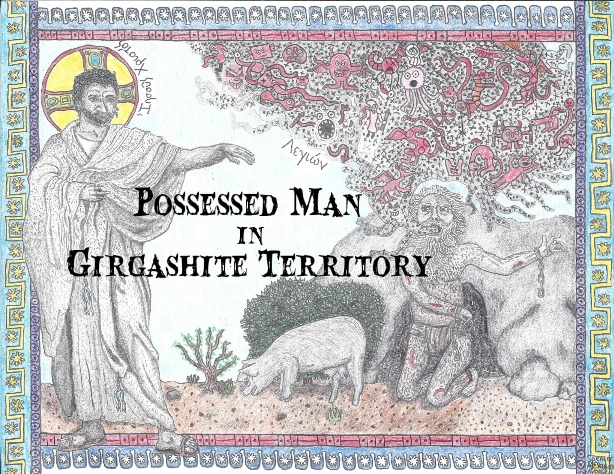
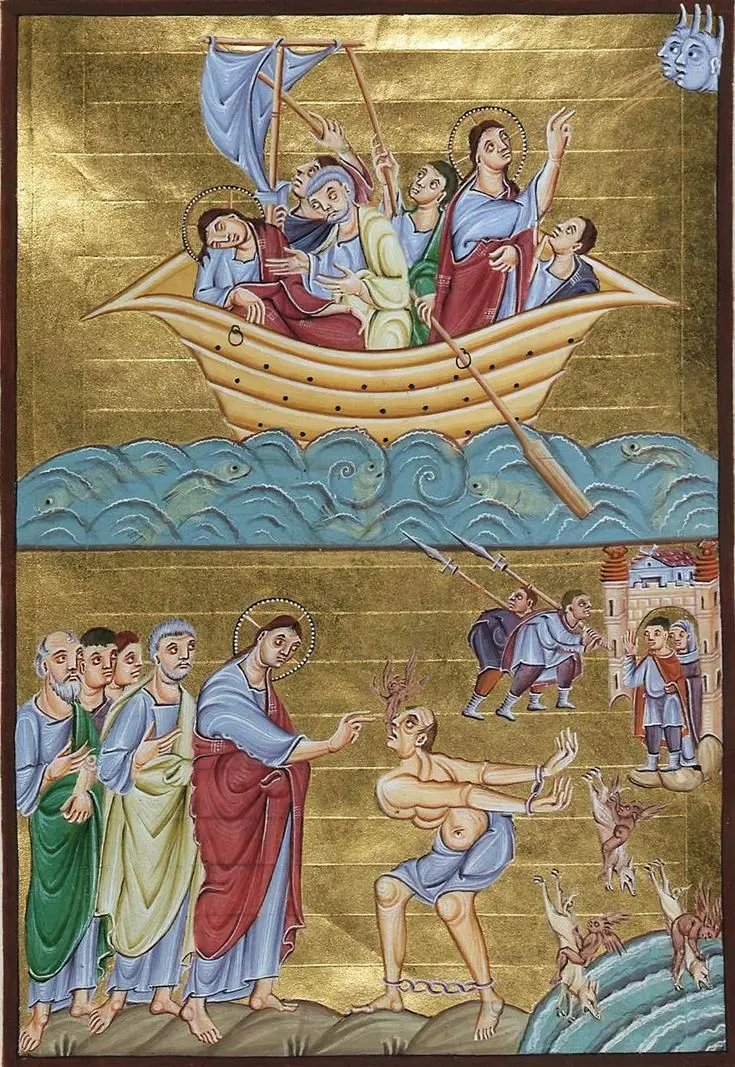
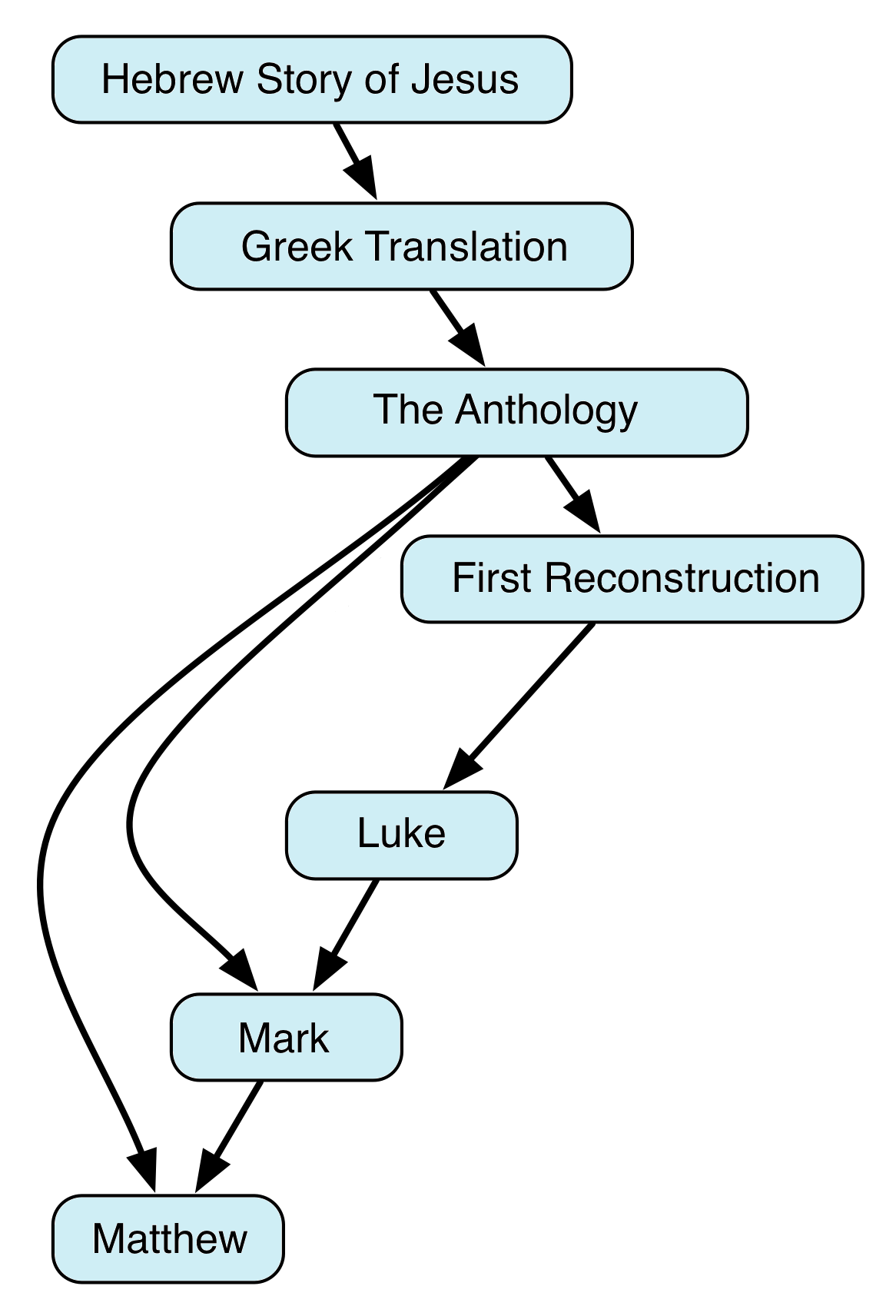

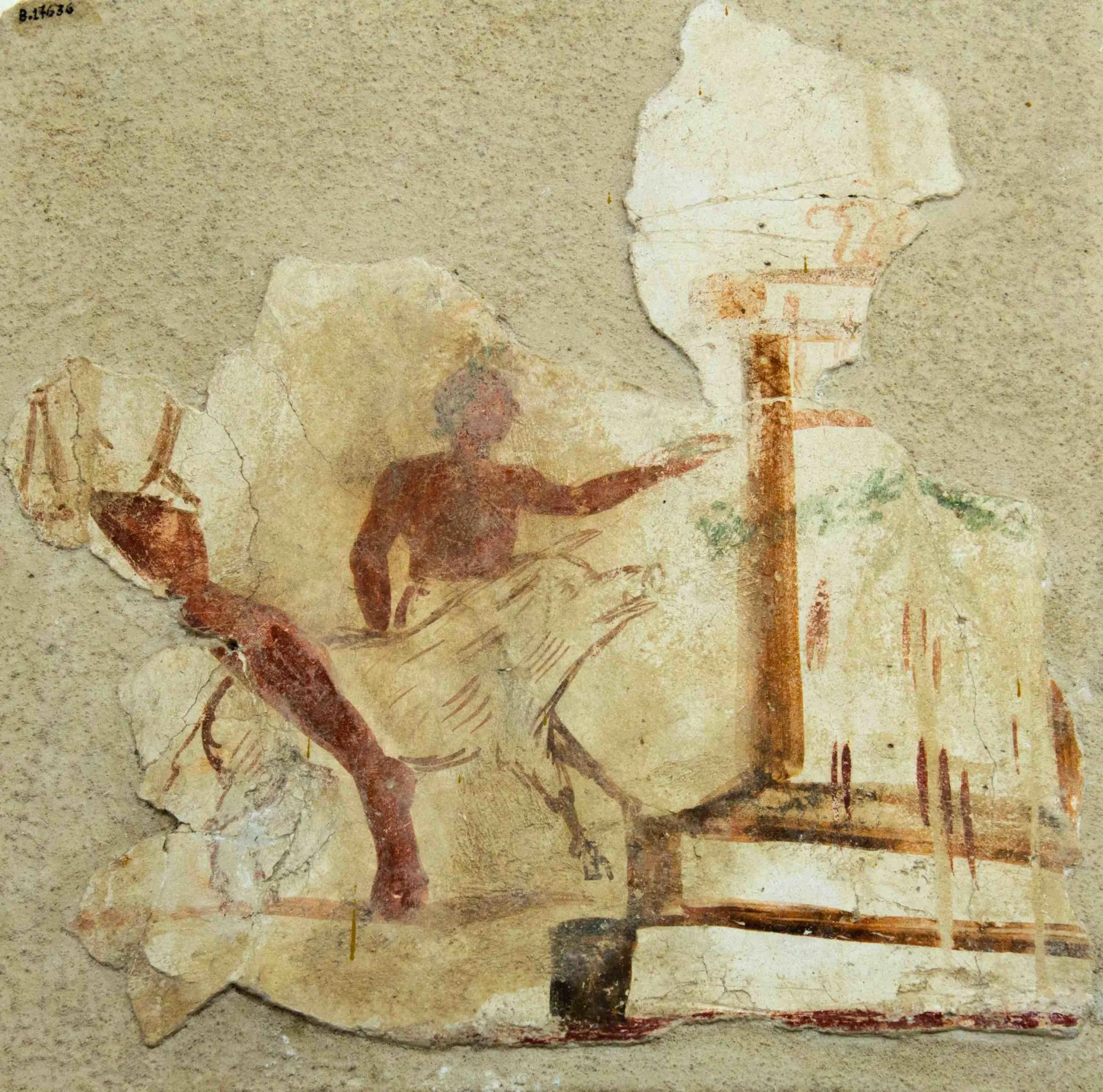
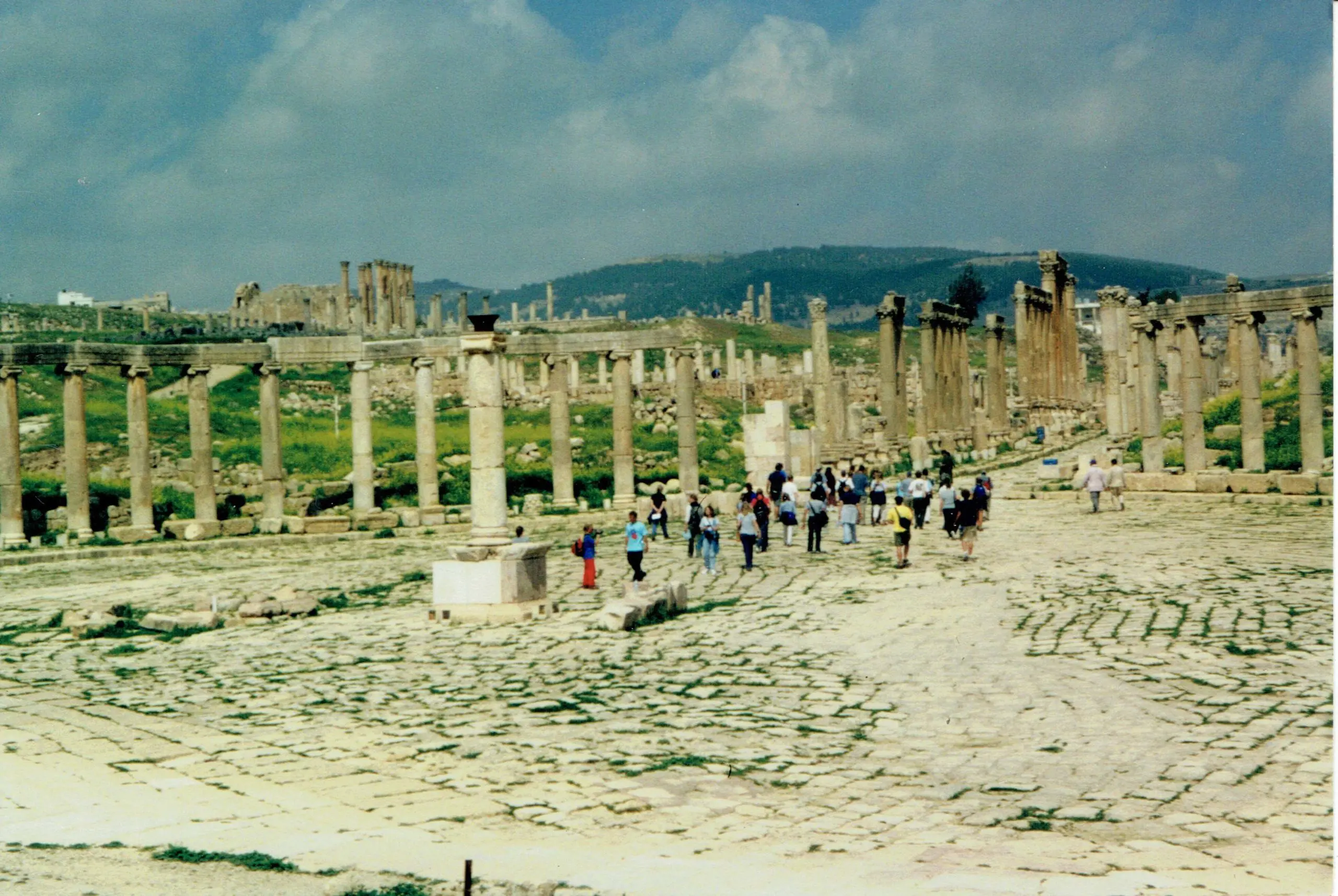
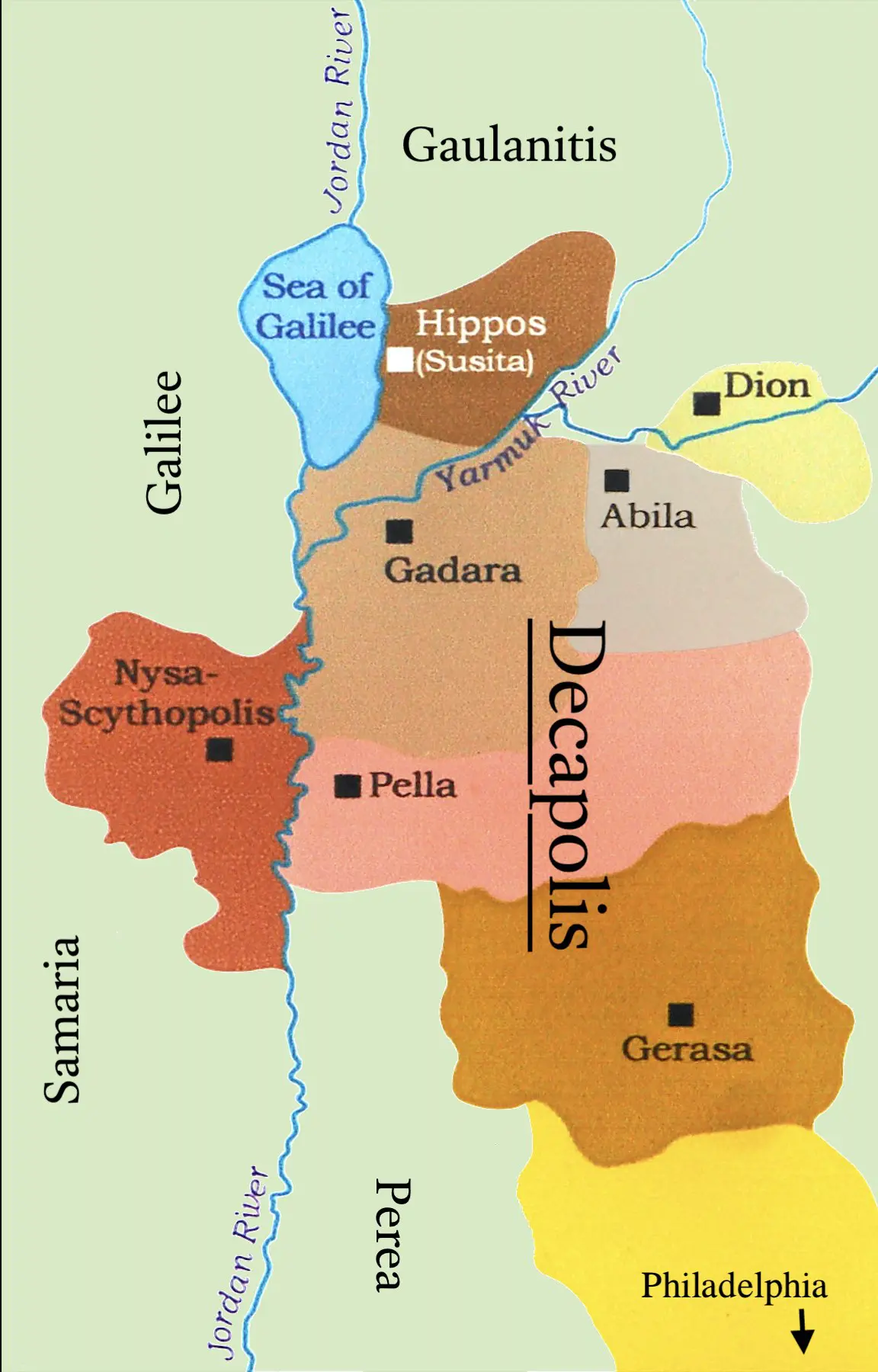

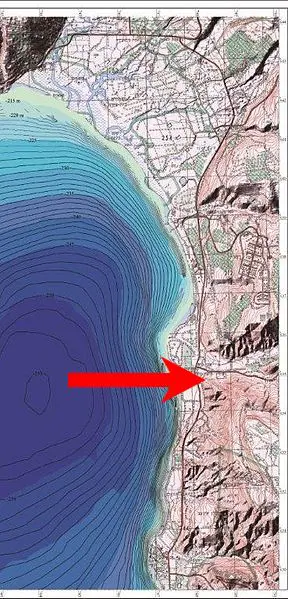

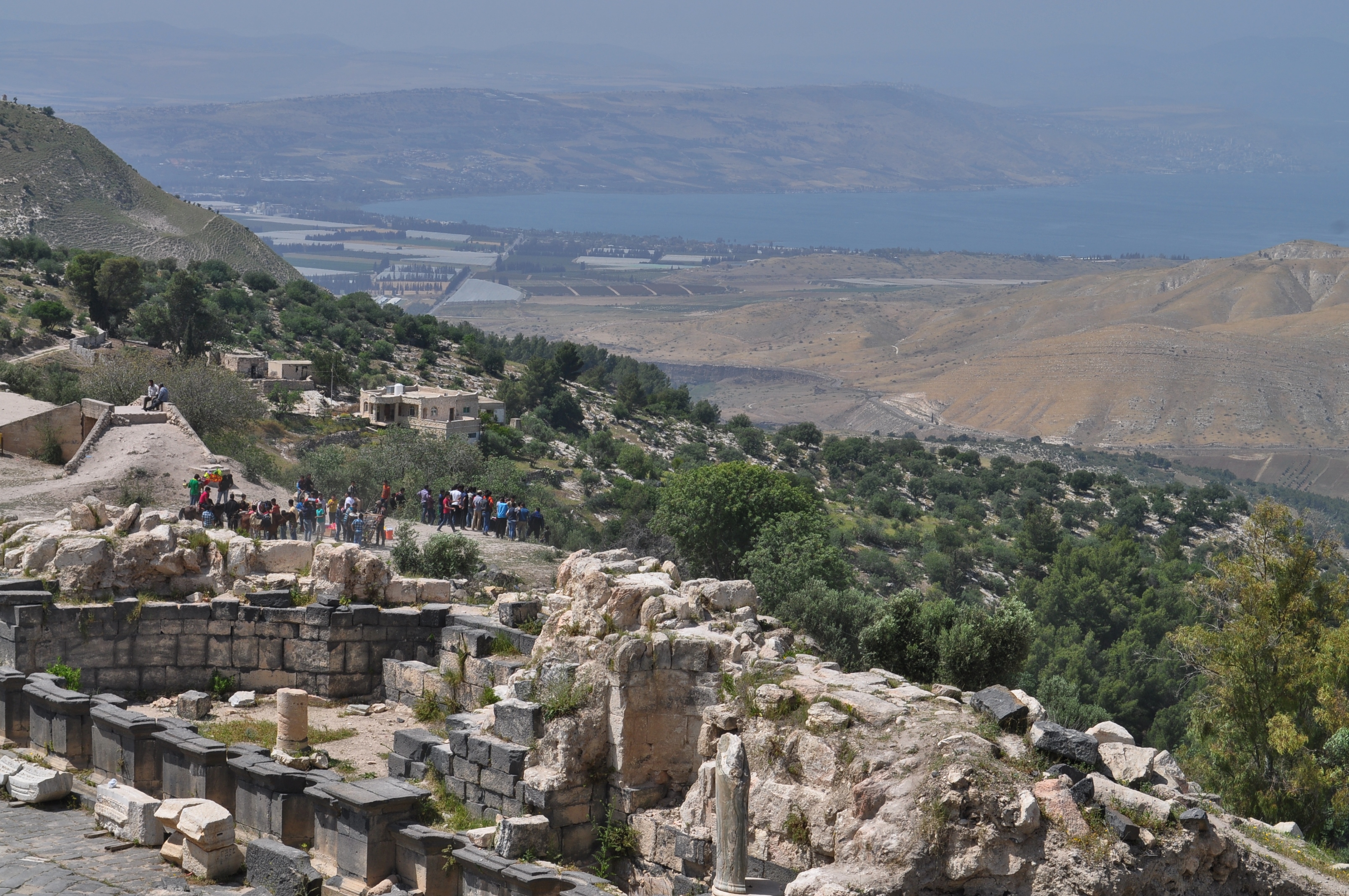

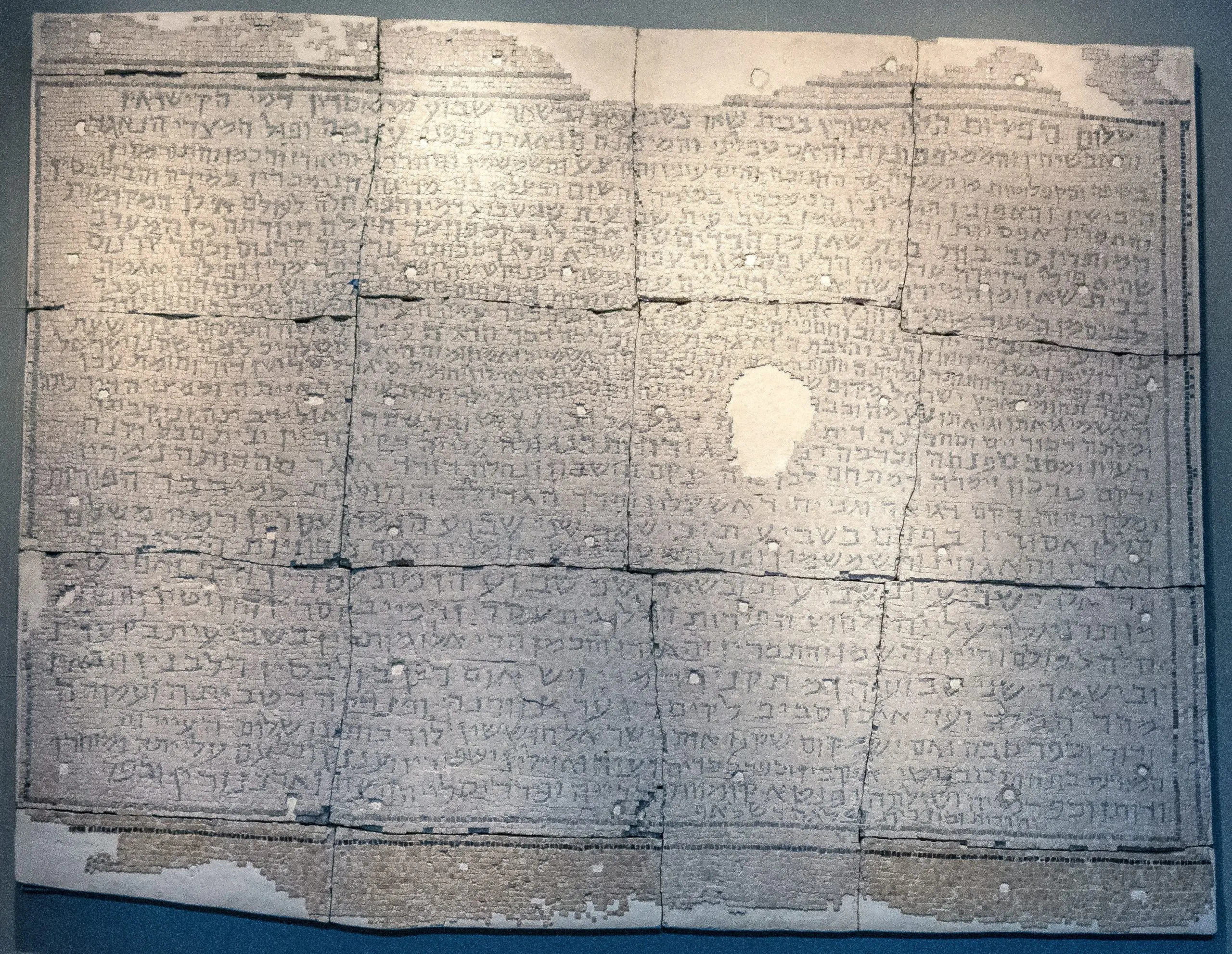


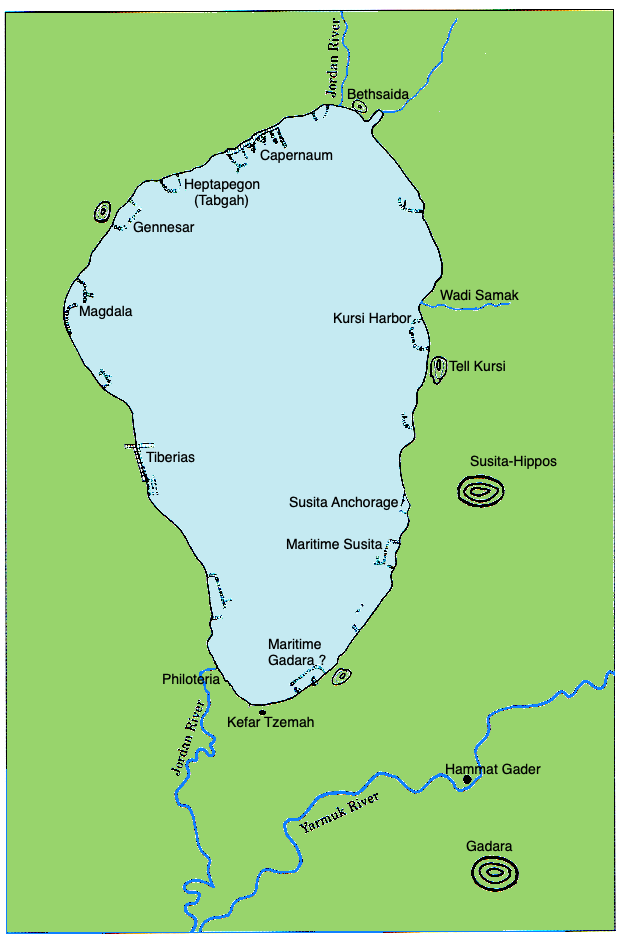

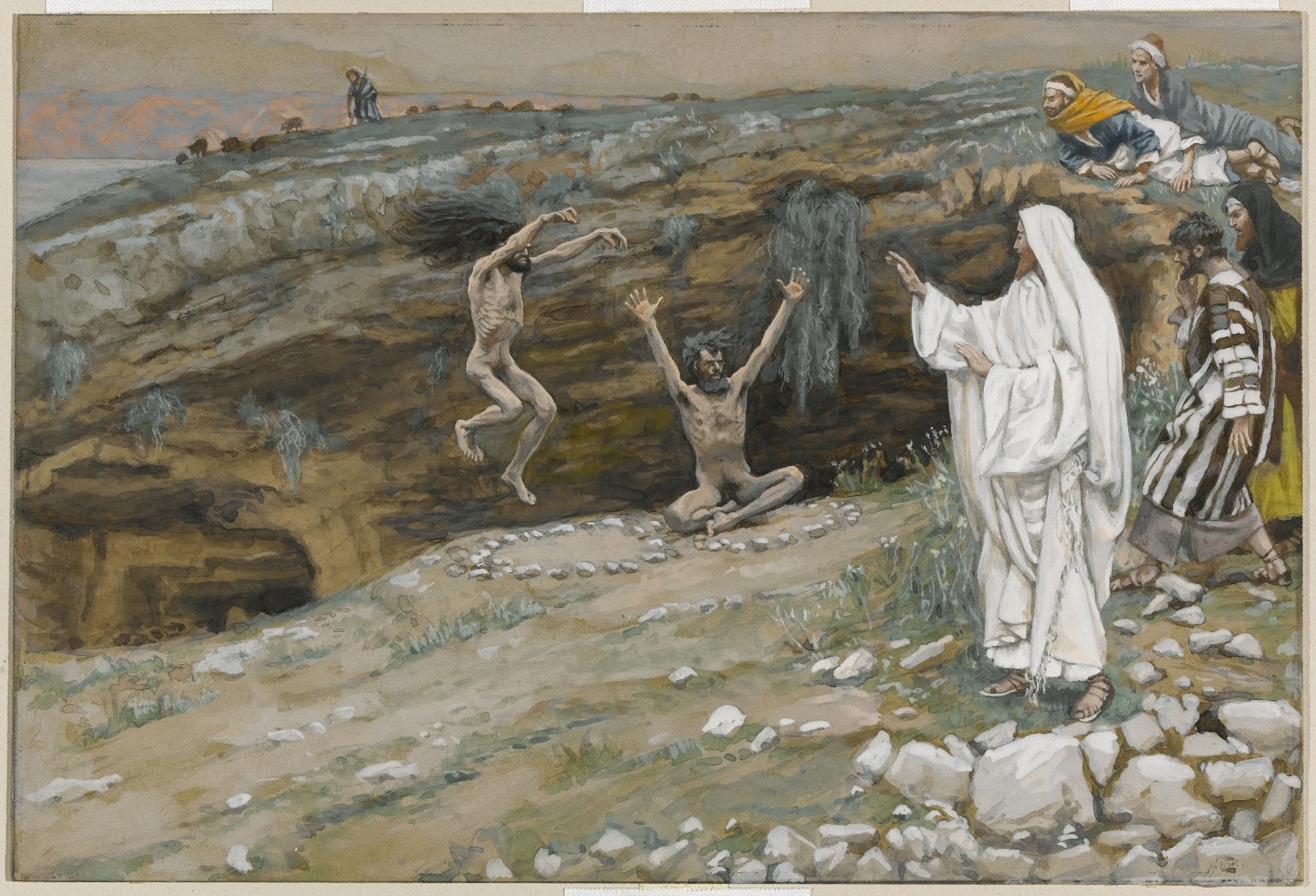
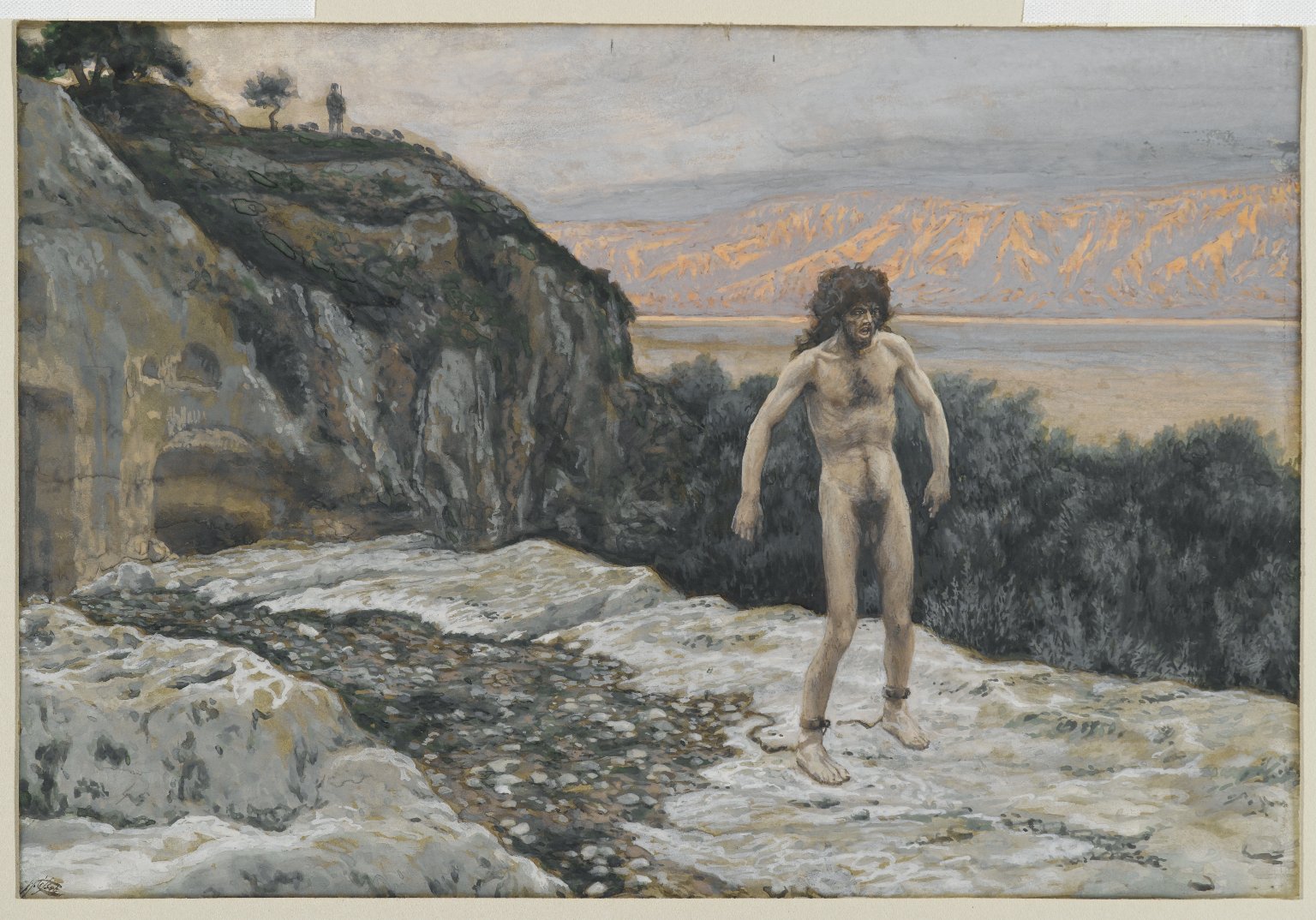
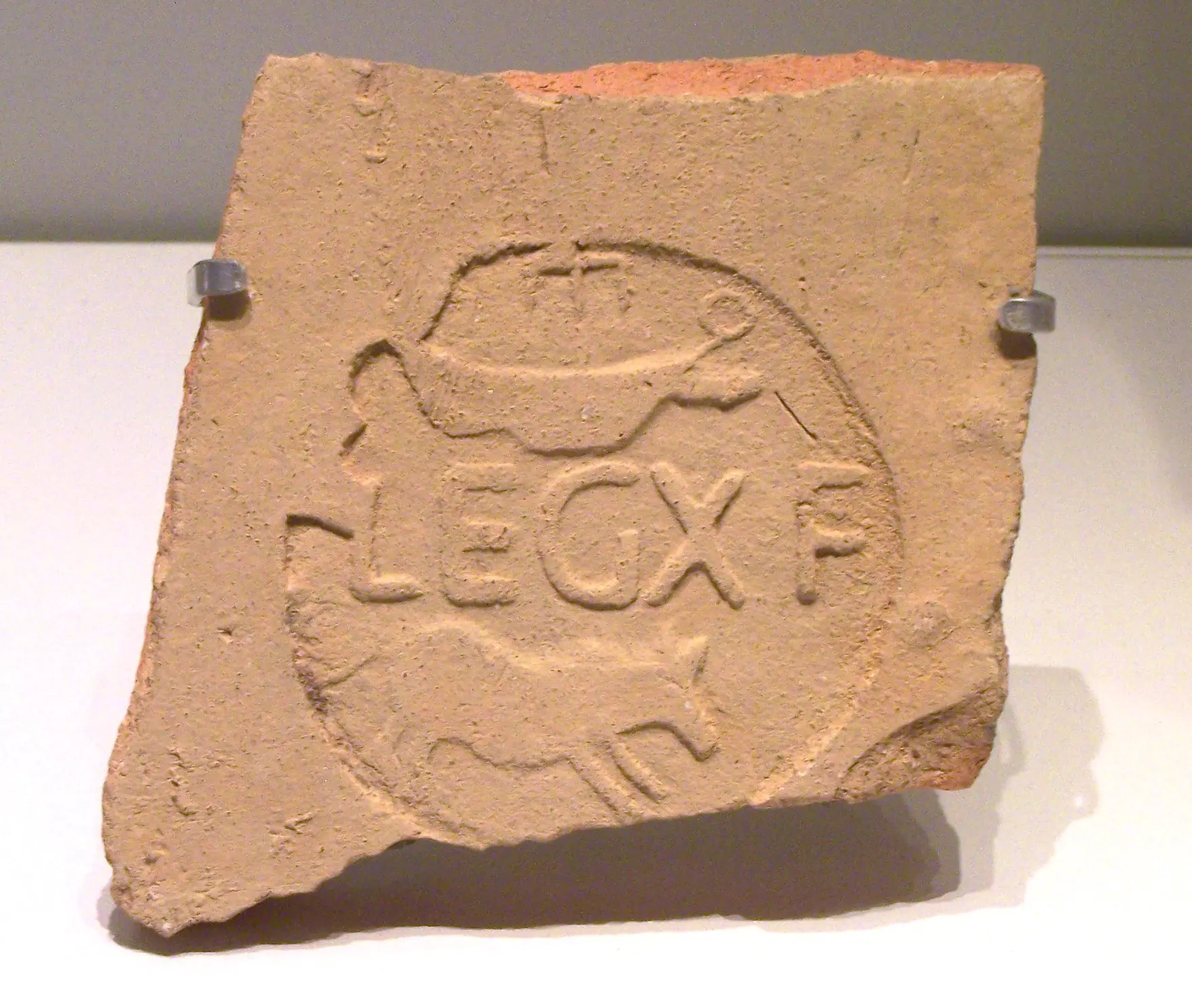



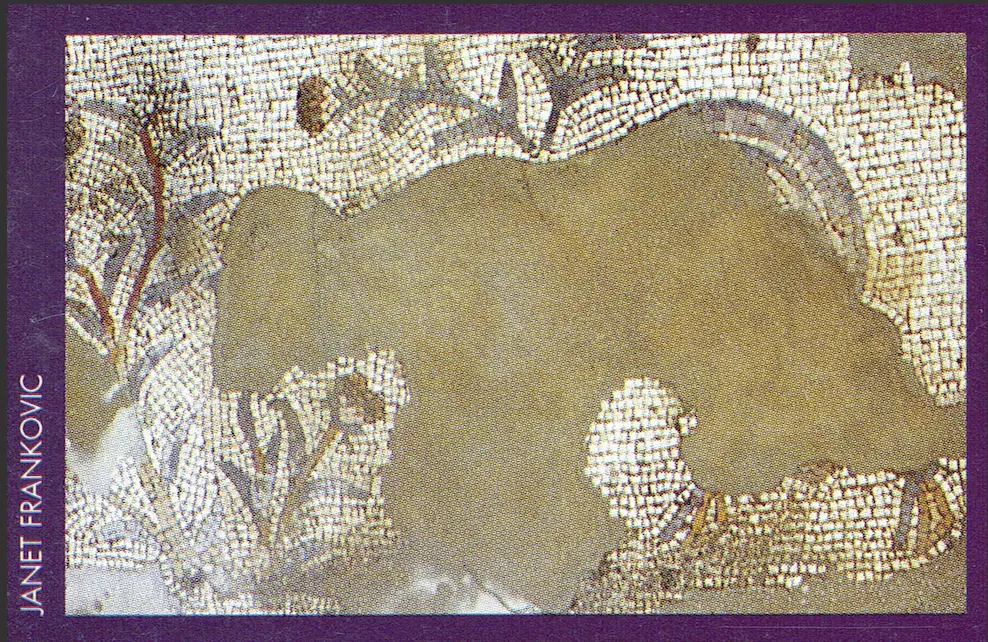
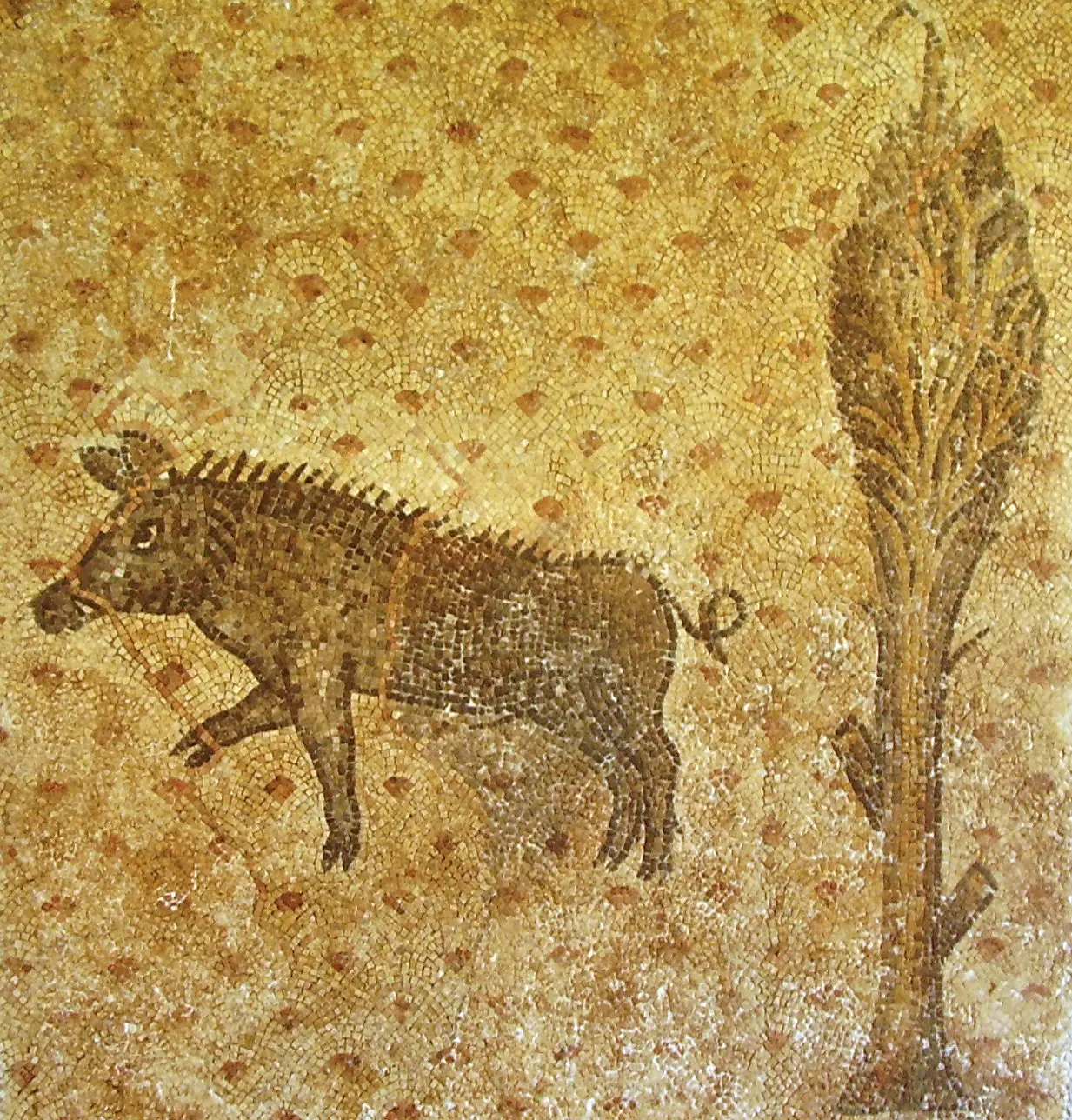
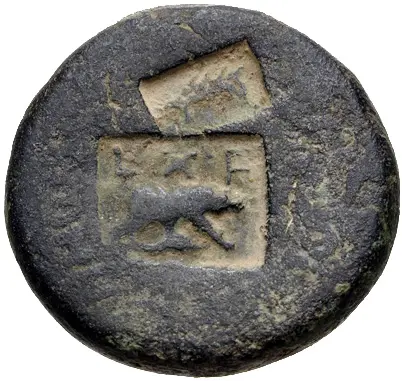
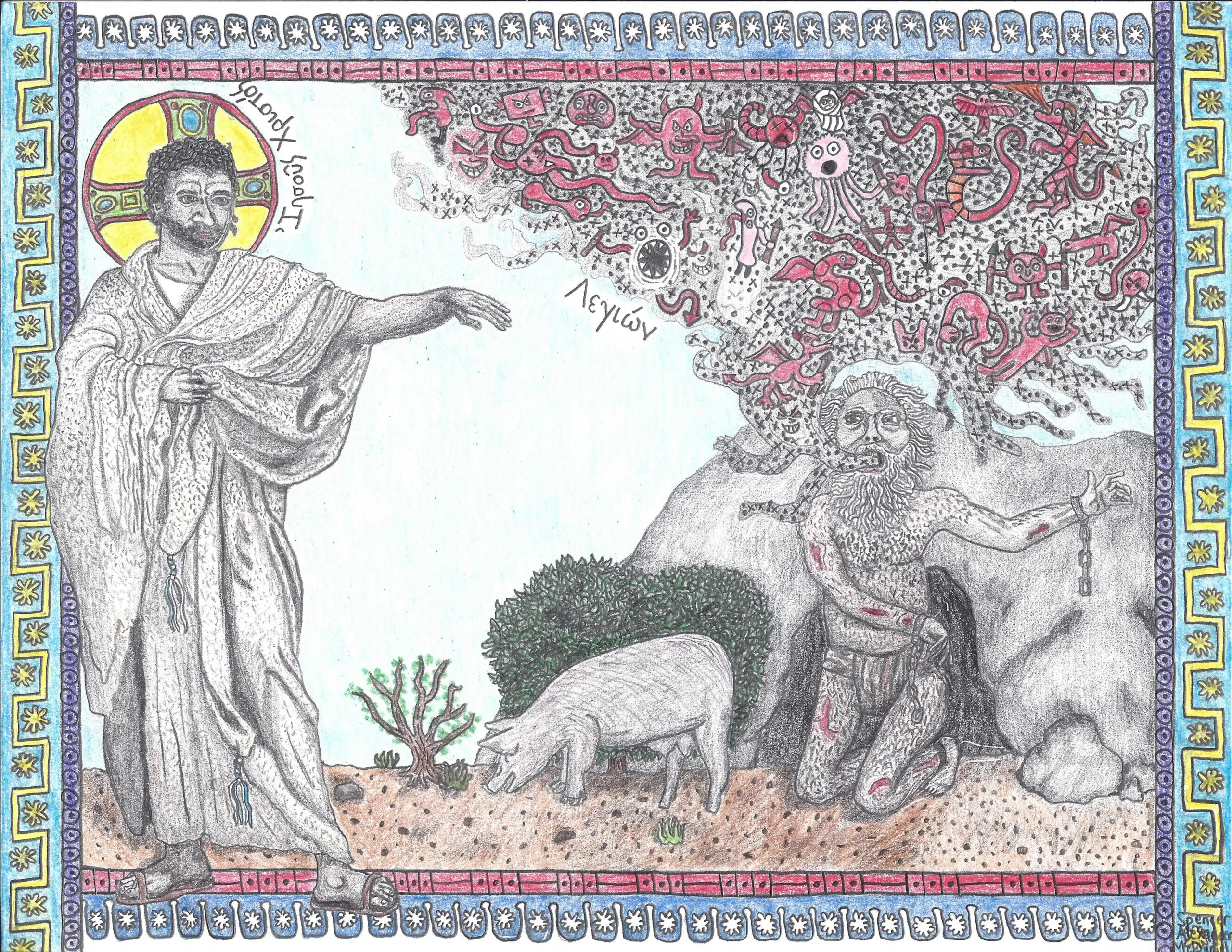

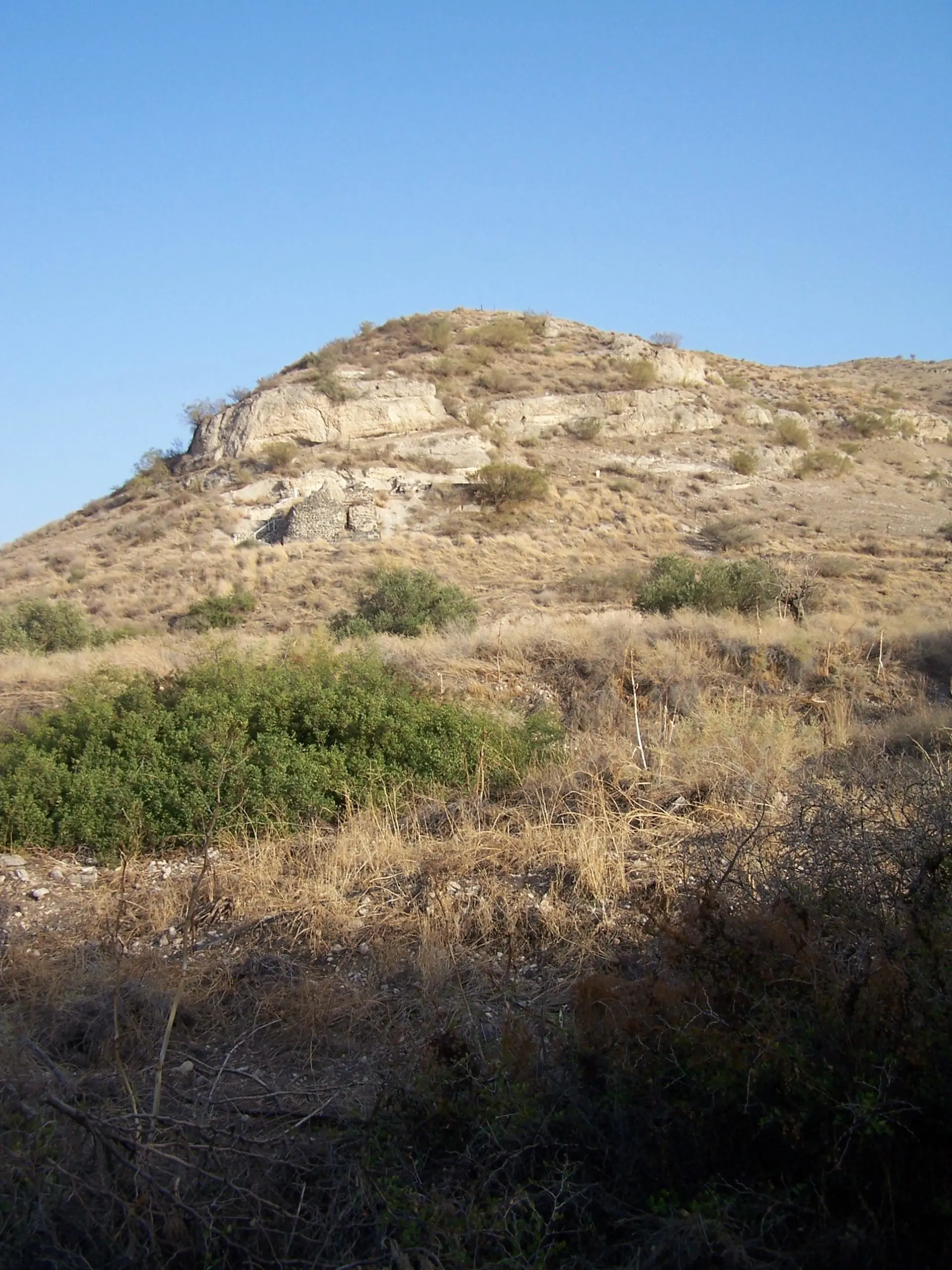
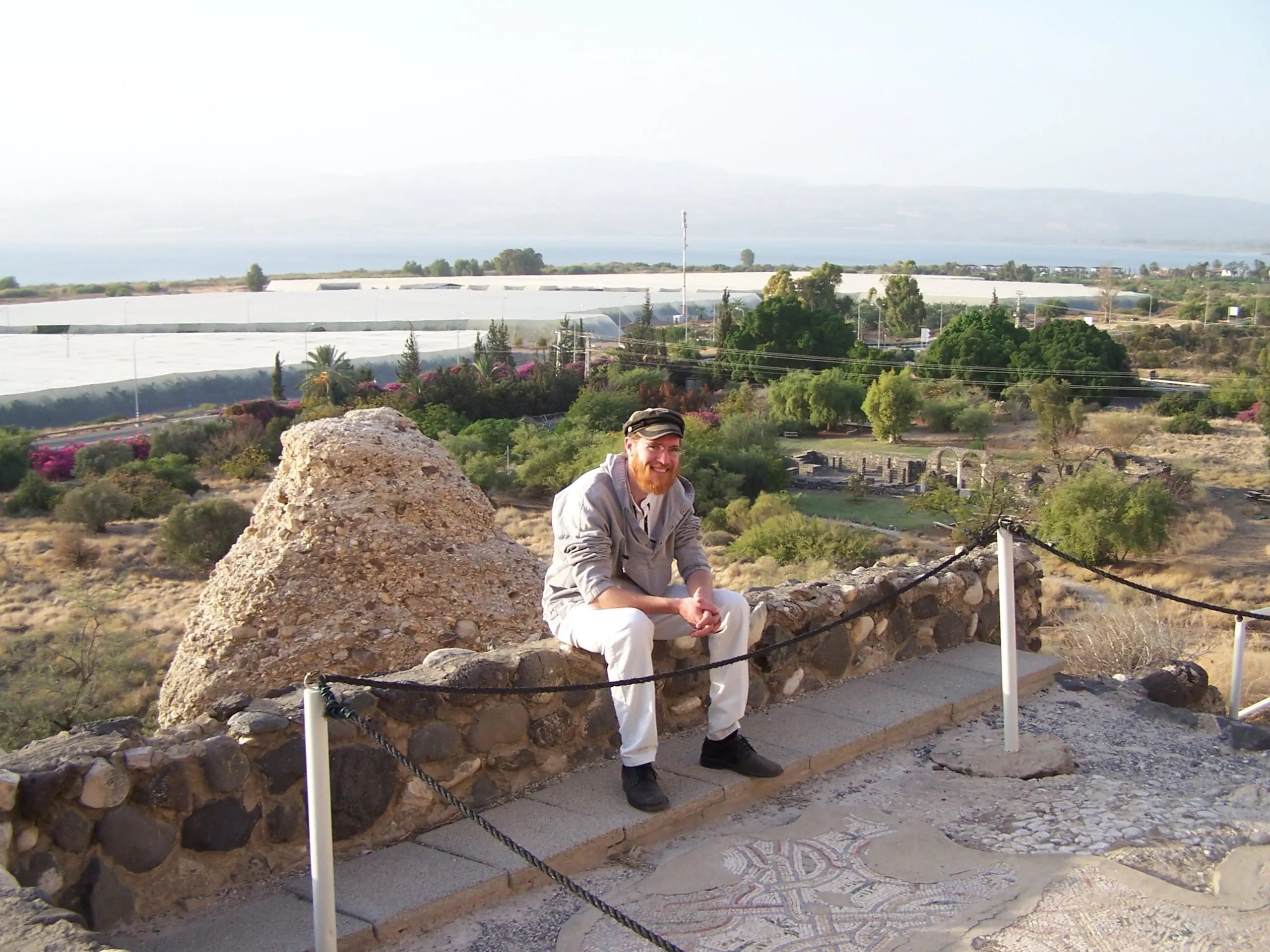



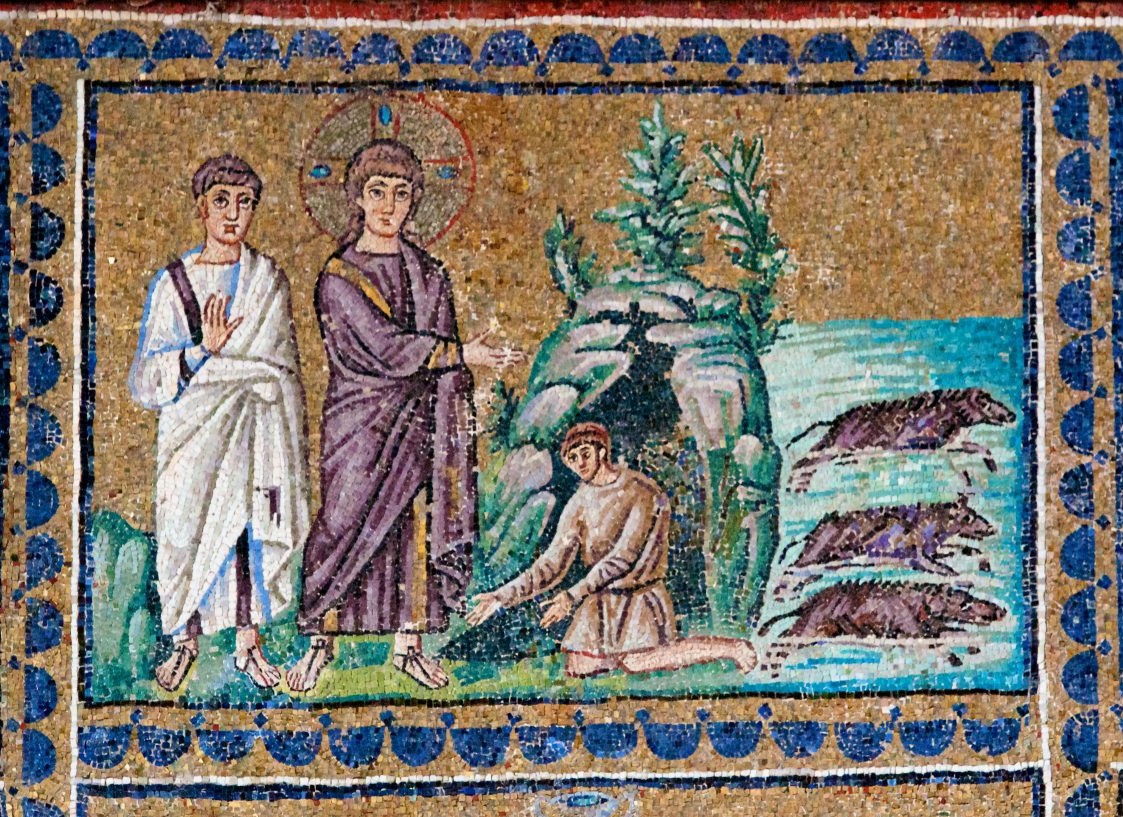

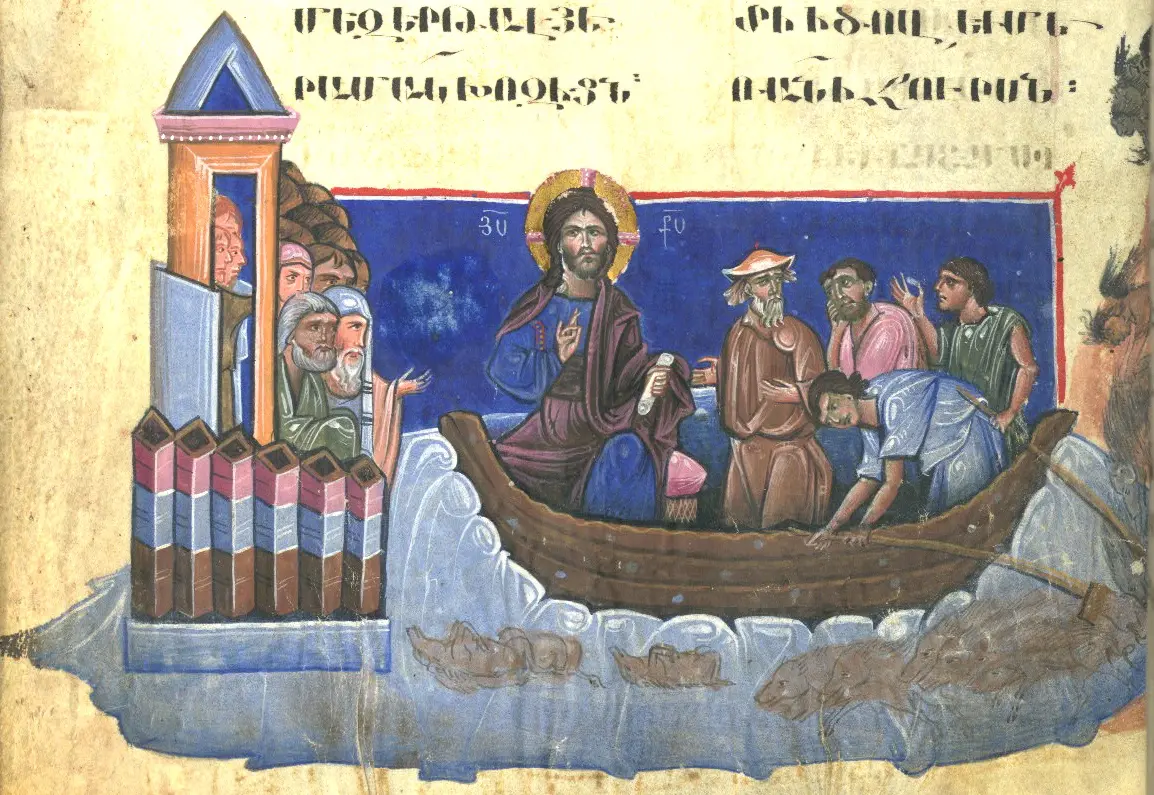
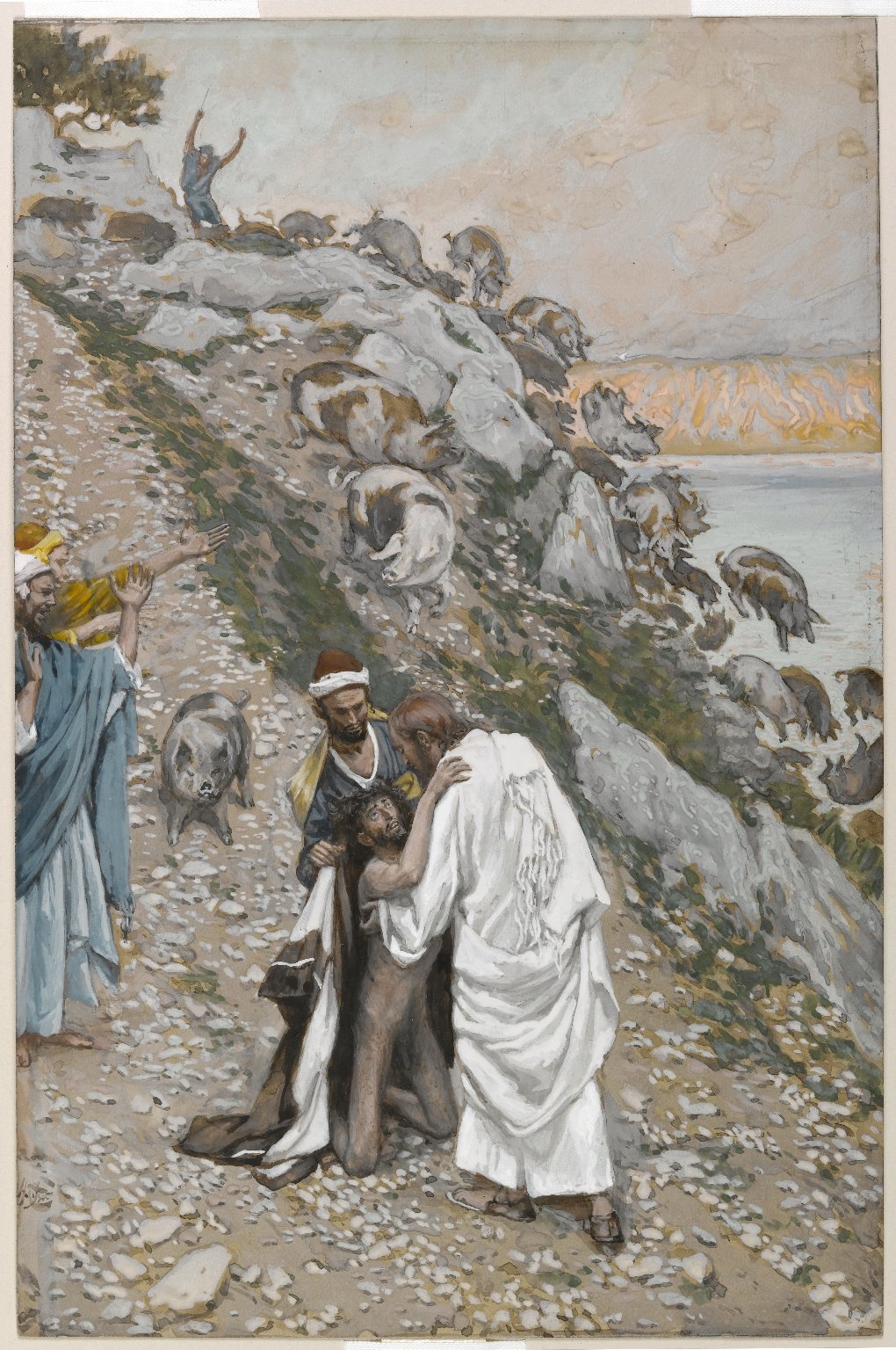
 Click here to return to The Life of Yeshua: A Suggested Reconstruction main page.
_______________________________________________________
Click here to return to The Life of Yeshua: A Suggested Reconstruction main page.
_______________________________________________________