
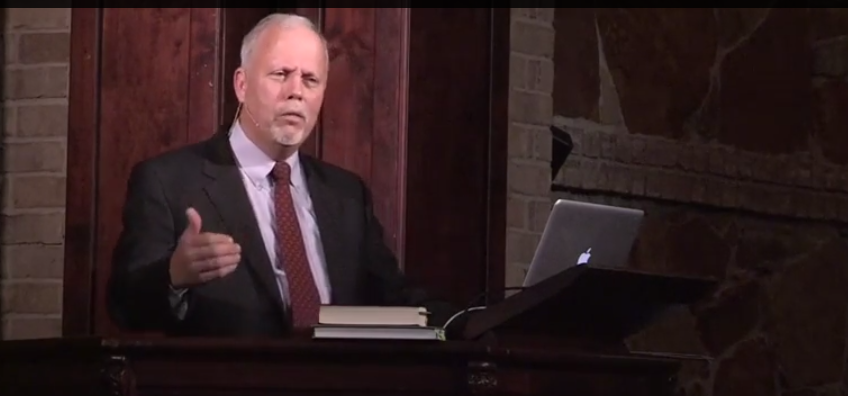
Dr. R. Steven Notley is a contributor to Jerusalem Perspective and member of the Jerusalem School of Synoptic Research. He is Professor of New Testament and Christian Origins at Nyack College in New York. In this lecture Dr. Notley discusses examples of how the Hebrew language influenced the Greek text of the canonical Gospels.
Demands of Discipleship

“Anyone who wants to join me but puts family ties or love of self ahead of me cannot possibly be my full-time disciple. Anyone who is not prepared to die cannot possibly be my full-time disciple. Anyone who does not renounce his possessions cannot possibly be my full-time disciple.”
Rich Man Declines the Kingdom of Heaven
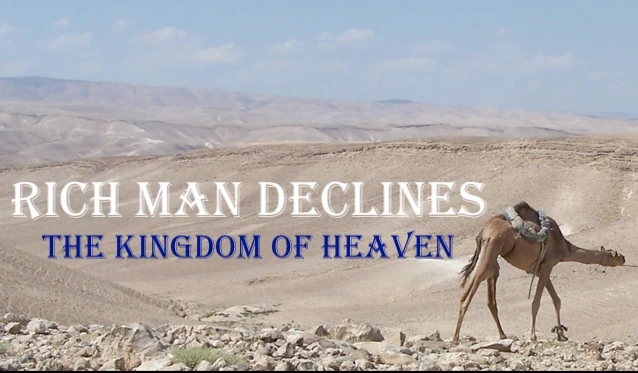
In order to join Jesus band of full-time disciples the rich man would have to adopt a radically different lifestyle than the one to which he was accustomed.
LOY Excursus: The Kingdom of Heaven in the Life of Yeshua

In this excursus to the Life of Yeshua commentary, David N. Bivin and Joshua N. Tilton delve into the ancient Jewish concept of the Kingdom of Heaven and discuss the ways in which Jesus made use of this concept in his own unique style.
Hidden Treasure and Priceless Pearl Parables

Supposing that these twin parables once belonged to the same narrative-sayings complex as the Rich Man Declines the Kingdom of Heaven incident enables us to understand their message. Jesus’ demand that the rich man sell everything wasn’t an onerous or unreasonable request; to the contrary, Jesus had offered the rich man an extraordinary bargain.
LOY Excursus: Greek Transliterations of Hebrew, Aramaic and Hebrew/Aramaic Words in the Synoptic Gospels

One of the clues that the Synoptic Gospels descended from a Hebrew Life of Yeshua is the number of foreign words that were transliterated into Greek from either Hebrew or Aramaic (it is often impossible to distinguish Hebrew from Aramaic in Greek transliteration).
Shimon’s Mother-in-law

Shimon’s Mother-in-law, a tender story of familial intimacy, offers a unique glimpse of Jesus’ compassion.
“Treasure in Heaven”: Examining an Ancient Idiom for Charity
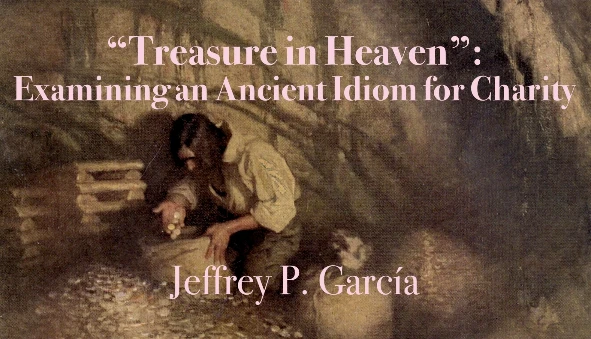
The growing value placed on charity in the first century C.E. cannot be overstated. As a new sensitivity developed within Judaism that challenged the compensatory “blessings and curses” paradigm of the Hebrew Bible (cf. Deut. 28) as a basis to serve God, so there was a shifting emphasis towards altruistic love embodied in the Levitical commandment, “…and you shall love your neighbor as yourself (וְאָהַבְתָּ לְרֵעֲךָ כָּמוֹךָ אֲנִי יי; Lev. 19:18).”
The Hebrew Life of Jesus
Despite the popularity of the modern suggestion that the Synoptic Gospels are the end result of several decades of oral transmission, the internal evidence indicates that this is not the case. Dozens of pericopae in Matthew and Luke translate to Hebrew so easily and so idiomatically that we must conclude that the Synoptic Gospels are the result of literary transmission.
From Luke to Mark to Matthew: A Discussion of the Sources of Markan “Pick-ups” and the Use of a Basic Non-canonical Source by All the Synoptists

The first article I wrote on the interrelationships of Matthew, Mark and Luke to each other and to other canonical and non-canonical sources appeared in the journal Novum Testamentum. With further research, however, I refined my hypothesis.