
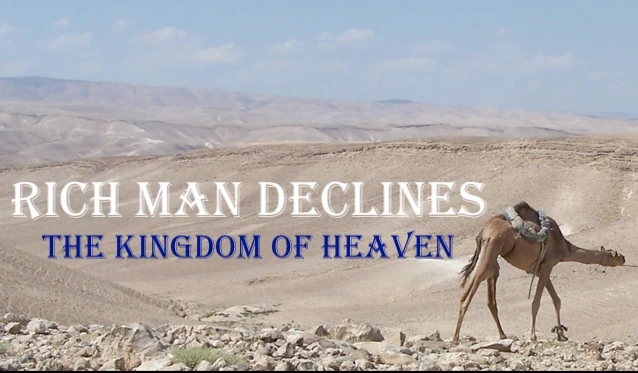
In order to join Jesus band of full-time disciples the rich man would have to adopt a radically different lifestyle than the one to which he was accustomed.
LOY Excursus: The Kingdom of Heaven in the Life of Yeshua

In this excursus to the Life of Yeshua commentary, David N. Bivin and Joshua N. Tilton delve into the ancient Jewish concept of the Kingdom of Heaven and discuss the ways in which Jesus made use of this concept in his own unique style.
Widow’s Son in Nain
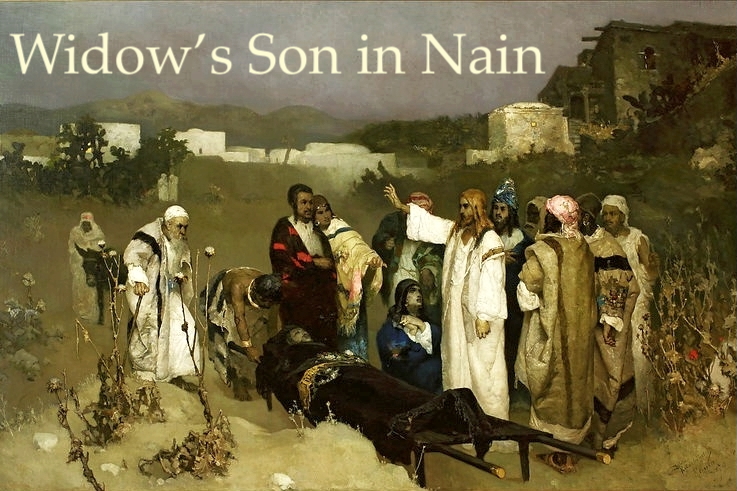
In Widow’s Son in Nain, David Bivin and Joshua N. Tilton ask “Which Nain was the town where Jesus raised the widow’s son?” and “What is the meaning of the people’s exclamation that a prophet had arisen among them?” The possibility of a Judean ministry early in Jesus’ career and of the messianic connotations of the Widow’s Son in Nain story are discussed in detail in this segment of the Life of Yeshua commentary.
Who Made the “Omission,” Luke or Mark?

Did Luke see and omit Mark 6:45-8:21, or did Mark see and omit Luke 9:51-18:14? The present article explores the possibility that the Markan pericope, “What Makes a Person Impure” in Mark 7:1-23 is dependent upon the Lukan pericope on “Discourse against the Pharisees” in Luke 11:37-41.
LOY Excursus: Greek Transliterations of Hebrew, Aramaic and Hebrew/Aramaic Words in the Synoptic Gospels

One of the clues that the Synoptic Gospels descended from a Hebrew Life of Yeshua is the number of foreign words that were transliterated into Greek from either Hebrew or Aramaic (it is often impossible to distinguish Hebrew from Aramaic in Greek transliteration).
Shimon’s Mother-in-law

Shimon’s Mother-in-law, a tender story of familial intimacy, offers a unique glimpse of Jesus’ compassion.
“Treasure in Heaven”: Examining an Ancient Idiom for Charity
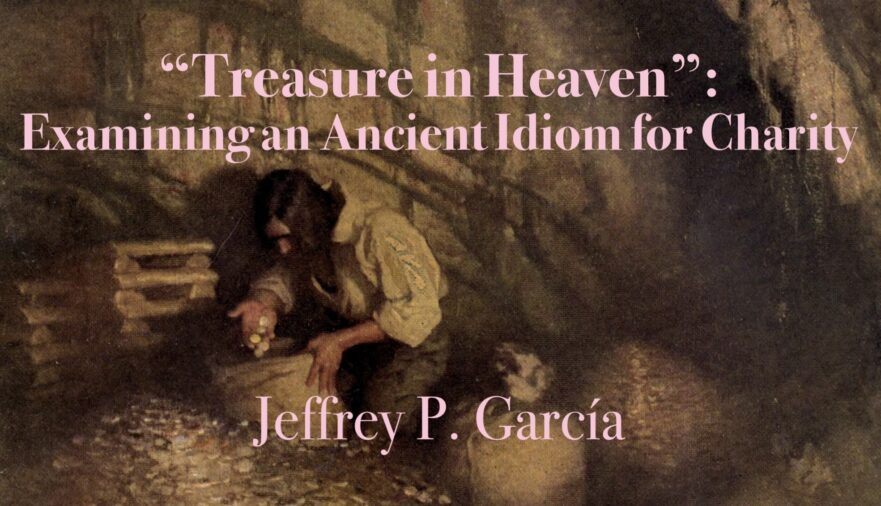
The growing value placed on charity in the first century C.E. cannot be overstated. As a new sensitivity developed within Judaism that challenged the compensatory “blessings and curses” paradigm of the Hebrew Bible (cf. Deut. 28) as a basis to serve God, so there was a shifting emphasis towards altruistic love embodied in the Levitical commandment, “…and you shall love your neighbor as yourself (וְאָהַבְתָּ לְרֵעֲךָ כָּמוֹךָ אֲנִי יי; Lev. 19:18).”
The Hebrew Life of Jesus
Despite the popularity of the modern suggestion that the Synoptic Gospels are the end result of several decades of oral transmission, the internal evidence indicates that this is not the case. Dozens of pericopae in Matthew and Luke translate to Hebrew so easily and so idiomatically that we must conclude that the Synoptic Gospels are the result of literary transmission.
From Luke to Mark to Matthew: A Discussion of the Sources of Markan “Pick-ups” and the Use of a Basic Non-canonical Source by All the Synoptists

The first article I wrote on the interrelationships of Matthew, Mark and Luke to each other and to other canonical and non-canonical sources appeared in the journal Novum Testamentum. With further research, however, I refined my hypothesis.
Introduction to A Hebrew Translation of the Gospel of Mark

Jerusalem Perspective presents a newly revised version of Robert Lindsey’s groundbreaking essay on the Synoptic Problem, which served as an introduction to his Hebrew Translation of the Gospel of Mark.