

Sermon preached on August 10, 1996.
Sidebar: Scholarly Attitudes to John

With the rediscovery of Jewish roots to John’s Gospel, scholars pay more attention to layers of historical data within the Gospel.
John’s Targumic Allusions
However one translates John 1:17, both clauses should be positively portrayed. After all, it is John himself who states that “salvation is of the Jews” (John 4:22) and that “the Hebrew Scriptures testify about Jesus” (John 5:39).
That Small-fry Herod Antipas, or When a Fox Is Not a Fox

We need to start translating “fox” with its proper Hebraic cultural meaning.
Herodes Antipas, der kleine Fisch oder: wenn ein Fuchs kein Fuchs ist

Der vorliegende Artikel von Dr. Randall Buth gehört zu einer Serie, die illustriert, wie die Kenntnis des semitischen Hintergrundes der Evangelien ein besseres Verständnis der Worte Jesu herbeiführen und die Übersetzung beeinflussen kann.
Inspiration, History and Bible Translation

To believe in the Christian Bible is also to believe in God’s working through the church, and to believe in the church is also to believe in its constitutional documents, the Hebrew Bible and the New Testament.
„Und“ oder „Aber“ – Also was?
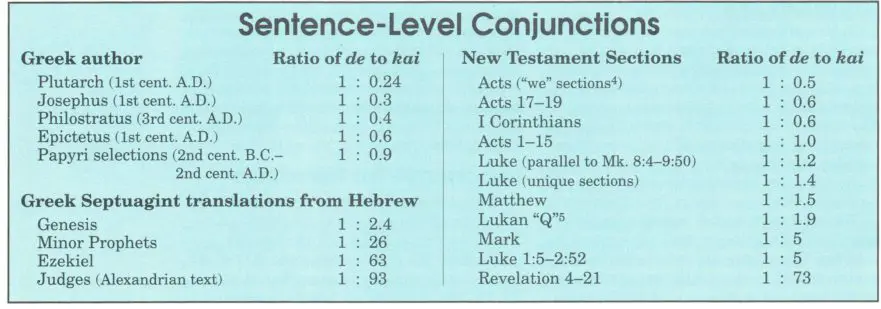
Schriften, die ursprünglich in Griechisch verfasst wurden, haben normalerweise eine höheres Aufkommen von “de” zu “kai” als Schriften, die von einer Semitischen Sprache beeinflusst wurden.

Pursuing Righteousness

A reconstruction can only be adopted by a theologian or a historian. A Bible translator must translate what the text of Scripture actually says.
Book Review: Robert L. Lindsey’s Jesus, Rabbi and Lord

There are many unique proposals in this book which deserve serious consideration.