
It is now a commonplace observation among scholars that Paul’s most basic convictions were misrepresented by the most dominant streams of Western theology.
The Central Text in the Original Sin Controversy
Diverging views on the doctrine of original sin represent a great chasm fixed between scholars and theologians today.
The Cross and the Jewish People
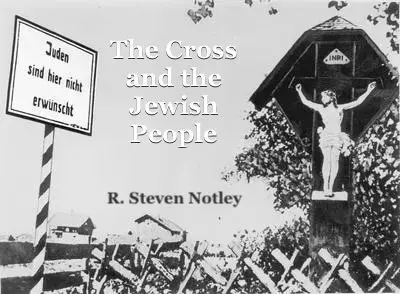
One of the most poignant pictures which exemplify the chasm of historical misunderstanding between Jews and Christians is that found in Yad Vashem, the Holocaust memorial in Jerusalem. It is a photograph of a life-size crucifix that stood outside an unknown German village prior to World War II. In a twist of tragic irony a sign was hung on the cross to warn Jews not to enter the village. It read: “Jews are not welcome here.”
Casting Down Modern Imaginations
Some scholars have plausibly argued that the Enlightenment’s preoccupation with the problem of knowing was a direct product of the Lutheran and Reformed “theologies of the Word” that emerged from the Reformation…
One God and Lord

The restoration of the Jewish homeland, Israel, and the reconnection of the Church to its Jewish roots are not unrelated phenomena. Many sectors of the Body of Messiah today are being stimulated and enriched by the “nourishing sap” of Israel’s faith, scriptures and scholarship. We are discovering that there is scarcely a single New Testament subject that cannot be amplified, deepened, or balanced by a Hebraic perspective. As disciples of Yeshua, we are deeply indebted to Israel.
Romans 11: The Olive Tree’s Root
Paul spoke about Israel as a “cultivated olive tree” whose rootage was in the Patriarchs, particularly Abraham. Some Bible commentators, however, interpreted the root of the olive tree as Christ or his messianic program.
Were the Pharisees “Legalistic”?

If we define legalism as “works righteousness,” then we cannot apply it to the Pharisees, because the Pharisaic understanding of piety was not based upon this concept.
No Longer Aliens (and Enemies) of the Commonwealth of Israel!
According to the New Testament, a pagan who becomes a follower of Jesus and enters the Kingdom of Heaven (in conservative Christian parlance, “gets saved”) becomes part of the Commonwealth of Israel.
God’s Mercy and Our Disobedience
Reading a passage from the New Testament against the backdrop of ancient Jewish tradition can sometimes add to the its significance. Romans 11:30-36 is one such passage, where without knowing the Jewish tradition to which Paul alluded, we run the risk of not hearing his emphasis clearly: God is merciful and his ways, incomprehensible.