
In Lesson Twelve of The Messianic Consciousness of Jesus series, Dr. Robert L. Lindesy discusses the significance of Jesus’ title “Lord.”
Evidence for Hebrew Roots of Matthew 1:21

The oldest known manuscripts of the New Testament were written in Greek, but by comparing Matt. 1:21 in Hebrew, Aramaic and Greek with the knowledge of the naming formula so common in the Hebrew Bible, we see that this verse only makes sense in Hebrew. Since the naming formula depends on a wordplay that does not work in Greek or Aramaic, Matt. 1:21, or the oral tradition behind it, had to be in Hebrew.
Not Everyone Can Be Yeshua’s Disciple
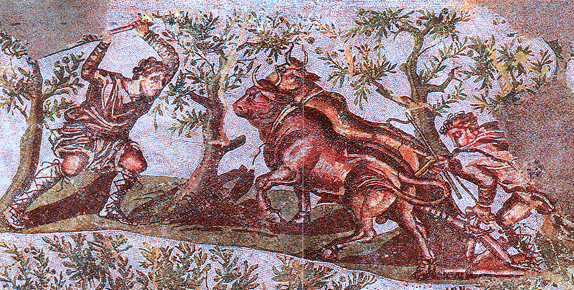
When three eager prospective disciples asked permission to follow Jesus, Jesus responded to each of them with a riddle. Why would God allow Jesus and his followers to sleep on the ground when he provides safe places even for the animals to sleep? How can the dead bury a corpse? Why would a disciple set his hand to a plow when Elisha had given up plowing in order to follow Elijah? These riddles would have to be puzzled over before their meaning was fully understood. But each of the riddles were ominous, and it appears that each of the three prospective disciples reconsidered his desire to join Jesus.
Tower Builder and King Going to War Similes

The Tower Builder and King Going to War similes explain why Jesus thought full-time discipleship was not suitable for everyone.
Demands of Discipleship

“Anyone who wants to join me but puts family ties or love of self ahead of me cannot possibly be my full-time disciple. Anyone who is not prepared to die cannot possibly be my full-time disciple. Anyone who does not renounce his possessions cannot possibly be my full-time disciple.”
LOY Excursus: The Kingdom of Heaven in the Life of Yeshua

In this excursus to the Life of Yeshua commentary, David N. Bivin and Joshua N. Tilton delve into the ancient Jewish concept of the Kingdom of Heaven and discuss the ways in which Jesus made use of this concept in his own unique style.
Hidden Treasure and Priceless Pearl Parables

Supposing that these twin parables once belonged to the same narrative-sayings complex as the Rich Man Declines the Kingdom of Heaven incident enables us to understand their message. Jesus’ demand that the rich man sell everything wasn’t an onerous or unreasonable request; to the contrary, Jesus had offered the rich man an extraordinary bargain.
Widow’s Son in Nain

In Widow’s Son in Nain, David Bivin and Joshua N. Tilton ask “Which Nain was the town where Jesus raised the widow’s son?” and “What is the meaning of the people’s exclamation that a prophet had arisen among them?” The possibility of a Judean ministry early in Jesus’ career and of the messianic connotations of the Widow’s Son in Nain story are discussed in detail in this segment of the Life of Yeshua commentary.
The Hebrew Life of Jesus
Despite the popularity of the modern suggestion that the Synoptic Gospels are the end result of several decades of oral transmission, the internal evidence indicates that this is not the case. Dozens of pericopae in Matthew and Luke translate to Hebrew so easily and so idiomatically that we must conclude that the Synoptic Gospels are the result of literary transmission.
Introduction to A Hebrew Translation of the Gospel of Mark

Jerusalem Perspective presents a newly revised version of Robert Lindsey’s groundbreaking essay on the Synoptic Problem, which served as an introduction to his Hebrew Translation of the Gospel of Mark.