

In the previous article of this series Halvor Ronning examined the statistics of verbal identities involved in comparisons between materials shared by all three Synoptic Gospels (Triple Tradition). Now in Part Two Ronning will bring into consideration the statistics pertaining to materials shared in only two Synoptic Gospels (Double Tradition). Ronning wiargues that the consistency with which an author treats his sources is a major clue for determining the order of Synoptic dependence.
A Statistical Approach to the Synoptic Problem: Part 1—Triple Tradition
“A Statistical Approach to the Synoptic Problem,” a new series on Jerusalem Perspective by Jerusalem School of Synoptic Research member Halvor Ronning, aims to contribute to the body of empirical data that must be accounted for by any viable theory that attempts to describe the interrelationships between the Synoptic Gospels. To that end, Halvor Ronning has developed and adapted several new methods of quantifying and testing synoptic hypotheses which will be described and applied in “A Statistical Approach to to the Synoptic Problem.”
Matthew 1:1-25: In the Year of Jubilee?
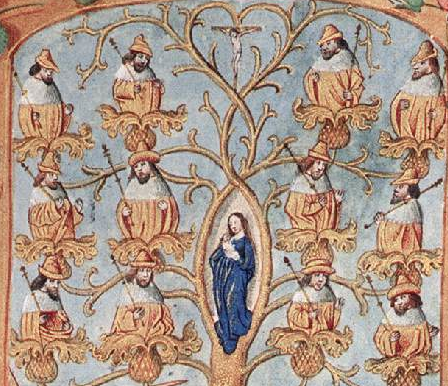
The genealogies of Matthew and Luke reflect diverging Jewish opinions about the time for the advent of the redeemer.
Jesus and a Canaanite Woman

Does the story of a Canaanite woman’s encounter with Jesus, which is found in the Gospels of Mark and Matthew, show indications of having descended from a Hebrew source? Why did the author of Luke fail to include this story? Explore these questions and more in “Jesus and a Canaanite Woman.”
Matthew 2:1-23: A Nazorean Shall Be Called

Where in the Hebrew Scriptures is it expected that the Redeemer will be called a Nazarene or come from Nazareth?
Sending the Twelve: “The Harvest Is Plentiful” and “A Flock Among Wolves”

Yeshua told his twelve emissaries: “There’s a huge harvest, but a shortage of harvesters. So send word to the owner of the field to hire more workers to help them finish the job.
“Go! But beware, I’m sending you out like a defenseless flock into a pack of ravenous wolves.”
The Significance of Jesus’ Words “Not One Jot or One Tittle Will Pass from the Law” (Matt. 5:18)
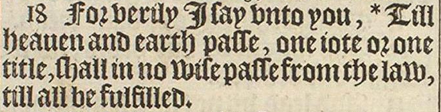
“Jot” and “tittle” are not everyday words in English. What do they mean and how should Jesus’ words in Matthew 5:18 be understood? Jerusalem Perspective‘s editor-in-chief, David Bivin, tackles these questions on behalf of a subscriber’s request for help.
Sending the Twelve: Commissioning

Yeshua summoned his twelve emissaries to Israel and he gave them power to drive out dangerous spirits and to heal every disease and sickness those spirits had caused. Then he sent them on ahead in pairs to every city he intended to visit.
Choosing the Twelve
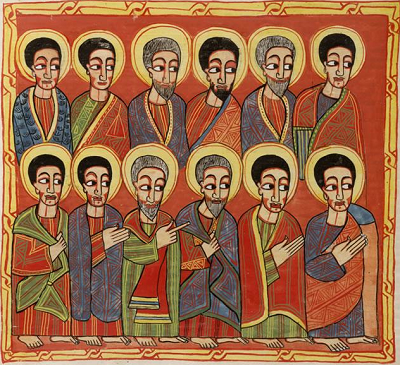
One day Yeshua called his disciples together and chose twelve of them to be his emissaries to Israel. Their names were Shimon Petros and Andrai (his brother), Yaakov, Yohanan, Pelipah, Talmai’s son, Matai, Tomah, Yaakov Halfi’s son, zealous Shimon, Yehudah Yaakov’s son, and Yehudah from Keriyot, who was a traitor.
The Origin of the Gospels

The July issue of The Church Quarterly Review in 1922 contained an article by William Lockton in which the author challenged the scholarly consensus concerning the solution to the Synoptic Problem. This important study, which is now in the public domain, was later to be of great importance to Rev. Dr. Robert L. Lindsey as further confirmation of Lindsey’s growing conviction that the Gospel of Mark is a highly edited epitome of the Gospel of Luke.