
I portrayed Salome by means of a bold, modernistic collage.
Medieval Jargon on First-century Lips

The following article is an attempt by the author to explain and correct an unfortunate choice of terminology early in his career. That poor choice may have influenced others as they were formulating their own ideas on ancient Jewish hermeneutics. While doing so, they tapped a rather startling source in support of their conclusions.
Character Profile: A New Portrait of Salome

The recent discovery of an ancient coin with a crisp imprint of Salome make this a fitting time to set the record straight—to rectify the public perception of this ancient Jewish aristocrat. Her image has been fictionalized to the point of grotesque caricature by writers of the past 150 years. Famous for her role in the execution of John the Baptist, Salome has been depicted repeatedly as morally depraved. Dilligent historical research, however, reveals a different story.
“And” or “In order to” Remarry?

Apparently, contrary to normal Greek usage, Greek’s kai (“and”) in the sense of “in order to” occurs in the Synoptic Gospels.
Remember Shiloh!

Without paying attention to ancient Jewish exegesis one can easily miss the full impact of Jesus’ statement, “den of thieves.” Was Jesus solely addressing the vendors, or was he aiming at bigger game?

Sidebar: Scholarly Attitudes to John

With the rediscovery of Jewish roots to John’s Gospel, scholars pay more attention to layers of historical data within the Gospel.
John’s Targumic Allusions
However one translates John 1:17, both clauses should be positively portrayed. After all, it is John himself who states that “salvation is of the Jews” (John 4:22) and that “the Hebrew Scriptures testify about Jesus” (John 5:39).
Jesus’ Twin Parables
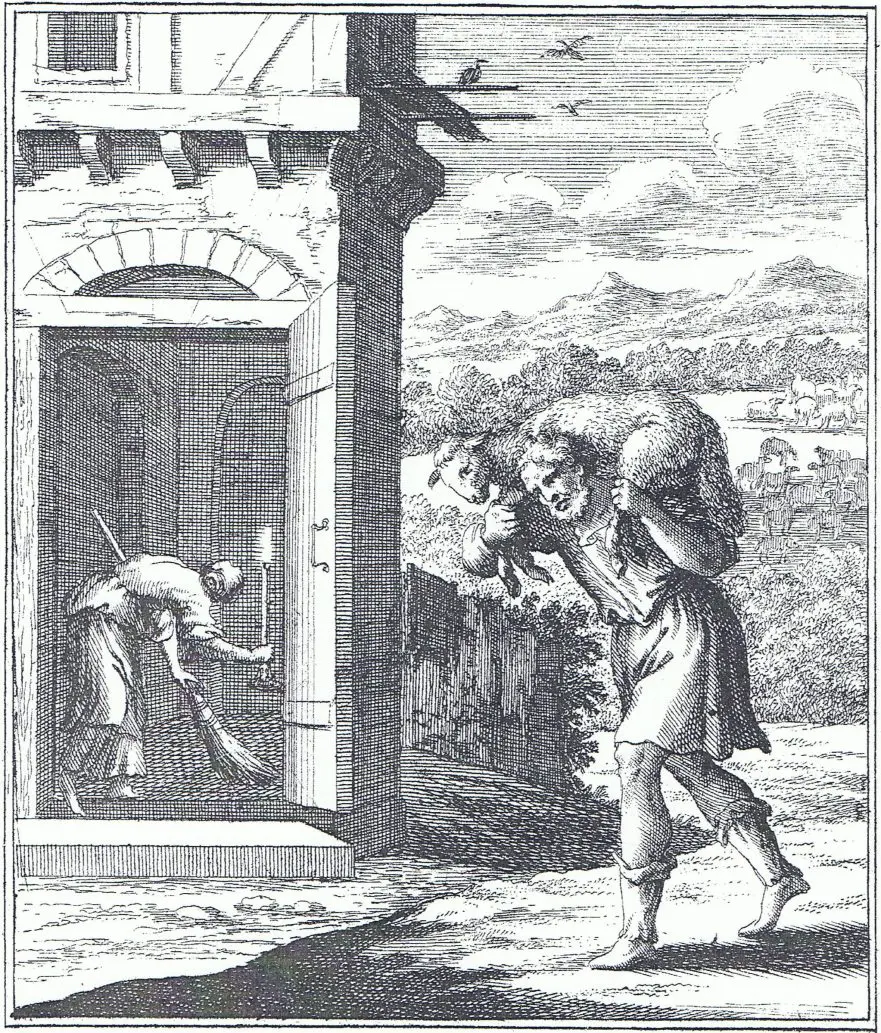
Conducting research on the Gospels, the late Robert L. Lindsey discovered Jesus’ teaching format: incident, teaching discourse and two concluding parables. In this article he discusses Jesus’ double parables.