

What can Jesus’ warnings against praying like Gentiles teach us about Jesus’ relationship to Second Temple Judaism and his attitude toward non-Jews?
Lost Sheep and Lost Coin Similes
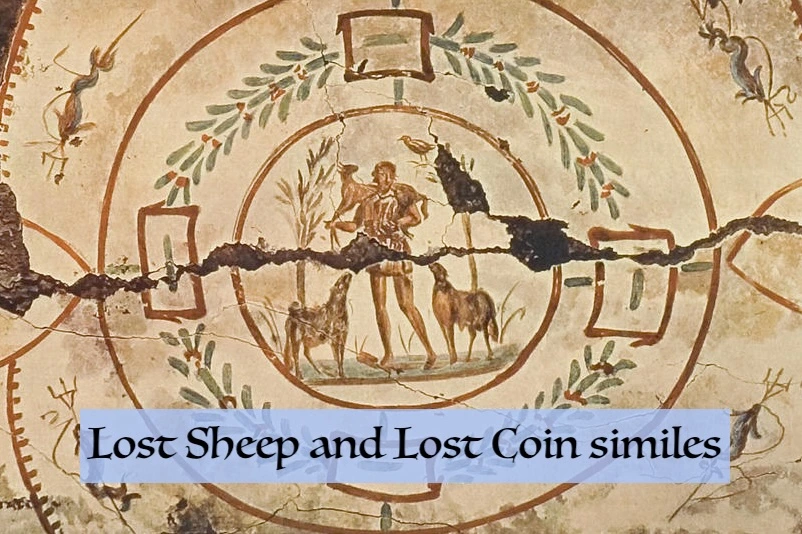
With the Lost Sheep and Lost Coin similes Jesus explained to his critics that he ate and drank with “sinners” because God rejoices when a person repents. God wants his friends—including Jesus and Jesus’ critics—to join him in the celebration.
Call of Levi
In the Call of Levi story we learn about Jesus’ attitude toward sinful persons and about his relationship with the Pharisees.
Mysteries of the Kingdom of Heaven

Did Jesus offer a rationale for teaching with the aid of story parables in this pericope, or does the Mysteries of the Kingdom of Heaven saying celebrate the dawning of the new age of redemption?
“Yohanan the Immerser and the Kingdom of Heaven” complex

The Hebrew Life of Yeshua, the source that Robert Lindsey believed ultimately lies behind the Synoptic Gospels, contained a conversation about John the Baptist and his relationship to the Kingdom of Heaven. David N. Bivin and Joshua N. Tilton attempt to reconstruct that conversation here.
LOY Excursus: Criteria for Identifying Separated Twin Parables and Similes in the Synoptic Gospels

Even casual Gospel observers notice that some of Jesus’ parables and similes come in pairs that resemble one another so strongly that they might be regarded as twins. But how does one determine which parables and similes truly are twins, and which might just bear a family resemblance? In this post David N. Bivin and Joshua N. Tilton suggest five criteria that authenticate parables and similes as true twins.
Yeshua’s Thanksgiving Hymn
In Yeshua’s Thanksgiving Hymn the Holy Spirit inspires Jesus to utter an Essene-style hymn that expresses gratitude for the divine revelation that was being disclosed to his followers.
Return of the Twelve

When Jesus’ twelve emissaries to Israel returned from their mission, thrilled by their success at exorcising demons, Jesus described to them a vision of the expulsion of Satan from heaven. The vision’s message was double-edged: on the one hand, the downfall of the angelic prince meant that the way was opened for the redemption of Israel; on the other hand, having fallen to earth, Satan was about to unleash his fury against God’s chosen people.
LOY Excursus: Greek-Hebrew Equivalents in the LOY Reconstructions

An index of Greek terms and their Hebrew equivalents that occur in the Greek Reconstruction and Hebrew Reconstruction columns of the Life of Yeshua reconstruction documents.
Did Jesus Call God “Abba”?

In the past, some scholars have relied on the evidence of Jesus’ use of the word “Abba” to draw far-reaching conclusions about Jesus, the language he spoke, and his relationship to Judaism. As part of their ongoing research for the LOY project, David Bivin and Joshua Tilton revisited the evidence for Jesus’ use of “Abba” as an address to God. Tilton summarizes their findings here.