

Research by Robert L. Lindsey has helped clarify the process by which gospel texts were preserved and transmitted. Luke desired, he said in his prologue, to present to Theophilus an “orderly” account. Such ordering is to be noted in Matthew and Mark, as well. These attempts at ordering help us understand why so many of the synoptic gospel stories appear in a different chronological order from gospel to gospel.
The “How Much More” Rabbinic Principle of Interpretation in the Teaching of Jesus

The use of simple-to-complex reasoning (kal vahomer in Hebrew) is as frequent in the teaching of Jesus as in the teaching of the sages.
Salted with Fire

Among the difficult sayings of Jesus, Mark 9:49 is one of the most enigmatic. Almost all previous explanations of this verse have dealt with the Greek text, but like many of the difficult sayings of Jesus, this one simply cannot be explained from the Greek alone.
The Queen of Teman

Why didn’t Jesus say “Queen of Sheba,” which is found in the Bible, instead of “Queen of the South”?
The Syndicated Donkey

Randall Buth may have discovered a significant idiom in the Greek text of Luke. This idiom could help us in determining the original language of Jesus’ biography. In Luke 19:33, did the donkey that Jesus rode into Jerusalem on Palm Sunday have more that one owner as the Greek text states?

Discovering the Hebrew Undertext of the Synoptic Gospels
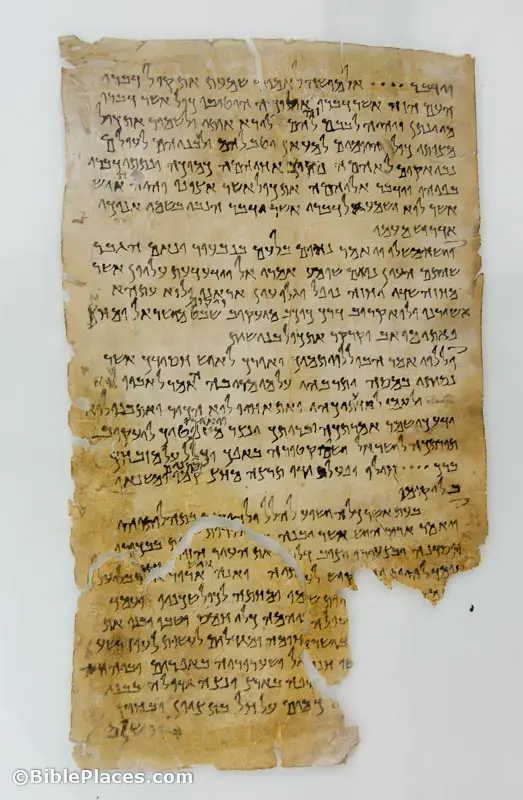
One may contend that there existed a basic text of Jesus’ life story written in Hebrew. One arrives at this assumption not merely on the basis of the church fathers’ writings, but because the Greek texts of the synoptic gospels show so much evidence of being “translation Greek,” that is, Greek that contains Hebrew idioms and sentence structures.
Semitic Background to the Nain Story

The short account of the resurrection of the widow’s son in Nain has a very Semitic feeling. If the Nain story was written originally in Greek, it is a very semitically flavored Greek. Several linguistic features of this story suggest that it may have been written originally in Hebrew.