
Does concern for ritual purity explain why the hemorrhaging woman touched Jesus’ tzitzit?
Coordinating Ritual and Moral Purity in the New Testament

Taking another look at how John the Baptist, Jesus, and the Apostle Paul related to issues of ritual and moral purity.
Two Kinds of Love in the Story of the Paralyzed Man

Two kinds of love operate in the story of the paralyzed man. One kind of love is inclusive and redemptive, the other is exclusive and destructive. Which kind of love will prove victorious?

What’s Wrong with Contagious Purity? Debunking the Myth that Jesus Never Became Ritually Impure
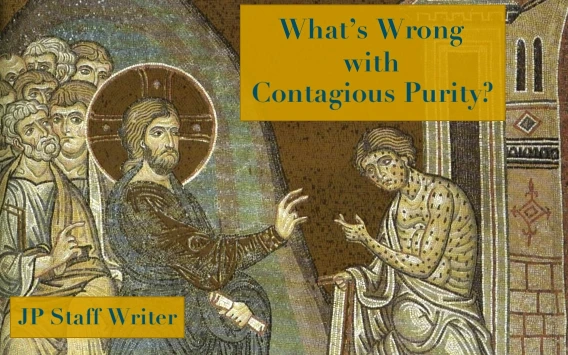
The view that Jesus could not be affected by impurity and that Jesus was able to spread his purity to others is based on faulty assumptions and invalid inferences.
The Seven Types of Pharisees and the Fear of God in the Synoptic Gospels
Ancient Jewish sources attest to a debate over which motivation for keeping the commandments—fear or love—was most highly to be esteemed. This debate surfaces, among other places, in the Talmudic discussions of the seven types of Pharisees. These seven types and the debate over love versus fear illuminate important aspects of Jesus’ teaching.
The Sin Against the Spirit: Matt. 12:31-32; Mark 3:28-29; Luke 12:10

Jesus’ saying about the sin against the Holy Spirit belongs to developing Jewish ideas regarding the gradation of sin and punishment. It also reflects his high self-awareness.
From the Galilee to Jerusalem: Luke as a Source for the Routes of Jewish Pilgrimage

Luke’s Gospel preserves valuable evidence of pilgrimage routes that would have been utilized by Jewish pilgrims in the Second Temple period.
Halakha in the Gospels

The Gospels describe Jesus and his followers as keeping halakha to a relatively high extent; they were a group to whom the law was important.
‘Look at…all the trees’: Trees in the New Testament Gospels

An examination of the role trees play in the New Testament Gospels.