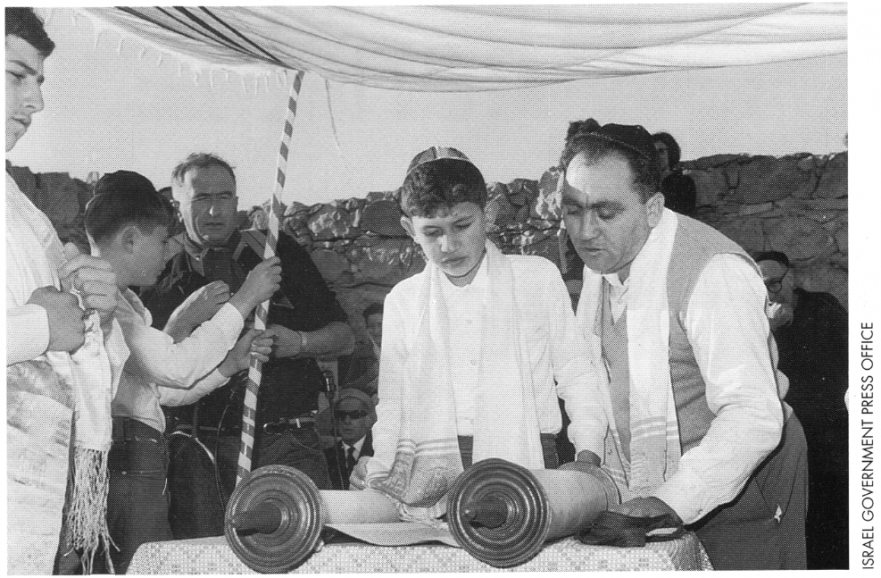
Only around 100 A.D. did it become the custom to have the weekly Torah portion read by seven persons.
Stewards of God’s Keys

Jesus gave his disciple Peter the “keys of the kingdom of heaven” and promised that whatever Peter “bound” and “loosed” on earth would be “bound” and “loosed” in heaven. What scriptural allusions lurk beneath these expressions and what are their implications? How does the Jewish literary background of Matthew 16:19 help us better appreciate Jesus’ words?
The Power of Parables

Jesus was a master teacher. Therefore, it is significant that he relied heavily on parables. What is it about parables that makes them so moving and memorable?
Lilies of the Field

Tulips, poppies, daisies and other wildflowers have been suggested as candidates for the “lilies of the field” in the Sermon on the Mount. In this photo essay we discover the subtleties of his message about these beautiful, short lifespan flowers.
Matthew 16:18: The Petros-petra Wordplay—Greek, Aramaic, or Hebrew?
The pinnacle of the Gospel story may be Jesus’ dramatic statement, “You are Petros and on this petra I will build my Church.” The saying seems to contain an obvious Greek wordplay, indicating that Jesus spoke in Greek. However, it is possible that “Petros…petra” is a Hebrew wordplay.
Hospitality: Heritage of the Church
Hospitality, charity and visiting the sick were priorities in the teaching of Jesus and other sages of his day. In the following article, Dr. Marvin Wilson highlights for Christians the importance of hospitality.
Is the Sage Worth His Salt?

The Gospels record that questions were sometimes put to the sage Jesus of Nazareth in order to “test” him. According to Joseph Frankovic, the questioner’s intent may not always have been hostile.

Jesus and the Hasidim
How do we define Jesus within first-century Jewish society? To which of the various Jewish sects does he belong? Was he a Pharisee, an Essene? After years of painstaking research, Shmuel Safrai has identified a new stream within the Judaism of Jesus’ time: the Hasidic movement. This may be a major breakthrough in New Testament studies, as well, because the picture Safrai paints of the Hasidim is amazingly similar to what we know about Jesus. Jesus, who was quite close to the Hasidim and perhaps even involved with some of them, does not reflect Galilean boorishness or ignorance, but rather the dynamism and ongoing creativity of Jewish life in Galilee.