How to cite this article:
Joshua N. Tilton, David N. Bivin, and Lauren S. Asperschlager, “Making a Show,” The Life of Yeshua: A Suggested Reconstruction (Jerusalem Perspective, 2026) [https://www.jerusalemperspective.com/36283/].
Matt. 23:5b-7; Mark 12:38-40;
Luke 20:45-47[1]
הִזָּהֲרוּ מִן הַסּוֹפְרִים הַמַּרְחִיבִים אֶת תְּפִילֵּיהֶם וּמְגַדְּלִים אֶת צִיצִיּוֹתֵיהֶם וּמְחַבְּבִים אֶת הַמָּקוֹם הָרִאשׁוֹן בְּמִשְׁתָּיוֹת וְאֶת הַמּוֹשָׁב הָרִאשׁוֹן בְּבָתֵּי כְנֵסִיּוֹת וּשְׁאִילוֹת הַשָּׁלוֹם בִּשְׁוָוקִים הָאוֹכְלִים אֶת בָּתֵּיהֶן שֶׁלְּאַלְמָנוֹת וּ[מִפְּנֵי מַרְאִית הָעַיִן] מַאֲרִיכִים בַּתְּפִלָּה [אֵלּוּ עֲתִידִין לְקַבֵּל אֶת דִּינָם]
“Beware of the scribes, who widen their tefillin and lengthen their tzitziyot, who cherish the place of honor at banquets, the most prominent seat at synagogues, and salutations in markets, who consume the homes of widows, and who for appearances’ sake prolong their prayers. Such as these are destined to receive their punishment.”[2]
| Table of Contents |
|
3. Conjectured Stages of Transmission 5. Comment 8. Conclusion |
Reconstruction
To view the reconstructed text of Making a Show click on the link below:
| “Showing Proper Humility” complex |
| Warning About Leavened Bread ・ Making a Show ・ Places of Honor |
Story Placement
In each of the Synoptic Gospels Making a Show occupies the same posterior position relative to a collection of narratives that describe confrontations between Jesus and the Temple authorities. Nevertheless, while there is synoptic agreement with regard to the placement of Making a Show, the Gospels of Matthew, Mark and Luke exhibit varying degrees of integration of Making a Show into the context of the surrounding pericopae.
Luke’s Gospel exhibits the least amount of integration of Making a Show into its surroundings. In Luke Making a Show belongs to a series of pericopae consisting of David’s Son (Luke 20:41-44), Making a Show (Luke 20:45-47) and Widow’s Gift (Luke 21:1-4) that follow the questions put to Jesus by the Temple authorities. This series lacks both continuity with the foregoing confrontation narratives and inner coherence.
As for continuity with the preceding narratives, David’s Son, which in Luke 20:41 is introduced with “but he said to them,” is linked to the collection of confrontation narratives by the merest thread—the presumptive antecedent of “them.” The weakness of this link gives the impression that the author of Luke placed this series of pericopae (David’s Son, Making a Show and Widow’s Gift) following the confrontation narratives only because this was a convenient place for him to do so, not because there was a necessary connection between this series and the confrontation narratives.
As for inner coherence, Luke’s Gospel makes no attempt to link David’s Son to Making a Show. The audience is different (Making a Show is addressed to the disciples [Luke 20:45], while David’s Son is addressed either to “some of the Sadducees” or to “some of the scribes”),[3] and there are no uniting themes or vocabulary. The audience changes again between Making a Show, addressed to the disciples in Luke, and Widow’s Gift, where Jesus’ remark is made to the general public. As for uniting themes and vocabulary, the situation is somewhat different with regard to Making a Show and Widow’s Gift, which do share the theme of impoverished widows. But even this link fails to generate coherence. In Making a Show the poverty of widows is negatively valued: scribes are condemned for devouring widows’ houses. But in Widow’s Gift an impoverished widow is valued positively: the donation of her last cent is regarded as praiseworthy. Thus the same theme—impoverished widows—plays opposite functions in the two pericopae, which thereby creates incoherence rather than cohesion. While the shared theme of impoverished widows fails to generate coherence, it clearly was the reason Making a Show and Widow’s Gift were juxtaposed.
Turning to Mark’s Gospel, we find that significant measures have been taken to integrate David’s Son, Making a Show, and Widow’s Gift with the preceding confrontation narratives. The author of Mark forges a link between the conflicts with the Temple authorities—scribes included (Mark 11:27)—by attributing the tradition that the Messiah is David’s son to the scribes: “How can the scribes say that the Messiah is the son of David?” (Mark 12:35 [emphasis ours]). In Luke the bearers of the tradition are anonymous: “How can they say [impersonal third-person plur.] that the Messiah is the son of David?” (Luke 20:41). The author of Mark also explicitly locates this pericope in the Temple (ἐν τῷ ἱερῷ; Mark 12:35), where the confrontations with the Temple authorities had taken place (Mark 11:27), and makes David’s Son an answer (καὶ ἀποκριθεὶς ὁ Ἰησοῦς ἔλεγεν; Mark 12:35) to the questioning of the scribes and other Temple authorities.
By making the scribes the bearers of the tradition that the Messiah is the son of David, the author of Mark was also able to impose continuity between David’s Son and Making a Show. In Mark, but unlike Luke, Jesus first attacks the teaching (David’s Son) and then the behavior (Making a Show) of the scribes. The author of Mark also signals that Making a Show is the continuation of Jesus’ attack on the scribes in David’s Son by reminding his readers that Making a Show was spoken in his teaching (ἐν τῇ διδαχῇ αὐτοῦ; Mark 12:38), just as David’s Son was spoken while Jesus was teaching in the Temple (διδάσκων ἐν τῷ ἱερῷ; Mark 12:35).
The author of Mark further imposed unity upon David’s Son and Making a Show by making the general public the audience of both. True, David’s Son is Jesus’ answer to the scribes (Mark 12:35), but according to Mark 12:37 the great crowd listened to this answer enthusiastically. And unlike Luke, where the warning against the scribes is addressed to the disciples, albeit in the hearing of the people, the author of Mark deferred reference to the disciples until partway through Widow’s Gift, so that in Mark the general public are the recipients of Jesus’ warning against the scribes.
It is difficult to imagine that the author of Luke, who was of a far more literary bent than the author of Mark, would have eliminated all these elements that create continuity between the confrontation narratives and David’s Son had he found them in his source. The alternative is to suppose that it was the author of Mark who imposed unity upon loosely connected pericopae such as we find in Luke.
In Matthew’s Gospel Making a Show is integrated into its context in a far more sophisticated manner. As in Luke and Mark, Making a Show follows the controversies with the Temple authorities in Matthew, but the author of Matthew absorbed his version of Making a Show into the preamble to Woes Against Scribes and Pharisees, which forms the first part of the fifth and final discourse in Matthew’s Gospel (Matt. 23:1-25:46).[4] This preamble (Matt. 23:1-12) is a composite text compiled by blending Moshe’s Seat, Making a Show, and a few additional sayings, some of which (e.g., Forbidden Titles [Matt. 23:8-10]) appear to have been composed by the author of Matthew himself. And because the first part of Matthew’s final discourse is aimed against the Pharisees, the author of Matthew made the Pharisees, not the scribes as in Mark, the target of Jesus’ criticism in David’s Son. As for Widow’s Gift, it disappears in Matthew’s Gospel simply because there was no place for a narrative of this kind in the extended discourse that occupies the position where Making a Show appears in Mark. Widow’s Gift, in other words, was simply squeezed out.[5]
Thus, the level of integration of Making a Show into each Gospel’s context progresses from Luke to Mark to Matthew, a progression that challenges the common scholarly assumption of Markan Priority based on the Two-source Hypothesis. On the other hand, the progression we observe fits neatly with Robert Lindsey’s hypothesis that the flow of literary dependence among the Synoptic Gospels runs from Luke to Mark to Matthew. It is understandable that if the author of Mark read Luke, he would have wanted to tighten the connections between the loosely related pericopae at the end of the stories of Jesus’ confrontations with the Temple authorities and to forge links with the confrontation narratives themselves. But it is incomprehensible why, as Markan Priorists must assume, the author of Luke would have taken these well-integrated pericopae and dissolved the logical links between them.[6] It is from the perspective of Lindsey’s hypothesis that we will examine the several versions of Making a Show in the discussion below.
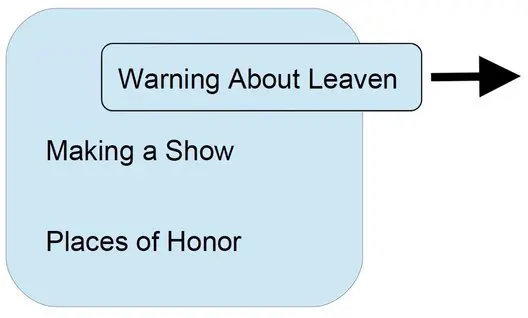
The weakness of the links connecting Making a Show to its Lukan context suggests that the original context of this pericope has been lost. It may be possible, however, to partially reconstruct its original context from the evidence of key terms and concepts it shares with other sayings of Jesus. The warning with which Making a Show opens in Luke (“Beware of the scribes…”; Luke 20:46) is verbally and syntactically similar to the Lukan form of Warning About Leavened Bread, which states, “Beware of the leavened bread…of the Pharisees” (Luke 12:1). The pairing of scribes and Pharisees is commonplace in the Gospels, and since the warning against the leaven of the Pharisees is incomprehensible on its own, it may be that Warning About Leavened Bread and Making a Show originally formed a unit and are mutually illuminating. Making a Show, which criticizes financial abuses (devouring widows’ houses), could hold the secret to the identity of the “leaven” in Warning About Leavened Bread, while Warning About Leavened Bread may indicate that it was Pharisaic scribes who were the target of Jesus’ criticism in Making a Show. We may tentatively hypothesize, therefore, that Making a Show originally formed the continuation of Warning About Leavened Bread.
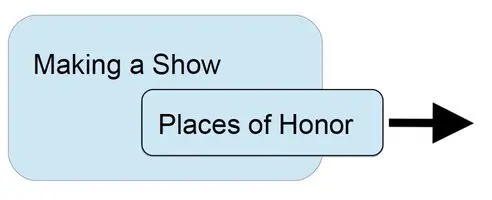
Making a Show also includes a key term that occurs in only one other synoptic pericope. That term, πρωτοκλισία (prōtoklisia, “first couch”), is also found in Places of Honor, a pericope unique to Luke’s Gospel, in which Jesus advises his audience not to assume the “first couch” at a wedding banquet, but to take the least conspicuous seat. In that way a person can escape potential embarrassment and might even be honored should the host choose to elevate him to a more dignified position. Such advice would gain added meaning if it was intended as a contrast to the pompous behavior of the Pharisaic scribes who loved the best places at banquets and who hungrily devoured widows’ estates. The First Reconstructor, however, embedded Places of Honor in a discourse Jesus delivered while dining at the home of a certain Pharisee, which is why Places of Honor is divorced from Making a Show in Luke.
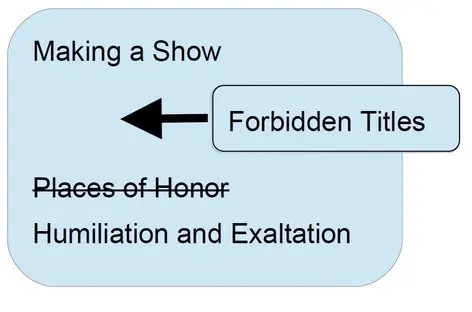
Matthew’s Gospel provides some evidence that Places of Honor did, indeed, follow Making a Show in his source. Although in Matthew Making a Show is followed by Forbidden Titles (Matt. 23:8-11), Forbidden Titles is followed by Humiliation and Exaltation (Matt. 23:12), the proverb quoted at the end of Places of Honor in Luke 14:11. It appears that the author of Matthew swapped out Jesus’ advice about seating arrangements in Places of Honor with the prohibitions against using certain rabbinic titles, but preserved the concluding proverb in its original location.
Thus, there is reason to believe that Warning About Leavened Bread, Making a Show and Places of Honor originally formed a literary unit. Since none of these pericopae are particular to followers of Jesus, it appears that this critique of the Pharisaic scribes was addressed to a general audience and may even have been delivered at a time prior to Jesus’ calling and training of disciples. We have therefore included these three pericopae in a complex entitled “Showing Proper Humility” and included this complex in the Teaching and Healing in Yehudah section of Jesus’ biography, which takes place before Jesus undertook the training of disciples. For an overview of the entire “Showing Proper Humility” complex, click here.
.

.
Click here to view the Map of the Conjectured Hebrew Life of Yeshua.
.
.
Conjectured Stages of Transmission
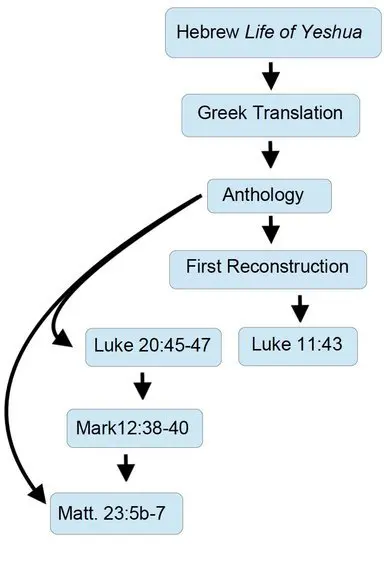
Part of Making a Show—the reference to loving the seats of honor in synagogues and greetings in the markets—is doubled in Luke’s Gospel. This doublet appears in Luke 11:43, where it serves as one of the woes in Woes Against Scribes and Pharisees. Lindsey believed that the presence of doublets in Luke was the result of the author of Luke’s dependence on two overlapping sources. The first of these sources was a longer text written in Hebraic translation Greek. Since its materials were mainly organized according to genre rather than chronology, Lindsey referred to this source as the Anthology (Anth.). The second of Luke’s sources was the First Reconstruction (FR), an epitome of the Anthology that presented some of the Anthology’s pericopae in stylistically improved Greek in something like a chronological narrative. According to Lindsey, FR often gave short, pithy versions of Jesus’ sayings divorced from their original contexts, while Anth. preserved longer forms of Jesus’ sayings often still embedded in their original contexts. Such characterizations of Anth. versus FR yield mixed results with regard to the doubled saying in Luke about loving seats of honor and greetings in public. On the one hand, Luke 11:43 is shorter and pithier than Luke 20:45-47, which might suggest that Luke 11:43 stems from FR. On the other hand, Luke 11:43 is embedded in a larger sayings context (Woes Against Scribes and Pharisees), whereas Luke 20:45-47 is a pericope whose original context appears to be lost. These facts might point to Anth. as the source behind Luke 11:43 and FR as the source behind Luke 20:45-47. Neither can the wording of the two versions determine the source from which the doublets are derived. The wording of the parallel portions is so similar that it is impossible to label one as Hebraic and the other as Greek, and since the whole of Making a Show reverts fairly easily to Hebrew, it could come from either source.
Thankfully, we have the Matthean version of Making a Show to deliver us from this quandary. The Matthean version of Making a Show exhibits considerable independence from the version found in Mark (and Luke 20:45-47), and since some of Matthew’s divergences from the Markan version of Making a Show are highly Jewish in content and fairly Hebraic in character (the references to tefillin and tzitziyot), it is reasonable to suppose that the author of Matthew, at least partially, relied on the Anthology for his version of Making a Show. Matthew’s references to the distinctive garb of observant Jews, which are taken from Anth., parallel the reference to walking about in robes found in the Lukan and Markan version of Making a Show, but which is absent in Luke’s doublet embedded in Woes Against Scribes and Pharisees. This parallelism between tefillin and tzitziyot in Matthew and robes in Luke (and Mark) hints that Luke 20:45-47 is the version that depends on the Anthology and Luke 11:43 is the version that depends on the First Reconstruction.
There are other reasons to suspect that Luke 11:43 and, indeed, the whole of Luke’s version of Woes Against Scribes and Pharisees depend on FR. First, the Lukan and Matthean versions of the woes are characterized by low verbal identity, which qualifies the woes as a Type 2 Double Tradition pericope. Luke’s source for Type 2 Double Tradition pericopae is typically FR.[7] Second, the description of the scribes’ and the Pharisees’ plot to trap Jesus in his words, which concludes Luke’s version of the woes (Luke 11:53-54), strikes a chord that is heard in other FR pericopae (e.g., Man’s Contractured Arm and Tribute to Caesar).[8] Third, Luke’s version of Woes Against Scribes and Pharisees contains vocabulary typical of FR redaction, most notably νομικός (nomikos, “legal expert”).[9] With regard to Luke 11:43 in particular, we suspect that this doublet was created by the First Reconstructor, who borrowed wording from Anth.’s version of Making a Show to replace one of the woes (Vain Oaths [Matt. 23:16-22]?) that occurs in the Matthean version of Woes Against Scribes and Pharisees but is absent in the Lukan parallel.
Although we have identified the Anthology as the source behind Luke 20:45-47, we must assume that the author of Luke did not copy this pericope verbatim. The author of Luke replaced the Anthology’s references to tefillin and tzitziyot with a bland reference to walking about in robes. The point of this criticism is not clear—what would Jesus have the scribes walk about in if not robes?—but the author of Luke probably regarded Anth.’s references to tefillin and tzitziyot as too foreign for his Gentile audience. Luke’s Anth. version of Making a Show became the basis of Mark’s, and the author of Matthew, in his usual style, blended the Markan and Anth. versions of the pericope. To Mark the author of Matthew mainly owes the placement of Making a Show, while for the wording Matthew’s version is highly indebted to Anth.
Crucial Issues
- Did Jesus condemn the wearing of tefillin and tzitziyot?
- Is Making a Show a blanket condemnation of all scribes?
- What is meant by “devouring widows’ houses”?
Comment
L1-4 As we noted in the Story Placement discussion above, there is almost no connection between David’s Son and Making a Show in Luke’s Gospel. Luke 20:45, which introduces the pericope, merely envisions a scenario in which the people are listening while Jesus addresses the disciples. The use of the genitive absolute in this introduction is un-Hebraic, and the reference to ὁ λαός (ho laos, “the people”) is characteristic of Lukan (not FR) redaction,[10] so it is likely that the author of Luke composed this introduction to Making a Show. For this reason we have excluded Luke 20:45 from GR.
The author of Mark made use of Luke’s introductory verse by attaching the reference to a listening audience—now identified as “the large crowd” instead of “the people”—to the end of David’s Son (Mark 12:37). By making this change and by omitting Luke’s reference to the disciples, the Markan evangelist was able to assign both David’s Son and Making a Show to the same audience—the crowd. The author of Mark further strengthened the ties between David’s Son and Making a Show by adding a reference to Jesus’ teaching (L2) that harks back to Mark’s introduction to David’s Son, which sets the pericope in the Temple, where Jesus was teaching (Mark 12:35).[11] There are numerous indications that Mark’s wording is redactional. The word order of ὁ πολὺς ὄχλος (ho polūs ochlos, “the great crowd”), with the adjective before the noun it modifies, is un-Hebraic. The use of the adverb ἡδέως (hēdeōs, “gladly”) occurs twice in Mark (Mark 6:20; 12:37), but never in Luke or Matthew,[12] and so is likely to stem from Markan redaction.[13] The term διδαχή (didachē, “teaching”) is so conspicuously a part of the author of Mark’s redactional vocabulary that Lindsey labeled it a “Markan stereotype.”[14] The two instances of verbs in the imperfect tense—ἤκουεν (ēkouen, “was hearing”; L1) and ἔλεγεν (elegen, “was saying”; L3)—are also characteristic of Markan redaction.[15] The density of Markan redactional features and the signs of dependence on Luke’s redactional introduction to Making a Show are our reasons for excluding Mark’s wording in L1-3 from GR.
Matthew’s introduction to the preamble to Woes Against Scribes and Pharisees (Matt. 23:1) depends loosely on Mark 12:37b-12:38. From Mark 12:37b (L1) the author of Matthew borrowed the reference to the “crowds” (L2),[16] and Matthew’s “saying” (L4) echoes Mark’s “was saying” (L3). The Lukan-Matthean agreement against Mark to refer to the disciples is probably due to the author of Matthew’s desire to make the audience of Jesus’ final discourse (crowds and disciples) parallel the audience of Jesus’ first discourse, the Sermon on the Mount (crowds and disciples; Matt. 5:1).[17] Thus, we have in L3 a rare example of a Lukan-Matthean minor agreement that is due to coincidence rather than Lukan-Matthean reliance on parallel non-Markan sources. Matthew’s τότε (tote, “then”), with which Matt. 23:1 opens, is a hallmark of Matthean redaction.[18] The redactional character of Matthew’s wording in L1-4 accounts for its exclusion from GR.
L5-12 Into his preamble to Woes Against Scribes and Pharisees the author of Matthew incorporated a saying of Jesus that affirms the halachic authority of the scribes and Pharisees but criticizes their deeds (L5-12), which are done in order to win praise from others (L21-23). This saying, which we have dubbed Moshe’s Seat, is problematic on two scores. On the one hand, the halachic rulings of the Pharisees were hardly monolithic. Prior to the destruction of the Temple the Pharisees were divided into two competing schools, Bet Hillel and Bet Shammai, that made conflicting halachic rulings. On the other hand, we know of several issues (e.g., healing on the Sabbath, divorce, polygyny) with regard to which Jesus’ halachah stood in conflict with both Pharisaic schools. How then are we to make sense of Jesus’ saying?
One approach would be to dismiss it as a later Christian statement that was placed on the lips of Jesus. But it is hard to imagine later Christians falsely attributing such an endorsement of Pharisiac authority to Jesus. Moreover, there are indications that the author of Matthew attempted to neutralize the positive force of the saying, which shows that neither the author of Matthew nor his community originated this saying. The embarrassment Moshe’s Seat caused the early Christians rather points to the saying’s authenticity.
If the saying is authentic, then it may be that in Moshe’s Seat Jesus was indicating to his audience his proximity to the Pharisees vis-à-vis the other major Second Temple Jewish sects (viz., the Sadducees and the Essenes), and that in a general sense he endorsed their religious authority. However, it is necessary to pay close attention to the formulation of Jesus’ saying, for it is not an absolute endorsement of all Pharisaic halachah. According to Moshe’s Seat, Jesus instructs his audience to “do whatever they [i.e., the scribes and the Pharisees] tell you” and makes reference to “works” or “deeds” the Pharisees do in order to be observed performing them. Abiding by the negative commandments (i.e., prohibitions) was neither particularly praiseworthy, being the least that was expected of all Israelites, nor particularly visible (how does one observe someone not committing murder, theft, or adultery?), so Jesus’ saying must pertain only to certain positive commandments held to be particularly meritorious and on that score characterized as “good deeds” (e.g., giving alms, visiting the sick, comforting the bereft, ransoming captives). In other words, Jesus agreed that the good deeds the Pharisees championed should be performed, but they should be done from pure motives, for the love of God and neighbor, not for earning oneself a fine reputation.
With this understanding of Moshe’s Seat the original context of this saying becomes easier to identify. In the Sermon on the Mount Jesus criticizes the performance of three key mitzvot—almsgiving, prayer and fasting—from wrong motives. Rather than performing these commandments in public in order to win praise, Jesus insisted these commandments should be done secretly so that God may reward them. Moshe’s Seat probably served as the preface to the discussion of the performance of these good deeds. One of the primary ways the author of Matthew neutralized this saying was to strip Moshe’s Seat from its original context[19] and to embed it in the preamble to Woes Against Scribes and Pharisees, which left readers with the impression that everything the scribes and Pharisees do is corrupt.
L5 ἐπὶ τῆς Μωϋσέως καθέδρας (Matt. 23:2). The appearance of the noun καθέδρα (kathedra, “chair”) in Moshe’s Seat and πρωτοκαθεδρία (prōtokathedria, “first chair”) in Making a Show (L33, L37) made the author of Matthew’s task of merging these two sayings more natural and more convincing.
L13 λέγουσιν γὰρ καὶ οὐ ποιοῦσιν (Matt. 23:3). Matthew’s preamble to Woes Against Scribes and Pharisees is self-contradictory. On the one hand, it claims that the Pharisees say but do not act (L13), while on the other hand, it claims that the Pharisees do act, but only to be seen by the people (L21-23). Both claims cannot be true. Of the two, the latter is more realistic. The Pharisees certainly did keep their own precepts, forming societies (ḥavurot) to hold one another accountable. Moreover, in Woes Against Scribes and Pharisees, Jesus cites examples of the Pharisees keeping their own precepts: tithing mint and cumin, purifying dishes, etc. Not only is the latter claim—that the Pharisees do act, but only so as to be seen by the people—more realistic, there are verbal clues that point to the second claim as the original. In L11 Jesus warns his audience not to act according to τὰ ἔργα αὐτῶν (ta erga avtōn, “their works”), while in L21 Jesus characterizes τὰ ἔργα αὐτῶν (“their works”) as being done in order to be seen by others. These verbal links reveal Matthew’s wording in L13-20 to be an intrusion into an earlier form of Moshe’s Seat.
The claim that the scribes and Pharisees say but do not act resumes a theme from the end of the Sermon on the Mount, where those who say to Jesus, “Lord! Lord!” are condemned because they fail to do his words.[20] Thus, the author of Matthew inserted this libel not only to neutralize the affirmation of the scribes’ and Pharisees’ authority in Moshe’s Seat, but to construct a bridge between the first and the last of the five major discourses that punctuate Matthew’s Gospel.
L14-20 The charge that the scribes and the Pharisees lay heavy burdens on people’s shoulders, which the author of Matthew incorporated into the preamble to Woes Against Scribes and Pharisees, is paralleled in Luke’s Gospel, where it serves as one of the woes. Luke’s placement of this charge is the more reliable, since the verbal links between L11 and L21 show that L13-20 are an interpolation.
L21-23 As we noted above in Comment to L13, L21 marks the author of Matthew’s return to the pericope we refer to as Moshe’s Seat. The phrase πρὸς τὸ θεαθῆναι (pros to theathēnai, lit., “toward the to be seen,” i.e., “in order to be seen”) echoes the warning in the Sermon on the Mount against doing righteousness before people in order to be seen by them (Matt. 6:1). This verbal overlap lends support to our supposition that Moshe’s Seat originally stood at the head of the pericopae on Almsgiving, Prayer, and Fasting.
L24-25 προσέχετε ἀπὸ τῶν γραμματέων (GR). We have accepted Luke’s wording in L24-25, which reverts easily to Hebrew (see below), for GR. Mark’s parallel replaces Luke’s προσέχετε (prosechete, “Beware!”) with βλέπετε (blepete, “See!”), an imperative the author of Mark was wont to insert redactionally.[21] The author of Mark made the same substitution in Warning About Leavened Bread (Mark 8:15; cf. Luke 12:1).
The author of Matthew’s insertions of extraneous materials in L5-23 forced him to omit “Beware of the scribes” in L24-25.
הִזָּהֲרוּ מִן הַסּוֹפְרִים (HR). On reconstructing προσέχειν (prosechein, “to pay attention”) with נִזְהַר (nizhar, “be warned,” “be careful”), see Warning About Leavened Bread, Comment to L13.
On reconstructing γραμματεύς (grammatevs, “scribe”) with סוֹפֵר (sōfēr, “scribe”), see Call of Levi, Comment to L41.
L26-29 “Who like to walk around in robes” appears in Luke and Mark parallel to Matthew’s charge that the scribes “widen their phylacteries and enlarge the hems.” Whereas Matthew’s charge relates to known first-century Jewish practice and criticizes its misuse, the complaint that the scribes “walk around in robes” is pointless. It is so pointless, in fact, that most modern translations often embellish the complaint by referring to “long robes” (KJV, RSV, NJB, NEB) or “flowing robes” (NIV), or the like. However, no such qualifier appears in the Greek text of Luke 20:46 or Mark 12:38; rather, it appears to reflect the translators’ recollection of “widen” and “enlarge” in Matt. 23:5 as well as their sense of the complaint’s inadequacy. For without some kind of insinuation that the robes were particularly distinctive or sumptuous the criticism falls flat. What, aside from robes, did Jesus want the scribes to walk about in? Should they have walked about in sackcloth and ashes? Or would Jesus have them go about stark naked? The pointlessness of this complaint was also felt in antiquity, as we see from ancient versions that attest to a variant text that read ἐν στοαῖς (en stoais, “in stoas/colonnades”) instead of ἐν στολαῖς (en stolais, “in robes”).[22] The advantage of this reading is that, when paired with “and who love greetings in the markets,” the complaint makes sense: the scribes loved to be seen and honored in public. Nevertheless, this variant reading is certainly secondary, since it is inconceivable that, had it been original, the pointless “who walk about in robes” would have replaced it in all extant Greek MSS.
We believe “who walk around in robes” represents the author of Luke’s unsuccessful attempt to make “who make their phylacteries wide and enlarge their hems” comprehensible to a non-Jewish audience that was unfamiliar with the practice of wearing tefillin and tzitziyot.[23] The First Reconstructor, who faced a similar problem of making the complaint relevant to a mixed Jewish-Gentile audience, adopted a more radical approach: in FR’s version of Woes Against Scribes and Pharisees he omitted the complaint entirely (Luke 11:43). The author of Matthew, comparing Mark 12:38 to the complaint in Anth., preferred Anth.’s reading.
Two reasons can account for Matthew’s preference. First, the author of Matthew recognized the pointlessness of the criticism that the scribes walk about in robes. Second, the author of Matthew was more antagonistic toward Judaism than the authors of Luke or Mark, so it suited him to denounce these distinctive Jewish practices. The author of Matthew’s increased antagonism toward Judaism is probably a reflection of the historical circumstances under which Matthew’s Gospel was written.[24] Luke’s Gospel, composed before the destruction of the Second Temple, was written at a time when Christians viewed themselves as a movement within Judaism. The Gospel of Mark, written shortly after the destruction of the Temple, evinces a more sectarian stance vis-à-vis the rest of Judaism. Its concern was more insular and inward-looking. But Matthew’s Gospel was written at a time (ca. 100 C.E.) when some Christians were beginning to view themselves as a movement in opposition to Judaism. Hence the Gospel of Matthew displays a hostility toward Judaism based on the drawing of new boundaries of self-definition. The author of Matthew’s community had become increasingly, if not entirely, Gentile in composition, while in the Jewish community early rabbinic leaders like Rabban Gamliel II were consolidating control over Jewish practice and even over who had the right to identify as Jewish. This rabbinic definition of Jewishness did not include the audience for whom the Gospel of Matthew was written. The two communities increasingly viewed one another as mutually exclusive, and their competing claims to represent the “true” Israel, as well as the uneven power dynamics between the Matthean Christians and the rabbinic Jews, led to resentment and hostility. This bad blood is reflected not only in the author of Matthew’s preference for Anth.’s references to the wearing of tefillin and tzitziyot, but also in his anachronistic criticism of the Pharisees’ use of the title “rabbi,” which occurs at the end of Matthew’s version of Making a Show (see below, Comment to L41-43).
Since it appears the author of Matthew copied L26-29 from Anth., it is his wording that we have followed in GR and reverted to Hebrew in HR.
L26 οἳ πλατύνουσιν (GR). Matthew’s γάρ (gar, “for,” “because”) in L26 is an editorial insertion that links Moshe’s Seat to Making a Show, two sayings the author of Matthew incorporated into his preamble to Woes Against Scribes and Pharisees. It is likely that Matthew’s γάρ took the place of the relative pronoun οἵ (hoi, “who,” “which”), since some such pronoun is required and οἵ also occurs further on in Luke’s version of the saying (L44). Matthew’s πλατύνουσιν (platūnousin, “they widen”), the only instance of πλατύνειν (platūnein, “to widen”) in Matthew’s Gospel,[25] presumably stems from Anth.
הַמַּרְחִיבִים (HR). In LXX most instances of πλατύνειν (platūnein, “to widen”) occur as the translation of הִרְחִיב (hirḥiv, “widen”).[26] We also find that the LXX translators usually rendered הִרְחִיב as πλατύνειν or a compound thereof.[27] Tigay noted that the ר‑ח‑ב root is used in reference to the size of tefillin capsules in medieval Hebrew sources.[28]
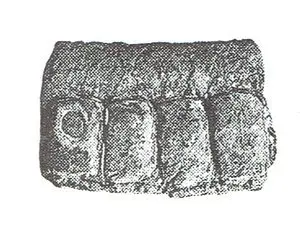
Tigay also noted that the dimensions of the ancient tefillin that have been discovered to date vary more in terms of width (across the forehead) than in height, ranging from a little over a centimeter and a half in the smallest example (1.65 cm) to slightly more than three centimeters in the largest example (3.2 cm). Thus, the accusation that some scribes made their tefillin broad is true to life.
The facts do not support Manson’s theory that what angered Jesus was the scribes’ attempt to make other people wear tefillin when not engaged in prayer.[29] Manson’s theory was based on the modern Jewish practice of only wearing tefillin during prayer and relies on the possibility that the verb πλατύνειν (platūnein, “to widen”) could mean “to lengthen” the time when tefillin were worn. Nevertheless, the basis of Manson’s theory is anachronistic. Unlike modern Jewish practice, it was customary for first-century Jews to wear their tefillin throughout the waking hours unless they were engaged in some disqualifying activity that required their removal.[30] The scribes, therefore, could not extend the time for the wearing of tefillin as Manson supposed. Moreover, the philological support for Manson’s interpretation is untenable. Neither the Greek verb πλατύνειν (platūnein, “to widen”) nor the Hebrew verb הִרְחִיב (hirḥiv, “widen”) are appropriate to time, nor did Manson cite any examples of such usage to lend credence to his theory. Even more fatal to Manson’s interpretation, however, is that Jesus criticizes what the scribes do to their phylacteries, not what the scribes attempt to make others do with theirs.
L27 τὰ φυλακτήρια αὐτῶν (GR). Matthew 23:5 contains the only instance of the noun φυλακτήριον (fūlaktērion) in the New Testament.[31] The usual meaning of φυλακτήριον is “fortification” or “protection,” but by extension it came to refer to a “protective amulet” (cf., e.g., T. Job 47:11).[32] Matthew’s Gospel is the earliest extant source to apply this term to the tefillin worn on the forehead and upper arm. This fact has led to discussion whether 1) Matt. 23:5 really does refer to tefillin rather than some other sort of amulet, and 2) if tefillin really are the referent, whether the choice of “amulet” was meant to denigrate them.
With regard to the first issue, the pairing of phylacteries with tzitziyot, the complaint that the scribes make their phylacteries wide and not that they wear them at all, and that the purpose of widening the phylacteries was meant to draw attention to the scribes’ extraordinary piety all argue in favor of interpreting φυλακτήριον in Matt. 23:5 as a reference to tefillin. Like tzitziyot, but unlike amulets, tefillin were a part of the observant first-century Jew’s ordinary dress. To distinguish oneself as especially pious with regard to these commandments it would have been necessary to attract attention to them by making the tefillin worn on the forehead especially broad and the tzitziyot especially long. The wearing of amulets, on the other hand, did not signal special piety as there was no commandment to wear them, and doing so was regarded with some suspicion, since amulets were associated with magic. Therefore, one might expect to be censured rather than commended for wearing an amulet. Thus, interpreting phylacteries as referring to tefillin rather than amulets is a better fit for the criticism Jesus levels against the scribes in Making a Show.

Since Matt. 23:5 probably does refer to tefillin, was Matthew’s word choice intended to be derogatory? This seems unlikely. First, as we already noted, it is not the wearing of phylacteries per se that the saying criticizes, but the widening of them to attract notice. Second, the wearing of tefillin does not appear to have been a point of controversy within Second Temple Judaism. Although the evidence for the wearing of tefillin is sparse, it is widespread. The Letter of Aristeas (§159) refers to the wearing of tefillin with approval,[33] in Matt. 23:5 Jesus gives tacit approval to the wearing of tefillin, the Essenes observed the practice as evidenced by the discovery of tefillin at Qumran,[34] and Josephus (Ant. 4:213) mentions the practice as normative.[35] It is also possible that the Revelation of John alludes to the wearing of tefillin.[36] Thus, the wearing of tefillin belonged to the common Judaism of the late Second Temple period and was not a source of division. Third, the use of φυλακτήριον to refer to tefillin in other early Christian sources does not appear to be derogatory. Justin Martyr (mid-second cent. C.E.) referred to tefillin by the term φυλακτήριον in the following manner:
…καὶ φυλακτήριον εν ὑμέσι λεπτοτάτοις γεγραμμένων καρακτήρων τινῶν, ἃ πάντως ἄγια νοοῦμεν εἶναι, περικεῖσθαι ὑμᾶς ἐκέλευσε, καὶ διὰ τούτων δυσωπῶν ὑμᾶς ἀεὶ μνήμην τοῦ Θεοῦ, ἅμα τε καὶ ἔλεγχον εν ταῖς καρδίαις ὑμῶν.
…and he commanded you to gird yourselves with an amulet [φυλακτήριον] of certain letters written on very thin parchments, which we assuredly consider holy, by these means pressing you ever to hold God in mind, and at the same time to have a sense of sin in your hearts. (Dial. 46:5 [ed. Trollope, 1:93-94])[37]
Everything in Justin’s description fits what we know about tefillin, but the same cannot be said about amulets. The wearing of tefillin was understood as a commandment, whereas the wearing of amulets was not. Justin’s phylacteries contain parchments, just like tefillin, and on them were inscribed words that both Jews and Christians regarded as sacred, i.e., verses of Scripture. And like tefillin, Justin’s phylacteries were intended to be a reminder, which is reminiscent of the verse, “And it will be for you as a sign upon your hand and as a memorial between your eyes” (Exod. 13:9), which was both the scriptural warrant for the wearing of tefillin and one of the verses enclosed therein.
Justin’s use of φυλακτήριον to describe tefillin, and his doing so in a non-derisive fashion, strengthen the argument that φυλακτήριον in Matt. 23:5 also refers to tefillin, and that its use there is not derogatory either. Probably the Greek translator of the Hebrew Life of Yeshua chose φυλακτήριον to refer to tefillin because the Greek language did not have a unique term for this distinctively Jewish item. It is quite possible that φυλακτήριον is the term most Hellenistic Jews used for tefillin and that evidence for this usage is unattested simply due to the paucity of Hellenistic Jewish sources.
אֶת תְּפִילֵּיהֶם (HR). Despite having concluded that Matthew’s “phylacteries” refers to tefillin, how to reconstruct φυλακτήριον in L27 is not as obvious as it may seem. For one thing, use of the Hebrew term תְּפִלָּה (tefilāh) for the objects we now know as tefillin is not attested in any source earlier than the Mishnah. It is possible, therefore, that in the first century tefillin were known by another name. Moreover, Tigay noted that even in rabbinic sources another term is sometimes used to refer to tefillin, and that term, like φυλακτήριον, means “amulet.”[38] The term to which we refer is קָמֵיעַ (qāmēa‘). The term קָמֵיעַ occurs as a synonym of תְּפִלָּה in the following examples:
תפלה של ראש נכתבת ארבע פרשיות…וכן של יד, אלא שהוא עושה של יד פרשה אחת ואם עשאה ארבע פרשיות כשרה, רבי יהודה אומר יתפור ויתנם לתוך קמיע
The head tefilah is written in four sections [which are….] and likewise the tefilah of the hand, except that he makes the tefilah of the hand a single section. But if he made it with four sections, it is acceptable. Rabbi Yehuda says, “Let him stitch them together and place them inside the amulet [קָמֵיעַ].” (Tractate Tefillin §9 [Seven Minor Tractates, ed. Higger, 46])
תפילה של יד אינה מעכבת של ראש, ושל ראש אינה מעכבת של יד. אם הפך את הקמיע מלמעלה לא יצא
The tefilah of the hand does not prevent by its omission the use of the tefilah of the head, and the tefilah of the head does not prevent by its omission the use of the tefilah of the hand. If he turned the amulet [הַקָּמֵיעַ] upside down, he has not fulfilled the commandment. (Tractate Tefillin §12 [Seven Minor Tractates, ed. Higger, 44])
In these examples it appears that קָמֵיעַ refers specifically to the capsule that encloses the parchments upon which verses of Scripture are inscribed, the very part of the tefillin that could be made wide.[39] Therefore, קָמֵיעַ, which refers to the specific part of tefillin in question and which, like φυλακτήριον, means “amulet,” is a viable candidate for HR. Nevertheless, we think תְּפִלָּה is more likely to stand behind φυλακτήριον in Matt. 23:5 than קָמֵיעַ. The latter was able to be used as a synonym for תְּפִלָּה in the passages quoted above because the context left no doubt that tefillin, not amulets, were the topic of discussion. The same cannot be said of Making a Show, where tefillin had not been previously mentioned.
L28 καὶ μεγαλύνουσιν (GR). Making a Show (L28) contains the only instance of the verb μεγαλύνειν (megalūnein, “to enlarge,” “to magnify”) in the Gospel of Matthew,[40] and is therefore unlikely to be redactional. Rather, Matthew’s wording in L28, which reverts easily to Hebrew, probably reflects that of his source (Anth.), which is why we have accepted it for GR.
וּמְגַדְּלִים (HR). In LXX most instances of μεγαλύνειν occur as the translation of ג-ד-ל in its various stems.[41] We also find that the LXX translators commonly rendered ג-ד-ל verbs as μεγαλύνειν.[42] Therefore, a ג-ד-ל verb is a good option for GR. Reconstructing μεγαλύνειν with גִּדֵּל (gidēl, “make big,” “enlarge”) also allows for the possibility of a wordplay.[43] The similar sounding גָּדִיל (gādil, “twisted cord”) is the word for the strands from which tzitziyot are made (Deut. 22:12).
Rabbinic sources describe the tzitzit in the following manner:
ועשו להם ציצית, אין ציצית אלא דבר היוצא ודבר כל שהוא וכבר נכנסו זקני בית שמאי וזקני בית הלל לעליית יונתן בן בתירה ואמרו ציצית אין לה שיעור כיוצא בו אמרו לולב אין לו שיעור ועשו להם ציצית, שומע אני יעשה חוט אחד בפני עצמו ת″ל גדילים מכמה גדילים אתה עושה אין פחות משלשה דברי בית הלל, בית שמאי אומרים שלשה של צמר ורביעית של תכלת והלכה כבית שמאי.
And they must make themselves a tzitzit [Num. 15:38]. A tzitzit is nothing other than a thing that sticks out at all. For already the elders of Bet Shammai and Bet Hillel entered the upper room of Yonatan ben Bateira and they said, “A tzitzit has no prescribed measure,” just as they said, “A lulav has no prescribed measure.” And they must make themselves a tzitzit [Num. 15:38]. I might understand that he might make a single thread by itself. Therefore, the Torah says, twisted cords [גְּדִלִים] [Deut. 22:12]. From how many twisted cords [גְּדִלִים] do you make it? No less than three—the words of Bet Hillel. Bet Shammai say, “Three of [undyed] wool and the fourth of blueish purple [תְּכֵלֶת ⟨techēlet⟩].”[44] And the halachah is according to Bet Shammai. (Sifre Num. §115 [ed. Horovitz, 124])
Thus, according to this early rabbinic source, each tzitzit consisted of two or three cords of undyed wool and one of wool dyed blueish purple (techēlet), but the length of the tzitzit was up to the individual wearer. The Talmud, however, clarifies that while there is no maximum length, there is a minimum length for the tzitzit:
ת″ר כמה חוטין הוא נותן ב″ש אומרים ד′ וב″ה אומרים ג′ וכמה תהא משולשת ב″ש אומרים ד′ וב″ה אומרים ג′
Our rabbis taught [in a baraita]: How many threads does he give [for the making of each tzitzit]? Bet Shammai say, “Four,” and Bet Hillel say, “Three.” And how much must it hang down? Bet Shammai say, “Four [fingerbreadths],” and Bet Hillel say, “Three [fingerbreadths].” (b. Men. 41b)[45]
A fingerbreadth measures about two and a quarter centimeters,[46] which makes the minimum length of a tzitzit either 6.65 cm (≈ 2.5 in.) according to Bet Hillel or 9 cm (≈ 3.5 in.) according to Bet Shammai. The Talmud further clarifies that these were the minimum lengths at the time of making a tzitzit, but tzitziyot remained valid if, through natural wear and tear, they became shorter over time.
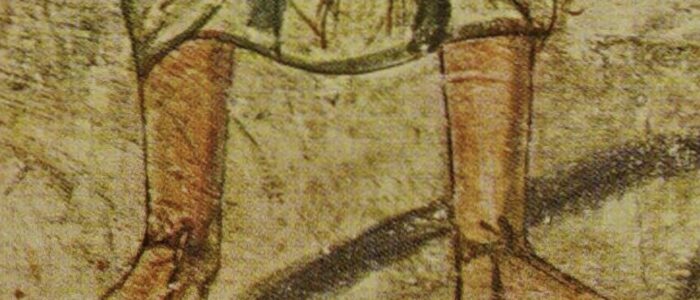
For practical reasons most people’s tzitziyot must have been close to the minimum length, for longer tassels would constantly snag on objects as a person went about his daily business (like tefillin, tzitziyot belonged to the ancient Jew’s everyday clothing). Catching on objects or trailing on the ground was not merely a nuisance, it also risked unintentional and even unknowing contact between the tzitzit and sources of ritual impurity. Ordinarily, then, shorter tzitziyot would have been preferable. And, indeed, the Dura-Europos synagogue paintings appear to depict individuals wearing tzitziyot that do not nearly extend as far as the ground.[47]
Nevertheless, there are references in rabbinic sources to certain individuals who wore much longer tzitziyot. The Babylonian Talmud mentions a wealthy Jerusalem aristocrat who lived just prior to the destruction of the Second Temple called Ben Tzitzit ha-Keset, so named because his tzitziyot trailed on the cushions on the floor (b. Git. 56a).[48] Likewise, the Talmud relates a story about how Rabbi Yonatan’s blue tassel accidentally trailed on the ground of a cemetery (b. Ber. 18b).[49] Despite examples such as these, the wearing of such long tzitziyot must have been exceptional if only for the impracticalities involved.
Click play (►) on the slideshow below to view depictions of tzitziyot in the Dura-Europos synagogue paintings.
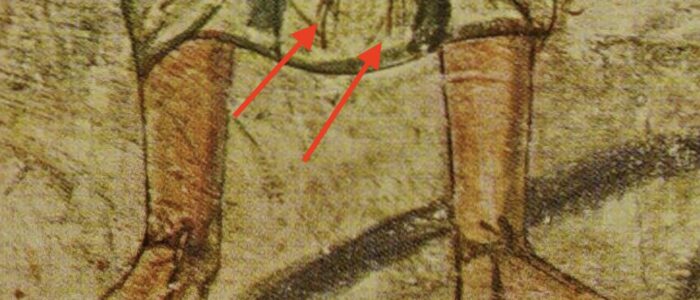
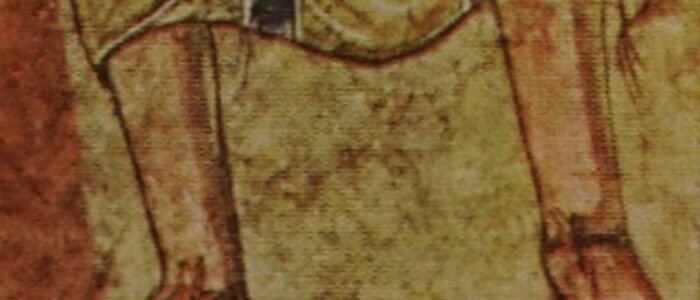
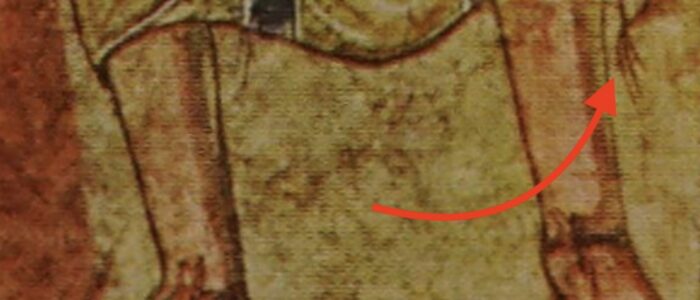
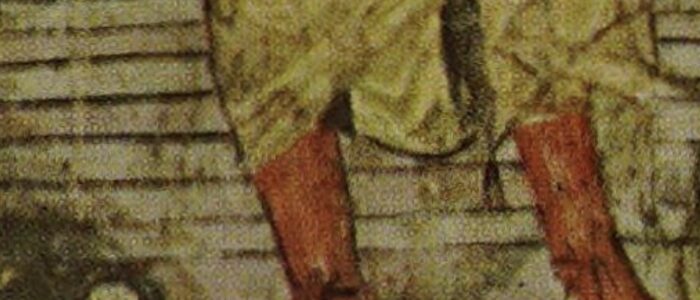
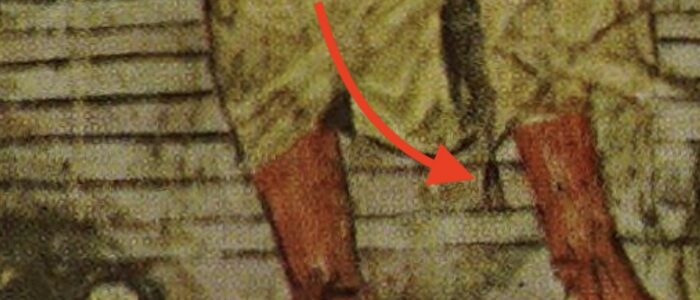
Above (Comment to L26) we noted Manson’s anachronistic and linguistically untenable interpretation that the scribes attempted to make other people wear tefillin when not actively engaged in prayer. Manson attempted to interpret the criticism concerning the tzitziyot in a similar manner, namely that Jesus protested “against the Rabbinic tendency to make the wearing of the phylacteries and the prayer-shawl a constant practice outside the set times for prayer.”[50] Here, too, Manson fell prey to glaring anachronism. Although in the present day tzitziyot are attached to prayer shawls, in the first century the טַלִּית (ṭalit, “mantle,” “cloak”) to which the tzitziyot were attached was an everyday item of clothing, not a prayer shawl.[51] The ṭalit (= ἱμάτιον [himation]) was the outer garment worn over the חָלוּק (ḥālūq, “tunic” = χιτών [chitōn]).[52] The scribes could not extend the time for the wearing of the ṭalit to which tzitziyot were attached because the ṭalit was worn whenever a person went out in public.
L29 τὰ κράσπεδα (GR). The noun κράσπεδον (kraspedon, “edge,” “border,” “fringe”) is relatively rare in the Synoptic Gospels. It occurs here in Making a Show (Matt. 23:5), in Yair’s Daughter and a Woman’s Faith (Matt. 9:20 ∥ Luke 8:44), and in Gennesaret (Matt. 14:36 ∥ Mark 6:56). Since the author of Matthew copied κράσπεδον from his source(s) in the latter two pericopae, it is likely that author of Matthew copied the instance of κράσπεδον in Making a Show from his source, too. Hence our adoption of Matthew’s wording in L29 for GR.
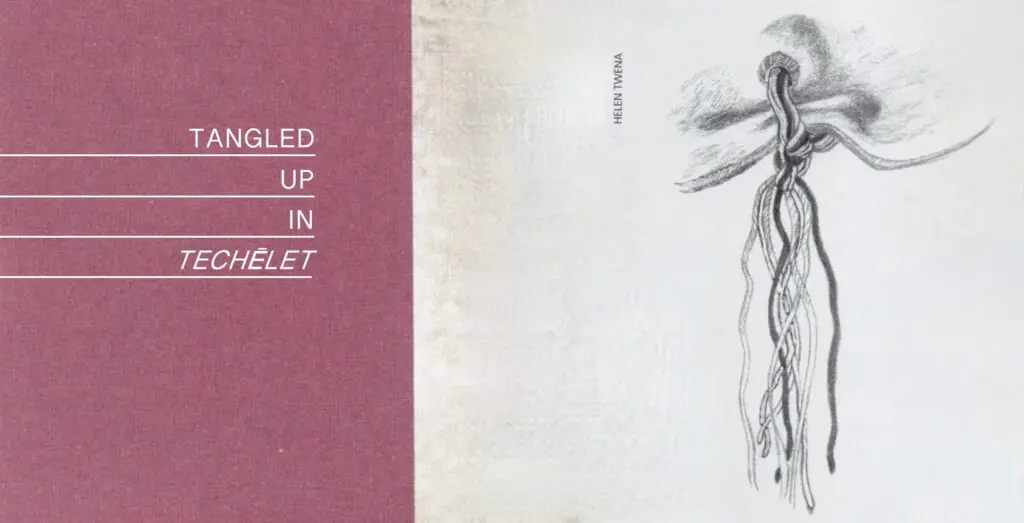
The three pericopae in which κράσπεδον occurs are mutually illuminating, since it is probable that this noun has the same meaning in all three pericopae. There can be little doubt that in Making a Show κράσπεδον refers to tzitziyot, since Jesus is referring to a religious practice relating to one’s clothing that certain scribes perform in an ostentatious manner.[53] Tzitziyot are the only religious observance that fits this description. The meaning of κράσπεδον in Making a Show confirms that stories about people seeking to touch Jesus’ κράσπεδον in order to be healed (Yair’s Daughter and a Woman’s Faith; Gennesaret) likewise refer to tzitziyot, with the corollary that, like other Jews of his day, Jesus observed the commandment to wear tassels (tzitziyot) on the four corners of his garments.[54] The evidence from Yair’s Daughter and a Woman’s Faith and Gennesaret that Jesus himself wore tzitziyot reflects light back on the criticism he voices in Making a Show. It is not the keeping of the commandment itself that Jesus opposed but the conspicuous manner in which the scribes chose to observe it. Rather than allowing their tzitziyot to serve their intended purpose of focusing the wearer’s attention on the commandments, these scribes were using the tzitziyot to attract attention to themselves.
אֶת צִיצִיּוֹתֵיהֶם (HR). In LXX the noun κράσπεδον (kraspedon, “edge,” “border,” “fringe”) only occurs five times, four of which are in reference to the ritual tassels which were to be worn on the four corners of one’s cloak (Num. 15:38 [2xx], 39; Deut. 22:12).[55] In the first three of these instances the equivalent Hebrew term is צִיצִת (tzitzit, “tassel”). In Deut. 22:12 κράσπεδον occurs as the translation of כָּנָף (kānāf, “wing,” “corner”), where the reference is to the part of the garment where the tassel is to be attached. The LXX translators rendered three of the four instances of צִיצִת in MT as κράσπεδον (Num. 15:38 [2xx], 39).[56] The one exception is in Ezek. 8:3, where צִיצִת is used in reference to a lock of hair rather than to the ritual tassels.
Although no possessive pronoun modifies τὰ κράσπεδα (ta kraspeda, “the hems”) in GR, we have attached a pronominal suffix to צִיצִת in HR. Hebrew prefers the pronominal suffix, but Greek translators of Hebrew texts often omitted equivalent possessive pronouns. Such an omission in L29 would have been especially easy, since the inclusion of αὐτῶν (“of them”) in L27 would have made it redundant. An example of the plural of צִיצִת with a pronominal suffix, similar to our reconstruction, occurs in an early rabbinic source:
באו ארבע ציציותיו ונדמו לו כארבעה עדים
His four tzitziyot [צִיצִיּוֹתָיו] came, and they seemed to him like four witnesses…. (Sifre Num. §115 [ed. Horovitz, 129])
L30 καὶ φιλοῦσιν (GR). The Lukan-Matthean agreement to use a verb for “love” in L30 strongly supports the supposition that Anth.’s version of Making a Show contained such a verb. Since in Matt. 23:6 and Luke 20:46 the evangelists were working from the Anthology, their agreed upon use of φιλεῖν (filein, “to love”) presumably reflects Anth.’s vocabulary. The use of the synonym ἀγαπᾶν (agapan, “to love”) in Luke 11:43, where the author of Luke depended on FR, is best explained as the First Reconstructor’s paraphrasing of Anth.’s wording. Matthew’s use of a present tense form of φιλεῖν is probably to be preferred over Luke’s participial form (cf. Luke’s present tense verbs in L44 and L47). On the other hand, Luke’s prosaic καί (kai, “and”) is more likely to reflect Anth.’s wording than Matthew’s slightly more refined conjunction, δέ (de, “but”).
וּמְחַבְּבִים (HR). In LXX the verb φιλεῖν (filein, “to love”) is relatively rare, but when it occurs it mainly does so as the translation of אָהֵב (’āhēv, “love”) or נָשַׁק (nāshaq, “kiss”).[57] Although the LXX translators never rendered חִבֵּב (ḥibēv, “love,” “cherish”) as φιλεῖν, this is no argument against our reconstruction, since ח-ב-ב in the pi’el stem never occurs in MT. Our reconstruction reflects Mishnaic usage, the style of Hebrew in which we prefer to reconstruct direct speech.
L31-40 The Matthean order of banquets→synagogues→markets (Matt. 23:6) is the inverse of the Lukan-Markan order of markets→synagogues→banquets (Luke 20:46 ∥ Mark 12:38-39). It would be difficult to decide which order to adopt for GR, and the post-positioning of markets, which makes a good segue into Matthew’s “and to be called Rabbi” (L41-43),[58] would prejudice us against Matthew’s order, except that Matthew’s order is partially confirmed by Luke’s version of Woes Against Scribes and Pharisees, where we find the order synagogues→markets (Luke 11:43). Luke 11:43 also has other agreements with Matt. 23:6-7 (attaching the definite article to the nouns in L37 and L39, use of singular nouns in L35/L37), which makes it likely that Matthew’s order reflects the arrangement in Anth.[59] Therefore, we have adopted Matthew’s order of banquets→synagogues→markets for GR and HR. In Making a Show (Luke 20:46) the author of Luke likely changed the position of greetings in the market so that walking about in robes and greetings in markets would make a balanced pair with first chairs in synagogues and first couches at banquets. The author of Mark simply followed Luke’s order. The First Reconstructor’s epitomizing approach to Anth. is sufficient to explain the omission of first couches at banquets in Luke 11:43.
L35 τὴν πρωτοκλισίαν (GR). Whereas Luke and Mark use anarthrous plural forms of πρωτοκλισία (prōtoklisia, “first couch”), Matthew has πρωτοκλισία in the singular with the definite article attached. Matthew also attaches the definite article to πρωτοκαθεδρία (prōtokathedria, “first chair”) in L37, and there the definite article has support from Luke 11:43. The Lukan-Matthean agreement to use the definite article in L37 suggests that the definite article occurred in Anth., and so Matthew’s definite article in L35 is likely to reflect Anth.’s wording, too. Matthew’s use of a singular form of πρωτοκλισία in L35 parallels Luke’s use of a singular form of πρωτοκαθεδρία in L37, so there is strong reason to suppose that the singular forms stem from Anth. in both cases. The situation is complicated, however, by Matthew’s use of a plural form of πρωτοκαθεδρία in L37. Nevertheless, we are inclined to accept singular forms for GR.
אֶת הַמָּקוֹם הָרִאשׁוֹן (HR). The noun πρωτοκλισία (prōtoklisia, “first couch”) is first attested in the Gospels and is unknown in extant sources independent of the Gospels.[60] It is unlikely, however, that πρωτοκλισία is a term coined by the Greek translator of Jesus’ saying. More probably πρωτοκλισία represents a colloquial term that chanced to escape attestation in more literary sources.[61] Hebrew lacks an obvious equivalent to πρωτοκλισία, making the term difficult to reconstruct. Our reconstruction of πρωτοκλισία with מָקוֹם רִאשׁוֹן (māqōm ri’shōn, “first place”) is based on the contrasting of πρωτοκλισία with τόπος ἔσχατος (topos eschatos, “last place”) in Places of Honor (Luke 14:8, 10). Whereas πρωτοκλισία reverts to Hebrew with difficulty, the latter phrase reverts easily to Hebrew as מָקוֹם אַחֲרוֹן (māqōm ’aḥarōn, “last place”). If τόπος ἔσχατος represents מָקוֹם אַחֲרוֹן in the underlying Hebrew text, then πρωτοκλισία likely represents מָקוֹם רִאשׁוֹן. Why, then, did the Greek translator adopt a literal translation for מָקוֹם אַחֲרוֹן but use a nonliteral translation for מָקוֹם רִאשׁוֹן? We suspect that when the Greek translator of the Hebrew Life of Yeshua was rendering Making a Show into Greek he was not thinking about the contrast between “first place” and “last place” that would occur in Places of Honor. He therefore chose terms for “first place” at banquets and “first seat” in synagogues that seemed best to him. When he came to Places of Honor, which we suspect followed Making a Show in his source, the Greek translator continued to use πρωτοκλισία as the translation of מָקוֹם רִאשׁוֹן for the sake of consistency, even though this created a slight unevenness in his translation.
L36 ἐν τοῖς δείπνοις (GR). All three synoptic versions of Making a Show agree on the wording in L36. Since the phrase ἐν τοῖς δείπνοις (en tois deipnois, “in the banquets”) reverts to Hebrew without difficulty, we have adopted the synoptic wording for GR.
בְּמִשְׁתָּיוֹת (HR). On reconstructing δεῖπνον (deipnon, “meal,” “banquet”) with מִשְׁתֶּה (mishteh, “banquet”), see Yohanan the Immerser’s Execution, Comment to L35. The plural of מִשְׁתֶּה occurs variously either as מִשְׁתָּאוֹת (mishtā’ōt) or מִשְׁתָּיוֹת (mishtāyōt).[62] According to Kutscher (129 §214), the former style of ending is more typical of Babylonian texts, whereas the latter is more typical of texts originating from the land of Israel. We have, accordingly, preferred the latter form. The plural form מִישְׁתָּיוֹת (mishtāyōt) occurs in the Kaufmann manuscript of the Mishnah (m. Sot. 9:11).
L37 καὶ τὴν πρωτοκαθεδρίαν (GR). Our Greek reconstruction in L37 is a hybrid of the wording in Matt. 23:6 and Luke 11:43. The conjunction, which we have adopted from Matthew, would have been omitted by the First Reconstructor as a consequence of his omission of the reference to the first couches at banquets (L35-36). On the other hand, we have preferred FR’s singular forms to Matthew’s plurals (see above, Comment to L35).
וְאֶת הַמּוֹשָׁב הָרִאשׁוֹן (HR). Like πρωτοκλισία (prōtoklisia, “first couch”), πρωτοκαθεδρία (prōtokathedria, “first chair”) is first attested in the Gospels and unknown in extant writings independent of the Gospels’ influence.[63] We have reconstructed πρωτοκαθεδρία on the analogy of πρωτοκλισία. In LXX καθέδρα (kathedra, “chair”) occurs as the translation of מוֹשָׁב (mōshāv, “sitting,” “seat”) more often than any other term.[64]
Tomson noted the similarity between Jesus’ denunciation of the scribes who coveted special seats in synagogues and the warning in the Epistle of James against giving special seats to wealthy persons “in your synagogue” (James 2:2).[65] Evidently, Jesus and the author of James believed the synagogue should be egalitarian rather than hierarchical, an opinion that put them at odds with elite members of society.
L38 ἐν ταῖς συναγωγαῖς (GR). In L38 there is complete verbal agreement between all three synoptic versions of Making a Show and Luke’s version of Woes Against Scribes and Pharisees. Since the synoptic wording reverts easily to Hebrew, we have adopted it unchanged for GR.
בְּבָתֵּי כְנֵסִיּוֹת (HR). On reconstructing συναγωγή (sūnagōgē, “synagogue”) with בֵּית כְּנֶסֶת (bēt keneset, “house of assembly,” “synagogue”), see Teaching in Kefar Nahum, Comment to L36.[66]
L39 καὶ τοὺς ἀσπασμοὺς (GR). Unlike Luke and Mark in Making a Show, Matthew attaches the definite article to ἀσπασμός (aspasmos, “greeting”). Matthew’s definite article finds support in Luke 11:43, a strong indication that the definite article occurred in Anth. Hence our adoption of Matthew’s wording in L39 for GR.
וּשְׁאִילוֹת הַשָּׁלוֹם (HR). The noun ἀσπασμός (aspasmos, “greeting”) does not occur in LXX,[67] so we cannot use it as a guide for HR. But this poses no difficulty, since we know that “greeting” was expressed as שְׁאִילַת שָׁלוֹם (she’ilat shālōm) in Mishnaic Hebrew. Examples of this phrase include:
עָבְרוּ אֵלּוּ וְלֹא נֶעְנוּ מְמַעֲטִים בְּמַשָׂא וּבְמַתָּן בְּבִינְיָן וּבִנְטִיעָה בָּאֵרוּסִים וּבַנִּישּׂוּאִים וּבִשְׁאֵילַת שָׁלוֹם בֵּין אָדָם לַחֲבֵירוֹ [כִּ]בְנֵי אָדָם נֶזוּפִים לִפְנֵי הַמָּקוֹם
If these [days of fasting] passed and they [i.e., the prayers for rain] are not answered, they minimize trade, building and planting, arranging marriages and weddings and greetings [וּבִשְׁאֵילַת שָׁלוֹם] between a person and his fellow, like people chastened before the Omnipresent One. (m. Taan. 1:7)
הנכנס לבית המרחץ מקום שבני אדם עומדין לבושין יש שם מקרא ותפלה ואין צריך לומר שאילת שלום…מקום שבני אדם עומדין ערומין אין שם שאילת שלום ואין צריך לומר מקרא ותפלה…מקום שבני אדם עומדים ערומים ולבושין יש שם שאילת שלום ואין שם מקרא ותפלה…
The one who enters a bath house, [if he is in] a place where people are standing clothed, he may recite [the Shema] and the prayer and, needless to say, [offer] a greeting [שְׁאִילַת שָׁלוֹם]…. [If he is in] a place where people are standing naked, there is no greeting [שְׁאִילַת שָׁלוֹם] there and, needless to say, [no] recitation [of the Shema] or the prayer…. [If he is in] a place where people are standing naked and clothed, there is a greeting [שְׁאִילַת שָׁלוֹם] there, but there is no recitation [of the Shema] or the prayer…. (t. Ber. 2:20; Vienna MS)
We similarly reconstructed ἀσπάζεσθαι (aspazesthai, “to greet”) with שָׁאַל בְּשָׁלוֹם (shā’al beshālōm, “ask of the peace,” i.e., “greet”) in Sending the Twelve: Conduct on the Road, L77.
L40 ἐν ταῖς ἀγοραῖς (GR). As in L38, there is complete synoptic agreement as well as agreement from Luke 11:43. Since the phrase ἐν ταῖς ἀγοραῖς (en tais agorais, “in the markets”) reverts easily to Hebrew, we have adopted this wording for GR without change.
בִּשְׁוָוקִים (HR). On reconstructing ἀγορά (agora, “market”) with שׁוּק (shūq, “market”), see Like Children Complaining, Comment to L5.
L41-43 καὶ καλεῖσθαι ὑπὸ τῶν ἀνθρώπων ῥαββεί (Matt. 23:7). We have excluded Matthew’s “and to be called ‘Rabbi’ by the people” from GR for several reasons. First, this accusation is unique to Matthew. Nothing corresponding to it occurs in the Lukan or Markan versions of Making a Show or in Luke 11:43. Second, Matthew’s wording in L41-43 is un-Hebraic in its use of the passive verb plus ὑπό + genitive noun. Third, it seems unlikely that Jesus would criticize the scribes for being addressed as “Rabbi” when he accepted this title when addressed to himself. Fourth, “and to be called ‘Rabbi’ by the people” looks like it was specially constructed as a segue into Forbidden Titles (Matt. 23:8-10),[68] where the author of Matthew has Jesus forbid the use of the titles ῥαββί (rabbi, “Rabbi”), πατήρ (patēr, “father”) and καθηγητής (kathēgētēs, “leader,” “guide”). These prohibitions appear to be negative reactions on the part of the author of Matthew and his community to the innovative use of “Rabbi” as a title for ordained sages, which the author of Matthew and his community anachronistically projected back onto Jesus.[69] Since the technical use of “Rabbi” as a title rather than merely as a polite form of address came into vogue in the period after the destruction of the Second Temple as the early rabbinic sages began to consolidate their power,[70] criticism of this technical use of “Rabbi” could hardly have originated with Jesus himself. Thus, there is every reason to suppose that the author of Matthew composed L41-43 for his own redactional and polemical purposes.
The insertion of L41-43 required the author of Matthew to omit the reference to the devouring of widows’ homes (L44-45) and making lengthy prayers for show (L46-47), but these were not great losses. Already in Matt. 6:5-8 the author of Matthew had included criticisms of improper prayer practices, and the author of Matthew had piled up so many criticisms of the scribes and Pharisees that inclusion of the enigmatic reference to their devouring widows’ houses was superfluous.
While L41-43 took the place of L44-47, Forbidden Titles (Matt. 23:8-10) took the place of Places of Honor (Luke 14:[7]8-11), except that the author of Matthew preserved its concluding proverb (“For everyone who exalts himself will be humbled, but everyone who humbles himself will be exalted”; Luke 14:11) in situ (Matt. 23:12). Thus, Matthew’s preamble to Woes Against Scribes and Pharisees preserves evidence that in Anth. Making a Show and Places of Honor were sequential.
L44 οἳ κατεσθίουσιν (GR). There is slight variation between the Lukan and Markan phrasing in L44. Whereas Luke has relative pronoun + present tense of κατεσθίειν (katesthiein, “to devour”), Mark has definite article + participle of κατεσθίειν. We have adopted Luke’s wording for GR.
הָאוֹכְלִים (HR). On reconstructing κατεσθίειν (katesthiein, “to devour”) with אָכַל (’āchal, “to eat”), see Four Soils parable, Comment to L32.
L45 τὰς οἰκίας τῶν χηρῶν (GR). In L45 there is complete Lukan-Markan verbal agreement, and since their wording reverts easily to Hebrew, we have accepted it without modification for GR.
אֶת בָּתֵּיהֶן שֶׁלְּאַלְמָנוֹת (HR). On reconstructing οἰκία (oikia, “house”) with בַּיִת (bayit, “house”), see Shimon’s Mother-in-law, Comment to L7.
On reconstructing χήρα (chēra, “widow”) with אַלְמָנָה (’almānāh, “widow”), see Widow’s Son in Nain, Comment to L8.
Jesus’ rebuke of those scribes “who devour widows’ houses” is at home in the prophetic tradition of speaking out on behalf of the fatherless, immigrants and widows (cf. Isa. 1:17; Jer. 7:6; 22:3; Zech. 7:10; Mal. 3:5).[71] Nevertheless, exactly what devouring a widow’s house means is unknown.[72] The scribes Jesus criticized may have preyed upon the hospitality of widows, or conned them into becoming the beneficiaries of their wills, or found some other means to take advantage.[73] Or perhaps “devour widows’ houses” was more rhetorical than forensic, and was not intended to be any more precise than Isaiah’s indictment of those who make “widows their plunder” (Isa. 10:2). It is tantalizing to note, however, that the Mishnah makes a cryptic reference to the מַכֹּת פְּרוּשִׁים (makot perūshim, “wounds of the Pharisees”; m. Sot. 3:4), a type of misdeed the Jerusalem Talmud defined in the following manner:
ומכות פרושים זה שהוא נותן עצה ליתומים להבריח מזונות מן האלמנה
And “the wounds of the Pharisees”: This is one who gives advice to the heirs how to defraud maintenance from the widow. (y. Sot. 3:4 [16a])
It is possible, but by no means demonstrable, that both the Gospels and rabbinic literature independently bear witness to the same abuse of power on the part of Pharisaic scribes.
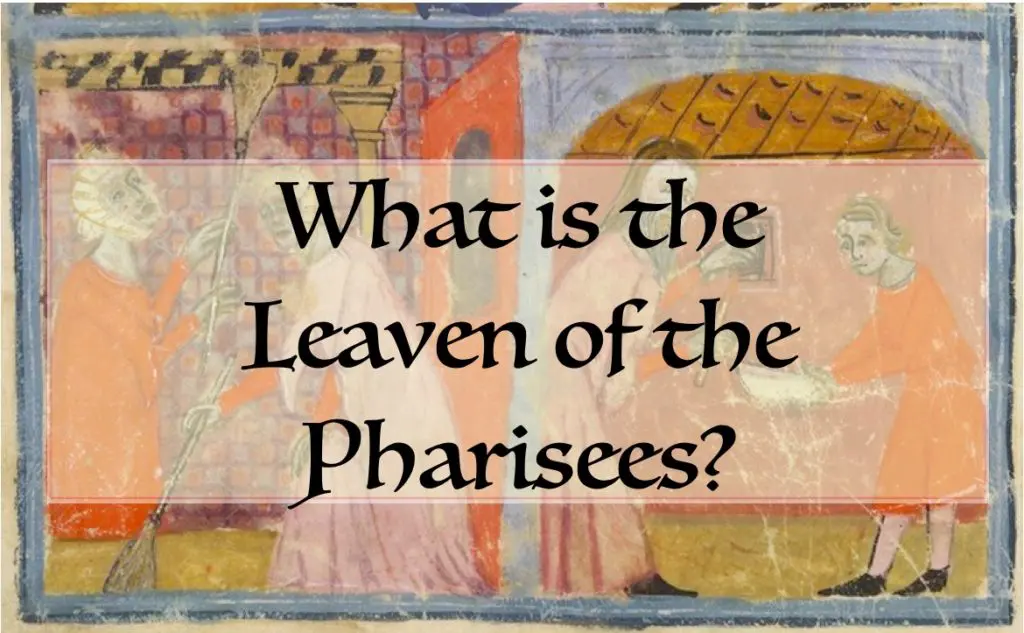
It is also possible that the reference to devouring widows’ houses offers a clue to the riddle posed by Warning About Leavened Bread, in which Jesus warns against the leaven of the Pharisees. What is meant by “leaven” in this saying is not clear, and each evangelist attempted to solve the riddle, although none did so satisfactorily. If, as we believe, Making a Show originally formed the continuation of Warning About Leavened Bread, then it is possible that Making a Show holds the answer to the riddle of the leaven’s identity. Making a Show describes ostentatious behavior: widening tefillin, lengthening tzitziyot and prolonging prayers. Such puffery might be identified as the “leaven” of the Pharisees. But if so, this answer to the riddle does not accommodate the reference to devouring widows’ houses. On the other hand, the Hebrew word for “leavened substance,” חָמֵץ (ḥāmētz), sounds like the Hebrew verb חָמַץ (ḥāmatz, “do wrong,” “oppress”) and the Hebrew noun חָמוֹץ (ḥāmōtz, “oppression”), which occurs once in Scripture in connection with widows:
לִמְדוּ הֵיטֵב דִּרְשׁוּ מִשְׁפָּט אַשְּׁרוּ חָמוֹץ שִׁפְטוּ יָתוֹם רִיבוּ אַלְמָנָה
Learn to do good, study justice, correct oppression [חָמוֹץ], judge the fatherless, defend the widow’s case. (Isa. 1:17)
It seems quite plausible, therefore, that Jesus’ reference to the “leaven of the Pharisees” involved a play on words: the “leavened substance” of the Pharisees was their oppression of widows in spite of their ostensibly pious mode of life. There is even the remotest possibility that Jesus’ saying alluded to the verse in Isaiah we quoted above. A potential obstacle to the possibility of such a wordplay is that in Mishnaic Hebrew the verb חָמַץ (ḥāmatz, “do wrong,” “oppress”) became exceedingly rare,[74] if not totally obsolete,[75] while the noun חָמוֹץ (ḥāmōtz, “oppression”) was entirely extinct. Nevertheless, although in Mishnaic Hebrew the ח-מ-צ (ḥ-m-tz) root became ever more limited to leavening and fermentation, the verb חָמַס (ḥāmas, “do violence,” “extort,” “oppress”) and the nouns חָמָס (ḥāmās, “violence,” “extortion,” “oppression”) and חַמְסָן (ḥamsān, “extortioner,” “oppressor”) show that the phonetically similar ח-מ-ס (ḥ-m-s) root took its place.[76] Thus, a wordplay based on חָמֵץ (ḥāmētz, “leavened bread,” “leavened substance”) and חָמָס (ḥāmās, “violence,” “extortion,” “oppression”) remains viable.[77] Such a solution has the advantage of finding sense in an otherwise incomprehensible saying of Jesus.
L46 καὶ [προφάσει] (GR). Luke and Mark are in full verbal agreement in L46. Nevertheless, we hesitate to adopt their προφάσει (profasei, “with a pretext”) for GR on the grounds that this is the only instance of πρόφασις (profasis, “motive,” “pretext”) in the synoptic tradition,[78] it is somewhat difficult to revert to Hebrew, and the saying would still make sense if this word were omitted, which could mean that it was supplied by a Greek redactor at some stage of the saying’s transmission, most likely the author of Luke himself. On the other hand, retroversion of the wording in L46 to Hebrew is possible, and the very paucity of πρόφασις in the Synoptic Gospels proves that this word is not characteristic of Lukan redaction. To indicate our uncertainty we have placed προφάσει in brackets.
וּ[מִפְּנֵי מַרְאִית הָעַיִן] (HR). In LXX the noun πρόφασις is extremely rare[79] and never occurs as the translation of a Hebrew term that would be a suitable option for HR. However, Mishnaic Hebrew possessed the idiom מִפְּנֵי מַרְאִית הָעַיִן (mipnē mar’it hā‘ayin, “because of the appearance of the eye,” i.e., “for the sake of appearances”), which a Greek translator might have rendered as προφάσει (profasei, “with a pretext”). Examples of this idiom include:
הַשֵּׁירַיִיַם וְהַכַּלָךְ אֵין בָּהֶם מִשֵּׁם כִּלְאַיִם [אֲבַל אֲסוּרִין מִפְּנֵי מַרְאִית הָעַיִן…]
Silk and bast silk have nothing in them relating to the prohibition against mixing two kinds of material, but they are forbidden [to be woven together—JNT and DNB] for the sake of appearances [מִפְּנֵי מַרְאִית הָעַיִן]. (m. Kil. 9:2)
יום הכפורים אסור באכילה ובשתיה ברחיצה ובסיכה בנעילת הסנדל…קטנים מותרין בכולן ואסורין בנעילת הסנדל מפני מראית העין
On the Day of Atonement eating and drinking, washing and anointing, and putting on sandals is forbidden…. Minors are permitted to do all of them, but they are forbidden to put on sandals for the sake of appearances [מִפְּנֵי מַרְאִית הָעַיִן]. (t. Yom. 4:1; Vienna MS)
רבי ירמיה בשם רבי לעזר שני חורגים שגדלו בבית אחד אסורין להינשא מפני מראית העין
Rabbi Yermiyah said in the name of Rabbi Liezer, “Two stepchildren who were raised in one house are forbidden to be married for the sake of appearances [מִפְּנֵי מַרְאִית הָעַיִן].” (y. Yev. 2:4 [12b])
Nevertheless, on account of our uncertainty we have placed מִפְּנֵי מַרְאִית הָעַיִן in brackets.
L47 μακρὰ προσεύχονται (GR). In L47 Luke and Mark are in close agreement, except that whereas Luke has a present tense form of προσεύχεσθαι (prosevchesthai, “to pray”), Mark has a participial form of this verb. We have adopted Luke’s wording for GR.
מַאֲרִיכִים בַּתְּפִלָּה (HR). The phrase μακρὰ προσεύχονται (makra prosevchontai, “long they pray”) does not revert to Hebrew exactly, but the thought is easily expressed as מַאֲרִיכִים בַּתְּפִלָּה (ma’arichim batefilāh, “they prolong [their time] in prayer”). An example of הֶאֱרִיךְ (he’erich, “lengthen,” “prolong”) in connection with prayer is found in the Mishnah with regard to the high priest’s entry into the Temple on the Day of Atonement:
מִתְפַּלֵּל תְּפִילָּה קְצָרָה בָּבַיִת הַחִיצוֹן וְלֹא הָיָה מַאֲרִיך שֶׁלֹא לְהַבְעִית אֶת יִשְׂרָאֵ′
He prays a short prayer in the outer room of the sanctuary. And he would not take a long time [מַאֲרִיך; printed eds. read: מַאֲרִיךְ בִּתְפִלָּתוֹ ⟨“take a long time in his prayer”⟩] so as not to alarm Israel. (m. Yom. 5:1)
The Jerusalem Talmud relates a story that gives the reason for this stipulation:
ולא היה מאריך שלא להבעית את ישראל מעשה באחד שהאריך וגמרו להכנס אחריו אמרו שמעון הצדיק היה אמרו לו למה הארכתה אמר להן מתפלל הייתי על מקדש אלהיכם שלא יחרב אמרו לו אע″פ כן לא היית צריך להאריך
“And he would not take a long time so as not to alarm Israel” [m. Yom. 5:1]—an anecdote about someone who did take a long time [שֶׁהֶאֱרִיךְ], and they decided to enter after him. (They say it was Shimon the Righteous.) They said to him, “Why did you take a long time [הֶאֱרַכְתָּה]?” He said to them, “I was praying for the Temple of your God that it might not be destroyed.” They said to him, “Nevertheless, you didn’t need to take a long time [לְהַאֲרִיךְ].” (y. Yom. 5:2 [27a])[80]
These examples amply illustrate the appropriateness of our choice of מַאֲרִיכִים בַּתְּפִלָּה (ma’arichim batefilāh, “they prolong [their time] in prayer”) for HR.[81]
L48-49 [οὗτοι λήμψονται κρίμα] (GR). It is with some uncertainty that we include the final sentence of the Lukan-Markan version of Making a Show in our reconstruction. It is not that there are stark differences between the Lukan and Markan endings—on the contrary, their wording is identical—or that the concluding sentence is especially difficult to revert to Hebrew. The source of our doubt is that the concluding sentence changes the character of Making a Show from a warning against the scribes who behave in the ways described into a pronouncement of judgment upon the scribes the saying warns against. The warning could stand on its own without the pronouncement of judgment in L48-49, which indicates that these lines could be a later addition. It is on account of these doubts that we have placed GR and the corresponding HR in brackets.
From GR we have excluded the comparative adjective περισσότερος (perissoteros, “greater”), which is un-Hebraic since Hebrew lacks comparative adjectives. The placement of περισσότερος before the noun is also un-Hebraic since Hebrew word order places adjectives after the nouns they modify. We suspect the author of Luke supplied the adjective in order to strengthen the force of the saying.
אֵלּוּ עֲתִידִין לְקַבֵּל אֶת דִּינָם (HR). On reconstructing λαμβάνειν (lambanein, “to take,” “to receive”) with קִבֵּל (qibēl, “receive”), see Friend in Need, Comment to L26.
In LXX κρίμα (krima, “judgment”) usually occurs as the translation of מִשְׁפָּט (mishpāṭ, “judgment,” “justice”).[82] In Mishnaic Hebrew, however, דִּין (din, “judgment,” “decision”) became quite common. We find an example of קִבֵּל + דִּין in the following rabbinic statement:
רבי ירמיה בשם רבי אבהו אף הנידונין צריכין לעמוד בשעה שמקבלין דינן שנאמר אשר להם הריב לפני ה′
Rabbi Yermiyah said in the name of Rabbi Abahu, “Even the ones being judged have to stand in the hour that they receive their judgment [שֶׁמְּקַבְּלִין דִּינָן], as it is said, [And the two people must stand—]who have a dispute—before the Lord [Deut. 19:17]. (y. Sanh. 3:9 [18a])
To דִּין we have attached a pronominal suffix even though a possessive pronoun is not attached to κρίμα. It was not uncommon for Greek translators of Hebrew texts to omit an equivalent to possessive pronominal suffixes.
Redaction Analysis
Making a Show is a fairly heavily redacted pericope even though the authors of Luke and Matthew worked directly from the text of Anth. The reasons for each evangelist’s redaction differed. The author of Luke was mainly interested in making the saying relevant to Gentile readers. He therefore suppressed some of the more distinctively Jewish content in the saying which his audience was unlikely to understand. The author of Matthew, by contrast, was motivated by anti-Jewish animus. He redacted Making a Show in order to incorporate criticism of Jewish practice current in his own day that did not exist in the time of Jesus. This “updating” of a saying of Jesus is consistent with Matthean redaction we have observed in other pericopae.
Luke’s Version[83]
The author of Luke provided his version of Making a Show with a brief narrative introduction (L1, L3), which indicated the audience to whom the saying was addressed but not the occasion on which it was spoken. In place of Anth.’s references to the scribes’ phylacteries and hems (L26-29) the author of Luke referred to their pleasure in walking about in robes (L26-27). The author of Luke rearranged the order of the remaining criticisms in order to pair walking about in robes with greetings in the markets and first couches at banquets with first chairs in synagogues. It is likely that the author of Luke supplied προφάσει (“with a pretext”) in L46, a stylistic improvement, and it is probable that he added “These will receive greater punishment” (L48-49) to the end of the saying. We cannot rule out the possibility, however, that the author of Luke only added the adjective “greater” and the remainder of L48-49 stems from Anth.
| Making a Show | |||
| Luke | Anthology | ||
| Total Words: |
47 | Total Words: |
41 [45] |
| Total Words Same as Anth.: |
26 [30] | Total Words Taken Over in Luke: |
26 [30] |
| % Same as Anth.: |
55.32 [63.83] | % of Anth. in Luke: |
63.41 [66.67] |
| Click here for details. | |||
| Making a Show | |||
| Luke | Anthology | ||
| Total Words: |
17 | Total Words: |
41 [45] |
| Total Words Same as Anth.: |
11 | Total Words Taken Over in Luke: |
11 |
| % Same as Anth.: |
64.71 | % of Anth. in Luke: |
26.83 [24.44] |
| Click here for details. | |||
The First Reconstructor borrowed an excerpt from Making a Show in his adaptation of Woes Against Scribes and Pharisees. He used this excerpt as a substitute for one of the woes that occurred in Anth. Because the author of Luke copied his version of Woes Against Scribes and Pharisees, the FR excerpt from Making a Show occurs as a Lukan doublet in Luke 11:43. The First Reconstructor’s changes to Anth.’s wording were to address the saying directly to the Pharisees (instead of a warning about the scribes addressed to a third party; L24-25), to skip over the references to wide phylacteries and and long hems (L26-29), to write ὅτι ἀγαπᾶτε (hoti agapate, “because you love”) as a synonym for καὶ φιλοῦσιν (kai filousin, “and they love”) (L30), and to omit the first couch at banquets (L35-36). The resulting excerpt pronounced a woe against the Pharisees who gloried in public recognition, occupying the most prominent place in the synagogue and accepting salutations in the market.
Mark’s Version[84]
The author of Mark lightly paraphrased Luke’s wording throughout his version of Making a Show. His most important contribution was to tie the saying more tightly to the preceding context by making it clear that Making a Show belonged to Jesus’ teaching in the Temple (L2).
| Making a Show | |||
| Mark | Anthology | ||
| Total Words: |
44 | Total Words: |
41 [45] |
| Total Words Same as Anth.: |
22 [26] | Total Words Taken Over in Mark: |
22 [26] |
| % Same as Anth.: |
50.00 [59.09] | % of Anth. in Mark: |
53.66 [57.78] |
| Click here for details. | |||
Matthew’s Version[85]
Matthew’s version of Making a Show is embedded in the preamble to Woes Against Scribes and Pharisees. To make the saying fit within the preamble the author of Matthew was forced to omit the words of warning that opened the saying (L24-25) and to insert γάρ in L26. The author of Matthew also added the assertion that the scribes and Pharisees love “to be called ‘Rabbi’ by the people” (L41-43) to the end of the saying, which allowed him to make the further insertion of Forbidden Titles (Matt. 23:8-10). Other changes the author of Matthew made—replacing καί in L30 with δέ, pluralizing “the first chair” in L37 to “the first chairs”—were merely stylistic in nature.
| Making a Show | |||
| Matthew | Anthology | ||
| Total Words: |
34 | Total Words: |
41 [45] |
| Total Words Same as Anth.: |
24 | Total Words Taken Over in Matt.: |
24 |
| % Same as Anth.: |
70.59 | % of Anth. in Matt.: |
58.54 [53.33] |
| Click here for details. | |||
Results of This Research
1. Did Jesus condemn the wearing of tefillin and tzitziyot? It is highly unlikely that he did. The wearing of tzitziyot was a scriptural commandment and the wearing of tefillin was regarded as such. The observance of these commands is attested across a wide spectrum of Second Temple Judaism. The Letter of Aristeas indicates that Hellenistic Jews observed these commands, finds at Qumran indicate that the sectarians wore tefillin, the Gospels claim that the Pharisaic scribes likewise wore tefillin and that Jesus himself wore tzitziyot, and dyed wool discovered in the Cave of Letters suggests that Bar Kochva’s rebels or their sympathizers wore tzitziyot, too. The wearing of tefillin and tzitziyot may not have been universal among first-century Jews, but it was certainly not uncommon or controversial.
In Making a Show Jesus does not condemn the wearing of tefillin and tzitziyot as such but the ostentatious manner in which certain scribes did so. It was not even their mere ostentation that so irked Jesus as the disingenuousness the scribes’ ostentation disguised. Despite making a show of their personal piety, the scribes Jesus condemned “devoured widows’ houses.” What exactly this misdeed entailed is uncertain, but it seems clear that in some way the scribes used their learning or their social status to their own advantage and to the disadvantage of widows. However they did so, it is unlikely that they technically transgressed scriptural commandments, although they violated the moral principles for which the commandments stand. Thus, Making a Show is a clear instance in which Jesus prioritized matters of social justice over personal piety.
For Jesus, it was not enough to show religious devotion while ignoring the plight of one’s fellow human beings. Neither could expressions of personal piety counterbalance harming one’s neighbor, either through commission or omission. This prioritizing of social justice over personal piety in Making a Show is consistent with the prophetic tradition (cf., e.g., Amos 5:21-24; Mic. 6:6-8) and is found in other sayings of Jesus, as when Jesus found fault with the Pharisees for tithing herbs but ignoring the weightier matters of the law: justice, mercy, and trustworthiness (Matt. 23:23 ∥ Luke 11:42). As with tithing, Jesus would undoubtedly have insisted that the wearing of tefillin and tzitziyot should be observed, but not as an end in themselves. Such observances were intended to be reminders of what God had done for Israel by redeeming the Hebrews from slavery in Egypt. They were meant to recall to the wearers God’s compassion for the downtrodden and to engender solidarity with the oppressed. The personal and private actions of wearing tefillin and tzitziyot were preparation and training for the interpersonal and communal actions of serving God through doing good for others. According to Jesus, personal piety was necessary but not sufficient for participation in the Kingdom of Heaven.
2. Is Making a Show a blanket condemnation of all scribes? Scholars often disparage Making a Show because in their view it “generalizes without discrimination.”[86] Surely, they point out, at least some scribes were not guilty of using their religious status to take advantage of widows. However, we are in agreement with Nolland, who pointed out that Jesus’ warning does not need to be read in such an all-encompassing manner.[87] The criticism is aimed not at all scribes but at all scribes who act in the way Jesus described.
If we are correct that Making a Show was originally the continuation of Warning About Leavened Bread, then this places a further limit on Jesus’ criticism. Jesus does not condemn all scribes but certain Pharisaic scribes who used personal piety as an excuse or a cover for exploiting disadvantaged members of society.
3. What is meant by “devouring widows’ houses”? Although various guesses have been made, we cannot say with certainty what is meant by “devouring widows’ houses.” It may be that the charge is rhetorical rather than forensic, and therefore the precise nature of the abuse cannot be reconstructed. Rabbinic literature remembers certain Pharisees who used their learning to cheat widows out of their maintenance. But even this recollection is vague, and it is not certain whether or not Jesus’ saying and the rabbinic tradition refer to the same phenomenon. What is clear is that by some means these scribes deprived widows of the security their homes afforded them.
Conclusion
In Making a Show Jesus prioritizes social justice over personal piety. Their ostentatious acts of devotion did not offset or excuse the harm the scribes Jesus criticized had done to disenfranchised members of society. These scribes had enriched themselves at the expense of widows, whose resources were limited and whose means of redress were few. Such oppressive behavior was likely the leavened stuff of the Pharisees against which Jesus warned his followers. The saying remains a warning to Christians who, by overemphasizing personal salvation, wash their hands of issues of social justice, lest they find common cause with the scribes by turning a deaf ear to Jesus’ prophetic message.
 Click here to return to The Life of Yeshua: A Suggested Reconstruction main page.
_______________________________________________________
Click here to return to The Life of Yeshua: A Suggested Reconstruction main page.
_______________________________________________________
Notes
- For abbreviations and bibliographical references, see “Introduction to ‘The Life of Yeshua: A Suggested Reconstruction.’” ↩
- This translation is a dynamic rendition of our reconstruction of the conjectured Hebrew source that stands behind the Greek of the Synoptic Gospels. It is not a translation of the Greek text of a canonical source. ↩
- The “them” of Luke 20:41 could refer back either to “some of the scribes” (Luke 20:39) or to “some of the Sadducees” (Luke 20:27). ↩
- Cf. Allen, 243; McNeile, 328; Bundy, 446; Davies-Allison, 3:266; Luz, 3:93. ↩
- It is possible, however, that the message of Widow’s Gift was not altogether to the author of Matthew’s liking. For the author of Matthew, the Temple was a condemned institution under God’s judgment, so it was probably convenient for the author of Matthew to omit Jesus’ commendation of a widow who gave her last to the Temple treasury. ↩
- Scholars who assume that Luke’s version of Making a Show depends on Mark’s include Fitzmyer (2:1316), Nolland (Luke, 3:975), Bovon (3:80) and Wolter (2:408). ↩
- See LOY Excursus: Criteria for Distinguishing Type 1 from Type 2 Double Tradition Pericopae. ↩
- On Pharisaic attempts to entrap Jesus as an FR redactional motif, see Man’s Contractured Arm, Comment to L12. ↩
- On νομικός (nomikos, “legal expert”) as a marker of FR redaction, see Man With Edema, Comment to L9. ↩
- The author of Luke made similar redactional use of the noun λαός in Yohanan the Immerser’s Eschatological Discourse, L1 (Luke 3:15), Yohanan the Immerser’s Execution, L2 (Luke 3:18) and Sermon’s End, L6 (Luke 7:1). ↩
- Cf. Gundry, Mark, 2:719. ↩
- See Moulton-Geden, 425. ↩
- Cf. Pryke, 169. ↩
- On διδαχή as a Markan stereotype, see LOY Excursus: Catalog of Markan Stereotypes and Possible Markan Pick-ups, under the entry for Mark 1:22, and Four Soils parable, Comment to L21. See also Teaching in Kefar Nahum, Comment to L30. ↩
- On the author of Mark’s redactional preference for imperfect verbs, see LOY Excursus: Mark’s Editorial Style, under the subheading “Mark’s Freedom and Creativity.” And on the use of third-person imperfect forms ἔλεγεν/ἔλεγον in Mark as the product of Markan redaction, see Mustard Seed and Starter Dough, Comment to L3. ↩
- Cf. Gundry, Matt., 453. ↩
- Cf. Gundry, Matt., 453; Davies-Allison, 3:267. ↩
- Cf. Bundy, 447 §342. On τότε as an indicator of Matthean redaction, see Jesus and a Canaanite Woman, Comment to L22. ↩
- Assuming, that is, that the Anthologizer had not already separated Moshe’s Seat from the pericopae on Almsgiving, Prayer, and Fasting. ↩
- See Bundy, 448 §343. ↩
- Pace Gundry, Mark, 2:726. On the imperative βλέπετε as a Markan stereotype, see Be Ready for the Son of Man, under the subheading “Redaction Analysis: Mark’s Version,” Comment to L16. ↩
- See Taylor, 494; Fitzmyer, 2:1318. ↩
- Cf. Plummer, Luke, 474; McNeile, 331; Manson, Sayings, 230, each of whom entertained the possibility that the “robes” and the “phylacteries and hems” are equivalent. ↩
- On the dates we assign to the composition of the Gospels of Matthew, Mark and Luke, see LOY Excursus: The Dates of the Synoptic Gospels. ↩
- See Moulton-Geden, 813. ↩
- See Trommii, 2:265-266; Hatch-Redpath, 2:1141. ↩
- See Dos Santos, 191. ↩
- See Jeffrey H. Tigay, “On the Term Phylacteries (Matt 23:5),” Harvard Theological Review 72.1 (1979): 45-53, esp. 49. ↩
- See Manson, Sayings, 230-231. Cf. Davies-Allison, 3:273. ↩
- See Tigay, “On the Term Phylacteries (Matt 23:5),” 49 n. 17. Thus Masechet Tefillin §11 states: מצות תפילין מהשחר עד הערב (“The commandment of tefillin pertains from dawn until evening”; Seven Minor Tractates, ed. Higger, 45). ↩
- See Moulton-Geden, 996. ↩
- See McNeile, 330; Nolland, Matt., 9:25. ↩
- A subtle shift between the scriptural basis for the wearing of the tefillin (Exod. 13:9, 16; Deut. 6:8) and the wording in Aristeas indicates that the wearing of physical objects is what Pseudo-Aristeas had in mind. Whereas Scripture speaks of binding the words of God to the arms and forehead, Aristeas refers to binding a sign on the arm. Thus, Pseudo-Aristeas conceives of wearing objects that contains verses of Scripture, i.e., tefillin. On the reference to tefillin in the Letter of Aristeas, see Benjamin G. Wright III, “Three Jewish Ritual Practices in Aristeas §§158-160,” in Heavenly Tablets: Interpretation, Identity and Tradition in Ancient Judaism (ed. Lynn LiDonnici and Andrea Lieber; Leiden: Brill, 2007), 11-29, esp. 21-25. ↩
- On the tefillin from Qumran, see Geza Vermes, “Pre-Mishnaic Jewish Worship and the Phylacteries from the Dead Sea,” Vetus Testamentum 9.1 (1959): 65-72; Yigael Yadin, Tefillin from Qumran (X Q Phyl 1-4) (Jerusalem: Israel Exploration Society and Shrine of the Book, 1969); Lawrence H. Schiffman, “Phylacteries and Mezuzot,” in Encyclopedia of the Dead Sea Scrolls (2 vols.; ed. Lawrence H. Schiffman and James VanderKam; Oxford: Oxford University Press, 2000), 2:675-677. ↩
- Unlike the scriptural basis for the wearing of the tefillin (Exod. 13:9, 16; Deut. 6:8), which refers to binding God’s word on the arm and forehead, Josephus refers to bearing inscriptions (ἐγγεγραμμένα [engegrammena]) on the head and the arm. Josephus clearly had physical objects containing scriptural verses in mind. ↩
- It is quite possible that the mark of the beast placed on the forehead and right arm of its recipients (Rev. 13:16) is a parody of the tefillin, which are worn on the forehead and the left arm. See R. H. Charles, A Critical and Exegetical Commentary on the Revelation of St. John (2 vols.; Edinburgh: T&T Clark, 1920), 1:362-363; J. Massyngberde Ford, Revelation: A New Translation with Introduction and Commentary (AB38; Garden City, N.Y.: Doubleday, 1975), 225. If the mark of the beast is a parody, then the revelator must have viewed the authentic wearing of tefillin positively. ↩
- Translation adapted from A. Lukyn Williams, trans., Justin Martyr: The Dialogue with Trypho: Translation, Introduction, and Notes (London: Society for Promoting Christian Knowledge; New York: Macmillan, 1930), 91-92. ↩
- See Tigay, “On the Term Phylacteries (Matt 23:5),” 49-50. ↩
- Tigay (“On the Term Phylacteries [Matt 23:5],” 48-49) noted that the examples of ancient tefillin varied in their dimensions more in width (across the forehead) than in height. ↩
- See Moulton-Geden, 619. ↩
- See Hatch-Redpath, 2:902. ↩
- See Dos Santos, 34. ↩
- In Mishnaic Hebrew hif‘il forms of ג-ד-ל mean “grow up,” “come of age.” ↩
- According to Deut. 22:12, each tzitzit was to consist of twisted cords (גְּדִלִים). How many twisted cords it does not say. A rabbinic principle of interpretation is that when the number of a plural noun in Scripture is unspecified, the total is three, since one would be expressed with the singular, and two would be expressed with the dual form of the noun. In this passage Bet Hillel and Bet Shammai agree on this principle, but not on how to apply it. Bet Hillel supposes that the total number of twisted cords, including the פְּתִיל תְּכֵלֶת (petil techēlet, “blueish-purple thread”), is three. Bet Shammai supposes that the petil techēlet should be counted separately from and in addition to the other twisted cords. ↩
- Cf. Masechet Tzitzit, which states: מצות ציצית, בית שמאי אומרים ארבע חוטין של ארבע אצבעות, ובית הלל אומרים שלש חוטין של שלש אצבעות (“The commandment to wear tzitzit: Bet Shammai say it requires four strands of four fingerbreadths in length. But Bet Hillel say it requires three strands of three fingerbreadths in length” [Masechet Tzitzit §3 ⟨Seven Minor Tractates, ed. Higger, 51⟩]). See also Sifre Deut. §234 (ed. Finkelstein, 266), which, however, is at odds with Sifre Num. §115, b. Men. 41b and Masechet Tzitzit §3. ↩
- Danby (798) equates a fingerbreadth with 2.33 cm., while Blackman (1:18) measures a fingerbreadth at 2.06-2.19 cm. ↩
- On the possibility that the tassels depicted on the corners of the mantles of certain individuals portrayed in the Dura-Europos synagogue paintings were tzitziyot, see Carl H. Kraeling, The Synagogue: The Excavations at Dura-Europos Conducted by Yale University and the French Academy of Inscriptions and Letters Final Report VIII, Part I (New York: Ktav, 1979), 81-82, esp. 81 n. 239. ↩
- The historical value of the Talmud’s explanation of Ben Tzitzit ha-Keset’s name, however, is questionable. Ben Tzitzit ha-Keset is mentioned along with two other individuals whose names are also explained with similarly dubious etymologies. Therefore, even if Ben Tzitzit ha-Keset was a real person, he may not actually have worn long tzitziyot. ↩
- Rabbi Yonatan was an early amoraic sage of the third century C.E. ↩
- Manson, Sayings, 231. ↩
- Shmuel Safrai, “Religion in Everyday Life” (Safrai-Stern, 2:793-833), 797-798; Jacob Milgrom, The JPS Torah Commentary: Numbers במדבר (Philadelphia: Jewish Publication Society, 1990), 410. ↩
- See Yigael Yadin, The Finds from the Bar Kokhba Period in the Cave of Letters (Jerusalem: Israel Exploration Society, 1963), 209. ↩
- See Jodi Magness, Stone and Dung, Oil and Spit: Jewish Daily Life in the Time of Jesus (Grand Rapids: Eerdmans, 2011), 117-118. ↩
- On the arbitrariness of translating κράσπεδον differently when pertaining to Jesus’ clothing rather than to the scribes’, see David N. Bivin, “The New International Jesus,” Jerusalem Perspective 56 (1999): 20-24 [https://www.jerusalemperspective.com/5197/]. ↩
- See Hatch-Redpath, 2:782. ↩
- See Dos Santos, 176. ↩
- See Hatch-Redpath, 2:1430. ↩
- Cf. Gundry, Matt., 457. ↩
- Cf. Gundry, Mark, 2:725; Luz, 3:97. ↩
- See Moulton-Milligan, 557; McNeile, 331. ↩
- See Wilhelm Michaelis, “πρῶτος, κ.τ.λ.,” TDNT 6:865-882, esp. 870 n. 2. ↩
- See Jastrow, 859. ↩
- See Moulton-Milligan, 557; McNeile, 331. ↩
- See Hatch-Redpath, 2:699. ↩
- See Tomson, If This Be, 345. ↩
- On the plural of בֵּית כְּנֶסֶת see Segal, 187 §381. ↩
- See Hatch-Redpath, 1:173. ↩
- See Bundy, 449 §345; Luz, 3:97-98; Nolland, Matt., 926. Cf. LHNS, 167 §210. ↩
- See Tomson, If This Be, 276. ↩
- See David N. Bivin, “Was Jesus a Rabbi?” Jerusalem Perspective 9 (1988): 1-2 [https://www.jerusalemperspective.com/2182/]; Tomson, If This Be, 51-52, 276. ↩
- See Tal Ilan, Jewish Women in Greco-Roman Palestine (Tübingen: Mohr [Siebeck], 1995; repr. Peabody, Mass.: Hendrickson, 1996), 147-148. ↩
- See Wolter, 2:410. ↩
- For a survey of possibilities, see Fitzmyer, 2:1318. ↩
- See Jastrow, 478-479. ↩
- Cf. Segal, 47 §84. ↩
- Cf. Jastrow, 478. ↩
- See JP Staff Writer, “What Is the Leaven of the Pharisees?” Jerusalem Perspective (2023) [https://www.jerusalemperspective.com/26391/], under the subheading “An Hebraic Answer to the Riddle?” ↩
- See Moulton-Geden, 870. ↩
- See Hatch-Redpath, 2:1231. ↩
- On this story, see Randall Buth, “What Is the Priest Doing? Common Sense and Culture,” Jerusalem Perspective 30 (1991): 12-13 [https://www.jerusalemperspective.com/2557/]. ↩
- In Praying Like Gentiles, L1, we similarly reconstructed προσεύχεσθαι (prosevchesthai, “to pray”) with בַּתְּפִילָּה (batefilāh, “in the prayer,” i.e., “while praying”). ↩
- See Hatch-Redpath, 2:786-787. ↩
-
Making a Show
Luke’s Anth. Version
Anthology’s Wording (Reconstructed)
ἀκούοντος δὲ παντὸς τοῦ λαοῦ εἶπεν τοῖς μαθηταῖς προσέχετε ἀπὸ τῶν γραμματέων τῶν θελόντων περιπατεῖν ἐν στολαῖς καὶ φιλούντων ἀσπασμοὺς ἐν ταῖς ἀγοραῖς καὶ πρωτοκαθεδρίας ἐν ταῖς συναγωγαῖς καὶ πρωτοκλισίας ἐν τοῖς δείπνοις οἳ κατεσθίουσιν τὰς οἰκίας τῶν χηρῶν καὶ προφάσει μακρὰ προσεύχονται οὗτοι λήμψονται περισσότερον κρίμα
προσέχετε ἀπὸ τῶν γραμματέων οἳ πλατύνουσιν τὰ φυλακτήρια αὐτῶν καὶ μεγαλύνουσιν τὰ κράσπεδα καὶ φιλοῦσιν τὴν πρωτοκλισίαν ἐν τοῖς δείπνοις καὶ τὴν πρωτοκαθεδρίαν ἐν ταῖς συναγωγαῖς καὶ τοὺς ἀσπασμοὺς ἐν ταῖς ἀγοραῖς οἳ κατεσθίουσιν τὰς οἰκίας τῶν χηρῶν καὶ [προφάσει] μακρὰ προσεύχονται [οὗτοι λήμψονται κρίμα]
Total Words:
47
Total Words:
41 [45]
Total Words Identical to Anth.:
26 [30]
Total Words Taken Over in Luke:
26 [30]
Percentage Identical to Anth.:
55.32 [63.83]%
Percentage of Anth. Represented in Luke:
63.41 [66.67]%
Making a Show
Luke’s FR’s Version
Anthology’s Wording (Reconstructed)
οὐαὶ ὑμῖν τοῖς Φαρεισαίοις ὅτι ἀγαπᾶτε τὴν πρωτοκαθεδρίαν ἐν ταῖς συναγωγαῖς καὶ τοὺς ἀσπασμοὺς ἐν ταῖς ἀγοραῖς
προσέχετε ἀπὸ τῶν γραμματέων οἳ πλατύνουσιν τὰ φυλακτήρια αὐτῶν καὶ μεγαλύνουσιν τὰ κράσπεδα καὶ φιλοῦσιν τὴν πρωτοκλισίαν ἐν τοῖς δείπνοις καὶ τὴν πρωτοκαθεδρίαν ἐν ταῖς συναγωγαῖς καὶ τοὺς ἀσπασμοὺς ἐν ταῖς ἀγοραῖς οἳ κατεσθίουσιν τὰς οἰκίας τῶν χηρῶν καὶ [προφάσει] μακρὰ προσεύχονται [οὗτοι λήμψονται κρίμα]
Total Words:
17
Total Words:
41 [45]
Total Words Identical to Anth.:
11
Total Words Taken Over in Luke:
11
Percentage Identical to Anth.:
64.71%
Percentage of Anth. Represented in Luke:
26.83 [24.44]%
↩
-
Making a Show
Mark’s Version
Anthology’s Wording (Reconstructed)
καὶ ἐν τῇ διδαχῇ αὐτοῦ ἔλεγεν βλέπετε ἀπὸ τῶν γραμματέων τῶν θελόντων ἐν στολαῖς περιπατεῖν καὶ ἀσπασμοὺς ἐν ταῖς ἀγοραῖς καὶ πρωτοκαθεδρίας ἐν ταῖς συναγωγαῖς καὶ πρωτοκλισίας ἐν τοῖς δείπνοις οἱ κατεσθίοντες τὰς οἰκίας τῶν χηρῶν καὶ προφάσει μακρὰ προσευχόμενοι οὗτοι λήμψονται περισσότερον κρίμα
προσέχετε ἀπὸ τῶν γραμματέων οἳ πλατύνουσιν τὰ φυλακτήρια αὐτῶν καὶ μεγαλύνουσιν τὰ κράσπεδα καὶ φιλοῦσιν τὴν πρωτοκλισίαν ἐν τοῖς δείπνοις καὶ τὴν πρωτοκαθεδρίαν ἐν ταῖς συναγωγαῖς καὶ τοὺς ἀσπασμοὺς ἐν ταῖς ἀγοραῖς οἳ κατεσθίουσιν τὰς οἰκίας τῶν χηρῶν καὶ [προφάσει] μακρὰ προσεύχονται [οὗτοι λήμψονται κρίμα]
Total Words:
44
Total Words:
41 [45]
Total Words Identical to Anth.:
22 [26]
Total Words Taken Over in Mark:
22 [26]
Percentage Identical to Anth.:
50.00 [59.09]%
Percentage of Anth. Represented in Mark:
53.66 [57.78]%
↩
-
Making a Show
Matthew’s Version
Anthology’s Wording (Reconstructed)
πλατύνουσιν γὰρ τὰ φυλακτήρια αὐτῶν καὶ μεγαλύνουσιν τὰ κράσπεδα φιλοῦσιν δὲ τὴν πρωτοκλισίαν ἐν τοῖς δείπνοις καὶ τὰς πρωτοκαθεδρίας ἐν ταῖς συναγωγαῖς καὶ τοὺς ἀσπασμοὺς ἐν ταῖς ἀγοραῖς καὶ καλεῖσθαι ὑπὸ τῶν ἀνθρώπων ῥαββεί
προσέχετε ἀπὸ τῶν γραμματέων οἳ πλατύνουσιν τὰ φυλακτήρια αὐτῶν καὶ μεγαλύνουσιν τὰ κράσπεδα καὶ φιλοῦσιν τὴν πρωτοκλισίαν ἐν τοῖς δείπνοις καὶ τὴν πρωτοκαθεδρίαν ἐν ταῖς συναγωγαῖς καὶ τοὺς ἀσπασμοὺς ἐν ταῖς ἀγοραῖς οἳ κατεσθίουσιν τὰς οἰκίας τῶν χηρῶν καὶ [προφάσει] μακρὰ προσεύχονται [οὗτοι λήμψονται κρίμα]
Total Words:
34
Total Words:
41 [45]
Total Words Identical to Anth.:
24
Total Words Taken Over in Matt.:
24
Percentage Identical to Anth.:
70.59%
Percentage of Anth. Represented in Matt.:
58.54 [53.33]%
↩
- See Bundy, 448 §345. ↩
- See Nolland, Luke, 3:975-976. ↩

![David N. Bivin [1939-2026]](https://www.jerusalemperspective.com/wp-content/uploads/userphoto/4.jpg)