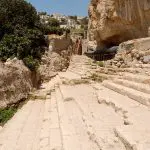
A Farewell to the Emmaus Road - Despite the Israel Antiquities Authority's call to action, little has been done to preserve the ancient remains of a Roman road that are still visible in the area where Jesus traveled with two of his disciples on the day of his resurrection.
- A New Solution to the Synoptic Problem - The many similarities among the Synoptic Gospels suggest a literary interdependence.
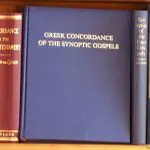
- Book Review: Robert Lindsey’s A Comparative Greek Concordance of the Synoptic Gospels - With the publication of the third and final volume of A Comparative Greek Concordance of the Synoptic Gospels, Dr. Robert Lindsey has given to the scholars who have been following his work, as well as to future scholarship, a necessary tool for the study of the synoptic Gospels.
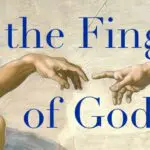
- By the Finger of God - Jesus’ ministry of miracles and deliverance occasionally brought him into conflict. One of the most intriguing controversies concerned the accusation by a group of Pharisees called “Jerusalem scribes” that Jesus had accomplished the healing of a dumb man with the aid of the prince of demons.
- Chickens and the Cultural Context of the Gospels - One aspect of the cultural context of the Gospels that is often overlooked is the role played by animals. In this article I will explore the significance of chickens in first-century Jewish culture and the part they play in the story of Jesus.
- Did Jesus Wear a Kippah? - Although priests wore a turban-like headdress, other Jews of the Second Temple period did not wear a headcovering.
- First-century Discipleship - Like other sages of his time, Jesus demanded his disciples' total commitment. They were to put the "kingdom of Heaven" (Jesus' band of full-time disciples) before all else. They were to "hate," that is, put second, father, mother, wife, children, brothers, sisters, and themselves, as well (Luke 14:26). Following Jesus to learn Torah from him was to take precedence over every other endeavor.
- Has the Lost City of Bethsaida Finally Been Found? - The scholarly debate over the location of Bethsaida continues to rage. Now, Mendel Nun, an authority on the Sea of Galilee and its ancient harbors, weighs in on the side of el-Araj.
- Jesus and Elijah in Luke 4:16-30 - Jesus’ association with Elijah is a prominent theme in Luke-Acts.
- Jewish Laws of Purity in Jesus’ Day - The sages were required to interpret the biblical commandments, including those dealing with ritual uncleanness of menstruants. Rabbinic regulations about impurity caused by menstruation form the background to several stories in the gospels.
- Parables of Ill Repute - In rabbinic parables God could be portrayed as behaving in a morally ambiguous manner: he might be a cruel slave owner or a heartless judge. In a few Lukan parables, Jesus also portrayed God as behaving scandalously. Often unsettling for modern readers, such portrayals added humorous elements to the plot and heightened the dramatic effect.
- Pilgrimage in the Time of Jesus - During the Second Temple period pilgrimage was associated with the festivals of Passover, Shavuot and Sukkot.
- Salted with Fire - Among the difficult sayings of Jesus, Mark 9:49 is one of the most enigmatic. Almost all previous explanations of this verse have dealt with the Greek text, but like many of the difficult sayings of Jesus, this one simply cannot be explained from the Greek alone.
- That Small-fry Herod Antipas, or When a Fox Is Not a Fox - We need to start translating “fox” with its proper Hebraic cultural meaning.
- The Kingdom of God: God’s Power Among Believers - One of the greatest theological controversies in the last century concerns the meaning of the terms “Kingdom of God” and “Kingdom of heaven.” Because scholars have not given adequate attention to the fact that these are completely Hebraic terms, confusion has arisen concerning the period of time to which the Kingdom refers, who takes part in it and the exact nature of the Kingdom. Examining relevant Gospel passages in their Hebraic context will clarify what Jesus meant when he spoke of the “Kingdom of God” or the “Kingdom of heaven.”
- The Kingdom of Heaven Is Like a Seine - The seine was used in the Sea of Galilee until the 1950s, and my experiences in the early days of modern Jewish fishing on the Sea of Galilee have given me some practical insight into its use.
- The Major Importance of the “Minor” Agreements - In this article, Dr. Robert Lindsey discusses the importance of the so-called "minor agreements" of Luke and Matthew against Mark for properly understanding the interrelationship of the Synoptic Gospels. David N. Bivin and Joshua N. Tilton collaborated with Lauren Asperschlager to bring this article, which previously existed only as an unfinished draft, to Jerusalem Perspective subscribers.
- The Recently Discovered Pool of Siloam - In this free sample lecture from the 2006 Jerusalem Perspective Conference, archaeologist and JP contributor Ronny Reich discusses the excavation of the first-century remains of the pool of Siloam discovered in Jerusalem. The complete collection of presentations delivered at the 2006 Jerusalem Perspective Conference is available through the En-Gedi Resource Center.
- The Sea of Galilee - According to the Gospels, Jesus’ earthly ministry centered around the Sea of Galilee. While important events occurred in Jerusalem, the Lord spent most of the three years of his ministry along the shore of this freshwater lake.
- The Sweetness of Learning - Although the Gospels give little information concerning Jesus' childhood, we can suppose that in his formative years Jesus received a good Jewish education. Dr. Wilson gives us a glimpse into the Jewish way of training a child.
- Understanding Parables - The rabbis taught, "Do not underestimate the value of parables, because by means of parables a person can master the words of Torah" (Song of Songs Rabbah 1:8).
- Was Jesus a Confirmed Bachelor? - Jesus still relatively young when he was crucified. His death may have come before he had a chance to marry.
- What Is the Priest Doing? Common Sense and Culture - Common sense is connected to cultural expectations. What is understandable in one culture may be opaque in another.