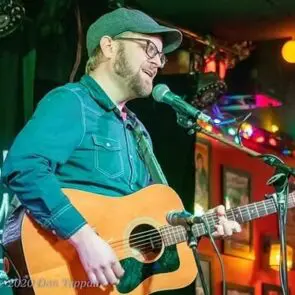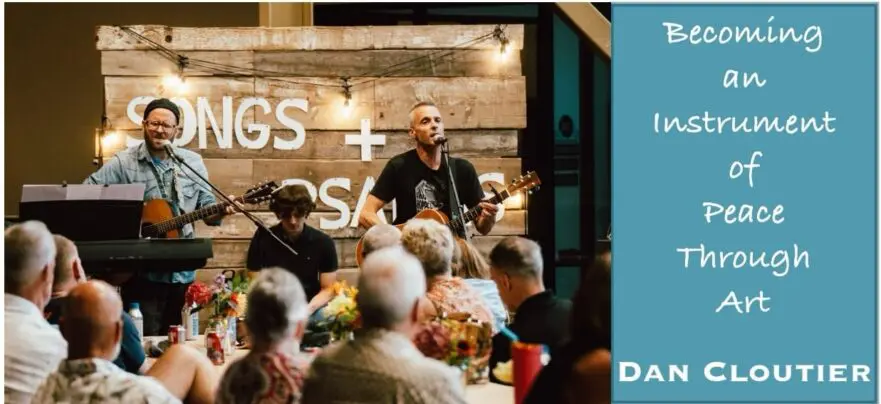
How to cite this article: Dan Cloutier, “Becoming an Instrument of Peace Through Art,” Jerusalem Perspective (2026) [https://www.jerusalemperspective.com/38932/].

With everything that’s happening in the world, it can be hard not to feel small, alone, helpless, and worthless. The social media algorithms are doing a masterful job of stoking fear and splitting neighbors apart, while our shared humanity and sense of belonging is constantly being diminished. Artificial intelligence (AI) even seems to be threatening our uniqueness in the world. Who needs to write or paint or sing or play music anymore when a machine can do it for you faster, cheaper, and easier? As a songwriter myself, I find it particularly disturbing that AI can write a song that sounds completely indistinguishable from something made by humans, and that includes songs about Jesus. There are AI-generated worship artists all over the internet. One of them, the fully artificially-intelligent artist Solomon Ray, hit number one on the U.S. Gospel charts in November 2025. And to anyone who thinks they won’t be fooled by robots, AI technology is only going to get better. Over the next few years it will become increasingly hard, if not impossible, to know if music was made by real humans or artificial intelligence. In the face of all this alienation, I’m sure glad Jesus said, “Don’t be afraid; you are worth more than many sparrows” (Luke 12:7).[1]
The Scriptures are clear that there is tremendous value in each and every human being on this planet. According to Genesis 1, we were each created in the divine image. Can this core biblical concept that we were created in the image of a Creator help us find hope? I believe with all my heart that one of the things we’re missing in today’s society is local art: art that we don’t just consume but that we actually participate in. Art, in my opinion, shouldn’t be this thing that only comes from some distant source far away or, even worse, from machines. It should come from yourself or from someone you know next door. We were created to create. The true purpose of art is to form real human and divine connection and community. Out of this creative activity comes belonging and a sense of peace.
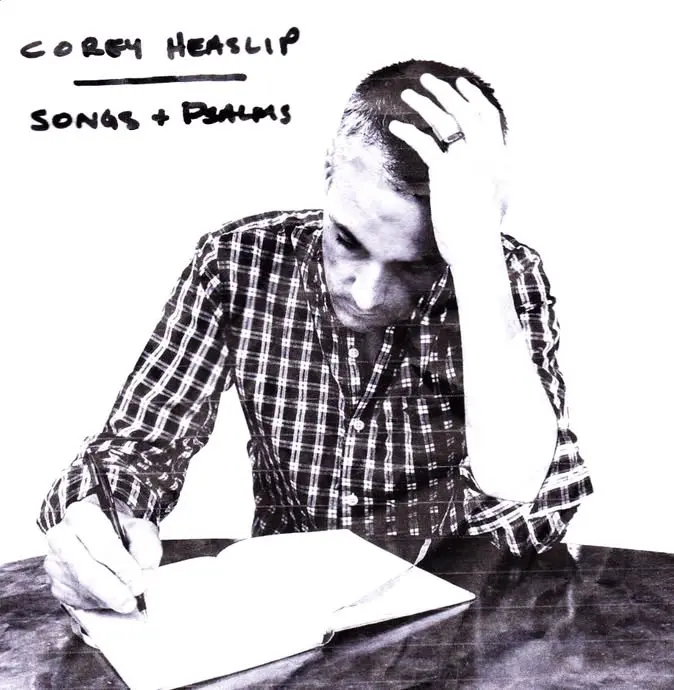
Of all the songs I’ve heard this year, the one that has moved me the most is a new song by my life-long friend Corey Heaslip called “Instrument of Your Peace.” The lyrics are based on the famous poem “Prayer of Saint Francis.” The earliest known version of the prayer comes from a French magazine published in 1912.[2] There is no record of Saint Francis ever saying these words. Nonetheless, it’s a powerful song about connection and community and peacemaking. As Corey wrote to me, “The myth [of the poem] makes for great liner notes, but I think the words on their own, even without music make it a classic. [The poem] fits right in with Jesus’ words in the Sermon on the Mount.” Here are Corey’s lyrics:
Make me an instrument of your peace
Make me an instrument of your peace
Make me an instrument of your peace
Make me an instrument of your peaceWhere there is hatred let me sow love
Where there is injury let me bring your pardon
Where there is doubt let me bring faith
Where there is despair let me bring your hopeMake me an instrument of your peace
Make me an instrument of your peace
Make me an instrument of your peace
Make me an instrument of your peaceWhere there is darkness let me bring light
Where there is sadness let me bring your joy
Where there is doubt let me bring faith
Where there is despair let me bring your hopeMake me an instrument of your peace
Make me an instrument of your peace
Make me an instrument of your peace
Make me an instrument of your peaceDivine Master grant that I may not seek to be consoled but to console
To be understood as to understand
To be loved as to loveMake me an instrument of your peace
Make me an instrument of your peace
Make me an instrument of your peace
Make me an instrument of your peace
Corey’s adaptation of the “Prayer of Saint Francis” reminds me that peace and art are collective actions we’re all called to practice together. After all, instruments, whether of peace or of music, must be played to be useful. If they’re not being used, aren’t instruments just lumps of wood and metal collecting dust on a shelf?
I just so happened to be on a family vacation to Hawaii when Corey first texted this song to me this past January (2026). We were staying with my dad’s best friend from high school, who lives high in the hills that overlook Honolulu. He had invited me and my family out to the island in memory of my dad.[3] I spent that week in Honolulu listening to Corey’s new song over and over again as I looked over the city and beyond to where the attacks on Pearl Harbor had taken place. Pearl Harbor is embedded in the collective consciousness of the United States as a day of great infamy and suffering, whose scars still reverberate around the world. I wondered how, in such a natural paradise, such an act of violence could have taken place.
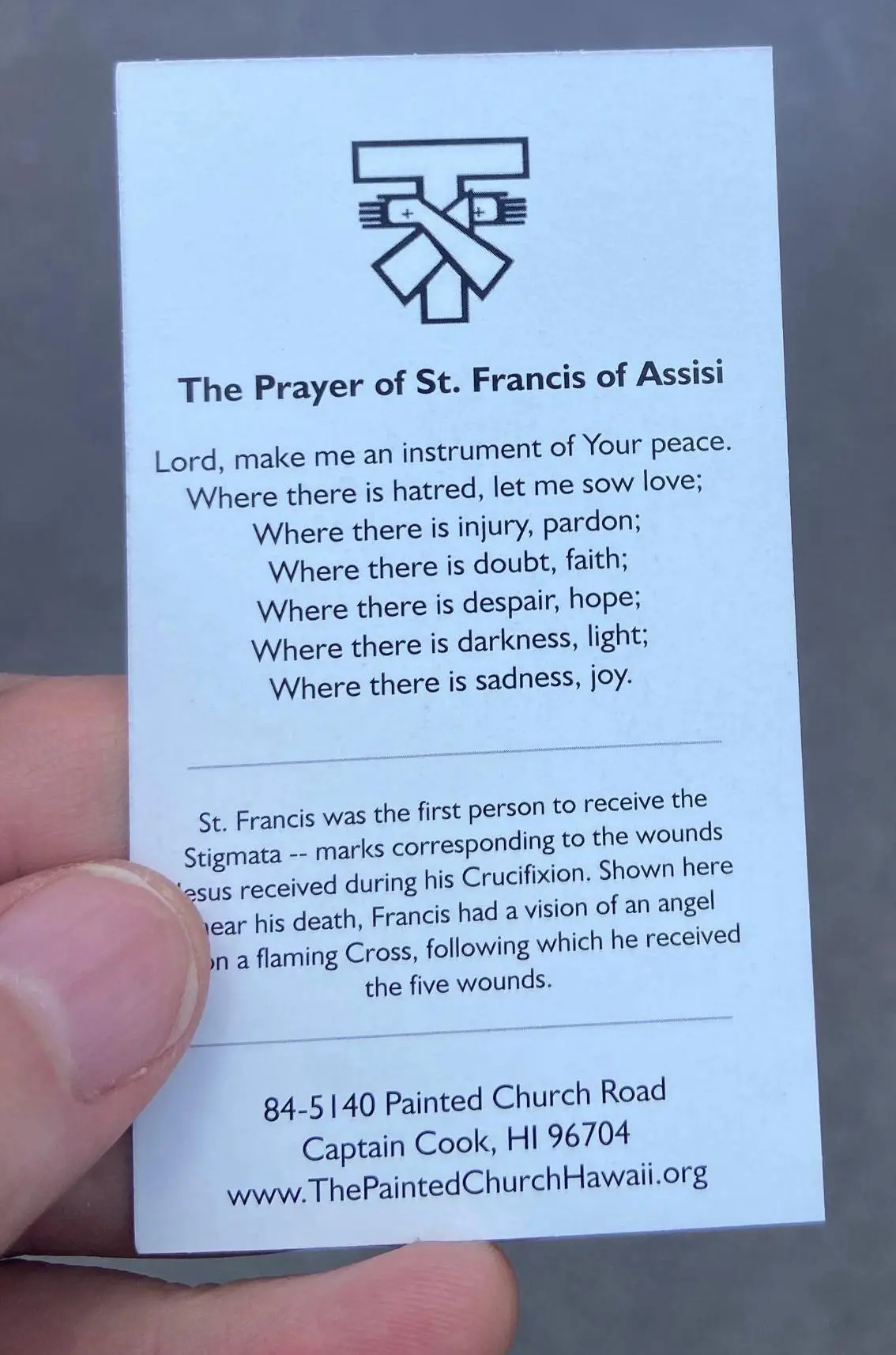
My family and I spent the next week on the Big Island of Hawaii, and my heart cried out Corey’s song every morning as I watched the sunrise over the Pacific Ocean. My family visited the famous Painted Church in Captain Cook, Hawaii. The history of that European explorer whom the town is named after includes tremendous violence, but at the Painted Church I was thrilled to find a mural dedicated to Saint Francis with a small card with the prayer attributed to him written on it.
I took a photo of the card I found, texted it to Corey, and thanked him for his new song and told him how much it had moved me over the past few weeks in Hawaii. He wrote me back deeply grateful that his song had had such a profound effect on me. I brought the card home with plans to give it to him at our next concert, but before I could see him in person again, my country had started a war with Iran (at the end of this past February).
As this new war started and its horrors began to make headlines, Corey’s song stayed on my mind. When I read that over 150 people, including 120 children, had been killed at the Shajareh Tayyebeh school by an “errant” missile from my own government,[4] my friend’s song echoed in my heart. When Pete Hegseth, my country’s current Secretary of Defense—or “Secretary of War,” as he likes to be called—said, “We will keep pushing, keep advancing, no quarter, no mercy for our enemies,”[5] I couldn’t reconcile this violent vengeful attitude with the lyrics of Corey’s song.
But it wasn’t just the song that felt opposed to this violent attitude. The song reflects who Corey is as a human being, and even deeper, it reflects who we both know Jesus to be: a man of peace. A large part of what made the song “Instrument of Your Peace” so special in my life is that I know the heart of the person who wrote the melody. I know Corey’s struggles, but I also know his kindness and commitment to his faith. Corey’s humanity, and our connection, allowed this simple song to grow even deeper inside me.
I first met Corey at an singer-songwriter’s open mic at the legendary folk venue Club Passim in Cambridge, Massachusetts, back in 2002. We hit it off immediately, in large part because of our shared faith in Jesus. Over the years, we’ve played shows together, bounced countless musical ideas off each other, and I was even his guitar player for his indie rock band “The Fall Downs” back in 2004-2005. There was a short time during our youth when we both had aspirations to be career musicians traveling the world, playing to legions of fans, but thankfully that dream never came to fruition, as we both love our current lives and families! Over the past twenty-five years we have walked through life together. Corey has been a true friend to me, always there for a phone call, text, or to grab a beer in the darkest seasons of my life, including the passing of my father and a bout with depression.
I’ve talked with Corey many times about Jesus over our long friendship, and that was a large reason why his song tugged my heart in such a powerful way. His melody wasn’t some distant call from a face I didn’t recognize, it was from my dear friend. Together we have reflected on and struggled with Jesus’ words about peace. Jesus himself declared, “Blessed are the peacemakers, for they will be called children of God” (Matt. 5:9), and that was right after he said, “Blessed are the merciful, for they will be shown mercy” (Matt. 5:7). I don’t know why or how those famous verses could be missed by someone like Pete Hegseth, who so loudly and militantly professes the Christian faith. It’s just not possible to read the four Gospels and not realize Jesus’ constant focus on peace and non-violence, from “turn the other cheek” (Matt. 5:39; Luke 6:29) to “love your enemies and pray for those who persecute you” (Matt. 5:44). Then there is the famous moment of Jesus’ arrest when he tells Peter, “Put your sword back in its place, for all who draw the sword will die by the sword” (Matt. 26:52). This is just the opposite of Hegseth’s obsession with “maximum lethality.”
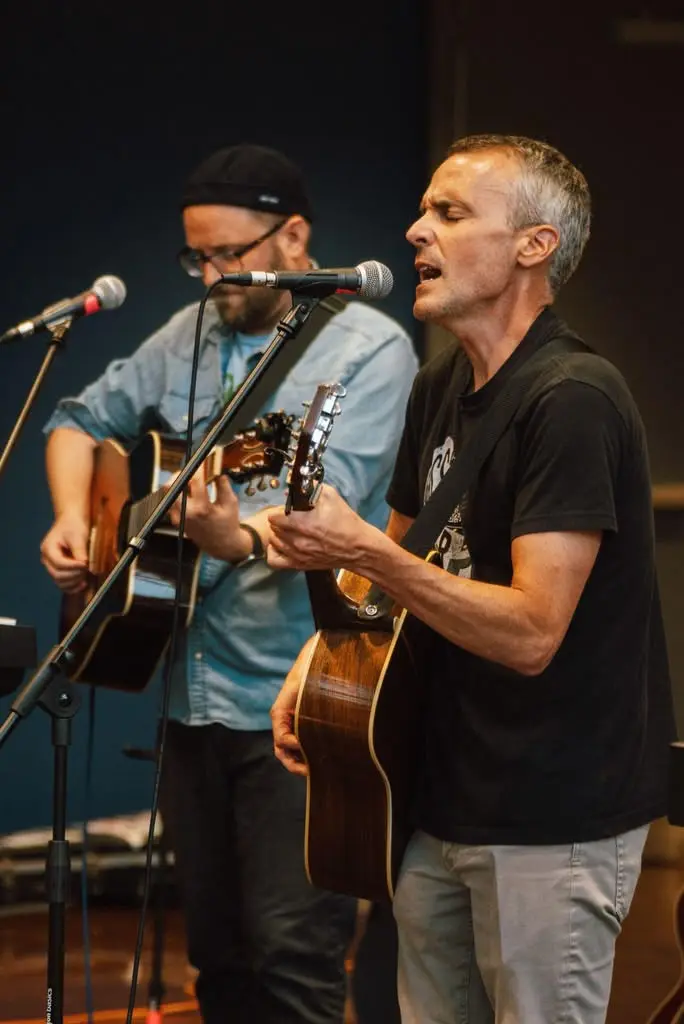
I assume it was in large part because of how the song affected me that when Corey went into the studio to record “Instrument of Your Peace” for his new album Songs + Psalms in May 2026, he asked me to sing the harmony part for his record. I don’t think I’ve ever responded with a quicker “yes” to any musical request in my life. Corey drove up to my house with his laptop, and we spent a night together singing. In August we performed “Instrument of Your Peace” live together for the first time at Corey’s album release show in front of over a hundred of his closest friends and family members. Everyone in that room was lifted by our voices together towards Jesus’ call to be peacemakers. And that’s something that AI or even a large group of writers from far away can never do. This song is a clear example in my life of the real human connection that art can give us.
I reached out to Corey after the show to have him explain more about why he wrote the song, and here’s how he responded:
The song is different from anything else I’ve written. For one, I’ve never taken someone else’s lyrics and put music to them. Two, it’s a fairly simple folk-style chord progression, which I don’t often employ. One thing I love about it is that it’s a social justice song, in my opinion, but it doesn’t take sides, unless you consider good and evil to be sides. And in that case, it definitely does take sides. But it doesn’t put one person down to raise another person up. I love that the words are “instrument of peace,” not “tools of war.” I love that it puts the advocacy into our hands, into our situations, into the interactions we will go about each day. When someone is down, let me pick them up; where there is darkness, let me shine light into that situation; where there is sadness, let me bring joy into that situation.
I was so proud of Corey as he gathered people from every corner of his life together to celebrate his music. The art we created together felt like an antidote to the social ills of loneliness, hopelessness, and worthlessness that are plaguing our society. According to the U.S. Surgeon General, people lacking human connection have the equivalent danger of premature death as smoking fifteen cigarettes a day.[6] Leaving that show with Corey, my soul felt renewed, like I had just spent days at a fancy health spa, instead of the gross feeling I get waking up after smoking a cigar.
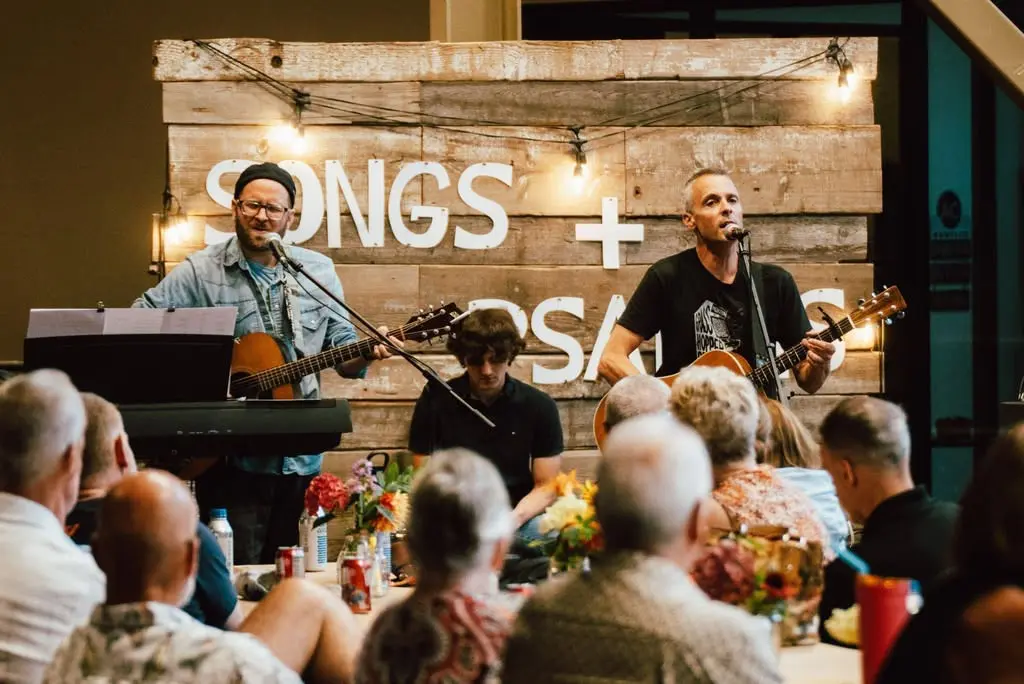
For peace to actually be achieved, it will require us to be active not passive. We’ll need to put down our phones, stop doom scrolling, and make community-centered art. Shared creativity and art is a major way for peace to spread. Our art doesn’t need to be immaculately produced or have mass appeal. But we can all make something that’s new and that makes the world more beautiful, and we can share it with a friend. In this way, we all can be instruments of peace.
Thank you, Corey, for your wonderful song. I can’t wait to hear what you create next and to stand next to you in support as your friend.
|
|
Other JP Articles You Might Enjoy:
- Becoming an Instrument of Peace Through Art

- Translation and Tradition: A Tribute to my Friend David Bivin
- The “Jerusalem School” Revolution: Current Status and Perspectives
- Greek, Granola, and a Baseball Cap: Remembering David Bivin
- In Their Own Words: David and Josa Bivin
- Faith in the Academic Jungle: David Bivin In Memoriam

Notes
- For an in-depth look at this saying of Jesus, see Joshua N. Tilton, “Like Every Sparrow Falling: The Symbolism of Sparrows in a Saying of Jesus,” Jerusalem Perspective (2025) [https://www.jerusalemperspective.com/31282/]. ↩
- See Christian Renoux, “The Origin of the Peace Prayer of St. Francis” [https://www.franciscan-archive.org/franciscana/peace.html]. ↩
- For a reflection on my dad’s death and the music connected to it, see my JP article, “‘Jerusalem’—A Song I’ve Not Sung in Five Years,” Jerusalem Perspective (2026) [https://www.jerusalemperspective.com/36933/]. ↩
- See Tyler Bartlam, Michelle Aslam, Sacha Pfeiffer, and Patrick Jarenwattananon, “New Report Details Airstrike on Iranian School,” All Things Considered (NPR, 5 October 2026) [https://www.npr.org/2026/10/05/nx-s1-5989414/new-report-details-airstrike-on-iranian-school]. ↩
- “Secretary of War Pete Hegseth and Chairman of the Joint Chiefs Air Force Gen. Dan Caine Hold a Press Briefing” (transcript), <i>U.S. Department of War</i> (13 March 2026) [https://www.war.gov/News/Transcripts/Transcript/Article/4434484/secretary-of-war-pete-hegseth-and-chairman-of-the-joint-chiefs-air-force-gen-da/] (accessed 16 October 2026). ↩
- Our Epidemic of Loneliness and Isolation: The U.S. Surgeon General’s Advisory on the Healing Effects of Social Connection and Community (U.S. Government, 2023), 8 [https://www.hhs.gov/sites/default/files/surgeon-general-social-connection-advisory.pdf]. ↩