How to cite this article: Ze’ev Safrai, “Gergesa, Gerasa, or Gadara? Where Did Jesus’ Miracle Occur?,” Jerusalem Perspective 51 (1996): 16-19 [https://www.jerusalemperspective.com/2771/].
| Rather listen instead? |
| JP members can click the link below for an audio version of this essay.[*]
Paid Content
Premium Members and Friends of JP must be signed in to view this content. If you are not a Premium Member or Friend, please consider registering. Prices start at $5/month if paid annually, with other options for monthly and quarterly and more: Sign Up For Premium  |
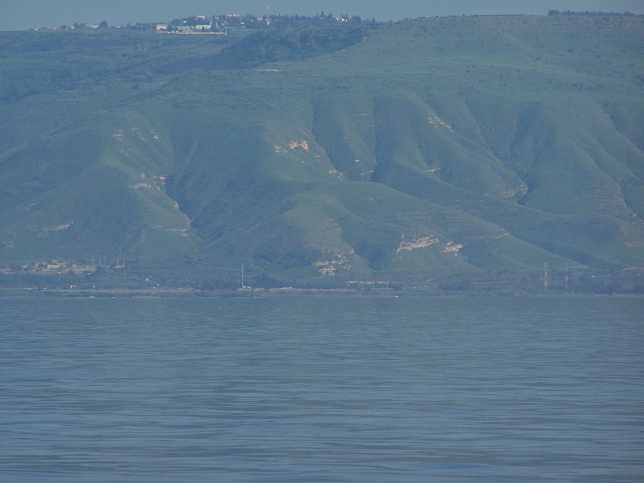
The miracle of the swine took place during Jesus’ visit to “the land of the Gadarenes,” “the land of the Gerasenes,” or “the land of the Gergesenes.” All three of these New Testament variants have solid textual support. On the basis of the textual evidence alone, we cannot determine which of these variants is the original in any of the three synoptic versions.[1] Despite this frustrating textual problem, we can determine, on the basis of geographical considerations, the location of the miracle. We are confronted by two questions. First, where did the miracle happen, or, what site did believers connect with the miracle? Second, how reliable, in this instance, is Christian tradition? Did second- and third-century Christian communities have accurate traditions about the deeds of Jesus? Before we launch into a geographical discussion, we must survey what early Christian writers had to say about the miracle of the swine.
Premium Members and Friends of JP must be signed in to view this content.
If you are not a Premium Member or Friend, please consider registering. Prices start at $5/month if paid annually, with other options for monthly and quarterly and more: Sign Up For Premium
Premium Members and Friends of JP must be signed in to view this content.
If you are not a Premium Member or Friend, please consider registering. Prices start at $5/month if paid annually, with other options for monthly and quarterly and more: Sign Up For Premium
Notes
- Matt. 8:28; Mark 5:1; Luke 8:26. For a discussion of the site, see C. Kopp, Die heiligen Staetten der Evangelien (Regensburg, 1959), 282-287.[↩]