How to cite this article: Joshua N. Tilton, “‘We Hear the Christmas Angels’: Origins of Extra-Canonical Traditions in Familiar Carols,” Jerusalem Perspective (2025) [https://www.jerusalemperspective.com/29924/].
Many of the most familiar and best beloved Christmas carols rehearse the story of Jesus’ birth. Scriptural accounts of the Nativity are found in the Gospels of Matthew and Luke, but some of the most vivid details the old carols describe—the holy light that surrounded the virgin mother and child, the ox and ass at the manger, the three kings kneeling before the Christ-child in the stable—cannot be found in the canonical texts of Scripture. These extra-canonical details are elaborations on the sparse Gospel accounts and pious expansions of the story that, one way or another, magnify the infant Jesus. Some of the expansions familiar from Christmas carols are of relatively recent origin, but many reach far back into antiquity. In this essay we will trace some of these traditions to their earliest attestations. Our inquiry will not proceed from the earliest to the most recent traditions, but will follow the chronological sequence of the infancy narratives. In doing so we hope to gain a deeper appreciation of the extra-canonical traditions that the carols have so deeply embedded in our imaginations.
Of Jesse’s Lineage Coming
(Lo, How a Rose E’er Blooming)
The beautiful carol “Lo, How a Rose E’er Blooming” likens the birth of Jesus to the blossoming of a winter rose. The hymn’s focus is on Mary, the shoot from the stump of Jesse (the forebear of the royal House of David), who bears Jesus, the Christmas rose. However, neither of the Gospel accounts link Jesus to Jesse’s lineage through Mary. Both Matthew’s Gospel and Luke’s connect Jesus to the royal House of David through his human father, Joseph.
Premium Members and Friends of JP must be signed in to view this content.
If you are not a Premium Member or Friend, please consider registering. Prices start at $5/month if paid annually, with other options for monthly and quarterly and more: Sign Up For Premium
Conclusion
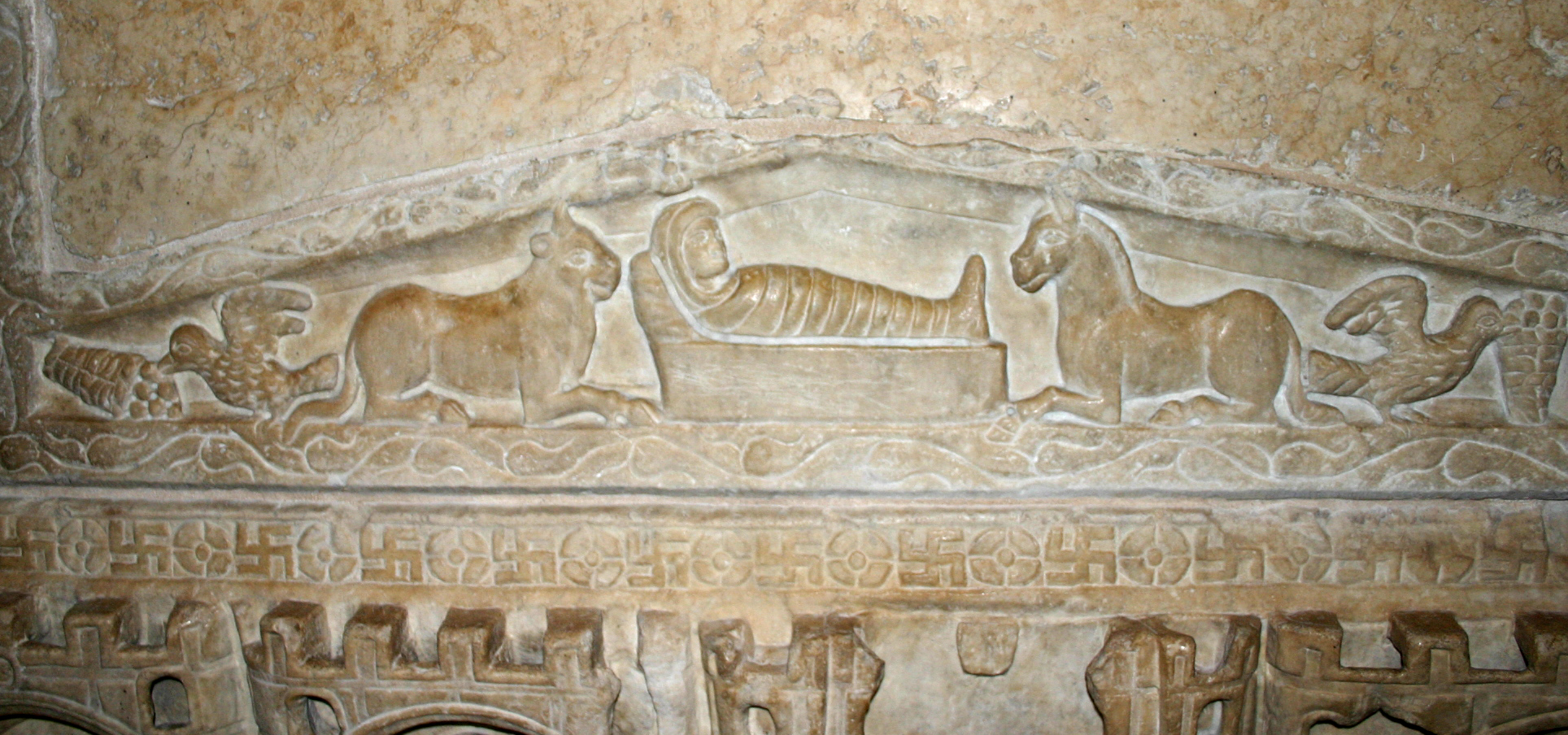
Christmas carols contain many details that cannot be found in the canonical accounts of Jesus’ birth. Some of these are recent inventions, but many are deeply rooted in ancient Christian traditions. Some of these traditions developed in order to resolve problems (real or perceived) in the canonical accounts. Thus, a Davidic ancestry was invented for Mary (“Lo, How a Rose”) in order to bind Jesus more securely to a royal lineage, and Joseph’s age was advanced (“The Cherry Tree Carol”) in order to explain why Joseph is never mentioned as being present during Jesus’ adulthood. Other traditions, such as the shepherds’ seeing the star (“The First Noël”), their bringing rustic gifts to the infant Jesus (“In the Bleak Midwinter”), and the presence of the magi at the manger (“As With Gladness Men of Old”), developed from the tendency to harmonize the infancy narratives in Luke and Matthew. Some traditions—the ox and the ass worshipping Jesus at the manger (“Good Christian Men, Rejoice”), the identification of the magi as kings (“We Three Kings”)—emerged from interpreting scriptural prophecies as applying to the nativity, while other traditions—the heavenly light surrounding mother and child (“Silent Night”)— originally had an apologetic purpose. Understanding the origins of these traditions lends us a richer appreciation of the apocryphal details that appear in so many Christmas carols.
The lovely silhouette animation short, “The Star of Bethlehem,” retells the Nativity story with many of the traditional embellishments discussed in this article.
|
This article was brought to you in part by Avtinas Incense™, blending incense for the Divine Service since the late Second Temple period with the Avtinas family secret recipe of aromatic spices. With Avtinas Incense™ your offering will make an armoa pleasing to the L-rd.
To learn more about Avtinas Incense™, and JP’s other first-century sponsors, visit the following link: https://www.jerusalemperspective.com/first-century-sponsors/. These sponsors are, of course, fictional and intended to be in good fun while also being informative about aspects of daily life in the time of Jesus. Purchase of items with our sponsors’ fanciful logos from Jerusalem Perspective’s Dashery store does, however, support the work of JP while also bringing a smile to the buyer’s face. |