
How to cite this article: Dan Cloutier, “The Bethlehem Stomp: A Songwriter’s Response to Matthew’s Nativity Story,” Jerusalem Perspective (2025) [https://www.jerusalemperspective.com/33241/].
|
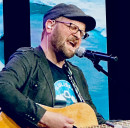
Dan Cloutier is a singer-songwriter based in Boston, Massachusetts. We’re thrilled to have him join the Jerusalem Perspective team as a music and art journalist and reviewer. Dan studied Biblical Studies at Gordon College and spent a semester in Jerusalem exploring the Holy Land. As a way of introduction, we wanted his first piece to be about a song he wrote called “The Bethlehem Stomp.” —JP |
Part of what has made the story about the birth of Jesus so resonant to writers and artists for the past two millennia is how deeply human it is. That’s why the Christmas hymn “O Holy Night” will continue to last beyond this century, and why it contains my favorite verse in all Christmas songs, and maybe all songs in general:
Truly he taught us to love one another
His law is love and His gospel is peace
Chains shall he break for the slave is our brother
And in His name all oppression shall cease
The “Chains shall he break” part often tears me up, and I have to really focus my emotions when leading worship at my church every December. As a songwriter, I am under no illusion that anything I ever write will be as moving or have such longevity as “O Holy Night,” but I still want to help bring light into the world. I believe that is the job of all artists. I also know that it is impossible to see the light the world needs without at times reflecting on the darkness all around. The great Canadian songwriter Leonard Cohen said it best, “There’s a crack in everything, that’s how the light gets in.”
The Massacre of the Innocents in Matthew’s account of Jesus’ birth is about as dark as it gets, and in all my years of listening to modern Christmas music I’ve never heard a song about it. There are classical pieces like the “Coventry Carol” from the 16th century, but you’re not going to hear anything about Herod and his brutal murders on American Christmas radio. But we need these pieces to reflect on the actual Biblical story. The Psalms themselves hold both songs of praise and also deep and troubling lament—I’m looking at you, Psalm 137.
The Massacre holds the kind of darkness that is akin to a midnight sky with a fog so dense that it cuts out all the stars’ light. It’s hard to see or fathom how any light could shine through such brutality and violence, and humanity’s bloody history echoes with similar stories from Moses and his reed basket, to the horrors of the Holocaust, to other uncountable genocides, both ancient and modern. This kind of violence is part of all our stories and part of all our family trees. But, as the birth of Jesus shows, even the most pitch-black sky or darkest story has some photons of light flying through it.
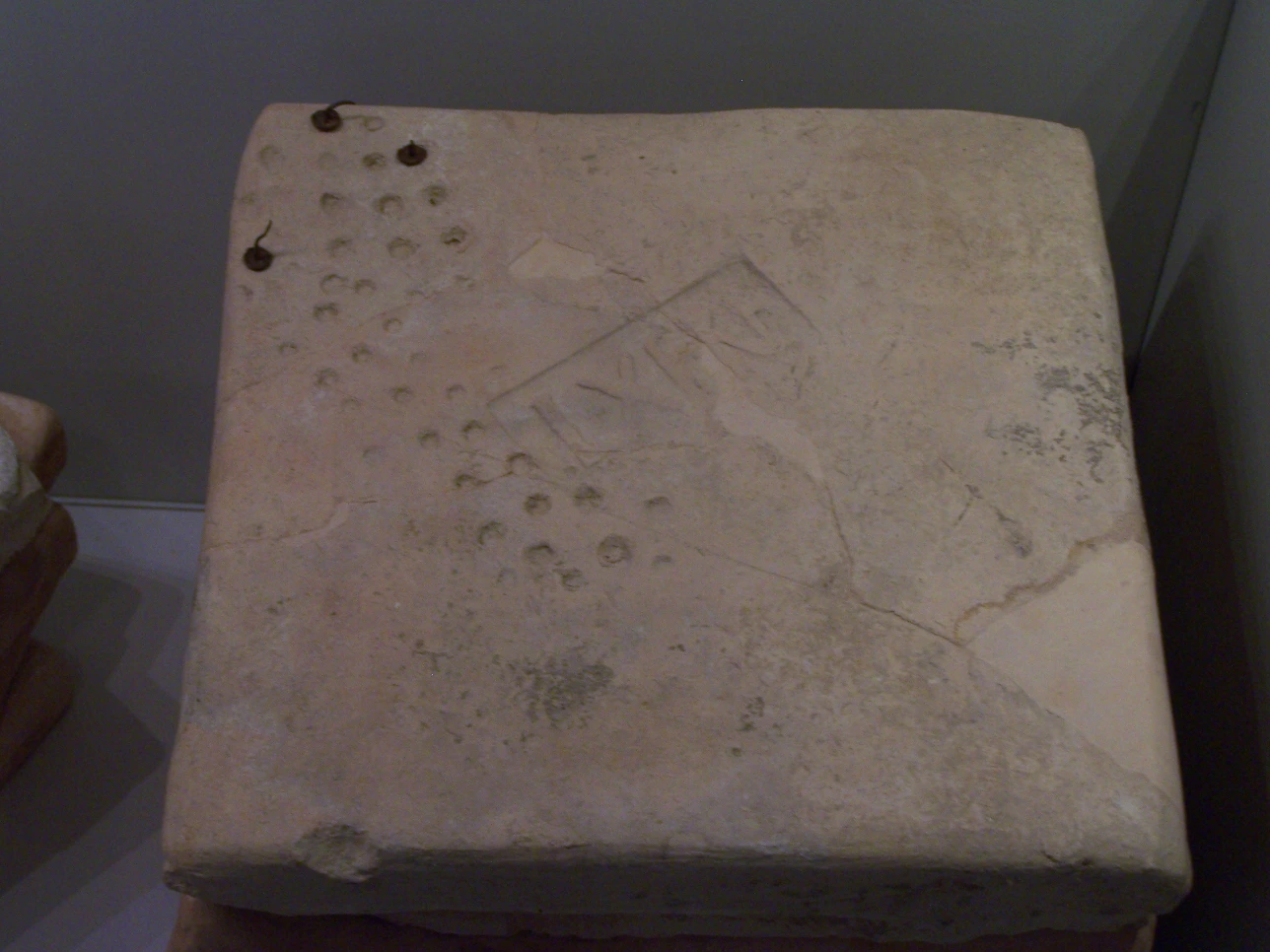
I wrote the song “The Bethlehem Stomp,” a song about the Massacre of the Innocents, back in 2010, and it is important to note that I was able to visit the actual city of Bethlehem in both 2001 and 2007. I remember driving around the landscape through the olive grove hills that surround the area thinking about Rachel weeping for her children for they were no more. It is such a beautiful land that is haunted by so many stories of hurt. One of my visits to Bethlehem was also around the time of the celebration of the Passover, and the bitter herbs from that feast were fresh in my mind. I was struck, therefore, when for the first time in my life I encountered the bitter herbs smell of tear gas at the checkpoint between Jerusalem and Bethlehem after an incident between some rock-throwing Palestinian kids and some Israeli soldiers. If I close my eyes, I can still recall its pungent pepper or horseradish scent. My song stems from that time and that visit.
The lyrics of “The Bethlehem Stomp” are written through the eyes of one of the soldiers who was just ordered by Herod to go out and kill all the baby boys two years old and younger in Bethlehem and its vicinity. The soldier in the song works his way into a drunken frenzy as he and the rest of his squad are driven towards their gruesome deed. The song ends with the soldier’s plea, “Don’t cut my wine with water tonight, I don’t want to feel any pain before this fight,” as he tries to push the last part of his humanity to the side, while the rest of the soldiers all shout, “Come On!” in a menacing unison.
But that brings us to the point of the song: no matter how hard the soldier tries, he can’t push all his humanity away. Even in his ever-increasing shadows, there are cracks and light shining through. The song forces the listener to ask the question if they would follow such an order as well. Would they be able to push themselves to do such horror in the name of a wicked ruler?
I first played “The Bethlehem Stomp” at a sold-out concert at Club Passim, the famed folk venue in Cambridge, Massachusetts, and I led the entire audience in rousing shouts of “Come On!” as we mimicked the swell of emotions the soldiers must have felt. Each time I performed the song subsequently I was always thinking of one of my favorite songwriters, Tom Waits, who is famous for taking on sinister or bizarre characters, as in his albums Rain Dogs or Mule Variations. Before singing “The Bethlehem Stomp” I became like an actor in a play, and for years afterwards I always looked forward to concerts around the holidays to shake up my audience. But then everything in my life changed. I had a child of my own.
My son was born with cancer in February 2012, and we had a rocky first year with him to say the least. When the next December came I could no longer sing the song “The Bethlehem Stomp” the same way. Instead of looking forward to performing it to get my crowd’s rowdy reaction, it became a song I brought out with great trepidation, but I still did it, and performing it always left me changed afterwards. As I held my newborn and very fragile son, I knew it was a story that still needed to be told. After all, that is the point of art, to be changed by light and to push back against the dark powers of this land. I hope this dark song can help make the light around you seem brighter.
The Bethlehem Stomp
By Dan Cloutier © 2010
Old King Herod is a mean mean man
I’m going out stomping in Bethlehem
Grab your sword and shield in your hands
I’m going out stomping in BethlehemCome On! Come On!
I hear Rachel weeping up in them hills
I’m going out stomping in Bethlehem
We aren’t going to stop until old Herod gets his fill
I’m going out stomping in BethlehemCome On! Come On!
Soldiers gather around, Soldiers gather around
It’s the Bethlehem stompIt’s like horseradish in the young mothers’ eyes
I’m going out stomping in Bethlehem
When we start stomping you better run for your lives
I’m going out stomping in BethlehemCome On! Come On!
Don’t cut my wine with water tonight
I’m going out stomping in Bethlehem
I don’t want to feel any pain before this fight
I’m going out stomping in BethlehemCome On! Come On!
Come down to the Bethlehem stomp