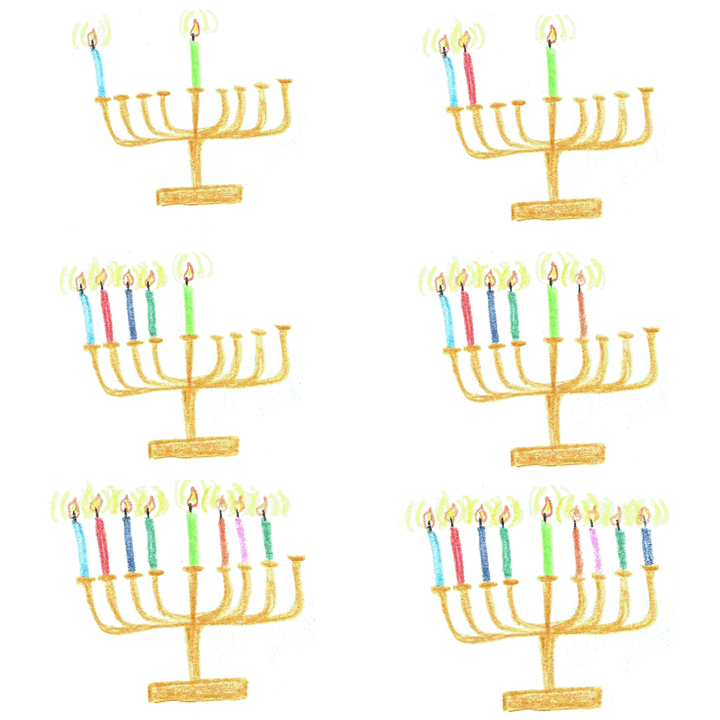

Hanukkah (חֲנֻכָּה [ḥa·nu·KĀH]) is a Hebrew word that means “dedication.” It is used in the Hebrew Scriptures for the dedication of holy objects such as the altar (cf., e.g., Num. 7:10), or for the dedication of holy places, such as the walls of Jerusalem, which formed the boundaries of the Holy City (cf., e.g., Neh. 12:27). As the name of a Jewish holiday, Hanukkah refers to the rededication of the Temple in Jerusalem to its proper function as the place for worshipping the God of Israel. This rededication took place in the second century B.C.E., after Antiochus IV Epiphanes, the emperor who ruled over Israel at that time, defiled the Temple in Jerusalem with idolatrous worship.
Because the tyrant Antiochus abhorred cultural and religious diversity, he decided that all the subjects of his empire should adopt a single identity. The thing that would give cohesion to this new pan-imperial ethos was worship of the Greek gods according to Greek custom. Much to Antiochus’ surprise and displeasure, however, many Jews of those days chose to remain faithful to their God and to their people, refusing to abandon their ancestral customs or to worship other gods. So furious did Antiochus become with his Jewish subjects that he attempted to stamp out Judaism completely. In order to erase Jewish identity entirely Antiochus banned the practice of circumcision, he prohibited observance of the Sabbath, he burned scrolls of the Torah, and he put to death those who would not sacrifice to pagan gods.
Hanukkah celebrates the astounding—some might say miraculous—reversal of fortunes that saw the liberation of the Jewish people from the hands of those who sought to snuff out their existence. In the words of a Hanukkah hymn:
Furious they assailed us,
but Thine arm availed us.
And Thy word broke their sword
when our own strength failed us.
Christians owe a debt of gratitude to the Jews of those days who risked so much in order that the Jewish faith and the Jewish people would not be eradicated from the face of the earth. And likewise we owe thanks to our Jewish friends and neighbors who keep that same faith alive today. Had Antiochus succeeded in his plan, Jesus could never have been born and his message about the Kingdom of Heaven would never have been heard. The Jews of the second century B.C.E. kept the faith alive so that it could continue into the first century C.E. and beyond, just as our Jewish friends and neighbors today keep the same faith alive in the present and carry it into the future.
But Hanukkah is not merely about Jews and Judaism. It also has a universal message. Hanukkah celebrates the inalienable right of every human being to worship according to her or his own conscience. It is a reminder that imposing one’s religion on another person or group of people is not merely disagreeable, it is a form of tyranny. And Hanukkah commemorates the resilience of the human spirit in the face of such tyranny:
Yours the message cheering
that the time is nearing
which will see all men free
tyrants disappearing.
Hanukkah’s message is that while hatred born of ignorance or fear may triumph for a time, the divine light revealed in human dignity will never be completely extinguished.
As our Jewish friends celebrate the rededication of the Temple this Hanukkah, perhaps those of us who are not Jews can rededicate ourselves to the principles of religious and cultural pluralism that safeguard human dignity. Human dignity is only secure when people of different traditions and ways of life have the wisdom to celebrate those differences and possess the humility to learn from one another. May this Hanukkah be an opportunity for us all to rededicate ourselves to the great principle of the Torah and of the Christian faith: to love our neighbors as ourselves.
Wishing Hanukkah blessings to everyone,
Joshua N. Tilton, editor
Jerusalem Perspective
The recordings below are of traditional Hanukkah blessings and songs. Enjoy!
Hanukkah: The Feast of Lights (Ktav).